|
By: Paul S Cilwa |
Occurred: 7/22/1965
Posted: 5/1/2024 |
|
Page Views: 1,073 |
| Hashtags: #Autobiography #MatanzasTheatre #StAugustine #Movies #CivilRights |
| The Matanzas Theatre was a central part of community life in St. Augustine, hosting movie premieres and serving as a social hub for many locals. |
| Estimated reading time: 5 minute(s) (1067 words) |
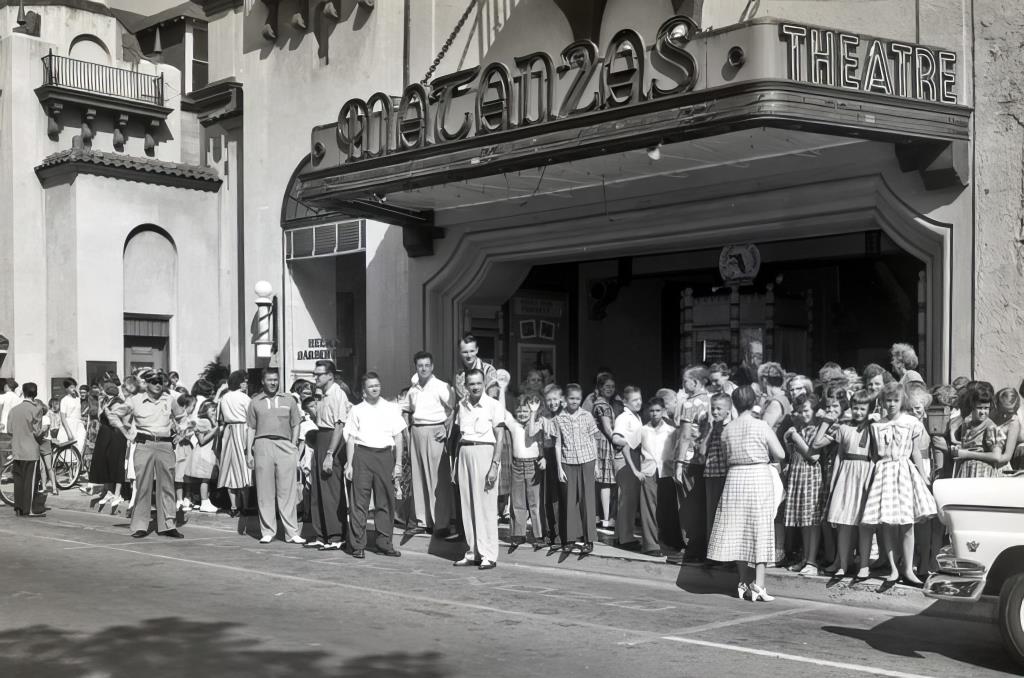
Opening its doors between late 1938 and early 1939, the theatre was a marvel of design,
crafted by architect Roy A. Benjamin in the Atmospheric/Spanish style that captivated
moviegoers of the time. As one of the last atmospheric-style theatres to be constructed,
the Matanzas Theatre was initially operated by Paramount Pictures Inc. through their
subsidiary E.J. Sparks. It later came under the management of Florida State Theaters Inc.,
well into the 1950s.
And on Saturday mornings, we didn't even have to pay! At least, not with money.
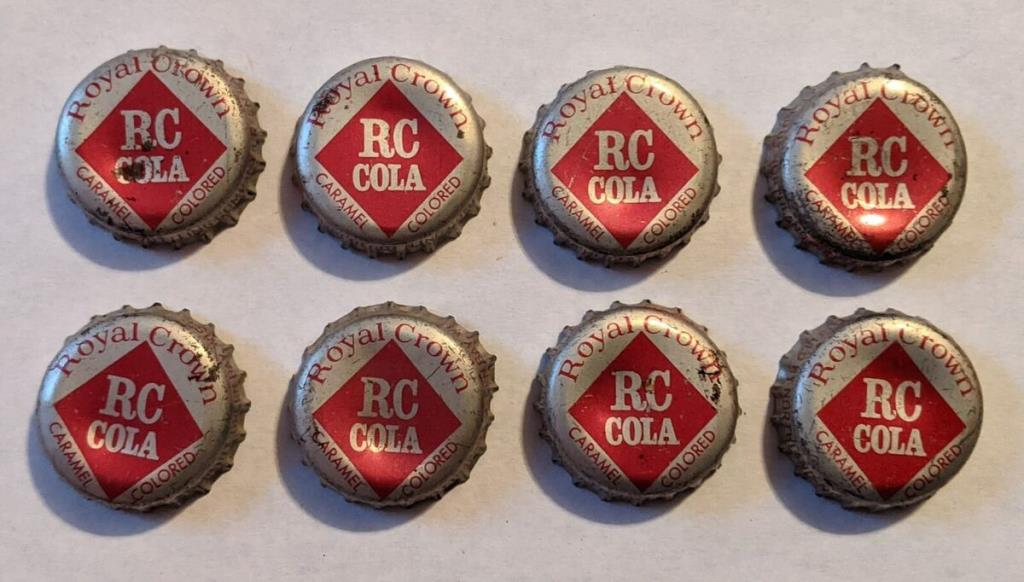
The practice of exchanging RC Cola bottle caps for movie tickets was a popular
promotion during the 1960s. It was a part of the Summer Fun Shows
where children could gain free admission to morning movie screenings by collecting
and presenting RC Cola bottle caps. You didn't even have to buy a soda;
you could literally, with a little diligence, find enough caps on the street
to see the matinee.
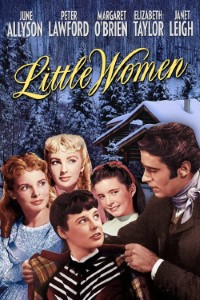
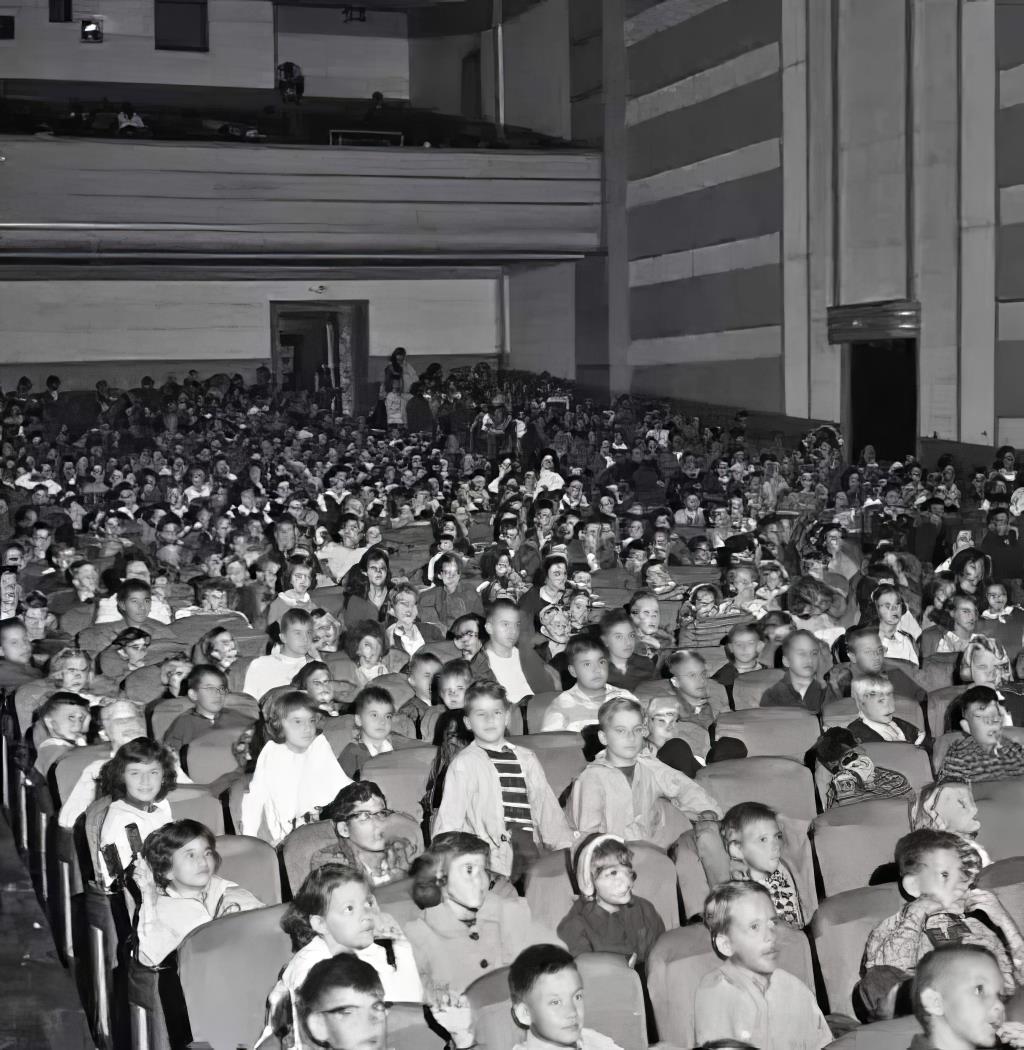
As I was now (in 1961) ten years old, I was considered old enough to chaperone my
younger sisters to the movies. And Mom trusted the Saturday morning matinees,
which they'd had when she was a little girl, to only show us movies that were
appropriate. And it was true; we saw movies ranging from westerns (including
old serials, like The Lone Ranger) to classics like Little Women.
But the indoctrination was more subtle than that.
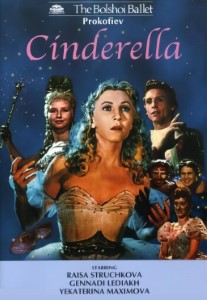
See, as we left the theatre we had to pass through the lobby; and that's where
the posters for the first run movies
couldn't help but be seen as we
traversed. My family didn't own a TV set at this time; so the only way I could
ever have known a movie existed, was if I saw the posters. And that's how I
found out about the Bolshoi Ballet's cinematic performance of Tchaikovsky's
Cinderella.
Now, to be honest, I barely remember the movie. What I remember is the argument
Mom and I had in order for us to be able to go. Because the Bolshoi Ballet
(and Tchaikovsky) were…Russian. And therefore, to my mother's
eyes, Communist.
So that was actually my introduction to the Cold War.
But I did talk Mom into letting us go.
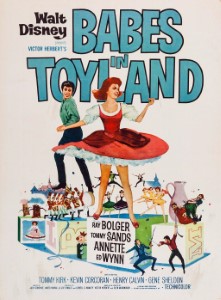
Which made me realize I needed to become more financially independent. So,
when I saw the poster for Disney's Babes In Toyland, a movie based
on an old Victor Herbert musical that we almost performed at school, I knew
I had to see it and didn't want to have to argue with Mom over whether
Mother Goose was a Communist. So I went around the neighborhood until I found
someone willing to let me mow their lawn for 35 cents, the price of an afternoon
matinee ticket. And, oh, how I loved that movie!
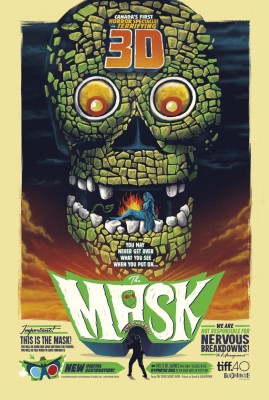
But then came…The Mask.
I loved Babes in Toyland because of the special effects, especially the
scenes with the characters seemingly shrunk to a few inches tall. And I also
loved stereoscopic (3-D) photos; so the idea of seeing a 3-D movie
was just irresistible. And I had never, ever even heard of a horror movie
.
And there were no Communists in it, I assured Mom. And that's how I wound
up dragging my sisters with me to see The Mask.
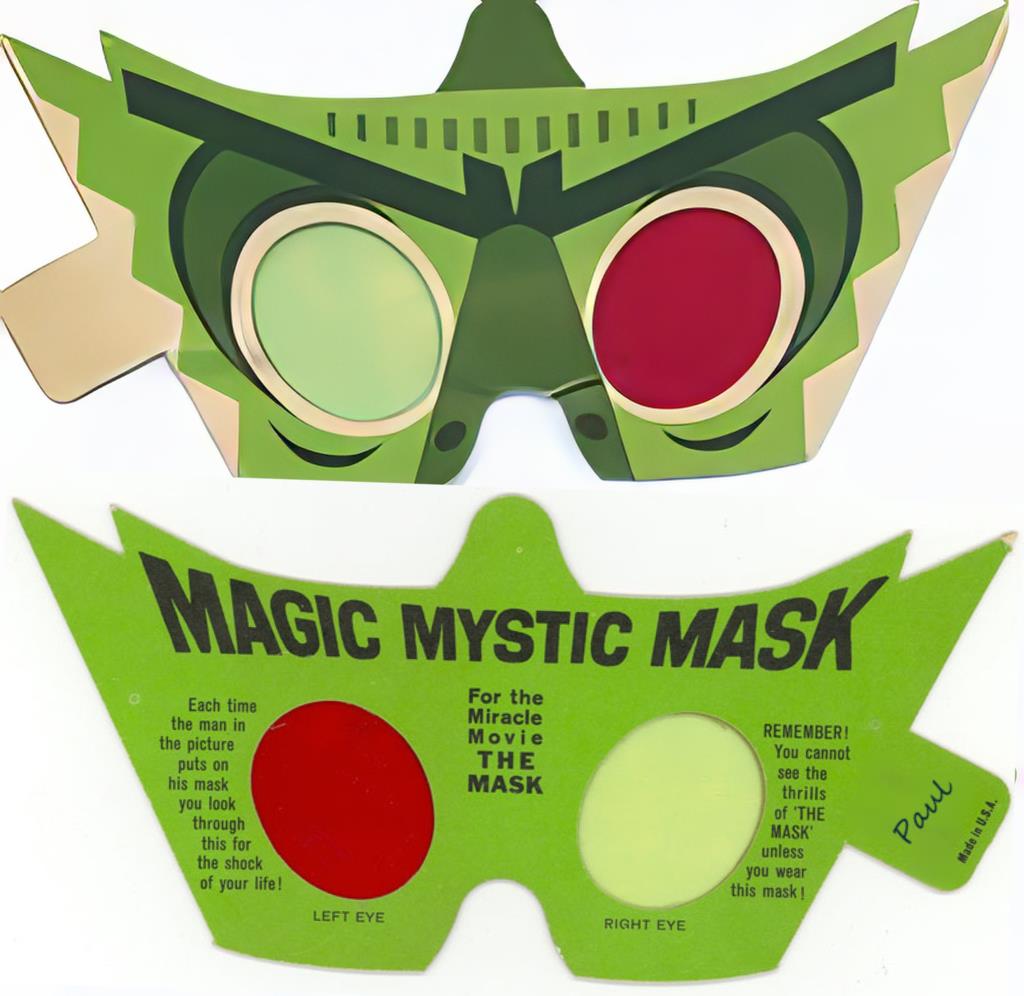
Most of the movie was actually not in 3-D. Some scary guy in the film would
say, Put the mask on, now!
and we would have to put on the
anaglyph (red/green) mask to see the 3-D effect, which was basically this
Aztec mask jumping out at the audience.
I don't actually remember a thing about the plot or story, other than it
was very scary to a ten-year-old, not to mention his eight and nine-year-old sisters.
And so I angrily rose in the middle of the film (probably in the first
ten minutes, really) and dragged the girls with me to the manager, who
I chewed out for allowing little kids to come in and see such filth.
He gave us a refund. I vowed never to return.
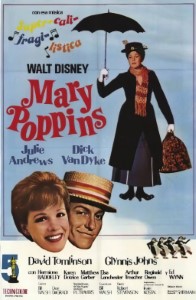
However, return I did, for the film classic that is still, sixty years later,
my favorite movie: Mary Poppins.
That was in 1964, and by then we had moved to Coquina Gables on Anastasia Island.
I used to play the radio while going to sleep, and on Sunday evenings the town's
main radio station, WFOY, played soundtracks and original cast albums from
various musicals; and one of them was the soundtrack to Mary Poppins.
I completely fell in love with the score. And so, I had to see it.
But I was older now. I was in 8th grade, and becoming aware of the racial strife
that was sweeping the nation. And this was the first time I actually realized
that the kids sitting in the balcony didn't, necessarily, choose to be there.
I had always wanted to sit in the balcony, because I imagined the view was
better. But the ushers would never let me, without telling me why. I
had assumed the balcony was just closed. But if so, why were there kids
sitting up there?
I had convinced myself they were the projectionist's kids.
And their many friends.
But then, on July 22, 1965, there occurred a significant event in the
civil rights movement when 21 Black youths attempted to integrate the auditorium
seating area, which had been restricted to white patrons only, with Black
patrons historically relegated to the balcony section. This act of civil
disobedience aimed to challenge the segregationist policies of the time.
The attempt ended in confrontation and arrests, marking yet another poignant moment
in the struggle for racial equality in the United States.
In any case, the theatre no longer exists. The façade does; it
currently houses an art gallery that whispers tales of the past to those
who wander through its arches. The Matanzas Theatre was more than just a
place to watch films; it was a vibrant social hub where memories were
made and shared. And, yes, where history was made.