|
By: Paul S Cilwa |
Occurred: 4/1/1969
Posted: 1/5/2024 |
|
Page Views: 585 |
| Hashtags: #Photography #Autobiography |
| My personal experiences with creating false apparent realities. |
| Estimated reading time: 7 minute(s) (1438 words) |
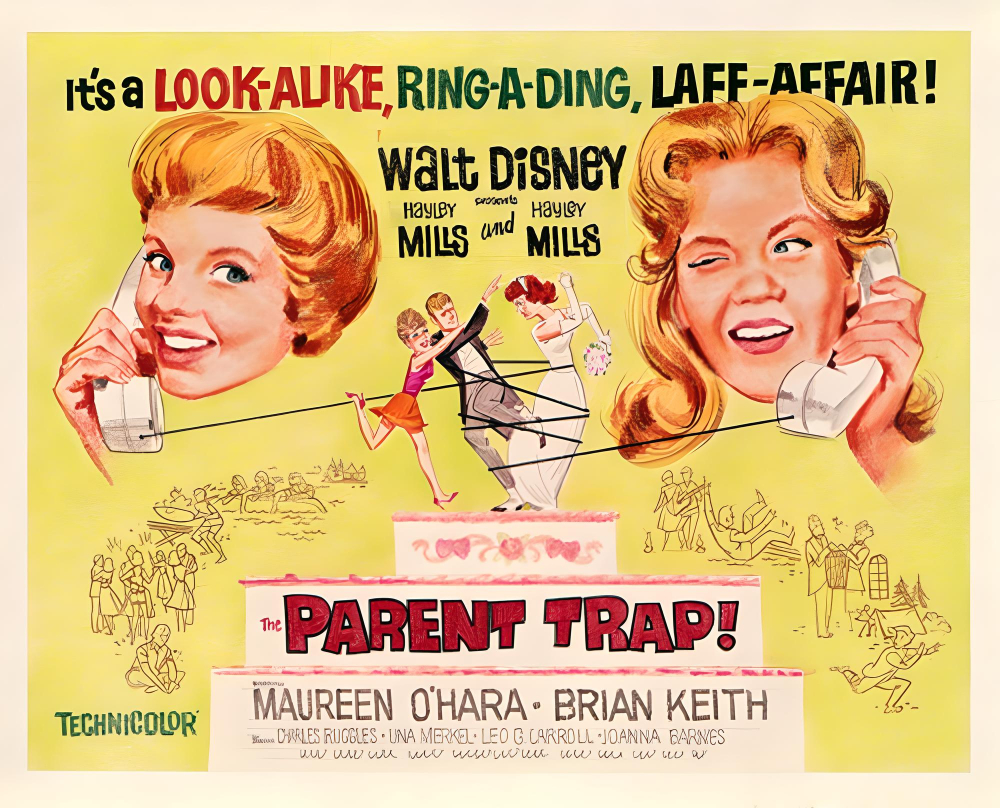
At ten, I knew the difference between reality and film presentations. Three years earlier, when we first returned to Vermont after
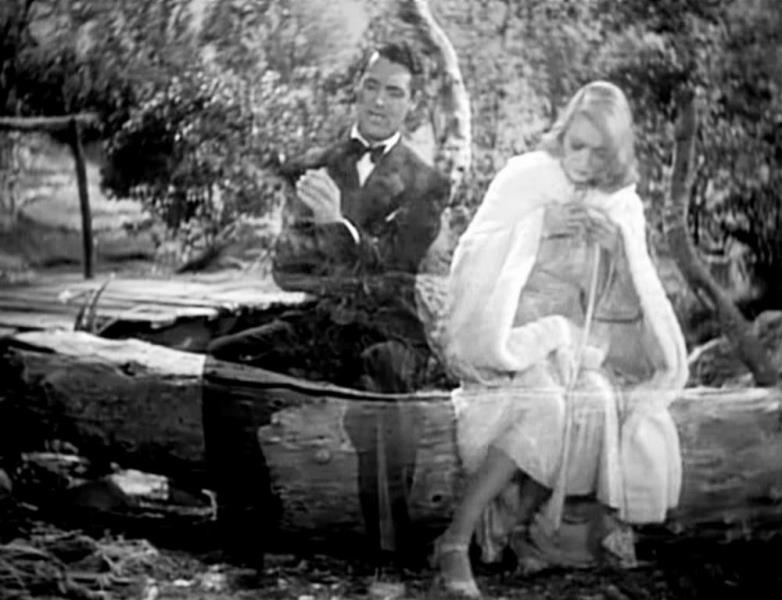
my father's death, I saw a movie on TV. I tuned in late and didn't catch the name of it, but I now know it was the classic
Topper Returns, a 1941 comedy thriller about a ghost who enlists the help of a banker named Topper to find her killer.
The film featured many in-camera special effects, such as invisible ghosts, moving objects, and trapdoors, that were
inspired by the Universal Invisible Man films. The film was nominated for the Academy Awards for Best Special Effects
and Best Sound Recording.
Now, considering my father had died just months before, and that my mother had to explain to me what a ghost
was,
you'd think that I'd have connected the two and asked uncomfortable questions. However, I didn't make the connection;
instead I was fascinated by seeing things on the flickering, black-and-white screen that looked real but I knew were
impossible…like the magically appearing footprints in soft sand, or the semi-transparent ghost of the woman
only Topper could see.
At seven I could become fascinated with the idea of creating a false reality. But at that time,
I hadn't been permitted access to the camera. (I did sneak it out one time and took a photo of a tree, the summer before,
but that film hadn't even been developed yet.)
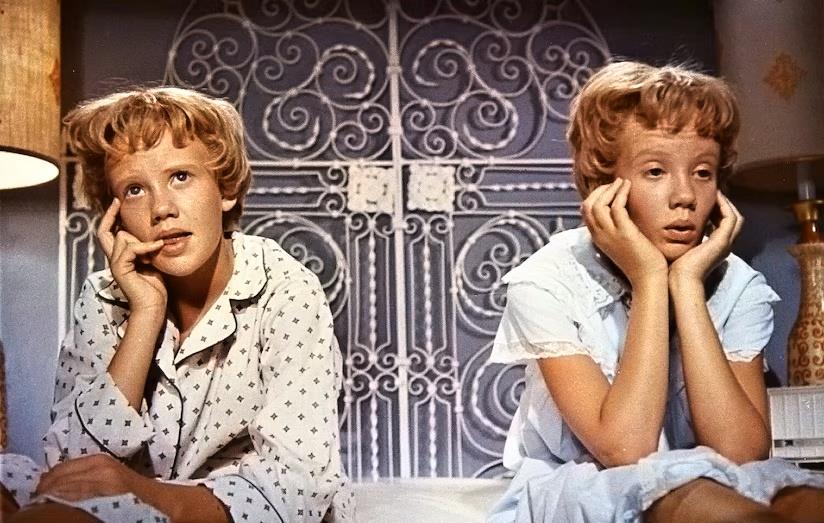
But then, at the more sophisticated age of ten, I not only had access to a camera; I had been elected
family photographer. So as the credits rolled for The Parent Trap and the lights came back on,
a spark had been ignited. The allure of in-camera special effects had taken root, and I found myself
daydreaming about the endless possibilities that could be unlocked through the lens of a camera.
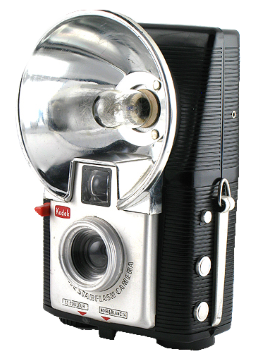
We had a Kodak Starflash, introduced in 1957. This compact and user-friendly camera became a popular choice
for amateur photographers, offering simplicity without compromising on features. The Kodak Starflash
boasted a fixed-focus lens, allowing for easy point-and-shoot functionality, making it ideal for
capturing everyday moments. However, what truly set the Starflash apart was its ingenious protection
mechanism against double exposures. In an era where accidental double exposures could easily mar a
roll of film, Kodak implemented a foolproof system to prevent this common issue. The camera featured
an automatic film advance mechanism coupled with a frame counter, ensuring that each exposure advanced
the film precisely to the next frame. This thoughtful design not only simplified the photographic
process but also safeguarded against the frustration of unintentional double exposures, making the
Kodak Starflash a reliable companion for photography enthusiasts of its time.
However, in-camera special effects almost always require a double exposure. So, while the Starflash
was an excellent beginner's camera, I soon outgrew it as a creative tool, though of course I continued
to document family occasions and my second passion at the time, photos of the Florida jungle,
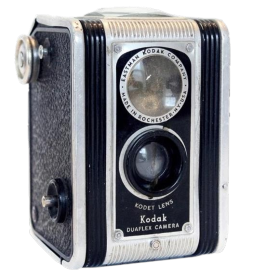
with the reliable little camera. But I looked with lust at my grandparents' Kodak Duaflex.
My grandfather, who had been an optometrist, was of course fascinated by lenses; and he had a
beautiful Kodak Duaflex that, I knew, did permit double exposures.
The Kodak Duaflex, introduced in 1947, represents a classic chapter in the history of medium-format photography.
This twin-lens reflex camera was designed to provide amateur photographers with an affordable and
user-friendly option for capturing memories in a square format. The Duaflex's distinctive feature was
its fixed-focus lens system, simplifying the photographic process for users who were not necessarily
well-versed in the technicalities of focusing a lens. With its Bakelite body, the Duaflex was lightweight
and durable, making it an accessible choice for enthusiasts.
The camera featured a unique, large viewfinder on top, allowing photographers to compose shots with ease.
The Kodak Duaflex gained popularity not only for its functionality but also for its affordability,
which made medium-format photography accessible to a broader audience. Its iconic design and straightforward
operation contributed to its lasting legacy, making it a beloved vintage camera among collectors and
photography enthusiasts alike.
Plus, it had a tripod socket in the bottom, something the Starflash lacked. Practically any in-camera effect
requires the camera be rock-solid and unmoved between exposures; and that pretty much requires a tripod.
So, equipment set up, all I needed was a model. My mom was usually game for these things, and not a
bad actress; so I got her to stand with a TV Guide on one side of the TV, and took the first exposure.
But I also held a sheet of black construction paper in front of the camera, obscuring the half of the
scene Mom wasn't in. Then, without advancing the film but moving the construction paper to the
other half of the scene while Mom swapped sides, I took the second exposure. Here is the result:
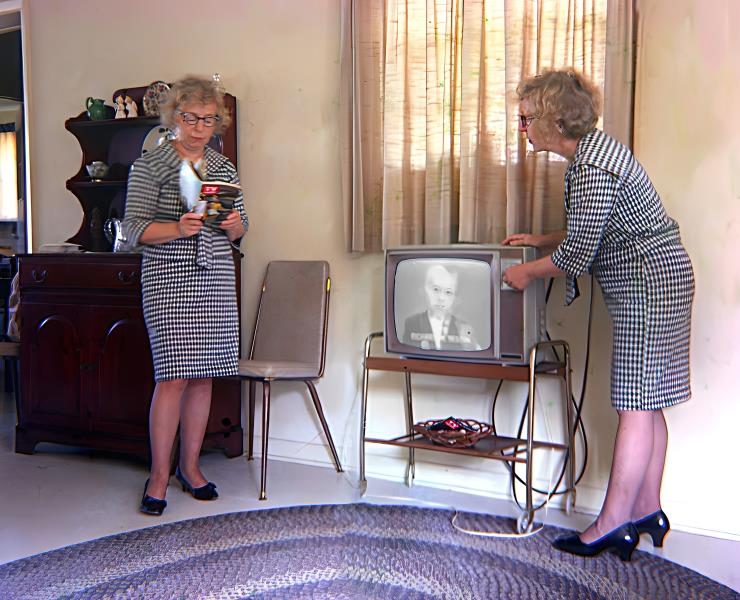
It's not flawless; the camera did move slightly between shots. But considering it was my first attempt to
do something Disney took months to perfect, and that I was by now about 15, I'd have to say
not too shabby.
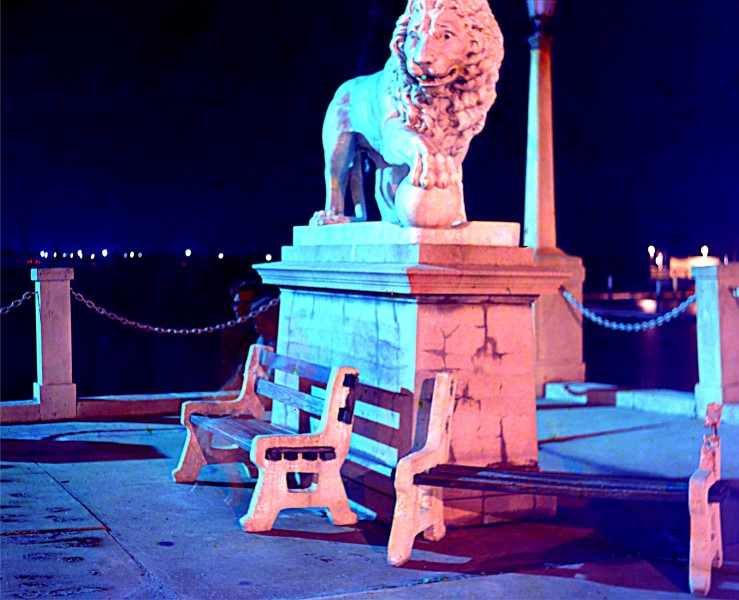
But by two years later, I had mastered the "ghost" effect, as well as time exposures for night shots.
In the below photo, taken of myself and my friend Rosemary Hankins, the difference in light colors
was not apparent when I took the photo; but it was a serendipitous accident that made the photo
much more interesting.
Finally, another type of in-camera effect: One in which the filming is straightforward, because the
film itself is special. Kodak's infra-red film was a type of film that could capture the invisible
near-infrared light that is reflected by plants, clouds, and other objects. The film was originally
developed for military and scientific purposes, such as camouflage detection and vegetation analysis.
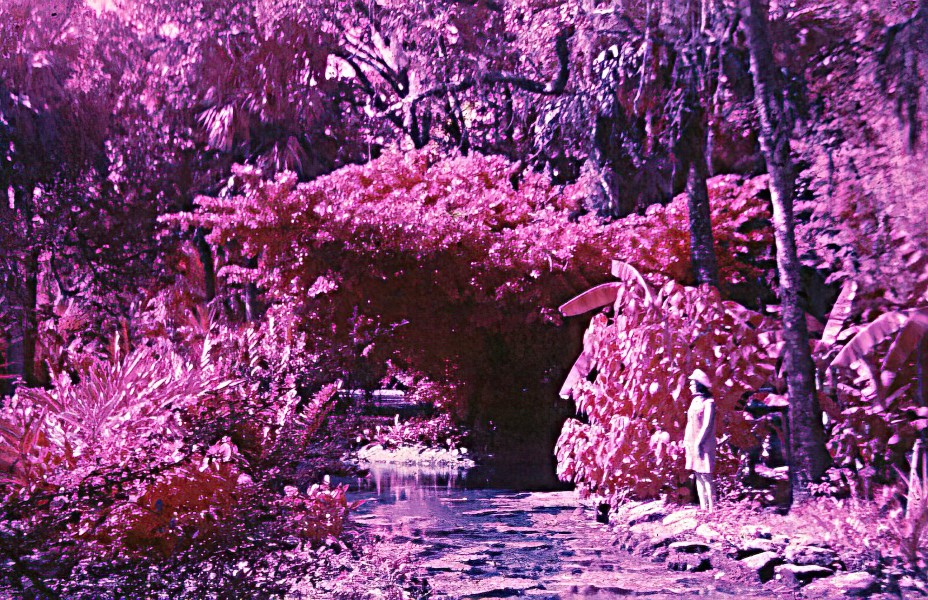
The film came in both black-and-white and color versions, with the latter producing false-color images
that had a distinctive and surreal look. The most popular color infra-red film was Kodak Aerochrome,
which was introduced in 1942 and discontinued in 2009. The film required special filters, handling,
and processing to achieve the desired results. However, without any special filters, most vegetation
came out red instead of green, and the sky pink, which of course I thought made it look like it was
shot on another planet. Below is a shot of my sister, Mary, at Washington Oaks
State Gardens.
For the high school yearbook, I took a couple of photos experimenting with simple (and in those days,
literal) cut (with scissors) and paste (with glue) effects. My classmates were impressed but
I was less so, and was much reinspired decades later when I could accomplish the same thing
so much more easily, digitally.