|
By: Paul S Cilwa |
Occurred: 2/14/1972 |
Milestone: #Marriage |
Page Views: 6,385 |
| Hashtags: #Wedding #MaryAnnSteinbergCilwa #Autobiography |
| That time Mary Ann Steinberg and I got married! |
| Estimated reading time: 9 minute(s) (1965 words) |
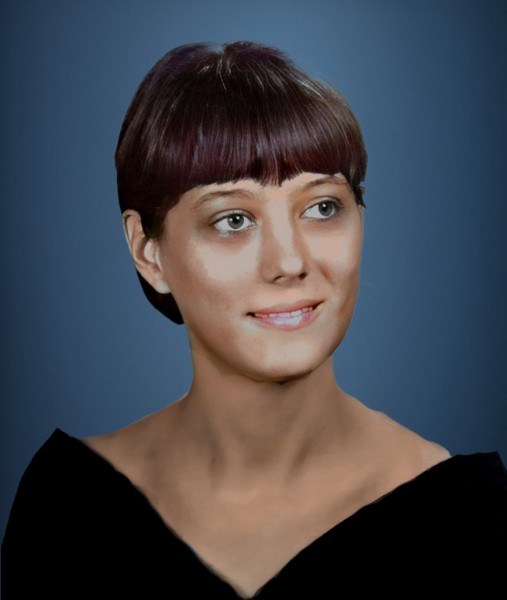
For example, there was a bit of an issue regarding Mary's wedding gown. Mary's mother gave
her $85 for it, which of course wasn't enough to buy a wedding gown, even in
1972. However, her mother also "happened to know" a woman who would
sew a wedding gown for…$85. Mary would have to supply the pattern and
fabric; and she had no experience in doing such a thing. In fact, she didn't
even know where patterns or fabric could be purchased. (Remember, this was in
the days before Wal-Mart!)
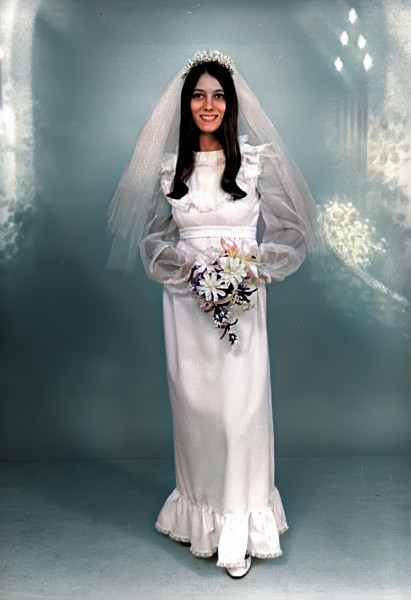
Luckily, my Aunt Edna had taught me those things. Plus, closeted or not, I doubt
there's a gay man in the world who wouldn't jump at the chance to orchestrate a
wedding!—It's the one thing all of us, top or bottom, twink or bear, urban or
rural, seem to have in common. So I loved taking Mary to the fabric store
and helping her go through the huge Simplicity Pattern catalogs, going over the
various wedding gown designs and options. Mary selected a pattern, a graceful
and simple classic empire with a frill around the bottom. The material was
white, of course. And, a bonus: the pattern could also be used to create a
matching "getaway" dress; Mary selected a jazzy red, orange and black material
for that.
Both of us still being active in the Catholic Church, there was never any
question regarding the location for our wedding: The Cathedral of St. Augustine.
We chose to have a full Mass said; and not just any Mass. Ours would be a
High Mass, which means there would be a full choir singing certain parts of
the ceremony: namely, the Kyrie, the Gloria, the Credo, the
Sanctus and the Agnus Dei. The choir was to be the entire chorus
from my junior college; they were to sing Haydn's Mass in G Major, also known as
the Missa Sancti Nicolai. Soprano Carol Alvers would have the featured
solo for the Agnus Dei. Father Mooney, later rector of the Cathedral itself,
would officiate.
The location of the reception was another contribution by Mary's mother: The
home of the local branch of the Catholic Daughters. Mary's mother also handled
the guest list. All my relatives lived either in New Jersey or Florida's Gulf
Coast, which I considered too far away to come for a wedding. So I didn't expect
many of them to attend (and, in fact, none did). But I made sure my pals from
SJRJC (St. Johns River Junior College) were invited and of course the rest of
the choir would be there, as well.
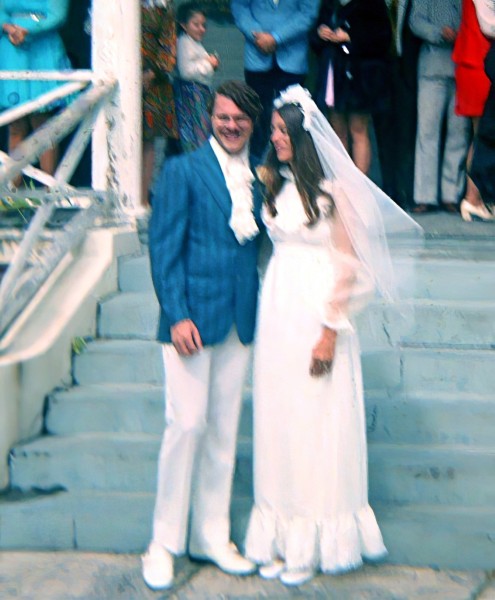
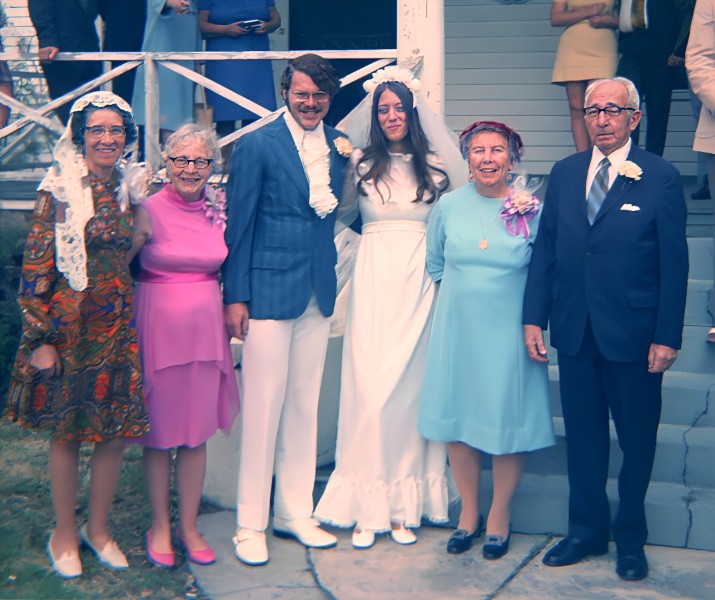
Then there was the matter of my attire. Tuxedo? I don't think
so! I wore white slacks, with white shoes and socks, and an iridescent (it
was the '70s) blue jacket. Since it was the '70s, I found I couldn't
buy a simple white shirt—I went to five different stores in the attempt. All the
white shirts then sold were made of a white-on-white embossed fabric which
didn't match what I had in mind. So I made my own shirt (or, rather,
shirt front) the night before the wedding. It consisted of a front and collar,
which was all I needed because I wouldn't be removing my jacket. The final touch
was a jabot, a
cascade of lace ruffles popular in colonial days, which I also made myself due
to the dearth of jabot stores at the time.
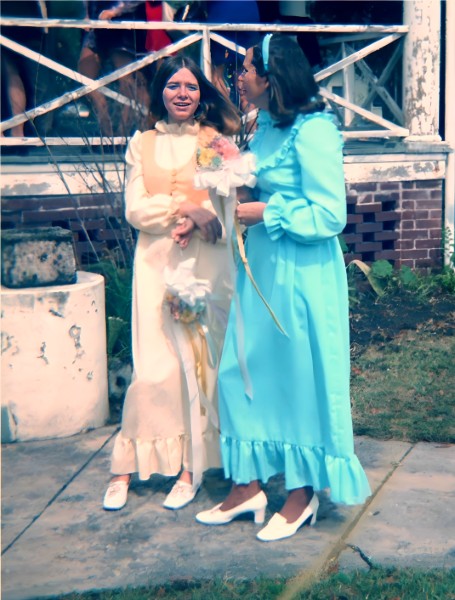
Neither Mary nor I could choose just one best friend to have as an attendant of
honor. So, in addition to her matron of honor (Rosemary Hankins), she had an
additional three bridesmaids, each in a dress made from the same pattern and
type of material as Mary's but in a different pastel color the girl could choose
for herself (as long as there were no duplicates). They had to get them from
Mary's mother's seamstress friend, so she made out like a bandit. I hope
Mary's mother got some kickback from the deal.
The bridesmaids had to pay for their own dresses, but were all assured they
would be able to wear them again.
My best man was my closest high school friend,
Chris Palmes.
Junior college pals Mike Tucker and John Griffith gave me a matching phalanx.
(It's important at a wedding that neither party appear to have more close
friends than the other.) So as not to distract from the beauty of the
bridesmaids (or the groom), though, the groomsmen were told to wear their
regular Sunday-go-to-meetin' clothes. Mike was given the extra
duty of carrying around my camera and taking the wedding pictures.
The day dawned. Sewing my own shirt had taken longer than I expected so I
hadn't gotten enough sleep, but I took a long shower and that helped. I arrived
at the church on time; so did the choir and they ran through a quick pre-service
warm-up.
Then the guests began to arrive. As is traditional, Mary's friends and family
sat on "her" side of the church, while mine sat on the other. Since we'd gone to
high school together, we had numerous mutual friends who resented being
compelled to "take sides". But a more serious imbalance soon became evident. It
hadn't occurred to my Mom to invite her co-workers to the wedding; after all,
most of them had never even met me. But Agnes, Mary's mother, had no such
compunctions. She had invited all the ladies in the Catholic Daughters, and
their husbands; and they all sat on the bride's side of the church. I easily had
more people there than Mary; but almost all of mine were hidden in the
choir loft. Agnes had won the first round.
The church organist, M. K. Murphy, began to play the
Lohengrin and Mary began her walk down the aisle, beautiful and radiant.
She received more than the usual amount of gasps of awe from the
congregation—and if she had more photos taken of her than had been taken of me,
I didn't mind.
The Mass started with the choir singing the Kyrie (the lyrics in
English read "Lord, have mercy!" which struck me as being somewhat ominous for a
wedding; but they are part of the Mass).
This was before the days of made-up vows; so Father Mooney simply recited
the usual ones and we repeated after him. There were no mishaps with the rings and no
mispronounced words. In fact, the only close call we had during the ceremony was
when Monsignor invoked the names of the Apostle, Paul and the Virgin Mary. Mary
and I began to giggle and couldn't stop, as it had been at least a month since
virginity had been a feature of our relationship.
Father Mooney knew this was to be a High Mass but he hadn't asked which
Mass the choir would be singing. And it hadn't occurred to me that Haydn's
Mass in G Major might not be the best choice. It takes about 40 minutes to sing
straight through, which, when added to the running time of a Mass (about 30
minutes) and the excess material in the wedding vows and appropriate homily
(another 20) meant this service would run a lot longer than the usual wedding.
So he began to get antsy. During the Agnus Dei, when Carol was singing
her rather long (but beautiful) solo, Father Mooney finally stood up and interrupted
her with the Mass's concluding words. He said, "The Mass is ended; go in peace."
The response is supposed to be made by the congregation. But when it was made,
"Thanks be to God!" his voice was louder than anyone's.
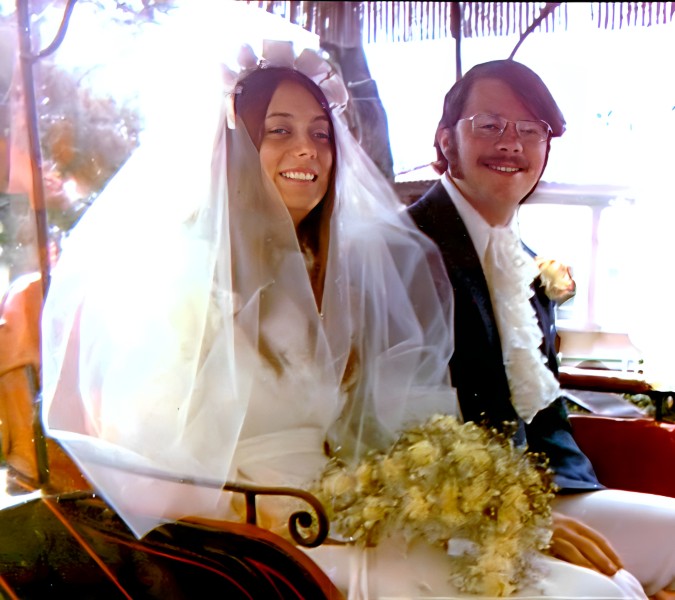
We rode the block from the Cathedral to the Catholic Daughters' building a
block away in a horse-drawn buggy—the first time for either of us, although the
buggies were ubiquitous in tourist haven St. Augustine. Meanwhile, my car—our
car—was parked behind our destination, where our friends were busily writing
rude remarks on it with white shoe polish and attaching balloons and cans.
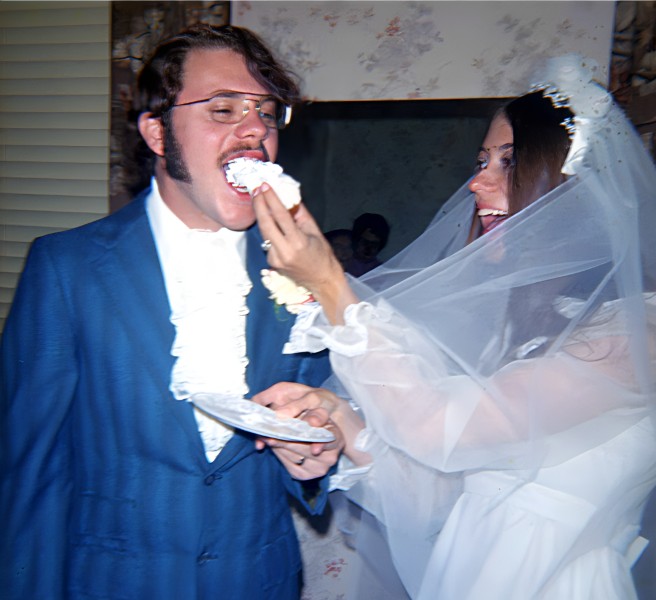
I suppose the reception could be called a success, because no one
died during it. But it was a close call. Agnes was already in her
70s (Mary had been adopted) and so were all her Catholic Daughter
friends. Her father was even older and so were his friends.
My friends in the choir were simply
outnumbered. Music came from a record player and the Daughters' Guy
Lombardo record collection. There was food in the form of casseroles
prepared by the ladies, especially a pungent chicken casserole that
someone forced me to sample, and of course the wedding cake.
Fortunately, neither Mary nor I were expected to remain at the reception
until it got rowdy. She changed into her "getaway" dress; and amid a rain of
rice we ducked into the decorated car and set out on our three-day honeymoon.

We had no fixed destination in mind; we had thought it might be fun
to visit Tennessee, a state I had never visited. North of
Jacksonville we stopped at a Waffle House for our first meal as a married couple.
You can't begin to imagine my surprise when the waitress, having seen our car through
the restaurant's conveniently large windows, informed us our meal
would be free. "Why?" I asked.
"That's your car, right?" she asked.
"Yes," I agreed, following her finger.
"Well, we give free meals to newlyweds," and with a shrug that said, didn't
you know that?, took our orders.
We ate at a different Waffle House for almost every meal of our honeymoon,
and for months afterwards until the shoe polish finally wore off our car.
We both began to get sick that evening. At first I did suspect Waffle
House. But I called home to let my Mom know where we were (as Mary called her
parents) and we learned that pretty much everyone who'd eaten the chicken
casserole had started throwing up.
I didn't have a lot of experience nursing people. Mary had been a
nurses aide, but they are discouraged from actually diagnosing and treating
illnesses. I got some Alka-Seltzer which helped me; Mary couldn't get it down
but she did find that cans of carbonated Gatorade (which is no longer available,
but it was good stuff) made her feel a little better.
We really didn't feel like participating in the traditional wedding night
activities, but did rather than have to admit in future years that we didn't.
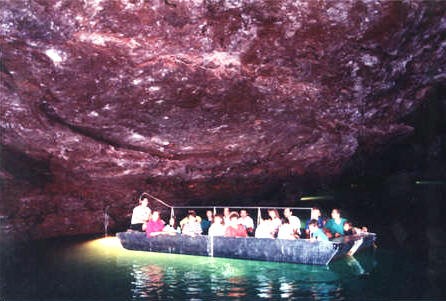
We made it to Chattanooga, Tennessee, where we rode the Incline Railway and visited
the Lost Sea (a lake in a cave). Despite being sick and its being February and
so cold and rainy we had a good time and I got lots of pictures.
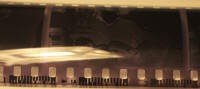
When we finally returned to Florida and our brand new (for us) apartment in
Palatka, I took the final picture of the roll of film, of Mary looking radiant
and happy to be home. Then I tried to rewind the film, to remove it and get it
processed. To my horror I discovered the film was damaged; thanks to a broken sprocket, all
the photos—of the wedding and the honeymoon—had been overlaid on the same negative.
It took me years to gather together a set of the pictures taken by our friends so
I would have at least some record of our wedding day.
On the other hand, twenty years later when we separated there was no thick,
expensive book of professional photos to either divide between us or throw out.