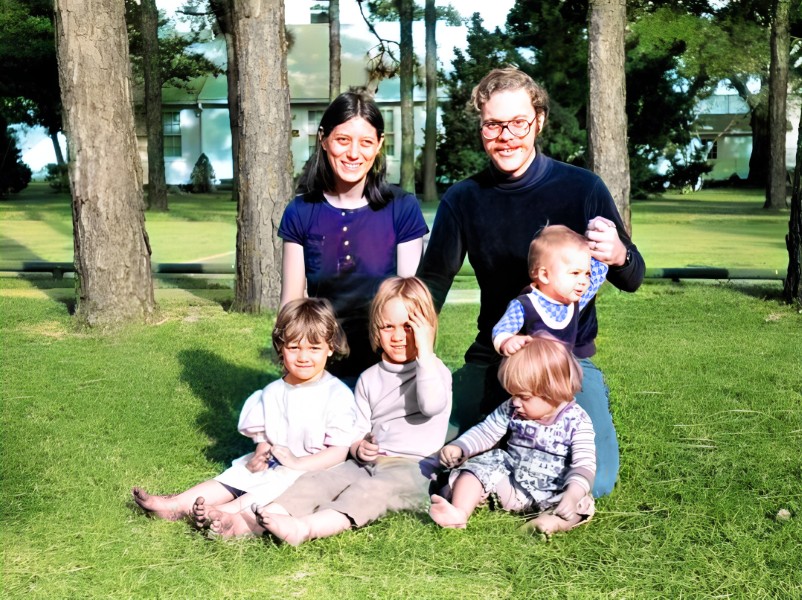
|
By: Paul S Cilwa |
Occurred: 3/5/1977
Posted: 3/2/2025 |
|
Page Views: 133 |
| Hashtags: #Autobiography #PanamaCity #DivisionofForestry |
| This was the year personal computers appeared, and my life's work. |
| Estimated reading time: 8 minute(s) (1899 words) |
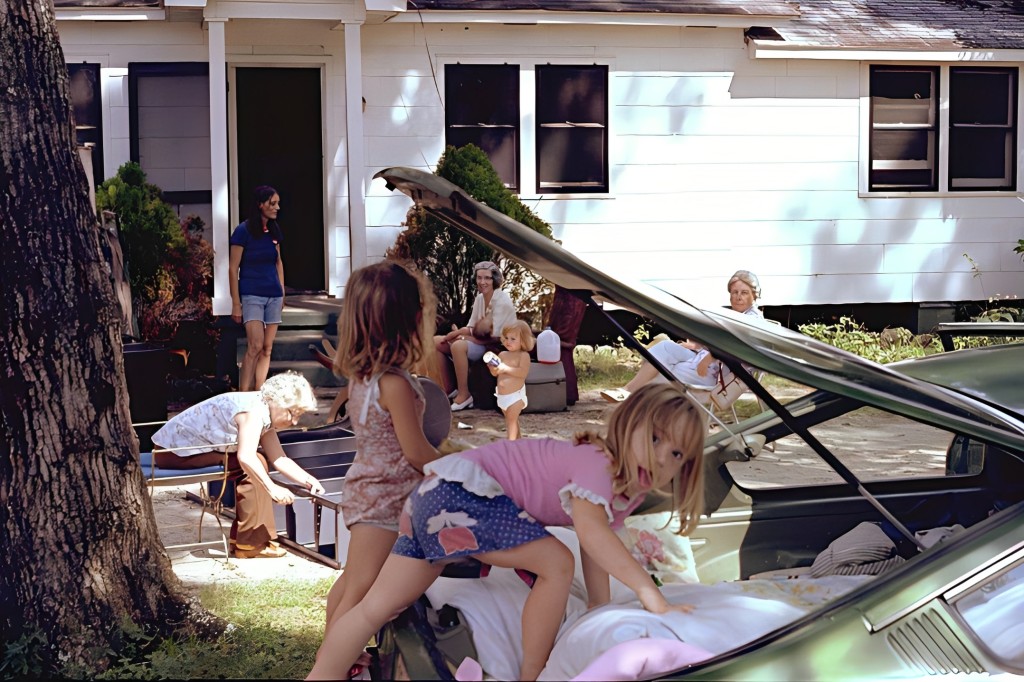
Mom and Gramma, and Gramma Steinberg, came by to help, or maybe just to watch—they're
sitting in the pictures!
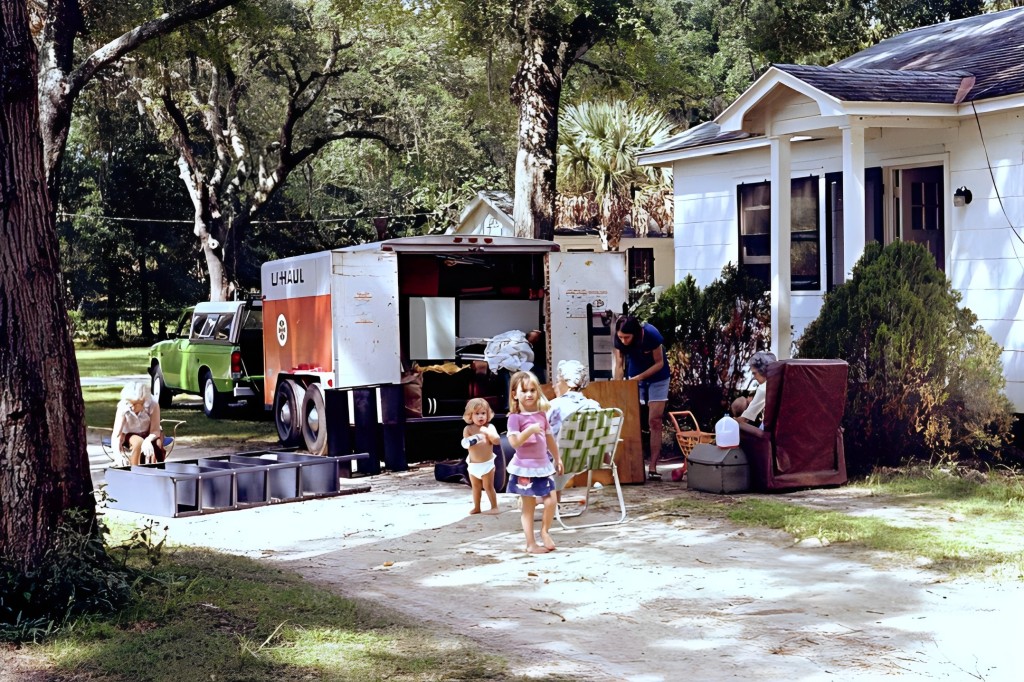
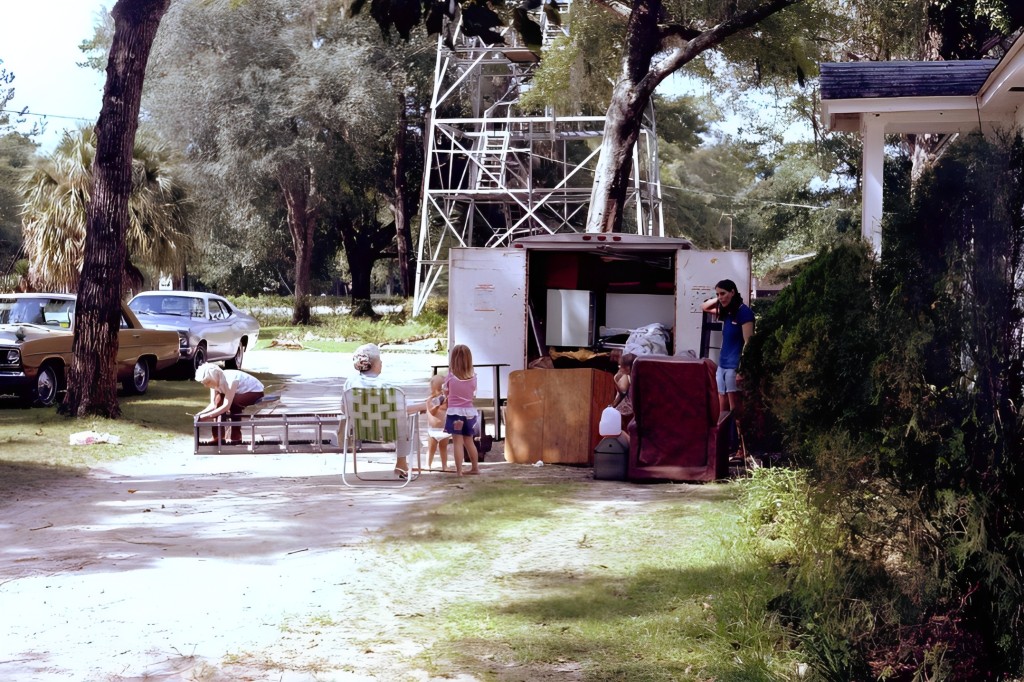
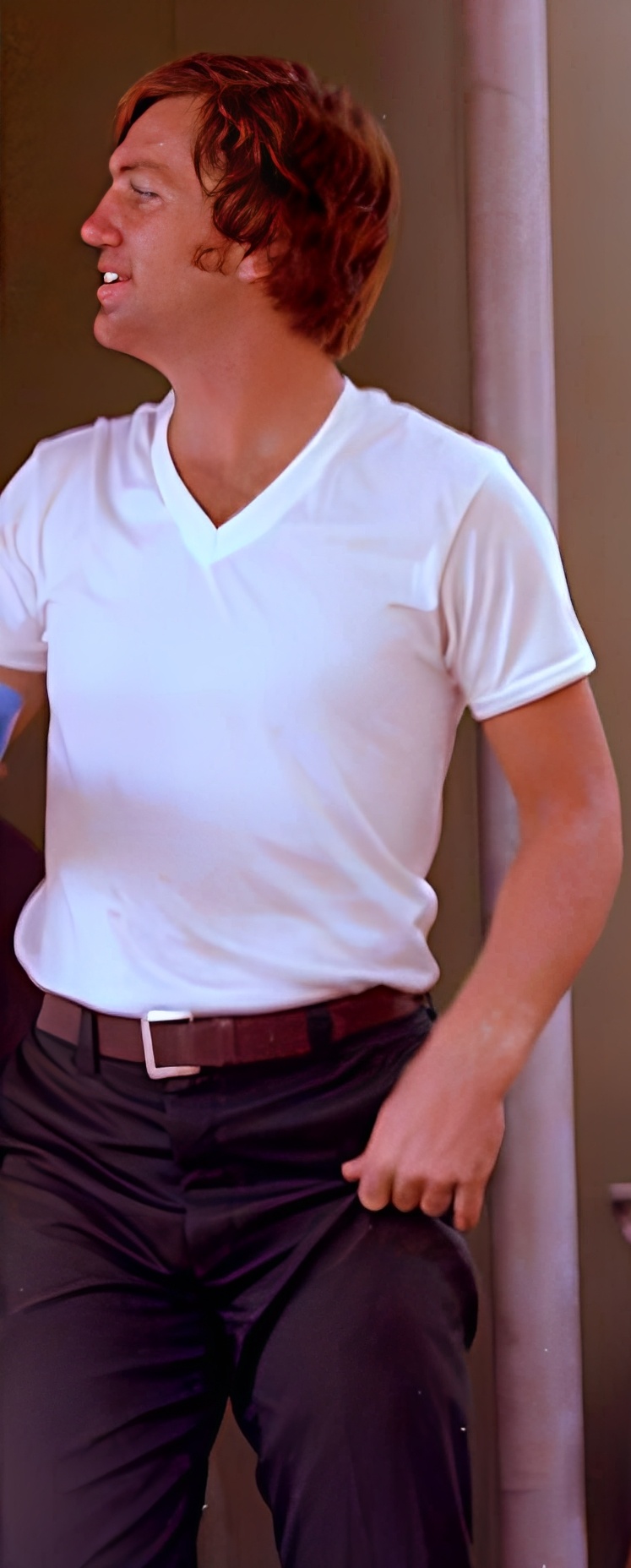
My ranger pal John Burnett had offered to help, especially with driving the U-Haul we
needed for all our stuff. I couldn't drive because I had to ride the motorcycle there.
(There was no room for it in the U-Haul. There was no room for another toothpick in the U-Haul.)
Mary was to take the kids in our car but didn't want to risk driving the trailer, in any case.
So I was grateful for John's help.
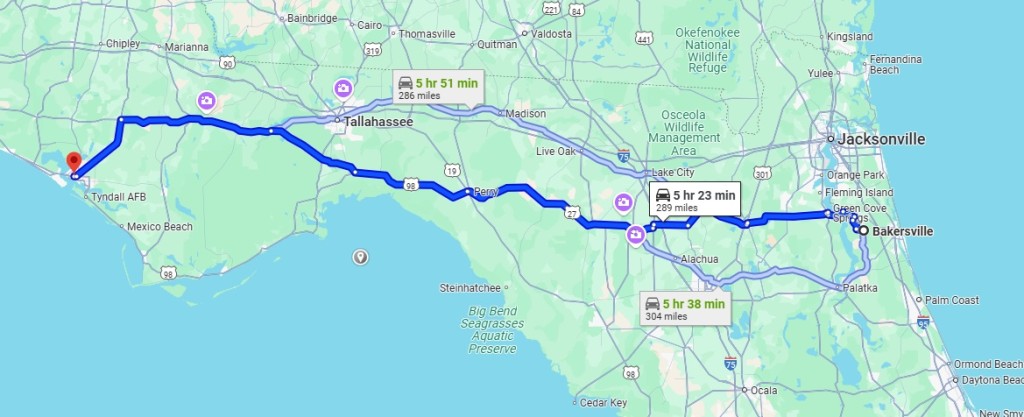
Interstate 10 wasn't yet completed in 1977 so we had to take state roads to get there. We left
early in the morning. John and I had decided we wouldn't try to drive together so I took off,
figuring I could make better time on the bike than they could driving and pulling the U-Haul.
But the weather was cool, then cold; and it rained and I wasn't wearing any kind of protective
gear. I started shivering so badly I could barely keep the bike aimed down the road. Suddenly,
ahead of me, was a Division of Forestry office! I staggered in, introduced myself, and begged to
be allowed to drape myself over their kerosene heater, which thankfully they allowed.
When we arrived at the Panama City house, it was late but we quickly set things up for indoor camping.
The new house was really the same floor plan as the one we'd left in Bakersville; so we just put
everything in the new house where it had been in the old house.
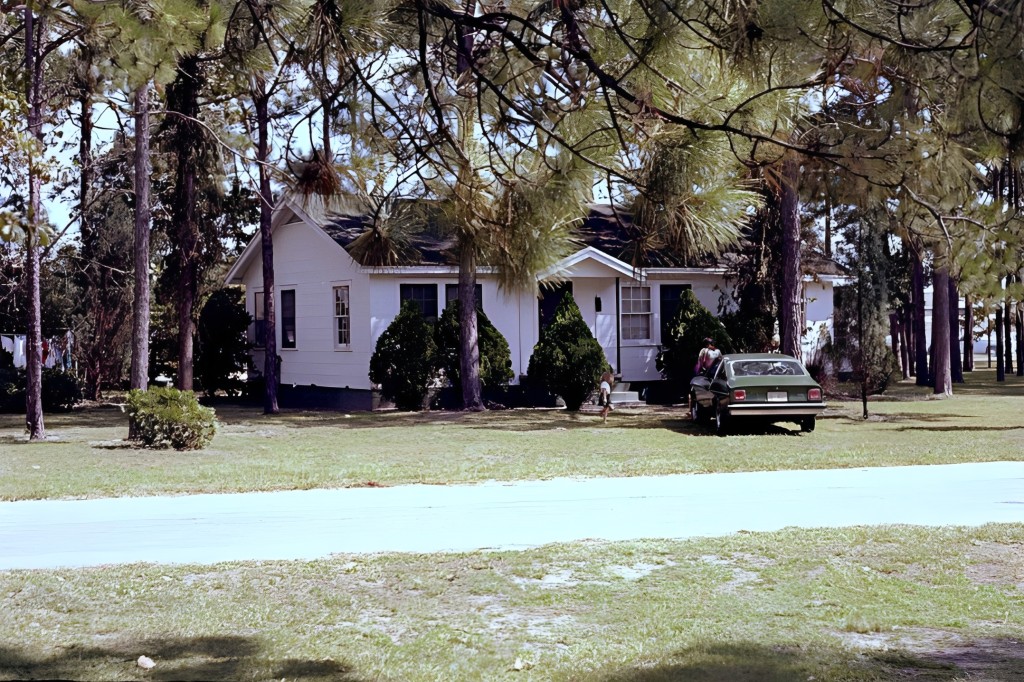
Although the grounds did not include a fire tower, they were spacious, with tall pines and a large
repair shed for tractor maintenance. There were three houses: ours, and one for each of the other
two dispatchers, Felix and Ralph.
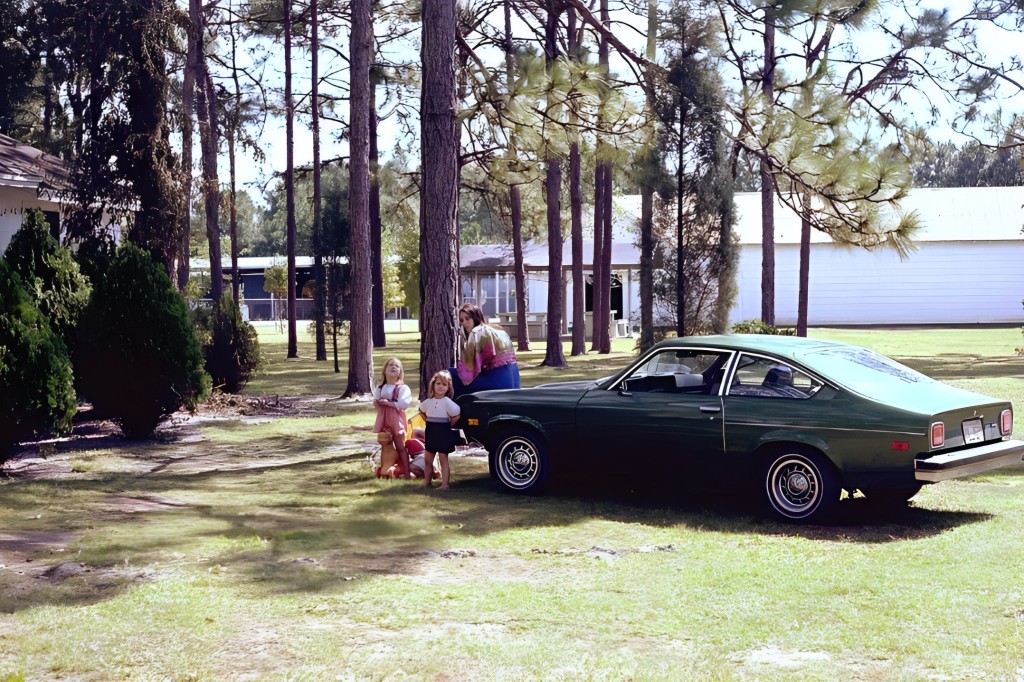
Felix and his wife had two kids of their own, about the age of ours.
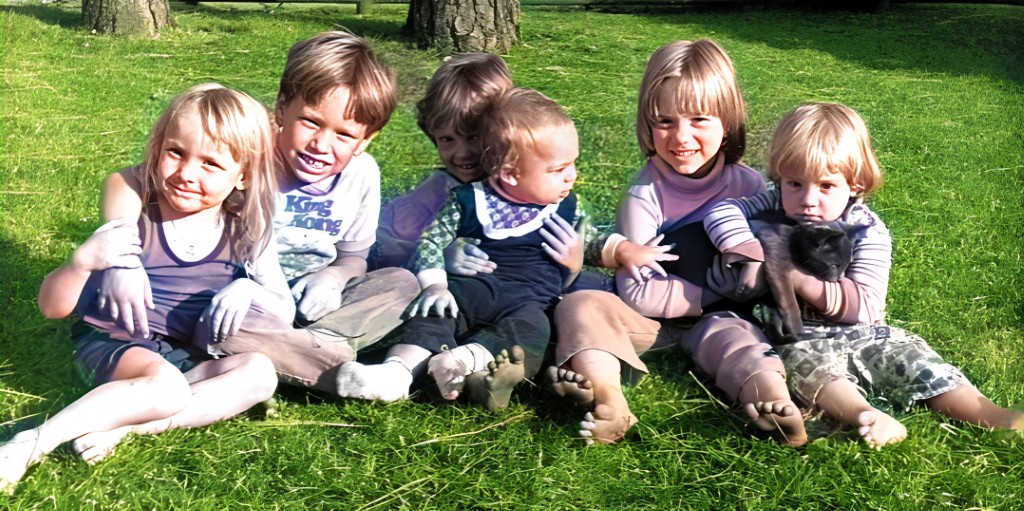
Felix came with a backstory. He was a nice, mild-mannered guy who had come to us after
a nervous breakdown. He had been a computer programmer, in the days when that meant spending 8 hours a day
plugging thousands of little wires into thousands of little holes. He cracked, and when he'd
recovered, he went into the one industry he was sure would never, ever, be touched by another
computer.
As it turns out, he'd picked the wrong one.
Ralph's backstory was that he was a retired Army secretary who never really retired.
That is, he still ran things as if we were an office in some Army base somewhere.
Including an ever-present, foul-smelling cigar perched at the side of his mouth.
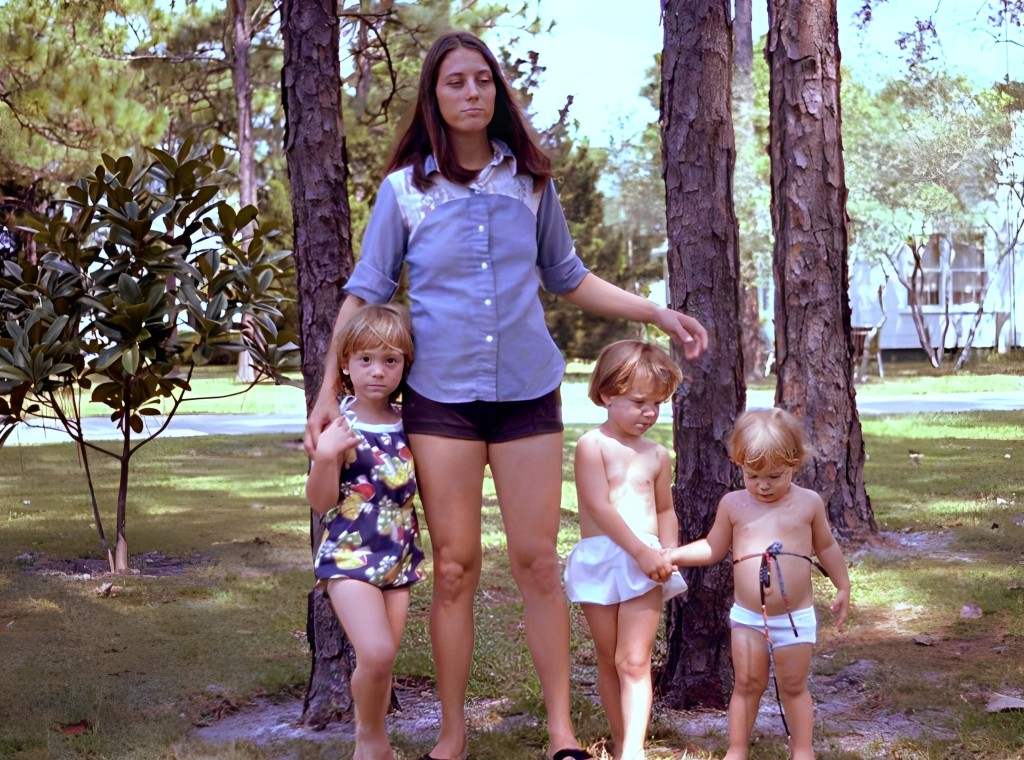
I had a few months of experiencing the "old" ways before the computers came after us.
Meanwhile, Mary and the kids thrived in their new home which looked so much like the old one.
(I'm not convinced the kids ever figured out what had happened.) Little Johnny still spent most
of his time in his crib. One day Jenny, herself not yet two years old, went missing. We couldn't find
her anywhere; and the only clue was that Johnny's bottle was also missing. We looked everywhere in
the house, then around the house, then out to the street. Nothing.
Felix suggested we re-search the house. And there she was: hiding behind the curtain at the
window of Johnny's room. With his bottle.
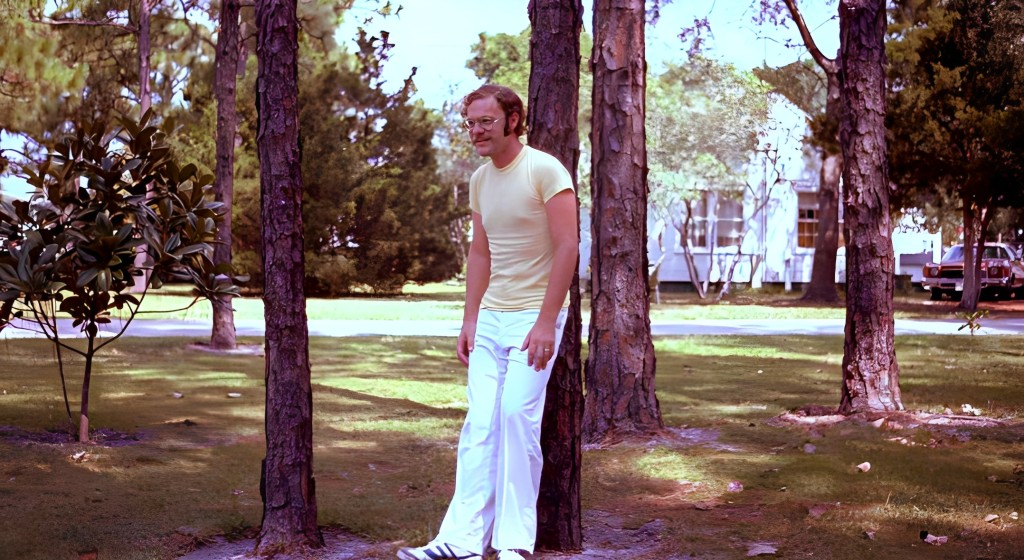
And then the invasion of the computer monster began.
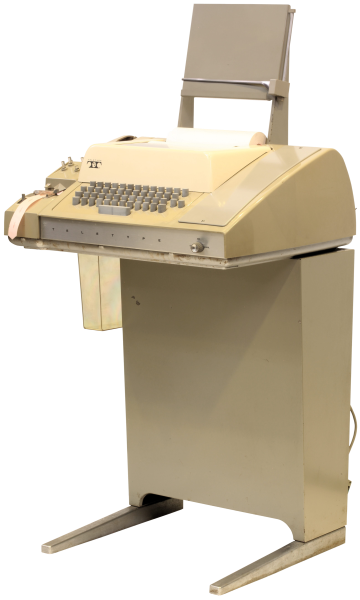
It came in the form of an electric typewriter sort of thing called a "teletype"
that could only type on rolls
of paper (as opposed to sheets). It had only upper-case letters. It also supported a medium called
"paper tape" for both recording keystrokes and playing them back. And it came with a 3-inch thick
instruction manual.
Now, as it happens, I've also loved manuals. I can't explain why, just that I do. So I
read, and committed to memory, every one of its 300+ pages.
Here's the purpose: In 1977, weather forecasting was a sketchy prospect at best. Meteorologists
believed that, with more data, prediction might become more accurate. And so they had us
dispatchers encode the various weather measurements at our offices (such as temperature,
rainfall, wind speed and direction) and send them, via the teletype, to a computer at
Oregon State University, pioneers in meteorology and computer science. In return, we would be
given the odds of fires started by lightning, or by cigarettes thrown out of cars, even
by arson. We could, in theory, then use those numbers to figure how many rangers we would need
on duty that day.
It was too early in the program to get much use out of it then; but this initiative led to
our current state of meteorological accuracy; so, looking back, I'd have to say it was a success.
I mentioned that the Panama City office handled the fires from its own Bay County, Florida,
as well as Walton County and Okaloosa County. That included encoding the weather. This involved
looking up the weather parameters in the manual, and converting them to numeric values for
transmission.
Then: we'd dial up Oregon's computer; the modem would connect; the teletype would come to life;
and, in response to command prompts, a line of numbers separated by commas (but no spaces!) had
to be entered for each of the counties reporting. If there was any error at all, the line had
to be completely retyped.
Felix was the first to announce he wouldn't touch the thing. After all, his previous experience
with computers had driven him to a nervous breakdown.
Then Ralph got into a fight with the teletype. It turns out, old typewriters from Ralph's era
did not have a key for "1" (the digit one). Instead, typists used a lower-case "l" to represent "1",
which worked fine for human readers. However, our teletype didn't have lower-case letters,
but it did have a "1" key.
Which Ralph refused to use. "I've typed "l" for "1" my whole life," he declared,
"and I'm not about to change now! Let the computer change!" So he would type the same
incorrect line, over and over, each time having it be rejected.
Until it was time to go home!—and still the weather had not been transmitted. The District
Forester had to come to my door, apologize for asking me to work when I wasn't supposed to be
on duty, and beg me to send the weather to Oregon.
So I wound up being the only dispatcher to transmit the weather, even on my days off.
Which meant I couldn't actually go anywhere overnight.
There were several preliminary "commands" we sent the weather computer to identify us.
These commands were always the same. So I learned to "record" them on paper tape, then
play them back each day, saving seconds. This mattered, because in those days we were charged
by connect time, measured in seconds. Given that, it also made sense for me to
"pre-record" the weather, since the paper tape reader could type much faster that I could.
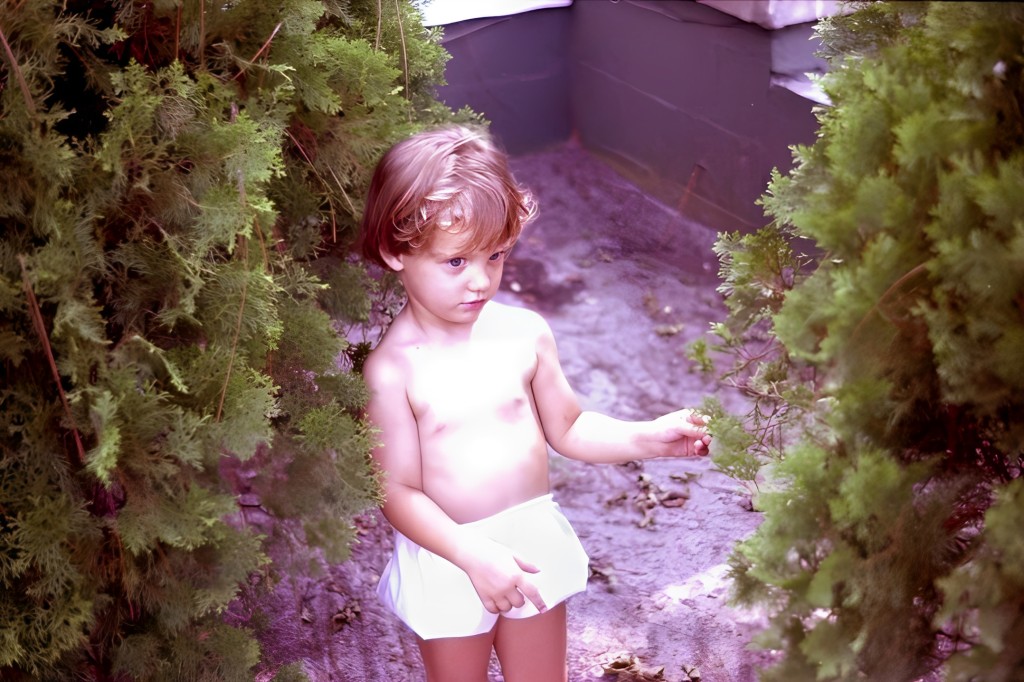
It was about this time we became aware of Karen's invisible friend. She would wander around the property
talking to him. His name was Charlie, and I just wrote him off as her imagination. Yet, at
three years old, I'm pretty sure she'd never met or heard the name "Charlie". And, in retrospect,
it seems odd that both Mary and I allowed a three-year-old to walk to the edge of the property
and then just hang out, talking to someone we couldn't see. But, at the time, I saw no harm
in it; and, of course, I was unconscious of my own history of alien interactions.
One day a guy from Tallahassee showed up. It seems that my county, the only one doing the weather
for three counties, was actually doing it in one-third the time the other counties were
taking…and they were convinced I was "cheating" somehow. When I showed him the macros
I'd written, and how I used the paper tape mechanism to speed things up, he started taking notes.
In a few minutes I went from being in some amorphous kind of trouble, to being the golden-haired
boy of the county.
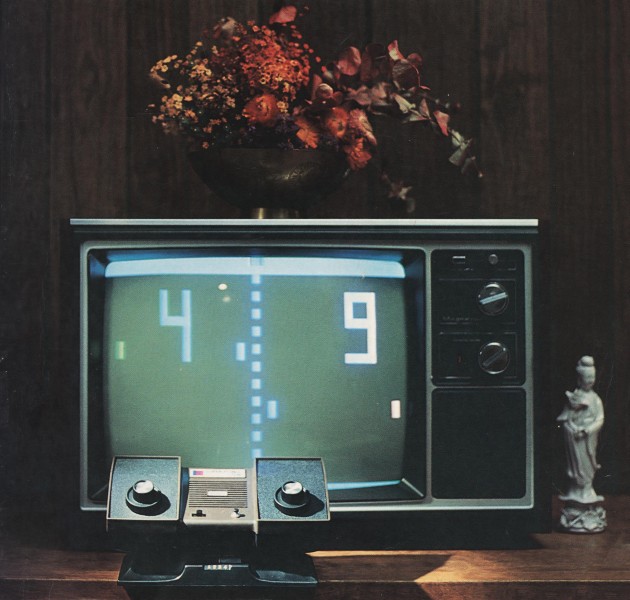
Pong, one of the earliest arcade video games, was a sensation when it debuted, capturing
the imagination of gamers with its simple yet addictive table tennis-style gameplay.
By 1977, home versions of Pong consoles were widely available, including models by Atari,
which brought the arcade experience into living rooms.
In 1977, I bought a Pong console through Columbia House (then, mostly, a record-of-the-month club).
It seemed like a good deal at
$10 a month for ten months. A couple of months later, though, the price dropped to $10
outright. I still had to finish paying off the full $100, which stung a little.
But Dottie loved the game! At just 4 years old, she was fascinated by it, though
she didn't quite understand how to play. Instead, she'd clutch the controller tightly
and bounce up and down in excitement as the game calmly played itself in demo mode.
Watching her pure joy turned that simple console into something far more memorable.
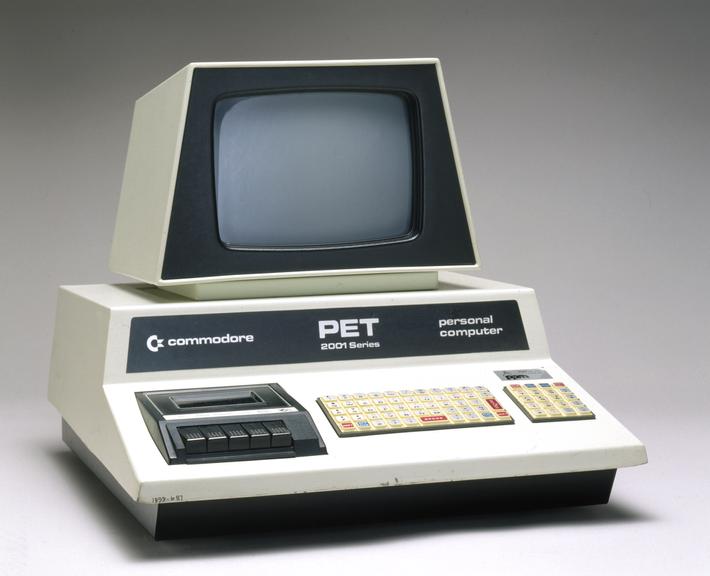
This was the year that saw the introduction of two personal computers, the Commodore PET and
Radio Shack's TRS-80. I wanted one terribly, as I could see its potential. "We could talk to it!
Like, 'Computer, turn on the lights!'" Of course, speech control was a long way off. But I saw
no reason to wait until the last moment, and bought a TRS-80 programming book, and practiced writing
small programs on paper, that I could never run.
But it was this experience that made me realize this: I didn't have to be good at math
to be a programmer! I'd always assumed I did, because that was the common wisdom in
those days. But my experience now suggested that common wisdom was wrong.
It's a common misconception that being good at math is a prerequisite for programming.
While math can be helpful in certain areas, like game development or data science,
programming is fundamentally about problem-solving, critical thinking, and understanding
logic. It's more about breaking down tasks into clear, sequential steps and designing
efficient ways to achieve goals—skills rooted in logic, not necessarily advanced
mathematics.
And so, after a year at the Panama City Division of Forestry office, and much careful planning
on how far I could go with my VA benefits—I quit to attend college full time.