|
By: Paul S Cilwa |
Occurred: 12/15/1978
Posted: 12/11/2019 |
|
Page Views: 1,387 |
| Hashtags: #CooperativeEducationProgram #EnvironmentalProtectionAgency #UniversityofWestFlorida |
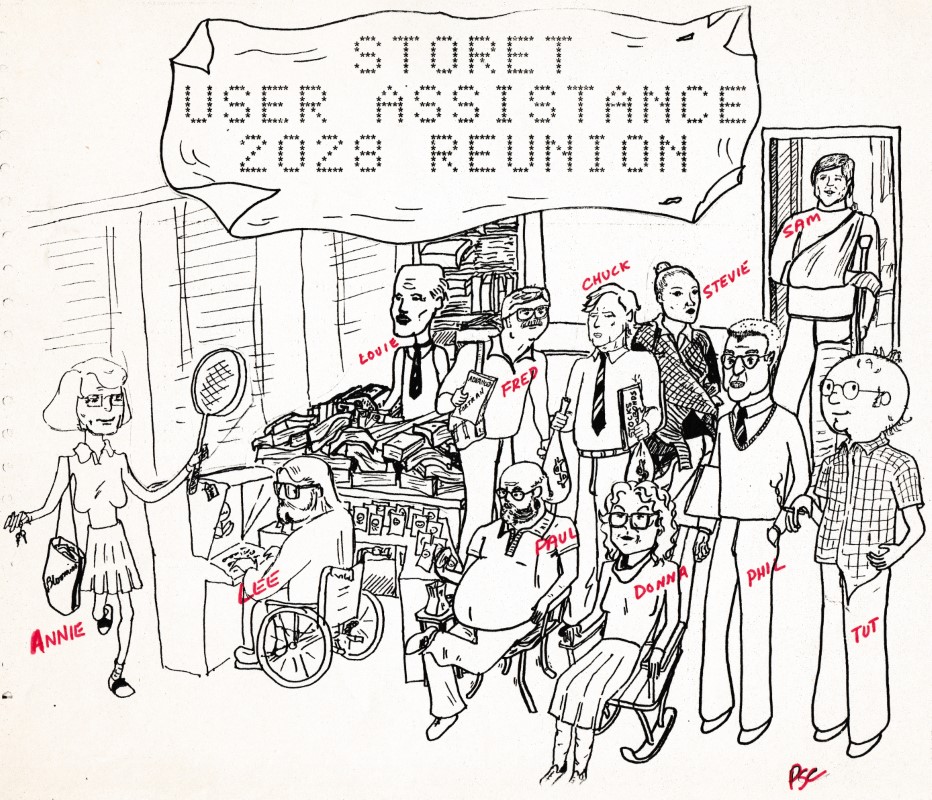
| This was my term paper for my first two co-operative education terms (spent with the EPA). |
| Estimated reading time: 7 minute(s) (1518 words) |
I had never heard about the Cooperative Education Program
until it was specifically brought to my attention by Dr.
Miller, head of the Systems Science department of UWF, after he
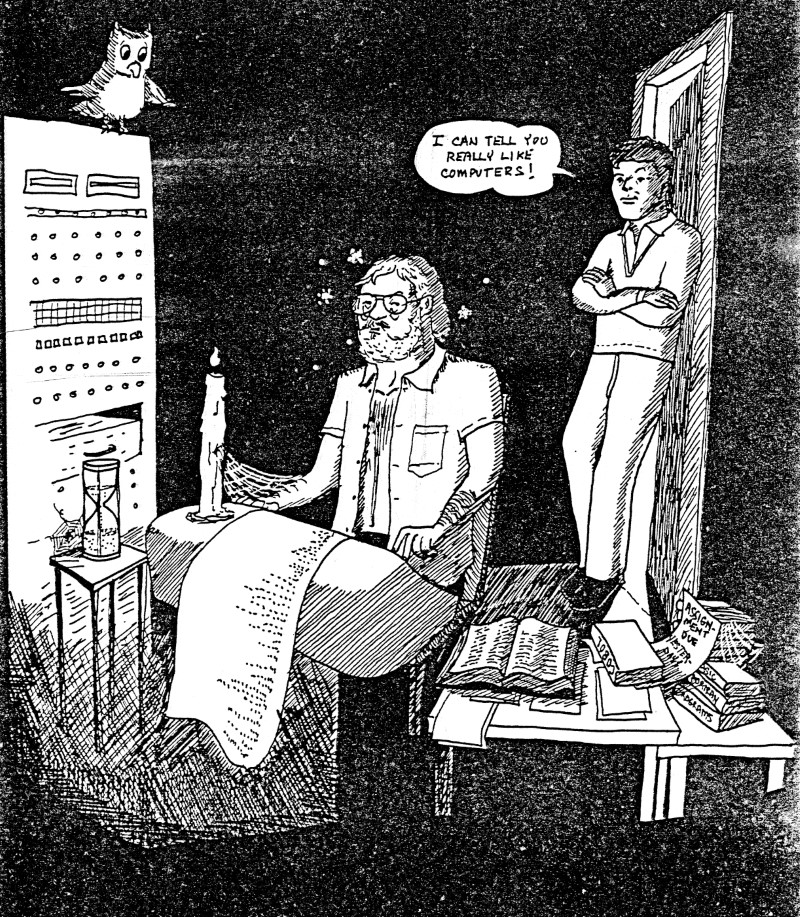
found me playing with the PDP-8 at school at 1:30 AM. Apparently
he felt that indicated sufficient motivation on my
part to allow me to pass as the complementary co-op to Tommy
DeWald, whom I had never met but who was described to me as "a
straight-A student who will be very hard to replace." It seems
that Tommy had originated the Co-op position he was in and that
I was going to have to maintain his aura of excellence during
the six months I would be taking his place in the STORET
section of the Office of Water and Waste Management of the
Environmental Protection Agency. After all, the Eyes of Federal
Government would be upon me as well as those of my school; and
I mustn't Let Anybody Down. Of course, it was added that I
should relax and enjoy my Co-op experience. (At that point,
telling me to relax was like telling someone not to perspire,
but I suppose it's the thought that counts...)
That was six months ago, although it certainly doesn't
seem that long. I am simply amazed at the quantity of knowledge
I possess now that I did not possess when I first came up here.
This knowledge not only includes material needed to function
as a systems analyst, but random intellectual tidbits concerning
government, politics, medicine, current events, history,
mathematics, the CIA, living in a Big City and just exactly why
a person should not walk home on a dark street twenty minutes
past midnight.
Of course, the main thing I was here for was to work for
and learn from the working on computers, or, more specifically,
the computer used by STORET here at the EPA. Background information
came quickly: STORET is a fifteen-year-old data management system
developed by Clarence ("Tut") Tutwiler, who also
happens to be my supervisor. Tut was a chemical engineer who
found himself creating STORET with little knowledge of how
other people would handle the same job; thus he put into STORET
an originality and flair that is fast disappearing from the
ranks of systems scientists as the schools and less tolerant
universities stamp out more and more programmed programmers. To
give but one small example before I move on: STORET stations
contain thousands of characters of information apiece; yet that
much is rarely requested. There are many ways of plucking out
from such a universe the bits of data you want; but Tut's
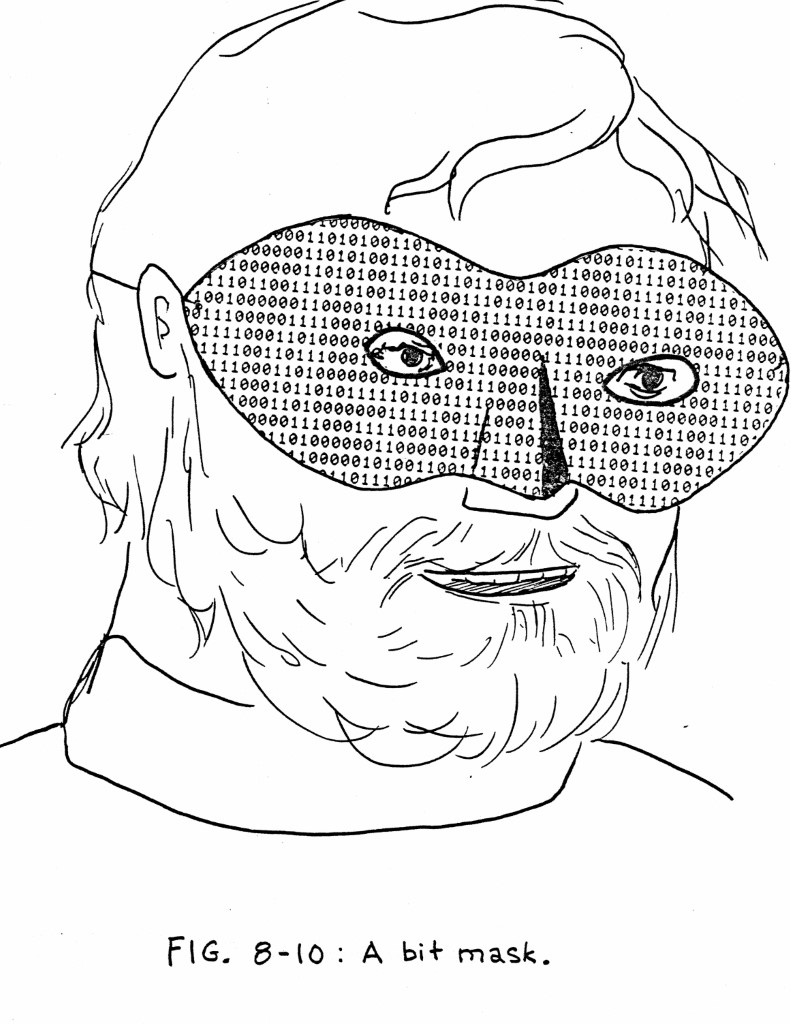
method is, as far as we know, unique: each record includes a
"mask" composed of a bit string of ones and zeroes. Your
request for information includes its own mask; by putting the
two together, only the station records you want are printed out
for you, and the expense of choosing one record over another is
practically nonexistent, especially by comparison to the more
complex logical operations of other data management systems.
Tut is always looking for ways to improve the system, too;
conscious of the fact that the organizations using STORET are
government agencies and as such need to economize as much as
possible, he introduces new features to STORET to make it less
expensive to run; yet these features are generally implemented
in such a manner that the users, who are, in general, not
computer people, will not notice the changes at all except,
possibly, as reduced costs.
As the years have passed, the information entering the
STORET system has become somewhat physically jumbled, although
of course it retains its logical sequence. As long as records
are requested one at a time, this poses no problem; for each
record contains a pointer indicating where, physically, the
next logical record can be found. However, it occurred to Tut
that, since computer costs include a certain charge per
"interrupt" (loading in of data blocks from a storage device),
it would save money if the programs that obtain data could
replace their one-at-a-time reading methods with one that would
take in enormous blocks of data in a single interrupt and hold
them, on the theory that, even if you don't request the next
logical record next, you will probably want it eventually; and
when you do, why, there it will be! This requires, however,
that the data be physically as well as logically sequential…
and that's where I came in.
My assignment was to write a subroutine to do this chain
reading (or, more specifically, to call upon an already extant
subroutine that does the reading) and to hold the data thus
retrieved, returning it to the main program upon demand.
Finishing that, I was to write the program that would read the
data in the standard method, right where it is, and write it
back onto some new disks in the new, physically sequential
order. In years to come, when the data begins again to get
tangled, my REORG—this time using my READER to get the data,
since most of it will still be in order—will be used again,
to neaten things up and help keep STORET usage economical.
Well, I did it. I came here after one course each of
FORTRAN and COBOL, knowing no PL/1 (the language used here), no
JCL (job control language, sort of), and having no concept
of what it was I was supposed to do. Yet, as I write this,
READER has been incorporated into the three programs that will
use it; REORG is writing onto the first new disk, and people
occasionally make use of command language procedures I wrote to
help make our jobs a little easier and/or more fun. I have
written JCL procedures, PL/1 functions, and assisted users
calling in for ALPHA command language help.
In the process, I discovered that I do, indeed, like
Systems Science—I was never sure, before. It's fun and
challenging; and if the people in this office are any
indication, my future co-workers will all be as zany as I am.
The question the Cooperative education office is always
asking (I suppose since on the answer hangs the justification
for its existence!) is: "Did you find a correlation between
your work experience and school?"
Well, of course the question is entirely self-serving,
since the purpose of school is to prepare us for our future
work experience! Nevertheless, I will answer the question: of
course there was a correlation. There will always be. In my
case, I didn't have nearly the knowledge I should have had when
I came here; my apparent "knack" for programming and constant
support from everyone here made up for that and I made it
through the terms learning things that will make the courses I
now have to take, a cinch to ace. On the other hand, a friend of
mine—one of many UWF co-ops I first met in Washington—claimed
that he could never have made it through his terms here
without the courses I hadn't taken. For him came the knowledge
that his scholastic courses were teaching him needed
skills for his future career; for me came the knowledge
necessary to pass those courses. A bit backwards, perhaps, but
I haven't learned all there is to know and I'm sure those
courses will still have plenty to offer.
But most meaningful of all, I think, is the fact that both
I and my employer came out ahead. At least, I know I did; I
gained thousands of dollars' worth of knowledge and experience
and was paid for it. And I feel my employer did; they got
programs that I, at least, think are efficient and useful, and
they will be using them for years to come. And they got them for the
salary of a GS-4! All in all, not a bad system.
And now it's time to go home, at least for six months. However,
fast the time has flown! I've sampled much that the Big Cheese has to
offer: museums, concerts, culture, muggings. I've met strangers
who became acquaintances and acquaintances who became close
friends. I've worked at a job I enjoyed, as opposed to most of
my previous jobs which just made me wish I were doing
something—anything!—else.
Six months ago I had never heard of Co-ops or the Co-op
program…
And now I are one.