|
By: Paul S Cilwa |
Occurred: 11/15/2020 |
|
Page Views: 858 |
| Hashtags: #Coronavirus #Maui |
| Long before white people came to Hawaii, Kamana's ancestors were already here. |
| Estimated reading time: 5 minute(s) (1108 words) |
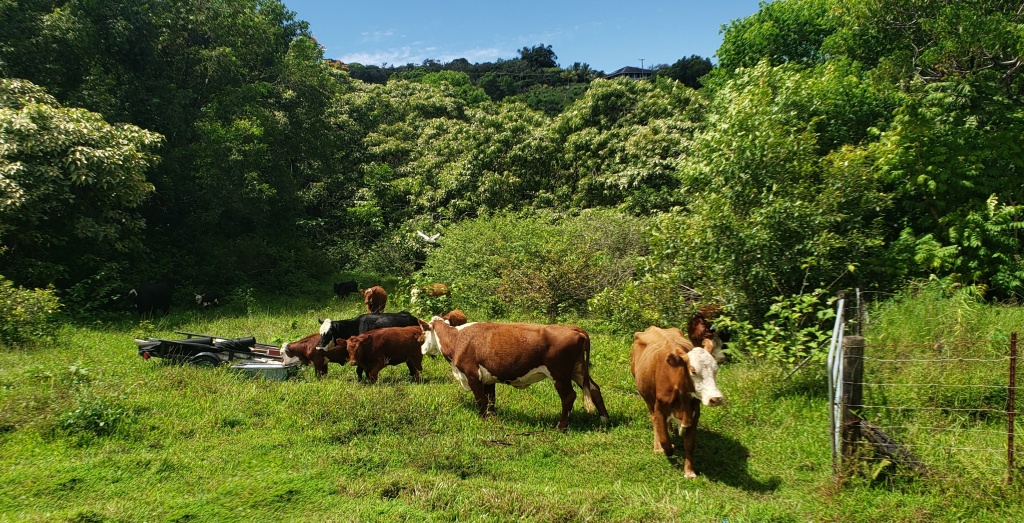
At first, my daughter Jenny (who is the current owner) wanted the cows gone. However, without
them we would soon find ourselves buried under tons of uneaten grass. As it is, the cows that
are here can't keep up. But this jungle will quickly swallow up any sign of human habitation if
not continuously cut back; and the cows are an important part of this. So, even though we are not
paid for the cows to be here, it is nevertheless to our benefit to retain them.
But they've also been a liability. They aren't graceful creatures, especially when being
annoyed by our dogs, and have pushed our satellite dish out of alignment and bent it; have
knocked over pretty much every fence my grandson Zach has tried to build, and are a potential
danger to my grandbabies when they are here.
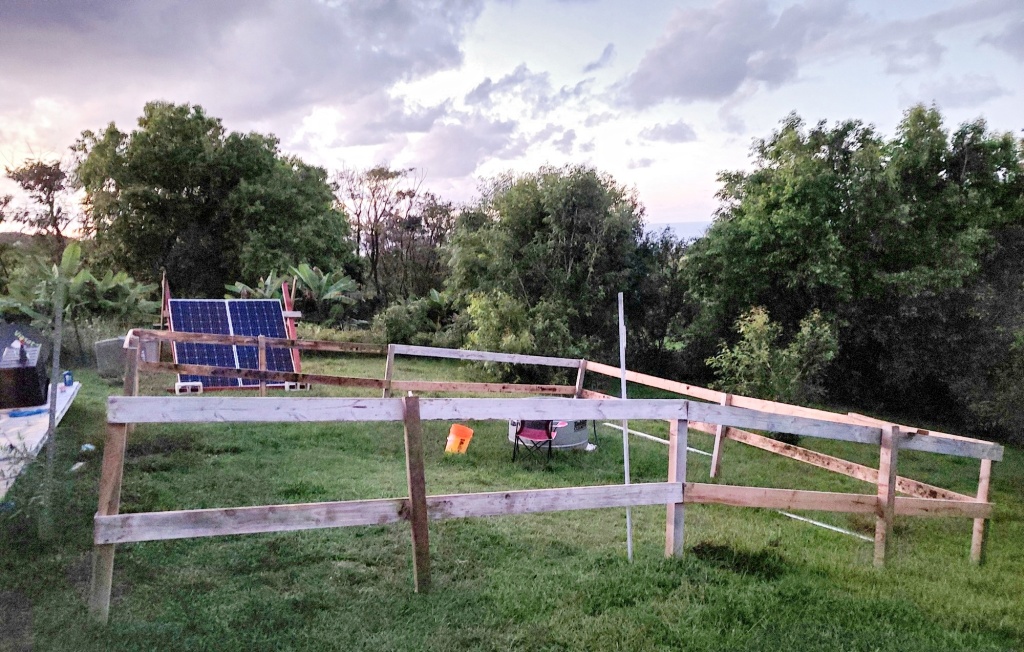
Zach's first attempt at a fence to keep the cows from drinking the water from our cowbooy
tub (intended for soaking, not drinking) worked about a week. But the posts weren't buried
and the cows started knocking it down almost immediately. The picture above was taken in July;
by October, nothing was left standing.
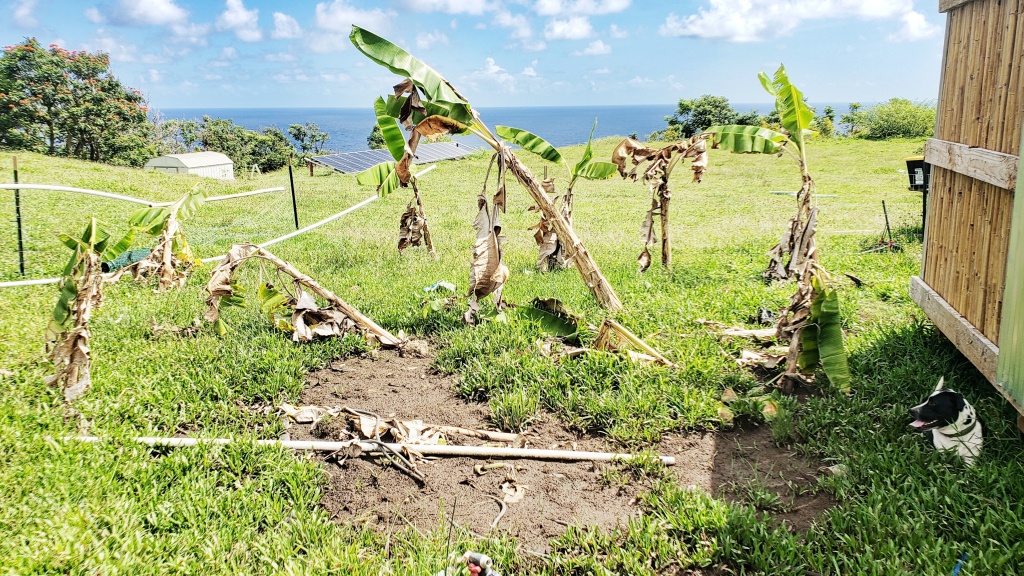
Also in July, just before he flew back to Arizona, Zach but a more serious fence (with metal
posts driven into the ground) near his container, to protect a number of banana plants he transplanted
there. But by September, the fence had been breached and most of the plants trampled. (Once
the cows get in and turn ground into mud, the feral pigs come in a finish the job.)
And so, Jenny felt the cows would have to go. So we contacted the Hawaiian, a man
named Kamana (pronounced kah ma NAH). That wasn't hard. After all, he is onsite almost
every day, monitoring the cows and calves and moving them from one pasture to another.
Actually, when I first met him months ago, I was a little embarrassed. After all, this
land belonged to his ancestors—or,m rather, they lived on it since Hawaiians had
no concept of private property until Europeans showed up and started dividing up the islands
amongst themselves. And I said as much to him, but he brushed off my concerns.
"That's all in the past," he said. "Now we all just have to live together.
Cooperation is how we can all make the most of what the aina [Earth] gives us. I've
been working this land for ten years. I hope you will take advantage of the knowledge
I've accumulated through this time."
Plus, he pointed out, he has skills (such as fencing) that we could make use of; and
a network of friends and family with all kinds of helpful professions (such as engine repair)
and for whom he could vouch.
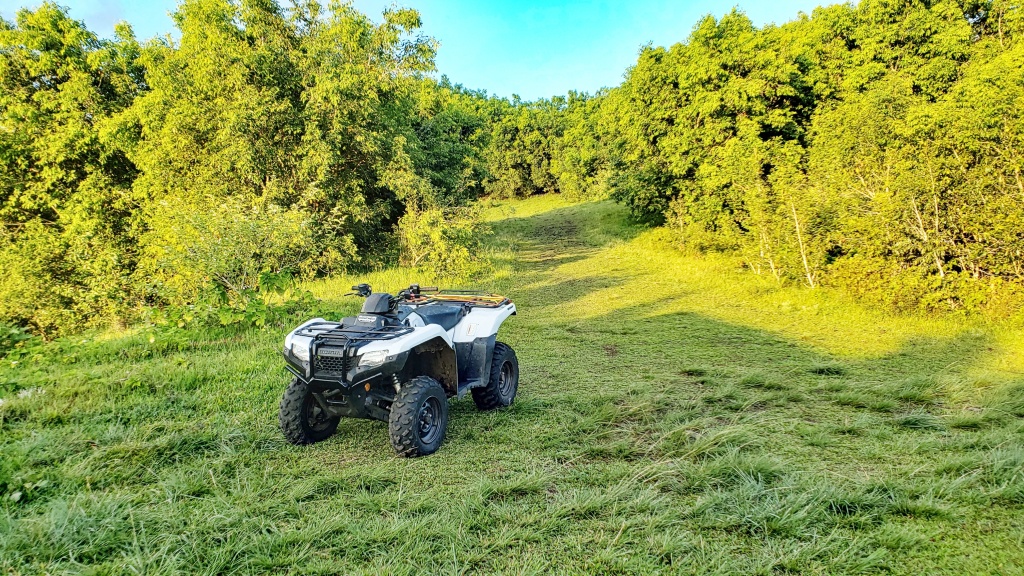
Well, as it happened, the quad was in need of repair. We relied on it for getting around the
property up until September, when it stopped working. We had located a local man (I'll call him
Lars) who is a mechanic. He and his wife came out to examine the quad and propose a price,
which I accepted. He promised to come by the following Friday at 9 AM, and I agreed to meet him
at our gate at that time to let him in. I also texted him the night before to confirm, and he
replied in the affirmative.
But I waited an hour and a half the next morning, and he never showed up. He also, to this
day, has not responded to the texts I sent.
Keith overheard people in the general store talking about a week later, how Lars had taken ill
and was in and out of the hospital. Somehow thinking that Lars was sick seemed better to me than
that Lars was rude and/or unprofessional. But, either way, he was obviously never going to repair
our quad. So I asked Kamana about it.
"I have a cousin who is a mechanic," Kamana said. "If I can
bring the ATV to him, I know he can fix it."
"Sure!" I said. "It's not doing us any good just sitting here."
So he towed the quad behind his own ATV, and, two days later, it was back, fixed…and
for $10 less than Lars had quoted us!
We knew that Jenny and the babies were coming for Thanksgiving, and I was concerned that the
toddlers might encounter a bull or sow, either of which could be fatal. So Kamana offered to
put up a sturdy, cow-and-pig-proof fence around any areas we wanted to declare bovine-free for
just the cost of materials.
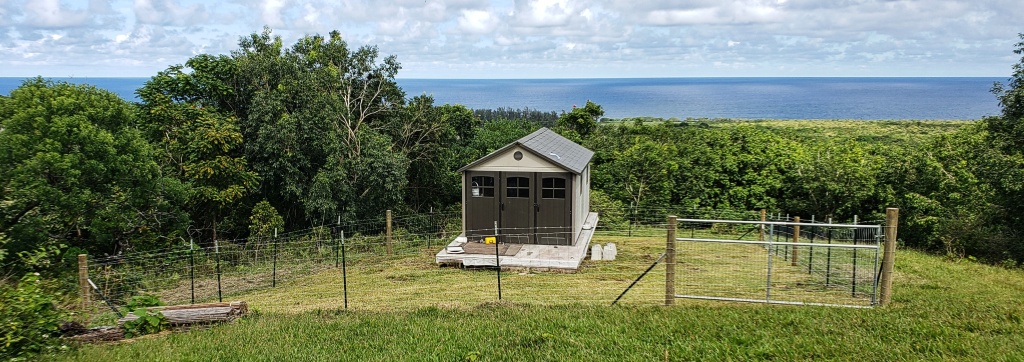
I asked for the first fence to be put around Jenny's cabin before she got here. After a day's
work, this was the result:
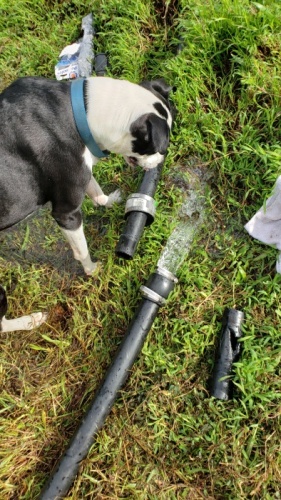
Then, yesterday, we had a water disaster. Our neighbor Chris, who sometimes mows the grass on
the access road to his property, forgot to raise his blades and sliced our water pipe, which is
above ground. (Against my advice, but the pipe guys swore it would be okay.) Water gushed everywhere.
I was Doordashing on the other side of the island at the time; Keith called me, frantic, wondering
what to do. Chris obtained a pipe connector from the hardware store and installed it; but as soon
as the pressure was turned back on, the connector (which turned out to be the wrong kind) blew off
and the water had to be turned off again.
(As a reminder, our water comes from a tank at the top of the property, at least 500 feet higher
in elevation than our shed.)
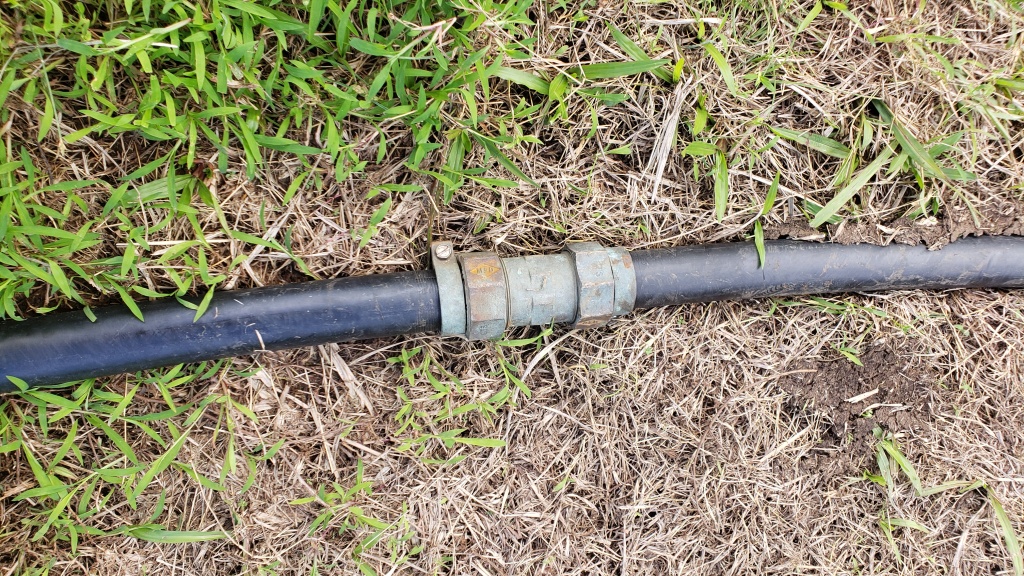
Well, Kamana came to the rescue. He had another cousin who is a plumber (or perhaps
Kamana himself is a plumber, I might be confused) and came back after a short while with a
proper fitting that actually allowed us to have water flowing again.
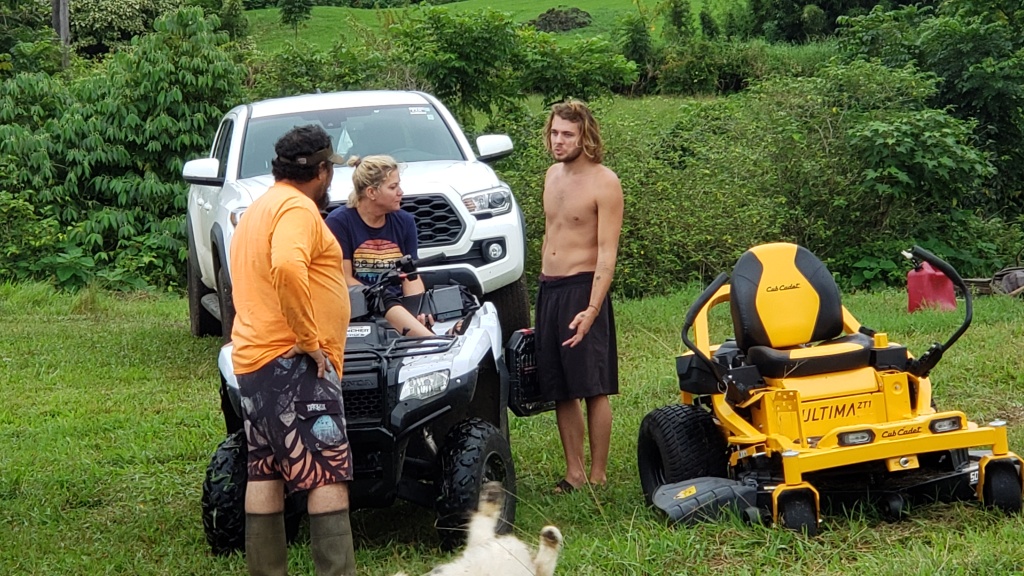
Now we've sent the riding lawn mower off to the mechanic cousin to fix. And next will be the
spare generators.
Rather than thinking of Kamana as a squatter here, we've come to realize that he is an
invaluable asset to the property and to us, as much so as the grass and trees. I'm looking
forward to learning from Kamana's experience as we continue our adventure on Maui.