|
By: Paul S Cilwa |
Occurred: 9/9/2021 |
|
Page Views: 623 |
| Hashtags: #Coronavirus #Maui |
| Ruminations on small pieces of Earth. |
| Estimated reading time: 6 minute(s) (1351 words) |
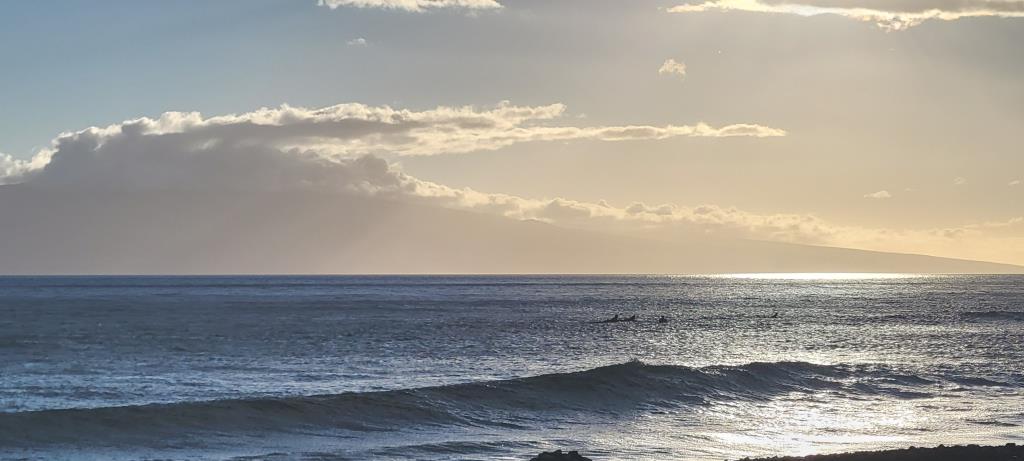
It's dawn, and so beautiful here it makes my heart ache. We're at Papalaua
Beach Park again, where we spent the night car camping, to be on this side of
the island for an appointment with a dermatologist. But whenever I sit in my
camp chair, listening to the crashing of nearby waves and watching the stars
play hide-and-seek with puffy little clouds, I am overwhelmed with a mixture of
awe, gratitude, and a dollop of pity that, of all the (surely) millions of
people who would give their eye teeth to be right here where I am now, only
Keith and I are.
I grew up on an island. And at 70 years old, it's
likely I'll die on this one. And that got me thinking about the islands I've
known.
I grew up on Anastasia Island, the location of St. Augustine Beach, Florida.
Granted, it hardly seemed like an island, with two bridges (now three!) to the
mainland, and the City of St. Augustine spilling over onto its northern end. But
an island it was nevertheless and, in the pre-helicopter-parent days of the
1960s it seemed to me an ideal place to grow up.
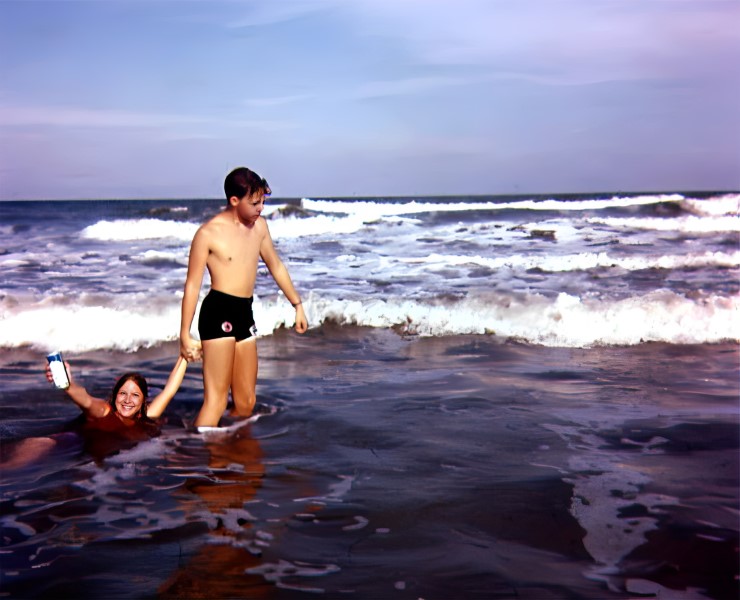
We moved to "the island" as locals called it, from downtown St Augustine, in
1962. But we'd actually stayed there previously, for a couple of months in 1961
when we first came to Florida from Vermont.
It was five miles from my house to downtown St. Augustine. As a Boy Scout, we
hiked that as our official, obligatory, five-mile-hike. (To become a First Class
Scout, one needed to have gone on three 5-mile hikes and one 20-mile hike.) The
hikes were literally along the shoulder of the road into town, but I suppose
making them was the start of my developing the ability to hike, which has
probably saved my life, in addition to my bone density, several times by now.
I was also allowed to make that walk into town by myself, which I did several
Tuesdays in a row, one summer, to attend early morning Mass. (I usually then
took the city bus back home.)
But although I didn't call it "hiking" (we called it "playing in the woods"),
I spent a lot of time, alone as well as with my neighborhood friends, wandering
the Florida jungle adjacent to our little housing development. This came
naturally to me as I'd been allowed to wander our 65 acres in Vermont—at nine
years old!—without supervision or even any instructions beyond "Be home before
dark!". But having the same freedom and opportunity in Florida certainly
reinforced my love of being in nature.
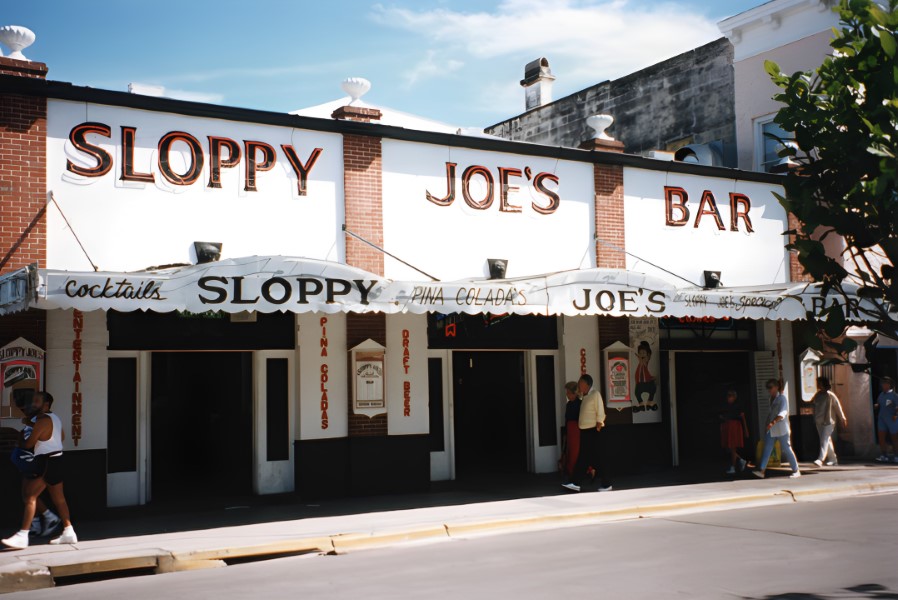
The first time I visited Key West was in 1973, shortly after the birth of my
firstborn. My wife, Mary, baby Dottie, and our friends Richard and Brenda drove
there from Fort Lauderdale.
To get to Key West by car, one takes the Overseas Highway, a collection of
bridges linking dozens of islets in the archipelago we call The Keys. To be
honest, I don't remember much about Key West itself on that trip, but I do
remember my dinner in Key Largo where I had, at Richard's recommendation,
ordered salad with bleu cheese dressing and veal Parmigiano for the very first
time, and my life and palate were forever changed.
Yes, I now know how veal are raised, and no longer support that industry. But
I have fond memories!
It was 20 years before I returned to Key West, this time a newly divorced
man. My mom mentioned she'd never been, so I took her.
That also turned out to be a fateful trip. To begin with, this was my first
time actually sightseeing. (On the first trip, it was a goal, not a
destination.) But, more to the point, while sightseeing, I climbed a lighthouse,
looked down, found I was gazing slack-jawed at a rack of chaise lounges filled
with naked men sizzling in the sun.
That was how I discovered that Key West was, in fact, a Gay Mecca. I
subsequently made many return visits on my own, and then it became my go-to
destination to take guys to if I was really serious about them. I brought Steve,
Larry, and, eventually, Michael to whom I proposed to on the trip. And later, I
took Keith there, first on a cross-country trip, then as guests of
my daughter who'd bought a cottage there.
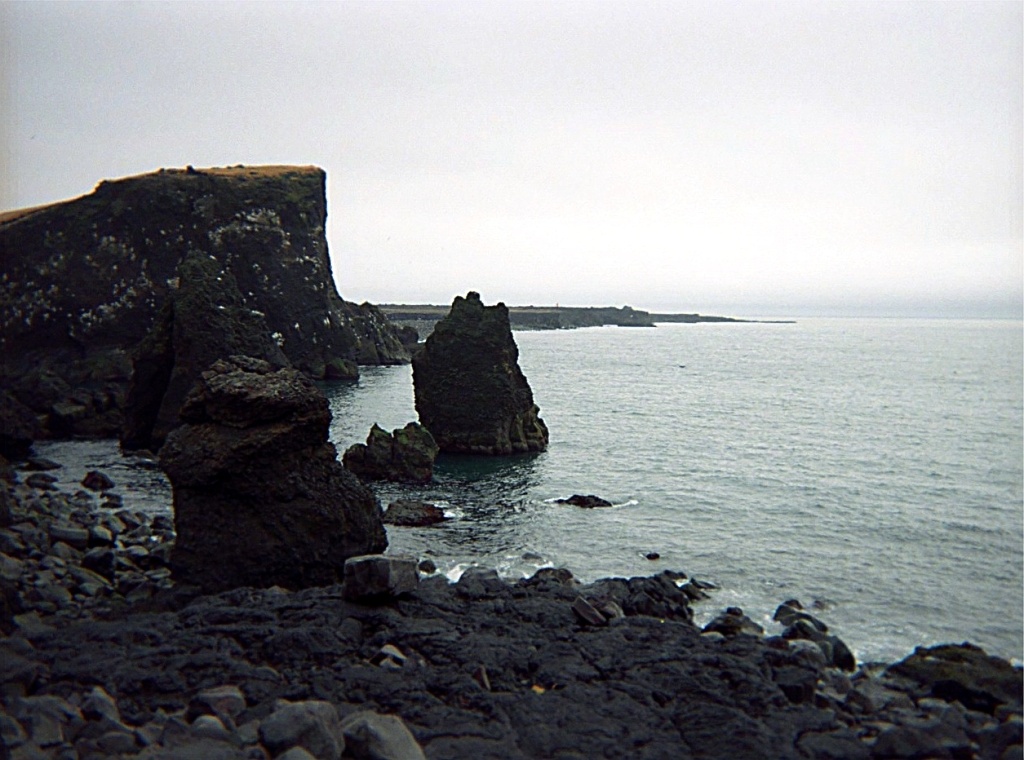
My next island was Iceland. I had been scheduled to teach a course in
Germany, but my ticket and passport had been stolen. I got both replaced but it
was too late; they'd already rescheduled the class. But now I had a ticket to Germany via
Iceland and took it anyway.
Iceland was beautiful, one of the few places I've seen that doesn't look like
anywhere else I've seen. And later, my son married an Icelandic girl and lived
there for a couple of years.

I visited Kauai on my second visit to Hawaii. Visiting it with my then-husband was, I
hoped, going to rekindle our romance. Unfortunately, instead it verified that
our romance had evolved into the love of brothers.

My first trip to Hawaii had been to Maui, and that was thanks to another
daughter's having become a flight attendant, which allowed her to give me free
stand-by flights to anywhere. I loved Maui, and returned four more times, most
recently with Keith, before we moved here 18 months ago.
Maui is actually two islands in one. In ancient times, as Hawaii drifted over
a Pacific "hot spot", first West Maui was formed around (now highly eroded)
Mauna Kahalawai; much later, East Maui formed around Mauna Haleakala. The
two volcanoes were so close together they formed an isthmus between them, making
island a geological Venn diagram.
Like Maui moving over the magma hot spot, we humans tend to create and
live in islands of our own creation, as we move through our lives. (We call them
"family" or "community".) And like Maui, the islands we create often overlap. In
addition to our home/family island (which is common to all of us while being
unique to each of us), we have our work island, and perhaps a bowling league
island or a gamer club island. Pokémon players, gay folk, religious folk, even
the KKK constitutes an island for their members.
I think we're drawn to islands, both geological and sociological,
because they represent both freedom and security. In the wild, freedom is
dangerous, because one never knows when an action might trigger an unexpected
and deadly consequence. But in an enclosed environment, most dangers are already
known and one subconsciously avoids doing something that would likely be
disastrous.
But what remains feels like freedom, because it allows one to express
oneself more fully than in the wild. It's still, for example, a little risky
to hold my husband's hand in public in some places. But we can do so among
gamers, programmers, and people who like the same music we do.
Islands can provide a false sense of security though. The Anti-Vaxx
crowd constitutes an island for them and the disinformation that created them.
The Republicans thought they controlled them but even the profoundly stupid will
eventually realize that the person they're following has reversed his stories
one time too many. After a year of telling his deplorables that the vaccine was
useless and that they should drink bleach and shove an ultraviolet light up
their asses, when he finally told a rally last week, "Take your vaccine. Melania
and I did, it's great!" his own base booed him.
So, yeah, they're gonna die (in far higher proportions than the
vaxxed). To avoid being caught up by them or by some new variant festering even
now in the cesspools of their de-wormed bloodstreams, we have to create new
islands for ourselves, islands that are masked, vaxxed, and closed
to anyone else.
Sorry, but that's the way it's gotta be until the last anti-vaxxer
votes themself off the island.