|
By: Paul S Cilwa |
Occurred: 4/24/2024
Posted: 6/4/2024 |
|
Page Views: 398 |
| Hashtags: #History #Egypt #Ankh #Cross #Symbols |
| My daughter's gift from Egypt gets me wondering about the history of the symbol. |
| Estimated reading time: 5 minute(s) (997 words) |

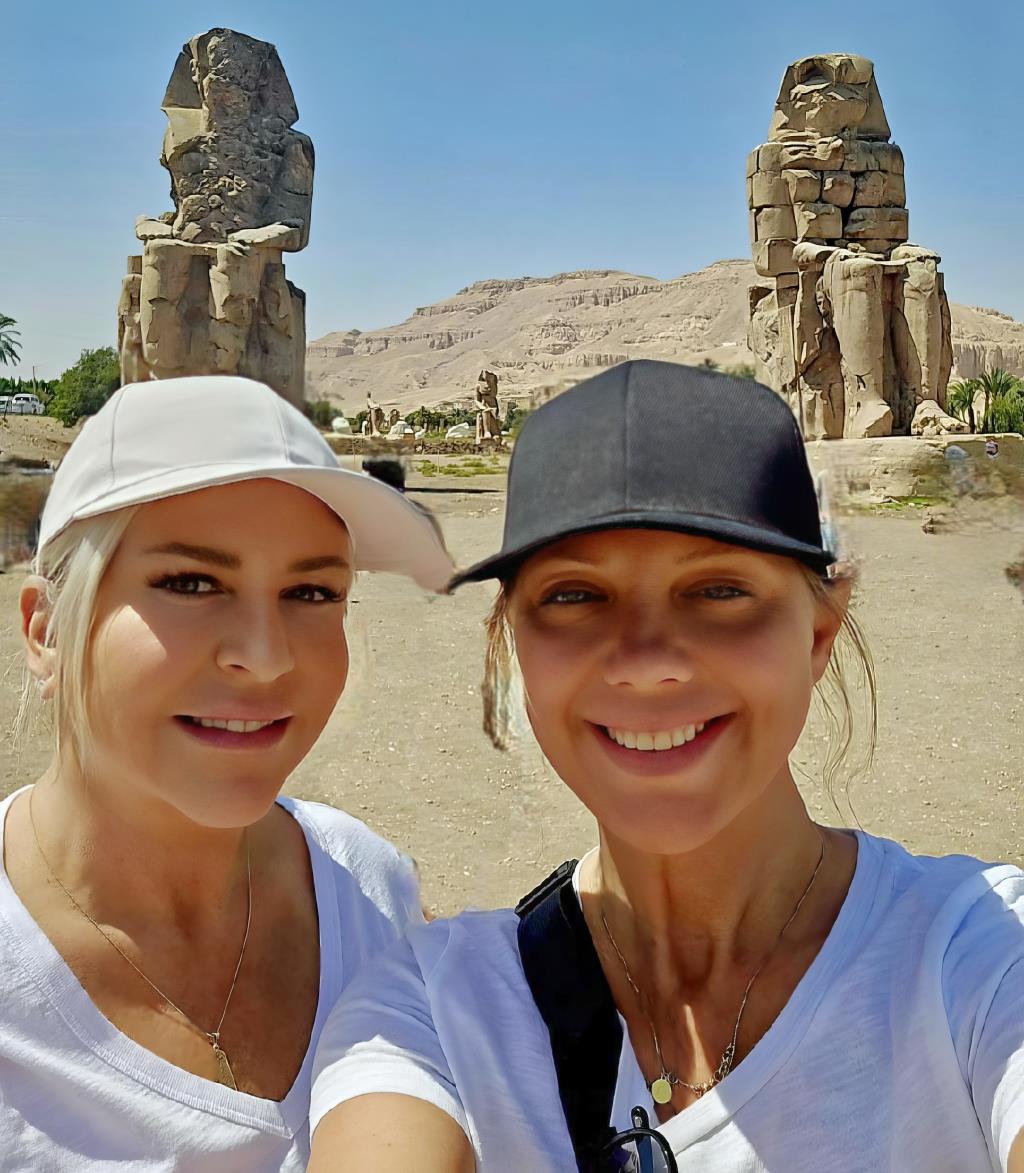
But this is really her (on the right) with Dawn.
And then the obligatory juxtaposition photo!
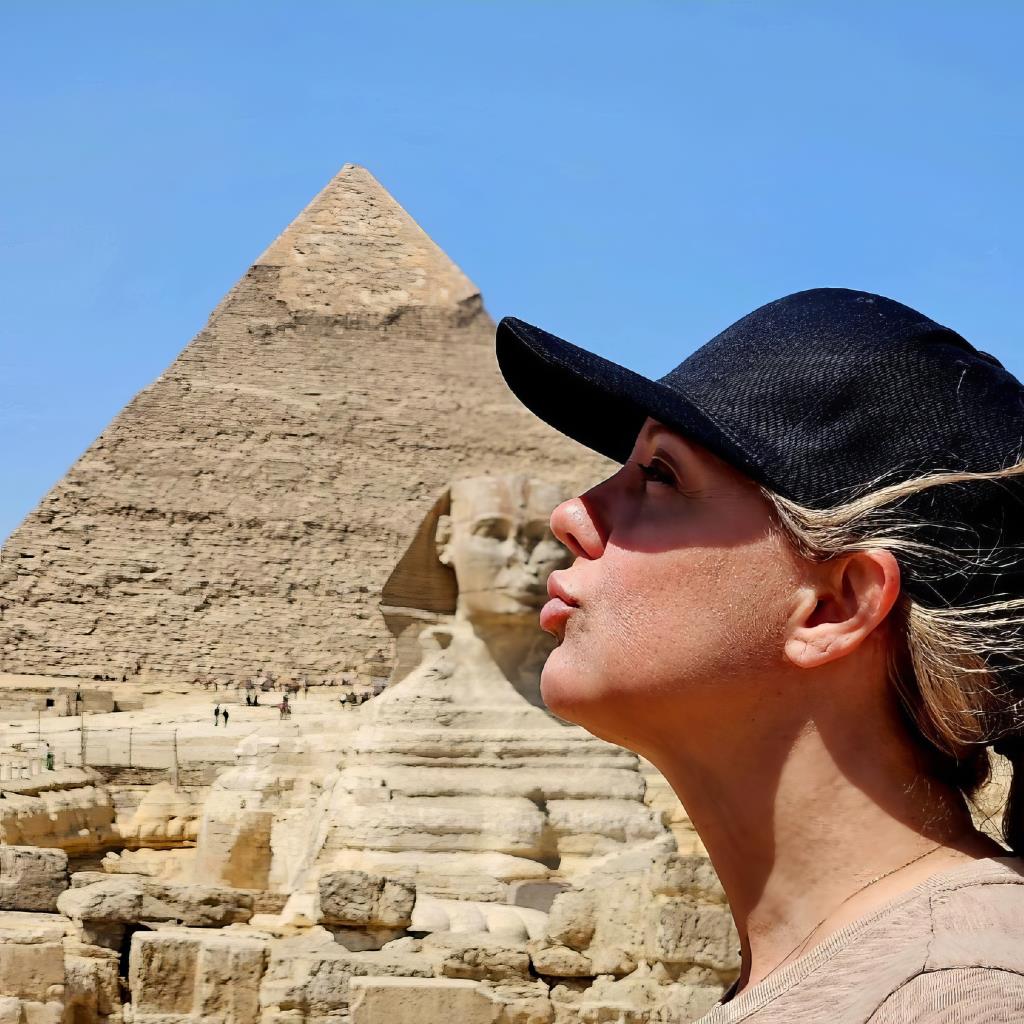
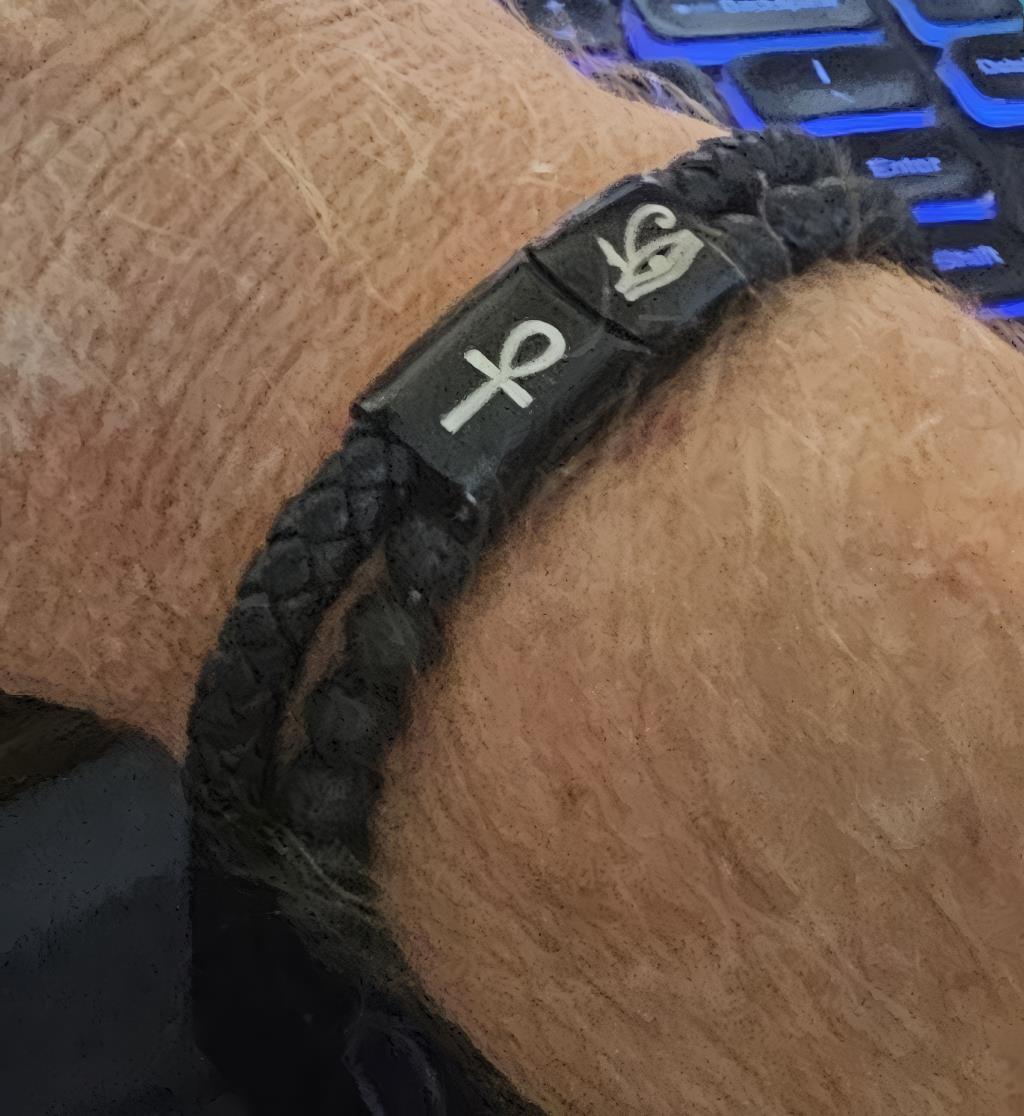
Anyway, as people do when they travel, Karen decided to buy all us
stay-at-homes bracelets with the Ankh symbol. It also bears the Eye of
Horus, but the Ankh is what she was going for, as it seems so
quintessential Egyptian (not that the Eye of Horus isn't as well).

But that got me wondering. Is it? Or did previous cultures use it as well?
Here's the thing: Most people think that history kind of started
with Egypt. Certainly, when I was in grade school, no one mentioned Sumer
or the Indus Valley or any of the other, older civilizations, even though
they'd been discovered and were in the process of being catalogued by
archaeologists.
But the bulk of ancient Egyptian history is kind of in the middle, even if
one only starts with Sumer, because of all the even older civilizations
we keep uncovering now that we have developed more sensitive devices of detection.
So, what is an ankh, and who came up with it?
When you ask, most sources insist the ankh is an ancient Egyptian symbol
representing life and immortality. While the exact dating of the oldest
ankh artifact can be challenging, some of the earliest representations of
the ankh symbol appear in the Early Dynastic Period of Egypt, around 3100 BCE.
One of the oldest known representations of the ankh is found in the tomb of
Pharaoh Djer of the First Dynasty. The tomb, which dates back to around 3000 BCE,
includes inscriptions and artifacts that feature the ankh symbol. This period
marks the beginning of the pharaonic civilization in Egypt, and the ankh was
already a significant symbol in their culture, and has remained so ever since.
Plus, the ankh, in its composition as well as meaning, is a conflation of two
older symbols: The circle, and the cross.
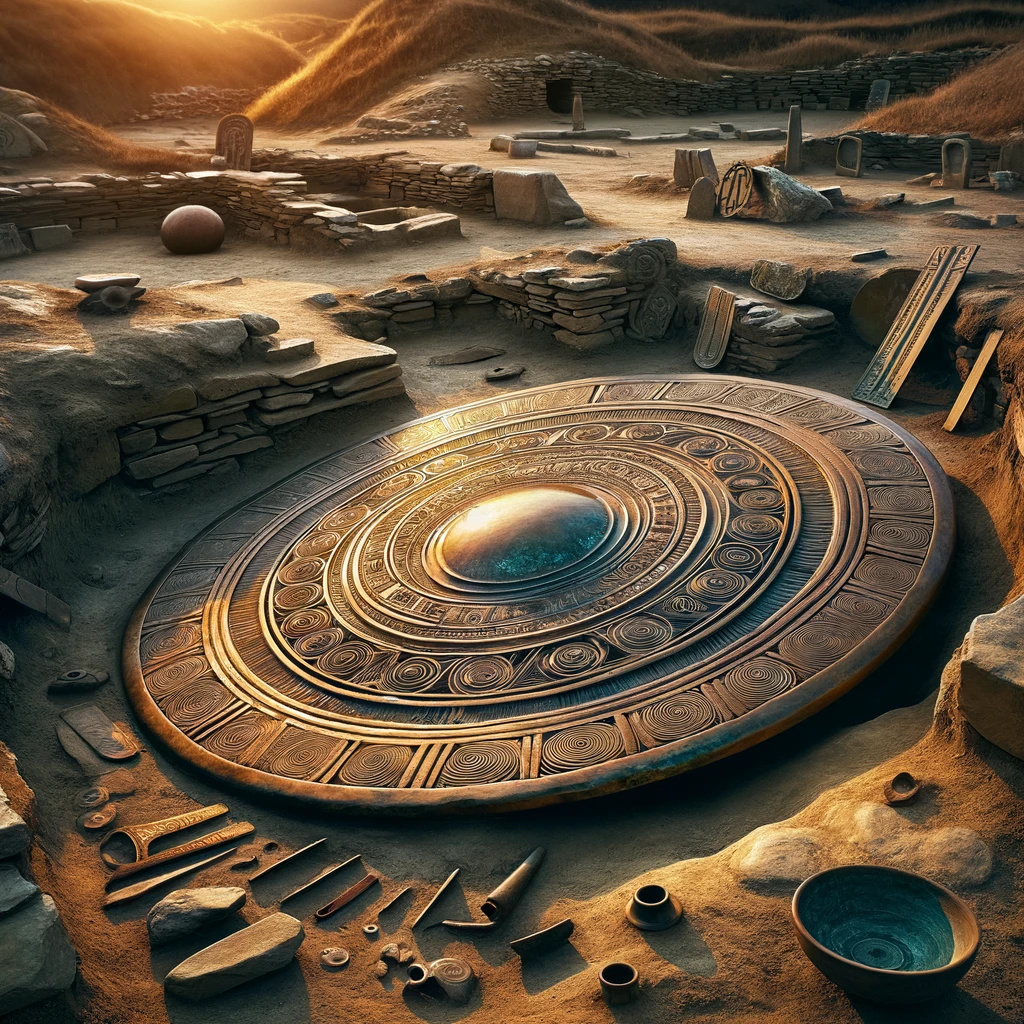
The circle has been a significant symbol in many ancient cultures,
representing concepts such as the sun, eternity, and the cyclical
nature of life. For example, sun discs were common in Neolithic and
Bronze Age cultures, symbolizing the sun's life-giving energy.
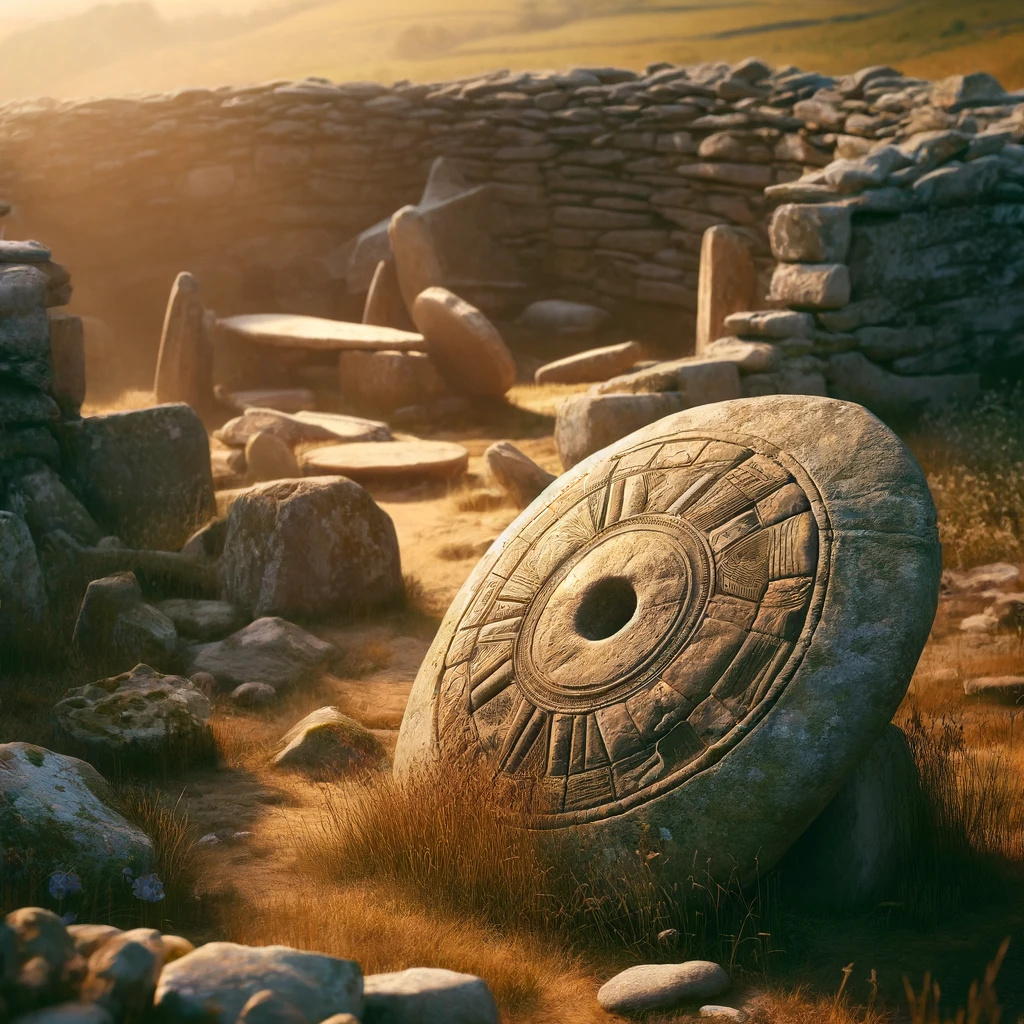
Neolithic Sun Disc
Bronze Age Sun Disc
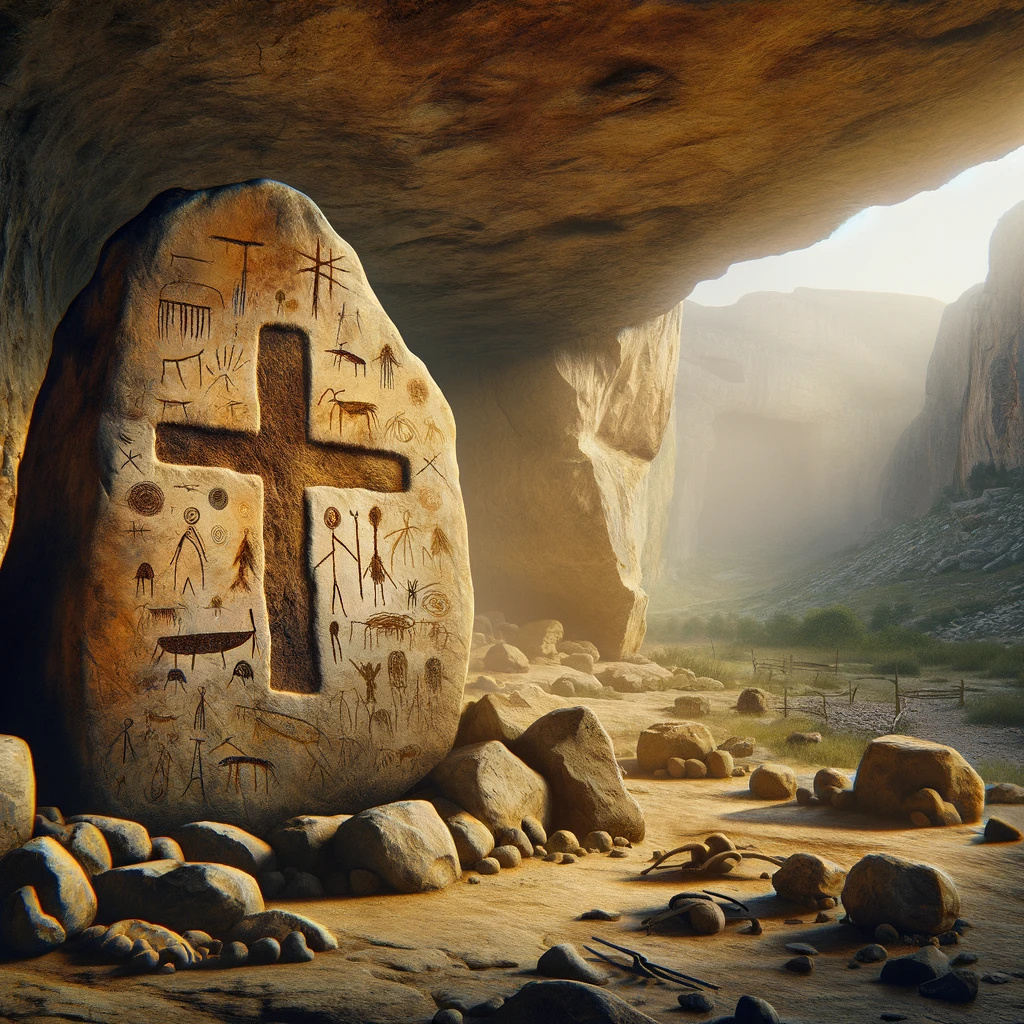
The cross, which predates Christianity by thousands of years,
has been found in prehistoric art, often symbolizing the four cardinal points,
the intersection of heaven and earth, or duality. It appears in various
forms in many ancient cultures, including the swastika, which in its left-hand form
had positive connotations of luck and auspiciousness in ancient Indo-European cultures.
(The Nazis adopted its right-hand form.)

Left-handed (good)

Right-handed (Nazi)
So a circle, a figure that has no beginning or end, came to represent Eternity for
ancient (and very pre-Egyptian) peoples; and a cross came to represent the intersection
of heaven and earth or duality—in other words, mortality. Let's think about that
for a moment. If you put a circle representing Eternity with a cross representing
mortality, you basically have a symbol that represents the essence of the human experience:
A limited lifespan that intersects with a moment of Eternity.
So, yes, the Egyptians invented the ankh. But other cultures also combined circles and
crosses to achieve a similar meaning.
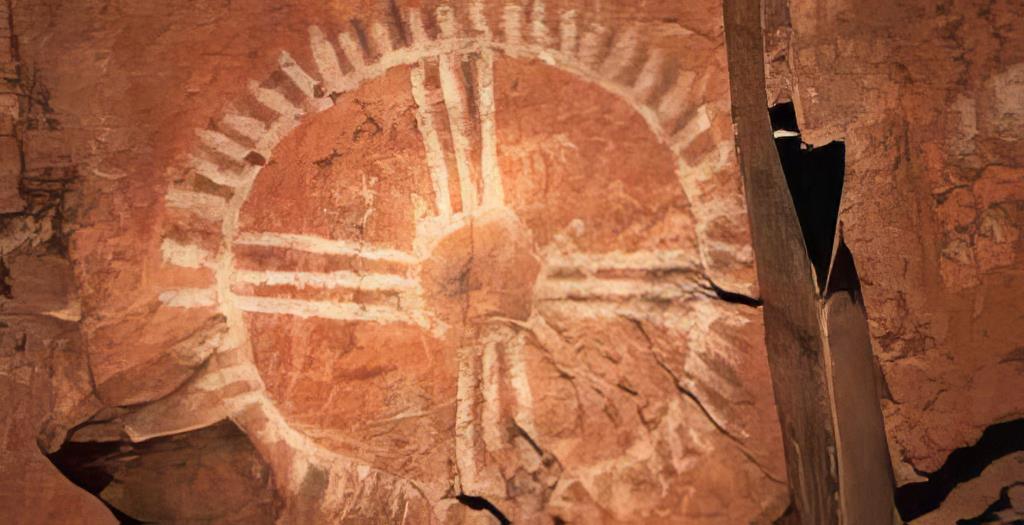
Many Native American cultures, for instance, combined them by placing the cross
entirely within the circle.
The Medicine Wheel, also known as the Sacred Hoop, is an ancient symbol
that represents the interconnections of life, the universe, and all living beings.
It is traditionally used by many Native American tribes to symbolize harmony and
balance and is often utilized in spiritual ceremonies and healing practices.
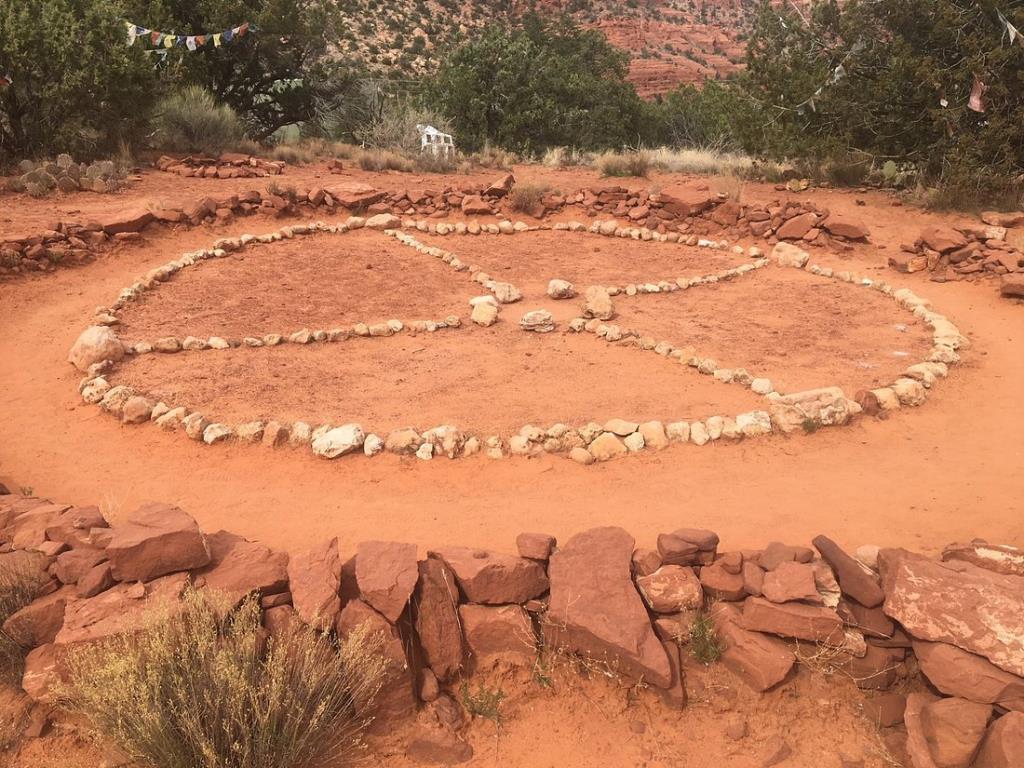
Although this one in Sedona, Arizona, is recent, the concept of the Medicine Wheel,
particularly in North America, dates back several thousand years, where
one of the most well-known ancient Medicine Wheels is the Bighorn Medicine Wheel
located in Wyoming. This structure is estimated to be at least 700 years old,
dating back to around 1300 CE. Some estimates suggest it could be even older,
potentially dating back to 1050 CE or earlier!
These wheels represent the interconnection of all life, the cycles of nature,
and the four cardinal directions. The circle symbolizes the cycle of life,
eternity, and the universe. It reflects the belief that life is continuous
and interconnected.
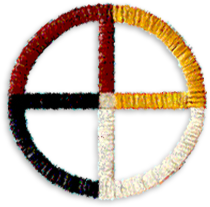
The cross within the circle represents the four cardinal directions (north, south, east, west),
each of which holds specific spiritual significance:
- East:
Associated with beginnings, the rising sun, and illumination.
- South:
Represents growth, warmth, and the summer season.
- West:
Symbolizes introspection, endings, and the setting sun.
- North:
Stands for wisdom, guidance, and the winter season.
The ancient Egyptian civilization was beyond doubt a deeply spiritual
and wise one. As were the pre-Columbian New World civilizations.
They both came up with a simple symbol that could convey deep
metaphysical truths to non-literate people as effectively as to their
literate descendents.
Ankhs for the memories!