|
By: Paul S Cilwa |
Posted: 11/3/2014 |
|
Page Views: 3,280 |
| Hashtags: #Cancer #Hospice |
| I describe some health issues being undergone by a dear friend. |
| Estimated reading time: 4 minute(s) (857 words) |
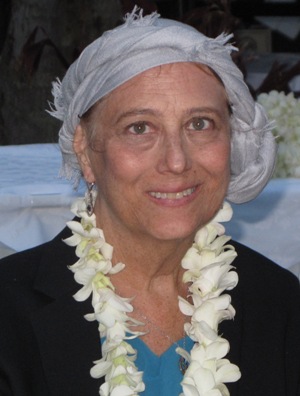
It's easy to see that I haven't blogged much in the past three years or
so, but it's not because I got blogged out. For the first two of
those years, I was recovering from
necrotizing fasciitis (as
much as I ever will) and living with my partner of the time. Shortly
before I moved out, my ex-wife, Mary, was diagnosed with colon
cancer. She would have to undergo chemotherapy. So, when I left my
(now ex-)partner, I moved in with Mary to be her caregiver during
treatment.
Mary's oncologist had such an unprofessional fit at the idea of
her making use of a safe, natural, alternative mode of healing in addition to
the chemo, that it made her second-guess
herself. With H2O2, she had brought her CEA
count (an indication of cancer activity) down to 8.9. But she
stopped taking it.
That was March, when she returned to chemo alone. Her oncologist
tried another combination of drugs, then another, and finally one
more. By October, her CEA was 260, and the oncologist gave her the
bad news: There was nothing more they could do for her. They had
exhausted every AMA-approved chemotherapy drug there is. They
couldn't even recommend more of the same as she'd taken, as she was
now so frail it would
shorten her life, rather than extend it.
"Go home," the oncologist told her. "Spend the time you have left
with your family, with your children." She was given a list of local
hospices providing end-of-life services at home.
She chose a company with the boldly descriptive name of
Hospice At Home.
Many people think that hospice is a place, like a hospital. But
it's not. To begin with, "hospice" is actually shorthand for
hospice care. It's a philosophy of medicine that seeks to relieve
pain and anxiety, at least as much as possible, in the final days,
weeks or months of life. While some people do recover from
their "terminal" illnesses, most, of course, do not.
One can experience hospice care in a dedicated facility, but when
patients have family or friends who can provide 24/7 care, most
prefer to stay home.
So I'm the one providing the 24/7 care, with relief from our
children when they can get here. But hospice, which by the way is
free-of-cost, provides all medications. Since they are providing
palliative care for end-of-life, drugs can be used without worry as
to long-term side effects. For example, Mary's hospice will be
taking her off her previously prescribed pain meds, and switching
her to methadone, which is more effective but is addictive. So what
if it's addictive? It's not like she'll have a monkey on her back
for decades to come.
In a sense, entering hospice is very freeing. It's the perfect
time to start smoking, for example, if one ever had a wish to find
out what that was about. One needn't worry about how soon one's
iPhone 6 will become obsolete, or having to buy new drapes. The
hospice patient, with pain controlled (hopefully to zero on the
clichéd 0-10 scale), can enjoy visits with family, simple hobbies,
and so on. In Mary's case, she is still well enough—we hope—to
take a quick flight to Las Vegas with our daughters for a "girls'
weekend out". Her goal is to make it to Thanksgiving and for all our
children to be there.
Of course, this can be somewhat wearing on the caregiver,
especially if the patient is a friend and family member about whom
he cares deeply. I have to watch, day by day, as
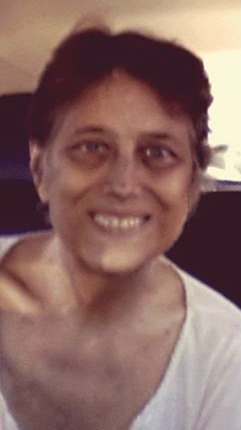 Mary grows more and more frail. And lately she's taken to having nonsense conversations;
a half-hour ago, for example, she wanted to know why anyone would
forbid children from playing under a dining room table. This was out
of the blue, with no context I could determine at all; and when I
tried to get clarification, she became testy and unable to explain.
(The kids think it's the pain meds; but she's been taking them for
many months and this has never happened before the past few days.)
Mary grows more and more frail. And lately she's taken to having nonsense conversations;
a half-hour ago, for example, she wanted to know why anyone would
forbid children from playing under a dining room table. This was out
of the blue, with no context I could determine at all; and when I
tried to get clarification, she became testy and unable to explain.
(The kids think it's the pain meds; but she's been taking them for
many months and this has never happened before the past few days.)
However, please don't think I am
complaining. I feel privileged to be allowed to share this most
intimate experience with her. Mary's bravery, good humor, and
empathy for others has made her loved by every one of her
caregivers, even—especially!—her oncologist. Her fearless
embracing of her impending transition is an example to us all. She
continues to humble and inspire me.
And yet, even now, she hasn't completely given up. She's
resumed taking H2O2. Personally, I think it's
too late, that she can't take enough hydrogen peroxide to kill the
cancer cells faster than they can spread. But I could be wrong. I
hope I am! It sure has happened before.
While some people do recover from their "terminal"
illnesses, most do not…
But some do.