|
By: Paul S Cilwa |
Posted: 3/30/2026 |
|
Page Views: 308 |
| Hashtags: #Autobiography #Aging #Health #SleepApnea #CPAP #MedicalDevices |
| A history of CPAP technology, a personal journey through sleep apnea, and a look at what might replace the mask. |
| Estimated reading time: 5 minute(s) (1119 words) |
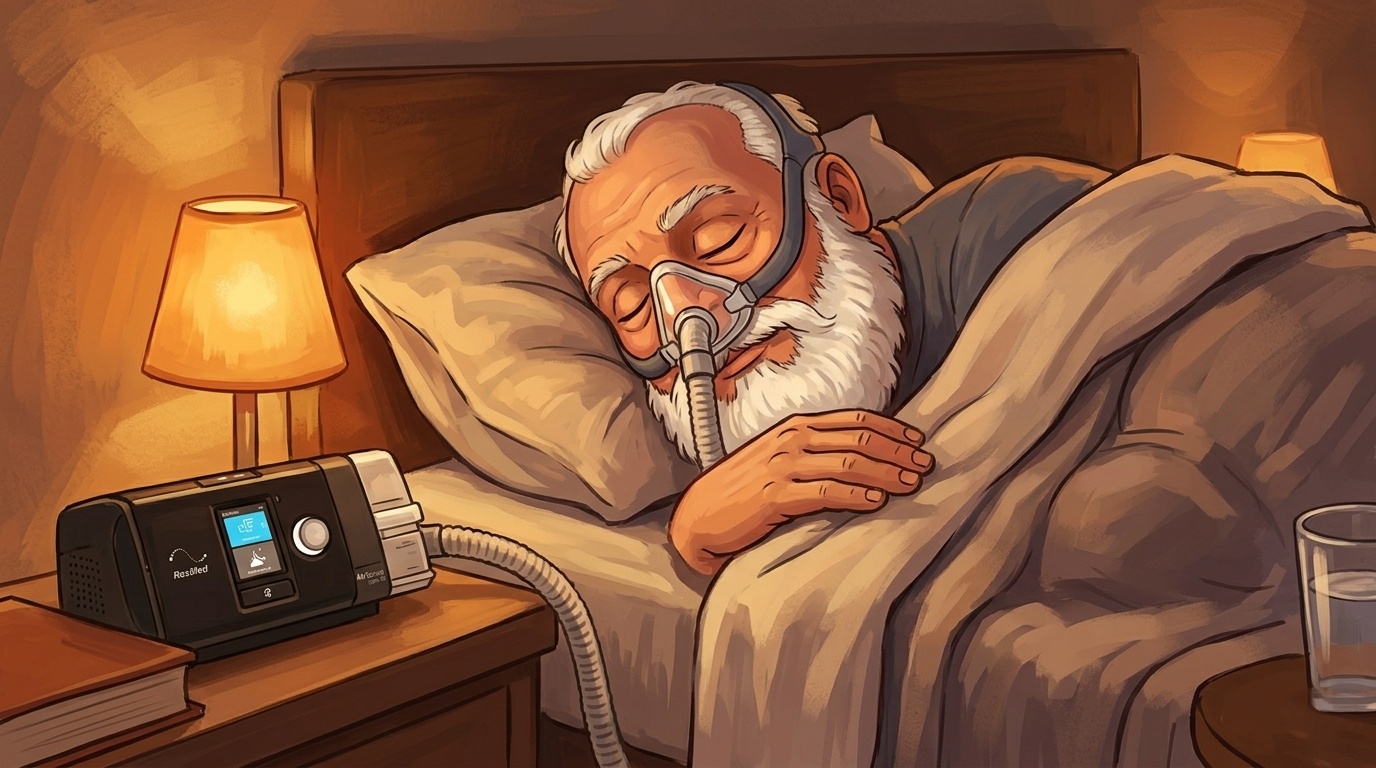
The Nooky Conversation
Some conversations change your life. Not always the ones you'd expect.
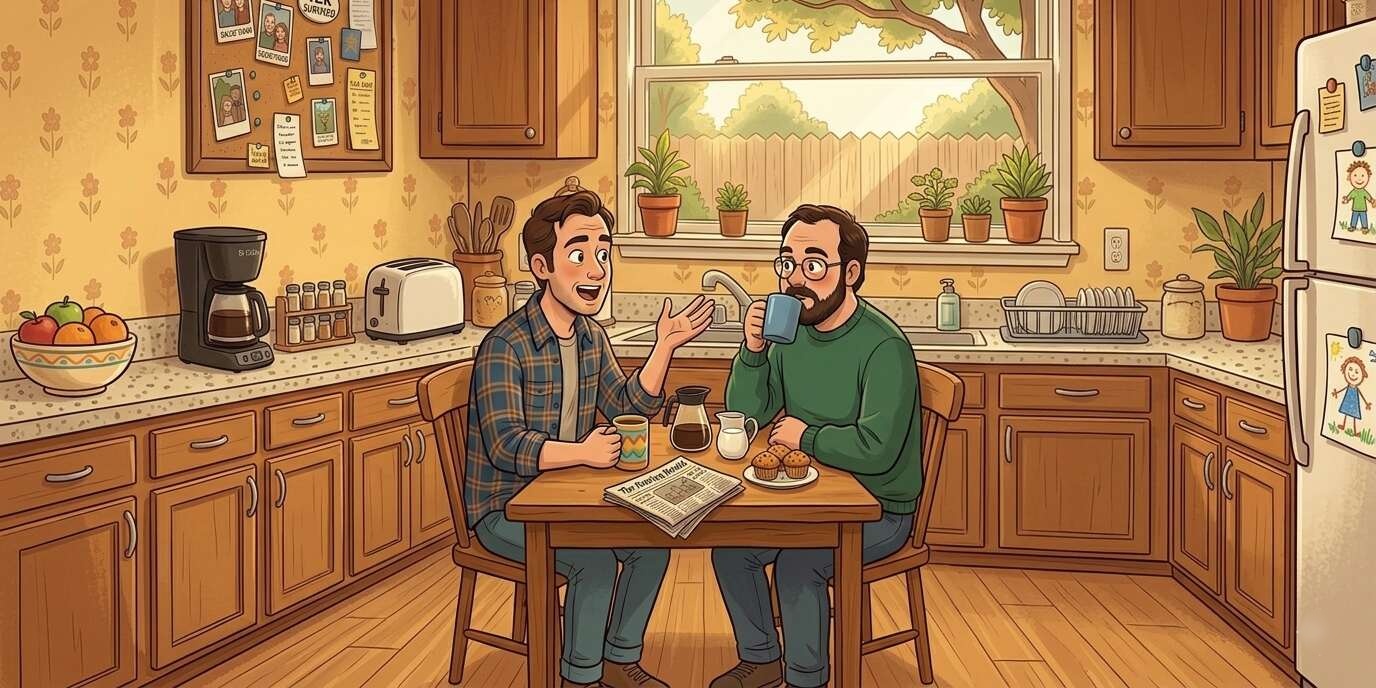
Around the turn of the millennium, my late friend Jay Kyser—who had served as an usher at
my wedding to Michael—mentioned
almost in passing that he'd recently been diagnosed with sleep apnea and had started using a CPAP
machine. He was matter-of-fact about it, the way Jay was matter-of-fact about everything.
"If I have someone over for the night," he said, with the casual frankness that made him such
a good friend, "I have to explain that the machine doesn't mean I'm dying, and that it's
perfectly okay to wake me up for a little nooky."
I laughed. But the conversation stuck with me.
Always Tired
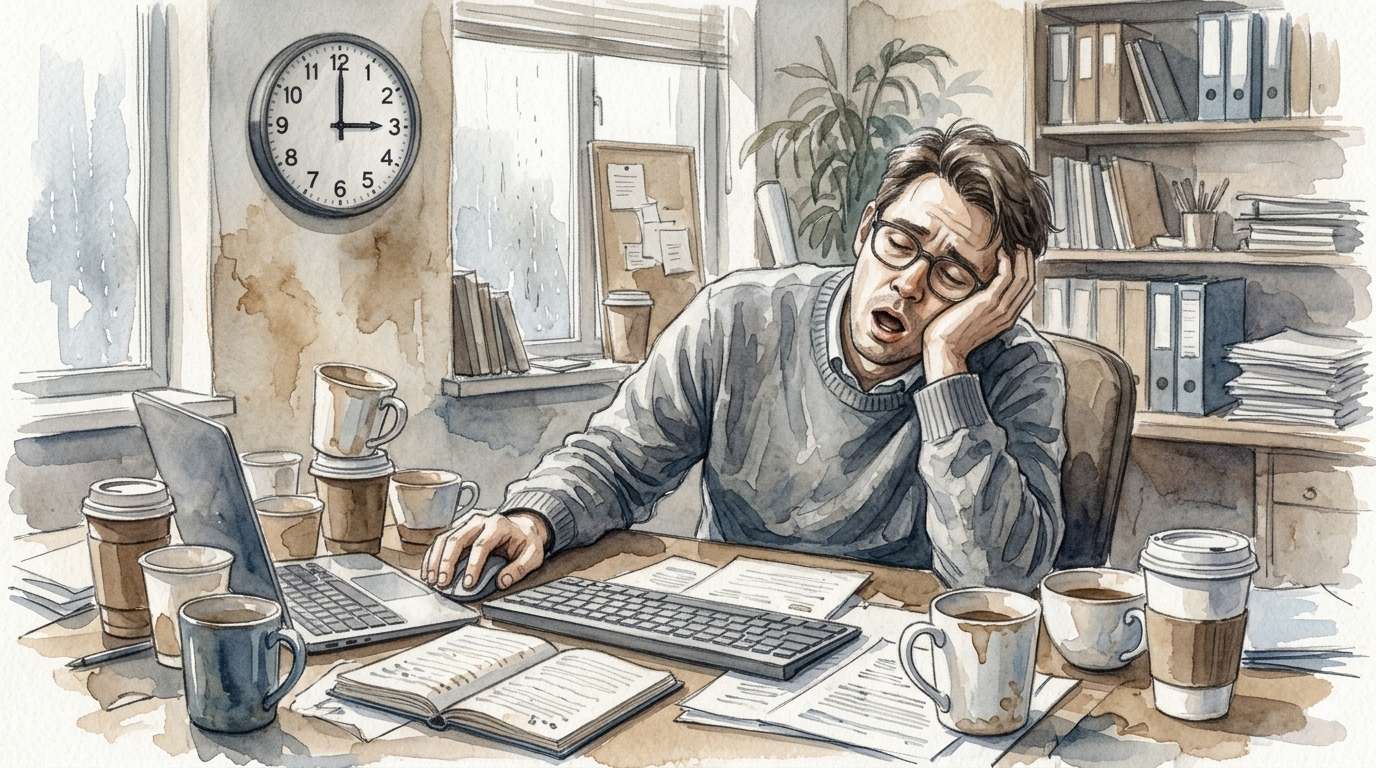
By that point I was always tired. Not "didn't get enough sleep last night" tired.
Bone-tired, relentlessly, every day, no matter how many hours I spent in bed. I'd
also been dealing with high blood pressure and inexplicable weight gain. My doctor
kept adjusting medications, but nothing addressed the root cause because no one had
identified what the root cause was.
Then, during a trucking training run out West, I was paired with a truckmate named
David who had severe sleep apnea. David stopped breathing
so often and so dramatically that I became oddly accustomed to it—the silence,
the sudden gasp, the resumed snoring.
Watching him night after night,
I started to recognize something familiar.
I'd been having dreams far too often of drowning or suffocating. I'd wake up in a panic,
heart pounding, gasping for air—having apparently forgotten to breathe while I slept.
I'd always assumed these were anxiety dreams. Watching David made me think they were
something else entirely.
I went home and made a sleep clinic appointment. The results weren't subtle.
I was stopping breathing dozens of times per hour. The sleep specialist handed me a CPAP
prescription with the same casual authority Jay had described weekend guests, and my life
has never been the same since.
And, incidentally, trucking companies have since taken this seriously, as sleeping drivers
is their main cause of accidents and loss. Now, all drivers are screened for sleep apnea,
and those with severe cases are required to
have machines and show compliance to keep their licenses. It's a huge improvement for road
safety, and I'm glad I was able to get treated before it became a legal requirement.
A Brief History of Breathing Machines
Sleep apnea itself isn't new—humans, like French bulldogs, have always snored and stopped breathing in
their sleep—but the ability to treat it is a surprisingly recent development.
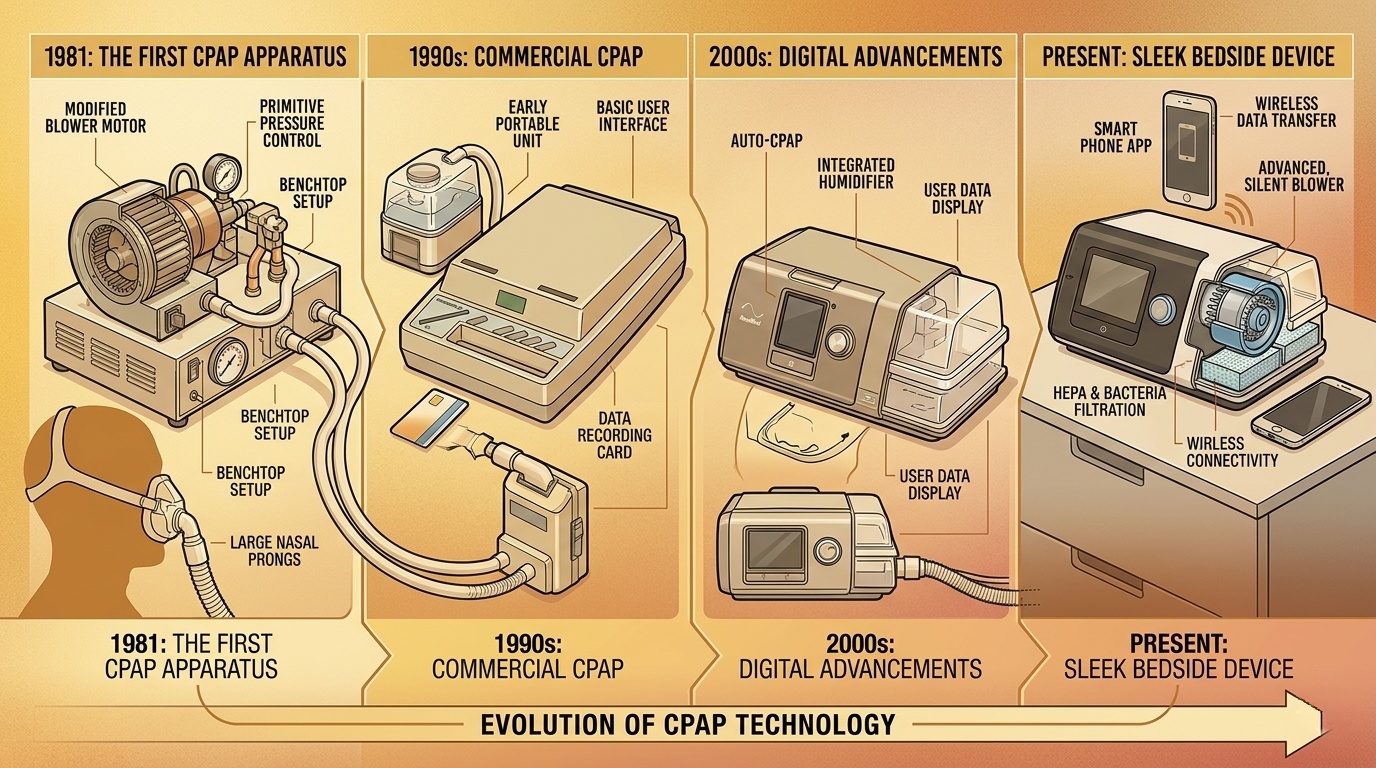
In 1981, an Australian physician named Dr. Colin Sullivan was frustrated enough with his
apnea patients that he decided to engineer a solution himself. The result looked like
something from a low-budget science fiction film: a vacuum cleaner motor connected to a
diving mask, strapped to a patient's face and blowing continuous air pressure into the
airway to keep it from collapsing during sleep. It was uncomfortable, noisy, and undignified.
It also worked brilliantly.
By 1985, Dr. Sullivan had co-founded ResMed to commercialize the technology, and the
CPAP (Continuous Positive Airway Pressure) machine began its long journey from "weird contraption"
to "standard of care." Through the 1990s, machines shrank, quieted down, and the masks evolved
from industrial diving gear into something a human being could actually wear. The 2000s brought
auto-titrating machines—APAP, which adjusts pressure breath by breath rather than blasting
a fixed level all night—and built-in humidifiers, which made the experience far less like
breathing through a hair dryer.
By the 2010s, CPAPs were generating nightly data: how many apnea events, how often the mask leaked,
sleep stage estimates. You could download it to your phone. You could bore your friends with graphs.
The 2020s brought AI-adaptive pressure control—my current machine, a ResMed AirSense 11,
analyzes my breathing patterns in real time and adjusts pressure continuously rather than reactively.
Colin Sullivan built his first one out of a vacuum cleaner. My machine has more computing power than Apollo 11.
What Comes Next
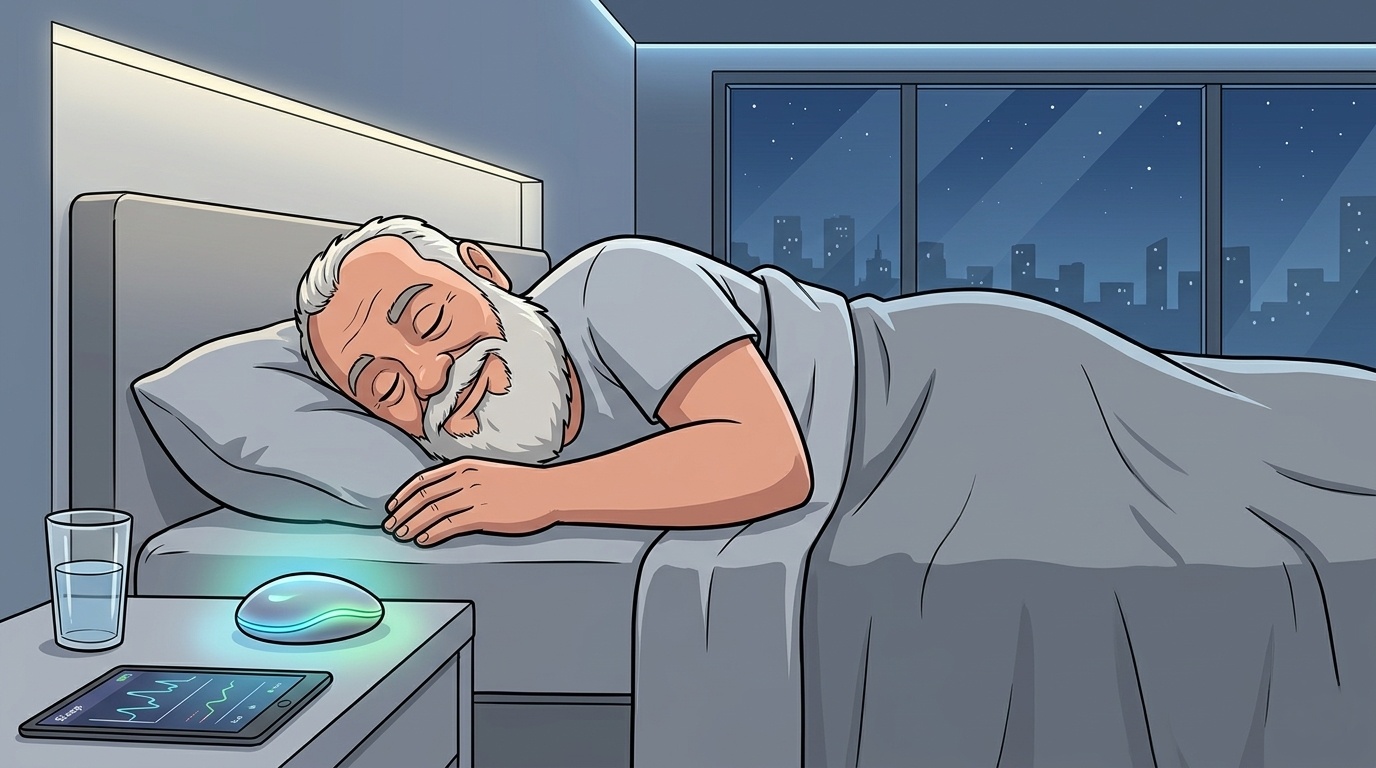
The mask, though—the mask remains the indignity.
I have cycled through probably a dozen mask styles over the years. Full face. Nasal pillow.
Nasal cushion. Over-the-nose. Under-the-nose. With headgear. Without headgear. Every new
design promises "the most comfortable sleep experience possible," which tells you how
comfortable the previous designs were.
Engineers and entrepreneurs have noticed. A wave of alternatives is emerging, aimed at treating
sleep apnea without strapping anything to your face:
- Bleep DreamPort (micro-CPAP): Small adhesive pads seal directly to your nostrils.
No hose, no mask, no headgear. Currently limited to lower-pressure prescriptions, but improving.
- Inspire: A surgically implanted device that stimulates the hypoglossal nerve, keeping
the airway open from the inside. A small remote lets you turn it on at bedtime. No machine.
No mask. No hose. Just a click.
- EPAP (Provent): One-way nostril valves that use your own exhalation to create
back-pressure, preventing airway collapse. Simpler than CPAP but effective mainly
for mild-to-moderate apnea.
- Positional therapy: Wearable devices that vibrate when they detect you've rolled
onto your back—the position that worsens apnea for most people. Sometimes the
fix really is that simple.
- Mandibular advancement devices: Custom oral appliances that hold the lower jaw
slightly forward during sleep, pulling tongue and soft tissue away from the airway.
Dentist-fitted, no electricity required.
- eXciteOSA: A daytime tongue stimulator you wear for 20 minutes while awake,
sending gentle electrical pulses to exercise the tongue muscles that collapse during
sleep. Think physical therapy for your airway.
And then there are the non-device approaches: weight loss (even modest amounts can
dramatically reduce apnea severity), myofunctional therapy (specific exercises for the
tongue, throat, and jaw), and in some cases, surgery.
I'm not abandoning my Resmed anytime soon. It, and its predecessors, have been keeping me
alive—literally—for more than two decades. But I watch these new technologies
with the same interest I once watched flat-screen TVs replace picture tubes and electric
cars inch past the range limitations of gasoline. The machine on my nightstand is a miracle.
I'd just love it even more if it disappeared entirely.
Jay Kyser was right that the CPAP needed explaining. He just didn't mention that the
explanation would take a quarter of a century, and it ain't over yet.