|
|
|
|
Page Views: 67 |
| Hashtags: #Chakras #Metaphysics #Spirituality |
| What a chakra is, where the idea came from, and why anyone might care. |
| Estimated reading time: 14 minute(s) (3178 words) |
- You don't believe you are psychic
- You don't believe anyone is psychic
- You fear that the New Age movement may be contrary to your
traditional religious roots
- You are doubtful that things with Hindu names can be of much
value to you
- You are doubtful that things without corporate brand names
can be of much value to you
In this book, we are going to address these issues in a light and
carefree way. Why not? Although you may have been brought up to
expect that personal spiritual development must be a somber and
serious undertaking, the fact is that nothing could be farther from
the truth! The reality is that God (or, if you prefer, All That Is)
is a happy and joyous Being, and the only way to get closer to that
Being is to become happier and more joyous yourself. After all, one
cannot become "one with the light" by clinging to darkness!
A Quick Definition
The word chakra is a Hindu word meaning, roughly,
"spinning wheel". According to Hindu belief, there are seven of
these energy centers located at seven points within the body. These
energy centers each have a specific purpose, just as the heart and
the lungs have different, specific purposes. But, since they are not
usually tattooed on the body or are easily recognized as a physical
feature we tend to not think of these centers as being real. Their
purposes and effects are more subtle than the purposes of the
physical organs.
If your heart rate decreases enough, your blood pressure drops,
your respiration slows down, and you may fall asleep or faint. These
effects are easy to measure and feel. If your heart chakra
slows down, you may sense a feeling of loneliness, emptiness,
futility. These feelings would be difficult to measure—but, if
you've ever experienced them, you know they are real.
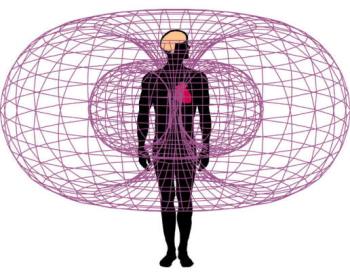
Chakras are usually presented as being, physically located in
real space—for example, the heart chakra is traditionally "located"
in the area of the physical heart, right about the sternum or breast
plate on the chest. Well, it's important to realize that chakras
are, by definition, non-physical. Therefore, they do not
exist in the same kind of space as a heart or a Volvo. Nevertheless,
we can pretend that chakras have physical coordinates. This gives us
a place within our physical bodies to become better acquainted with
the works, the plumbing. It doesn't take a lot of mumbo-jumbo to see
that something keeps it all working. The places we identify with
each chakra, are based on that chakra's primary purpose or effect.
So the heart chakra, which gives us that wonderful warm feeling in
the chest when working properly, or that horrible empty feeling when
it is not, is identified with the place in which we feel those
feelings. The throat chakra, which is activated when we communicate,
is "located" at the home of the vocal chords, and so on. (A person
whose primary means of communication is American Sign Language might
find it more convenient to imagine the "throat" chakra as being
located at the hands.)
The Hindus weren't the only culture to map chakras, by the way.
Most ancient cultures accepted the existence of a chakra system as a
given; and the mapping of which chakras do what, is amazingly
consistent from culture to culture. And, before you dismiss these
ancient cultures as "primitive", remember that, primitive or not,
most of them consisted of literate populations and kept efficient,
stable governments for
thousands
of years. One of these cultures, the Chinese Shang dynasty, maintained
peace and prosperity for seven hundred years! We Americans
have been unable to maintain both peace and prosperity for
seven consecutive decades, so perhaps a little respect for
these ancients would be in order.
Because the chakras are non-physical (but real), we moderns need
to learn a new way of perceiving what is "real". Or, perhaps a
better way of phrasing it would be to say we need to distinguish
between different "levels" of reality. If a telephone is "real"; so
is sadness. We are used to saying that sadness is a "state" rather
than a "thing". To work with chakras, you need to understand that
states are also things. They indicate what's up with a particular
area of our life. Well, so do chakras. As a matter of fact, you can
access chakras similarly as you do a telephone. You can learn to
dial up and listen. There is a wealth of information on that line!
Let's Be Scientific
As a rational, scientifically-minded person, you are aware that
your physical body consists of a variety of organs, such as the
heart, the brain, the uvula. You are also aware that it consists of
something else we can't quite define: It is alive. We
understand, scientifically, the processes of life—the chemical
bonds, the molecular reactions, the interplay of electricity and
fluids and temperatures. Yet Western doctors don't understand why a
cell should die, and they cannot restore a dead cell to life. Even
modern techniques such as cloning, organ transplants, and in
vitro
fertilization, take advantage of observed abilities of the living
cell that scientists do not fully understand or control.
We live in a young culture, however. Yes, we've gotten an
astonishing grip on the workings of the physical universe. That grip
has given us television, the ability to cure some diseases, and
roll-on deodorant. The thing to remember, however, is that—in spite
of our culture's own self-congratulatory press—not everything
can be understood or manipulated through physical means alone.
Our own lives are the constant, stunning reminder of this.
Experiencing Psychic Phenomena
When people state that they are not psychic, they usually mean
that they do not possess powers they feel are extraordinary. The
model most people seem to have of "being psychic" is Obi-Wan Kenobi
from Star Wars. But extraordinary is as extraordinary does.
For example, you can probably write a readable sentence or paragraph
in English. You may not find that to be extraordinary. But when
Shakespeare does the same thing, the results can be extraordinary
indeed! And even writers like Jacqueline Susanne, or Dean Koontz,
whose prose may not quite reach Shakespearean proportions,
nevertheless manage to make a lot of money and communicate with and
move millions of readers, by writing a bunch a paragraphs in
English. There's quite a range of possible literary prowess; and
maybe your supposed "lack" of psychic ability lies less in the
absence of that ability, than in your lack of development of these
talents.
Presumably, if you were willing to devote the time and energy to
perfecting your writing and marketing abilities, you, too, could
become a novelist of some renown. With less effort, you could still
manage to churn out a yearly Christmas or holiday letter that would
leave your personal friends and relatives laughing, crying, and
informed. Psychic development runs a similar range. If you drop
everything else, find a guru and study for fifty or sixty years,
you, too, could become a famous seer or guru. But with far less
effort, you can learn to develop your psychic abilities for your own
benefit. And, as you'll learn in these pages, such development
begins in large part with discovering your own chakras, and
exercising them as you would any muscle, to make them stronger and
more subject to your conscious control.
The thing to remember, is that psychic phenomena is usually
very subtle. That's why it's possible for intelligent people to
"not believe" in "psychic powers." Interestingly, the same people
usually do
believe in "hunches" or "intuition". They only get nervous when
the word "psychic" is used. The same people will feel a need to give
a "rational" explanation (no matter how forced) for any supposedly
psychic thing they encounter. In so doing, they find themselves
making rational-sounding, but
irrational, statements. "It was only the wind" they might
say, when they mean, "It was only an astonishingly
well-timed, coincidentally aimed and mind-bogglingly fortuitous gust
of wind that just happened to affect that one thing and go unfelt by
the rest of us."
Let's Be Religious
The New Age movement, by virtue of its universalist message, by
definition lies beyond the belief structures of all fundamentalist
religions, as does television, pre-marital sex, and slacks on women.
This frightens some people, who assume that if something isn't
included within the religious context, it must necessarily
go against
it. Yet, the same people customarily accept as good many things not
specifically addressed by their religious beliefs—the health
benefits of exercise, for example.
No matter what your religious belief system, understanding
yourself and how you function cannot conflict with it. Isn't "Know
thyself" a Biblical admonition? Some people also worry that
explaining the "mysteries of the soul" will in some way eliminate
the need for religious faith. Yet, many mysteries have been solved
through the years—we can now predict solar eclipses, and we
understand that lightning striking a house has more to do with the
lack of lightning rods than the wrath of God. There will always be
plenty of mysteries, and there will always be a need for faith.
After all, the more things we come to understand, the more things we
realize we have no clue about! For adherents to religious faiths,
any personal exploration that brings one closer to God must
be a good thing.
And how can you tell if your chakra experiments are bringing you
closer to God? Well, as with all other metaphysical things, you'll
just know. It may be imagination, it may be psychic, it may
be God—but, whatever it is, it's
real…so make the most of it.
A Chakra Experiment
To see how subtle, and yet real, a chakra can be, you can try
this experiment. All you need is about 20 minutes of peace and
quiet. (Now, you, there, in the corner—stop laughing! If necessary,
you can make this time before going to bed or by setting your alarm
clock a few minutes early.) You'll need to know, starting this
experiment, that you'll be undisturbed; so begin by taking the phone
off the hook.
Sit comfortably and close your eyes. (You can lie down if you
prefer, but try to not fall asleep.) Take five deep, slow breaths in
which you inhale, hold, and exhale for equal amounts of time. (Three
to five seconds for each step is about right. In other words, count
to five as you inhale, then hold as you again count to five, then
exhale slowly as you count to five again.) Adjust the number of
seconds as needed to help you feel relaxed. If you find yourself
expanding your chest so far your shirt buttons pop, or exhaling with
an explosive burst, slow down! This is a meditation, not an aerobic
exercise.
(By the way, this is the way to start any meditation.
Scientific studies performed in the sixties, when Transcendental
Meditation became popular, showed positive health and mental results
from simply doing this breathing/relaxation exercise and then
resting for 20 minutes. It turned out that whether chanting your
mantra or not, there was still benefit in taking time out to relax.)
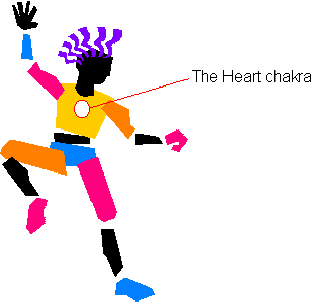 Anyway,
once you have relaxed, let your attention be drawn to the area of
your heart chakra. This is a spot that coincides where your heart is
located in your chest. This is the pump of your body. If it's going,
you're alive, and you may continue with the experiment.
Anyway,
once you have relaxed, let your attention be drawn to the area of
your heart chakra. This is a spot that coincides where your heart is
located in your chest. This is the pump of your body. If it's going,
you're alive, and you may continue with the experiment.
Imagine your consciousness to be a pinpoint of floating light.
Imagine yourself to
be
this pinpoint. What might your chest cavity look like, if you were
gnat-sized and it was transparent and intangible? Under your
control, guide your focus around the whole heart area—above the
chest and within it, a little to the left, a little to the right.
Feel your way around. Imagine finding your internal organs: your rib
cage, your heart as it beats, the air-filled sponges of your lungs.
Now, feel around for something more subtle. You are looking for
one, particular, tiny little spot. Think of it as your heart
chakra's G-spot. You'll know it when you find it, because, when you
do, you will suddenly feel the sensation of love.
The spot is small, so don't be surprised if you almost
immediately lose it. But you can find it again; and, with repeated
attempts, you'll find you can hold onto this spot for longer and
longer periods of time. It's also possible that you may not find it
at all on your first attempt. Even if you only get near it, you'll
get that sudden love sensation. The more dead-on you hit the spot,
the stronger the sensation will be.
Now, this much of the experiment alone should prove the point:
You
can influence your feelings, your state of being, simply by
directing attention to a chakra. Again; the Western traditionalist
will insist that, because your imagination was involved, none of
this experience was real. What such a materialist misses, is that
your imagination
is real! And your feelings are real. They may not be made of the
same kind of reality as, say, an internal combustion engine
or social unrest, but they are real nevertheless.
How real is imagination? Well…without it, there would be
no internal combustion engines, nor social unrest, either.
But wait, there's more. If you try this experiment—it's called a
heart meditation, by the way—once a week for three weeks,
you'll notice something new in your environment. Somehow, people
will seem more friendly to you, and you'll find yourself responding
more positively to them. Sometimes you'll even find yourself seeing
a stranger and feeling yourself filled with love for him or her.
Imagination? Perhaps…but real, nonetheless. And, unless you are a
Hollywood agent or personal injury lawyer, desirable.
The History of Chakra Awareness
There is actually nothing "new" about the New Age. Neither are
chakras a new invention. People have known about these energy
centers or vortexes for thousands of years. Hindu religions as well
as Buddhists, Christians, Jews and Muslims all include information
of these centers in their holy writings. Many indigenous cultures
around the world are steeped in the beliefs of sacred energies
within the physical body.
The Sumerians may have been the first to study these centers,
which had cycles and seemed to exist for them in real time and
space. These areas of the human form could be detected by the
physicians of their day. Operations were performed, taking these
chakras into consideration. Archeologists have unearthed skeletons
that show evidence of major brain surgery—and, because the cranial
holes show signs of healing, we know the patients lived for years
after their operations. A great deal of Sumerian writings have
survived, thanks to the fact they were recorded on clay tablets
rather than floppy disks, and their doctors left clear descriptions
of their procedures and techniques. The Sumerian civilization didn't
collapse so much as it evolved into all the great middle eastern
cultures of later history, including the Egyptian, the Greek, and
the Roman; and these techniques continued to be passed on in one
form or another. However, through the centuries the technology
behind the techniques was temporarily lost, because the techniques
were taken on faith. They were eventually rejected as folk medicine
at the arrogant dawn of scientific rationalism; it wasn't until the
last few years that science has rediscovered some of the principles.
Of course, translating the Sumerian documents hasn't hurt!
In ancient China right up through modern times, doctors of
medicine and healing are taught about these vortexes and how they
operate. Many indigenous cultures also know about them. So how come
we sit here wondering about them ourselves? How come those ancients
were so clever to come up with these ideas? Maybe they weren't so
clever—maybe they just took lots of time to find out for themselves.
After all, the Sumerian culture flourished over five times as long
as there has been a United States. Hopefully we can learn
from them and not need another 800 years to shift our attention to
spiritual matters. It's never too late to start remembering, and
here we are!
How Many Chakras Are There?
The traditions that teach of chakras have always spoken of seven.
However, there is a New Age tradition that we live in a time of
increased spiritual awareness, a time when new information is ready
to cross the boundaries between All That Is and Earth. It has been
said that "Twelve is the number of the age," and certainly the past
two millennia have seen the number twelve come into its own. There
were twelve apostles, twelve signs of the Zodiac, even twelve sides
to the iron crystal that some scientists say forms the center of our
Earth. Modern tradition says that there are many, many chakras; that
once, seven were all that mattered because of the state of
humanity's development; and that now, we can take advantage of
twelve. Three of the five additional chakras are "located" beyond
the physical body, while the other two connect the traditional seven
to the planet itself; by sending our point-of-consciousness to them,
we stretch our ability to perceive at a distance, which brings
further benefits—just as jumping farther and farther benefits an
athlete training for the decathlon.
The Format of This Book
In the remaining chapters, we will examine, one per chapter, the
twelve known chakras. For each chakra we will examine its primary
purpose, list the symptoms of a weak chakra (helping you decide
which of your chakras needs the most work), provide hints for
finding the chakra, and propose an visualization or meditation to
activate and strengthen it.
Think of these exercises like gym exercises. You know you must do
them for your own physical health; so you throw yourself into them
and make them fun. Exercising your chakras is good for your
physical, mental, emotional and spiritual health, so make time for
them and motivate yourself to do them with the same fervor.
After all, no one wants a puny chakra!
We also provide colors, sounds, and tones associated with each
chakra. These may mean nothing to you. But some people "think" in
colors, or in sounds, or in musical notes. For these people, know
the color, sound or tone associated with the chakra will help them
zero in on the energy there.
The fun begins on the next page. So, what are you waiting for?