|
By: Paul S Cilwa |
Posted: 10/1/2026 |
|
Page Views: 61 |
| Hashtags: #Music #1940s #BigBand #WAC #Signals |
| The tuffet is a swivel chair, and the spider waits until the last line. |
| Estimated reading time: 3 minute(s) (703 words) |
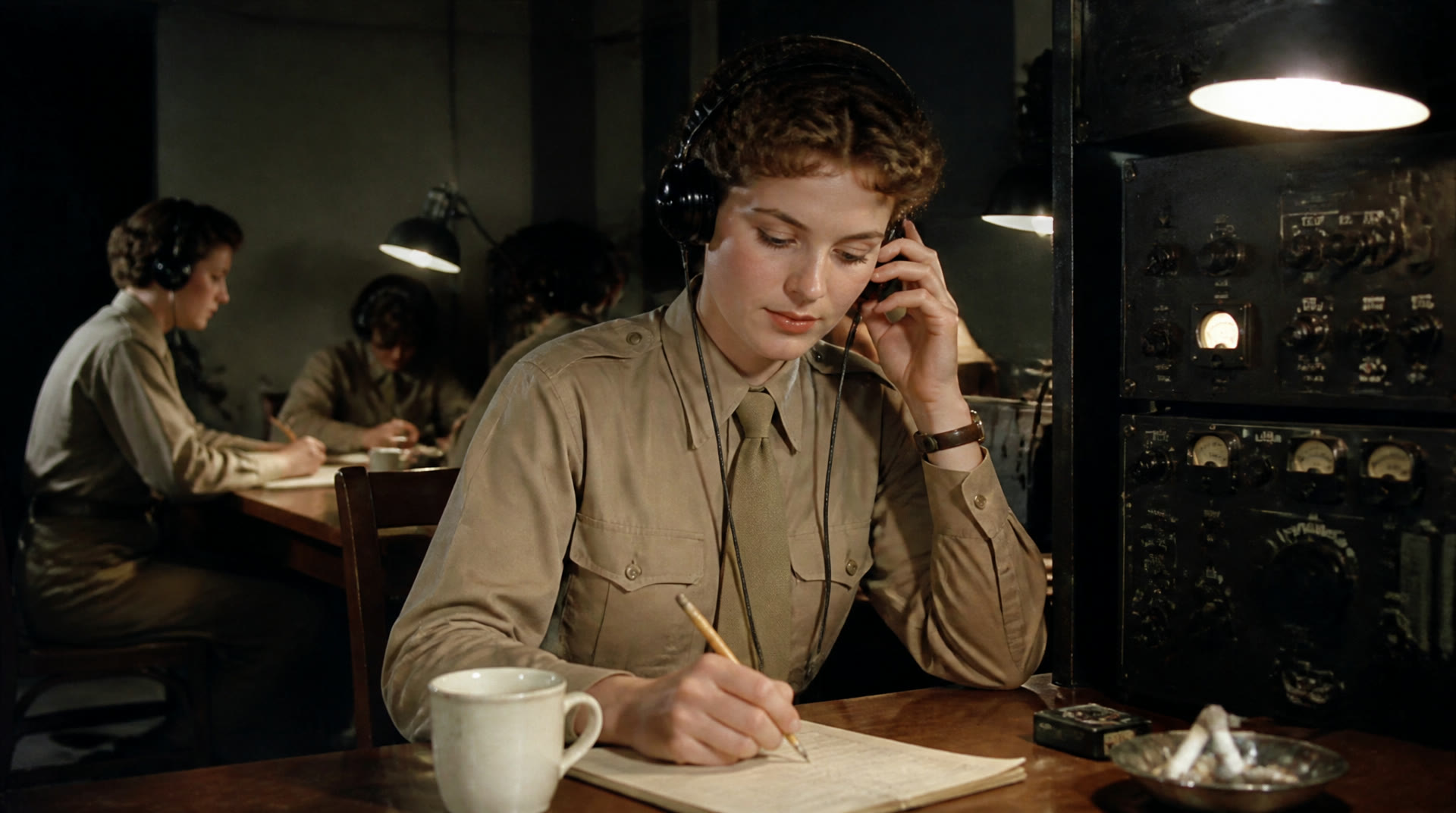
The girl in this song is a radio intercept operator, which is not a job anybody
writes songs about, and that is precisely why it wanted one. She sits a twelve-hour
graveyard shift in a room with no windows, listening to static for the one voice in
it that matters, and when she finds it she writes it down in pencil and hands it to
a runner. Nobody pins anything on her. A company of men goes home instead, most of
them never knowing there was anything to go home from.
In June 1943 the women who did this work weren't officially soldiers yet. The Women's Army Auxiliary Corps served with the Army, not in it, without full military rank or pay; Congress was finishing the bill that made them the Women's Army Corps, and Roosevelt signed it on July 1. Within weeks, small WAC detachments were posted to Army listening stations like Vint Hill Farms in Virginia and Two Rock Ranch in California, copying German and Japanese Morse off the air, and at Arlington Hall, the Army's codebreaking center, women would make up some 7,000 of its 10,500 workers by the end of the war. Nobody wrote songs about them then, either.
About the tag. I tried three endings and threw two away, because a song that
spends four minutes insisting the girl is nobody's prize cannot then hand her to a
fellow in the last eight bars. So the spider sits down beside her and she takes him
for a ride, and the band buttons it before anyone can ask who is courting whom. The
nursery rhyme has Miss Muffet frightened away. Ours does not scare.
Little Miss Muffet
The Paul S Cilwa Project
Paul S Cilwa
Lyrics
[Intro—brass riff, snare shuffle. All, bright harmony]
Little Miss Muffet
sat down at her tuffet—
a swivel chair, a headset, and a pad.
Little Miss Muffet,
she was the best set of ears they had.
[Verse 1—solo, crooner]
She wasn't built for foxholes,
never marched a muddy mile,
but she'd sit a twelve-hour graveyard
with the headphones and a smile.
While the boys were oiling rifles
and the sky was going black,
she caught a whisper in the static
of a German night attack.
[Pre-Chorus—trio, soft swing]
She didn't shake, she didn't shout,
took it down in pencil, clean—
a quiet girl with steady hands
and a mind like a machine.
[Chorus—all, big-band punch]
Little Miss Muffet
took the traffic, called it right.
Little Miss Muffet
had 'em beat before the light.
She hadn't any rifle,
not a stripe upon her sleeve—
just a pencil and a headset
and a hunch you'd better believe.
[Verse 2—alto lead]
The colonel hit the doorway,
said, "Who caught this in the din?"
She raised her hand so quietly
you could hardly see her grin.
They ran her sheet to headquarters,
they flashed the warning straight,
and the trap the Krauts had baited
was a trap that sprang too late.
[Bridge—call and response]
[Guys] She saved a company of soldiers—
[Girls] with a pencil and a chart—
[Guys] and nobody pinned a medal on her—
[Girls] nobody's half that smart—
[All] but every boy who made it home
owes the girl who did her part.
[Final Chorus—all, brass swell]
Little Miss Muffet
brought the whole battalion through.
Little Miss Muffet,
here's a hand from all of us to you.
She never fired a rifle,
never stormed a barricade—
but she stopped a German ambush
before the guns were laid.
[Tag—soft harmony, ritard, then a button]
Along came a spider,
he sat down at her side—
Little Miss Muffet
took him for a ride.