|
By: Paul S Cilwa |
Occurred: 7/21/1970
Posted: 11/27/2023 |
|
Page Views: 723 |
| Hashtags: #Photography #JacksonvilleInternationalAirport #Florida |
| In 1970, a trip to the airport was more fun than a trip to the zoo. |
| Estimated reading time: 3 minute(s) (616 words) |
The film I had purchased was called Kodak Royal-X Pan, and had a very high speed of ASA 1600.
It was introduced in 1957 as a successor to the earlier Kodak Super-XX film, which had a speed of ASA 200. Kodak Royal-X Pan was a panchromatic film,
meaning it was sensitive to all colors of the visible spectrum, unlike the even older orthochromatic films, which were only sensitive to blue and green light.
(That's why, in very old photos, red objects looked black.)
Kodak Royal-X Pan was designed for low-light situations, such as indoor sports, night photography, or journalism.
The film had a relatively fine grain structure and high sharpness, and it could be pushed or pulled by several stops to adjust
the contrast and exposure. Kodak Royal-X Pan was discontinued in 1992.
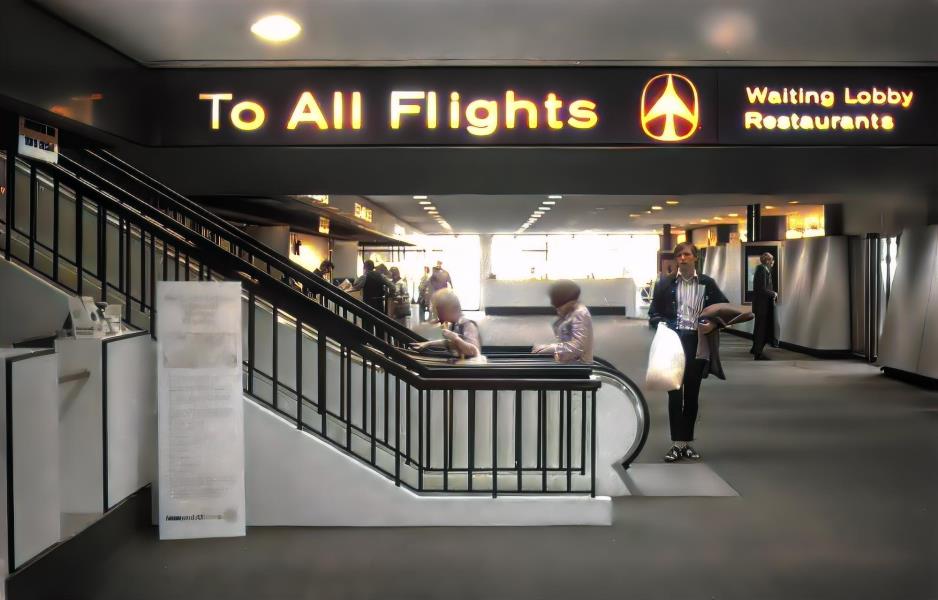
The reason I wanted to try out this film in the airport was that I knew it was a large space, too large to fill
with a flashbulb. So this would be an opportunity to take photos indoors, with natural lighting…if it worked!
However, when I got the photos processed, I was disappointed in how grainy they were. For example:
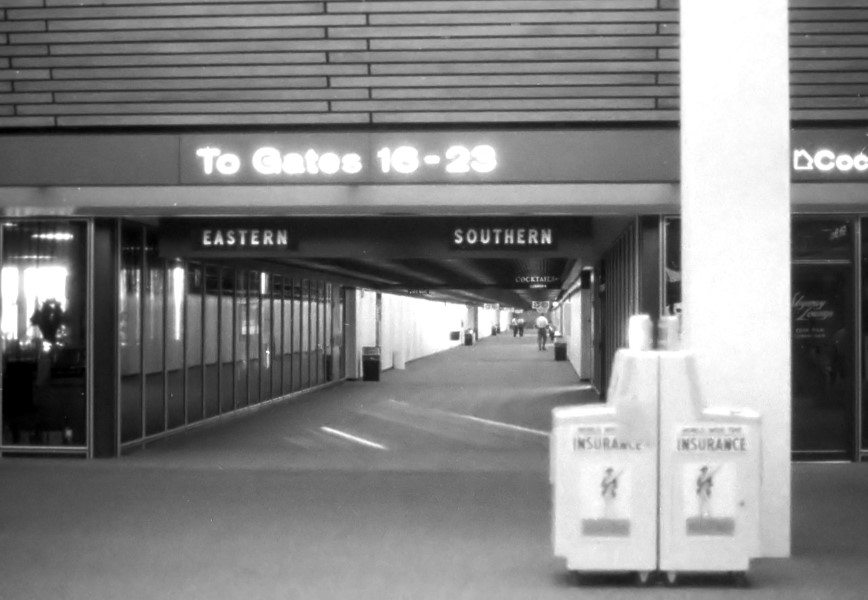
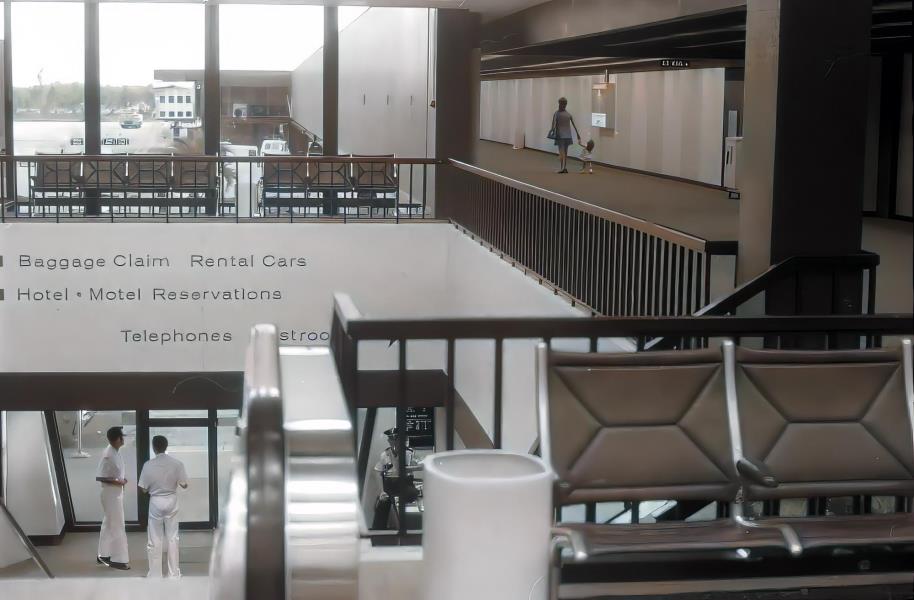
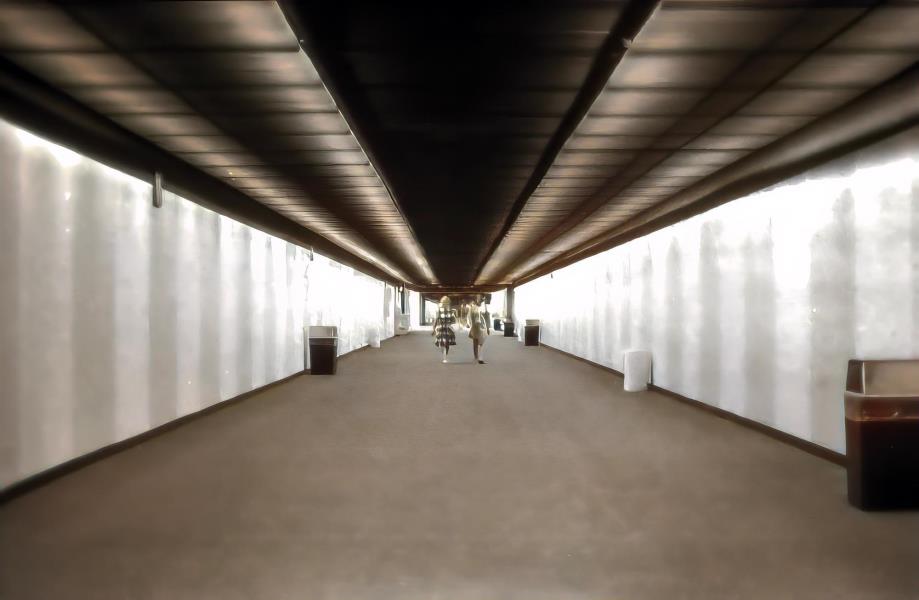
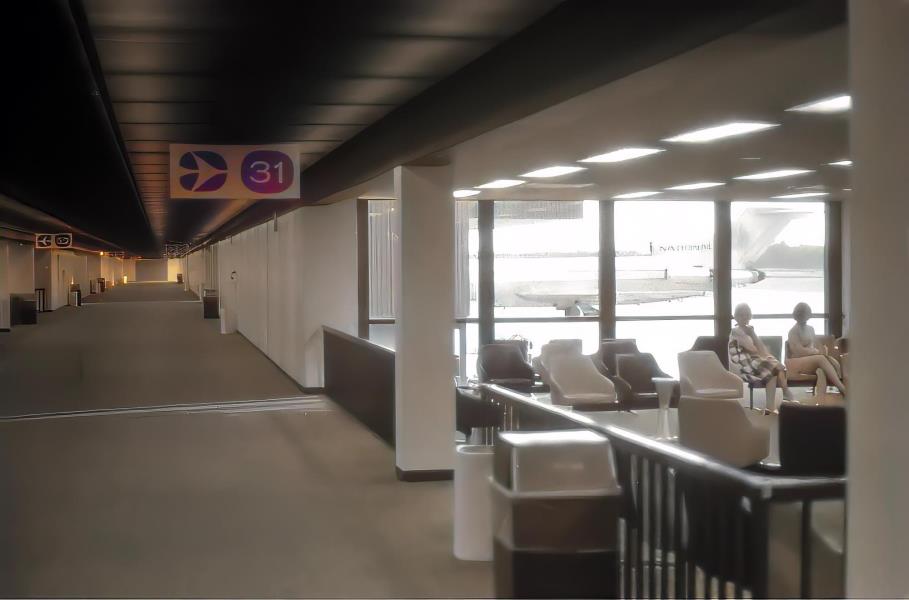
At that time, that was the best I could do. However, now we have these AI-based photography tools that make it possible
to get rid of the grain, and even interpolate details the original photo lacks. The below enhancement was done by Topaz Photo AI.
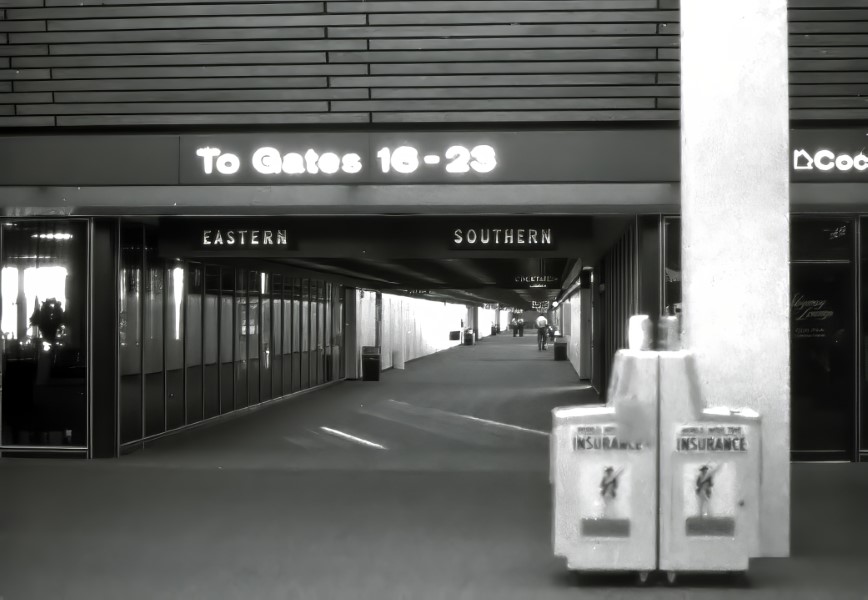
Now, I'm well aware that many photographers shot in monochrome (we used to call it B&W
or black and white
) for the
effect, just as today many desaturate the colors from images they shoot to create a monochrome image. But I wasn't one of those.
To me, black-and-white equated to cheap and I've never favored it. So…now we also have AI tools to colorize monochrome
photos. None of the ones I've used have been perfect. But they still do a fair job. (Most of the colorizations on this page were done
by Fotor.)
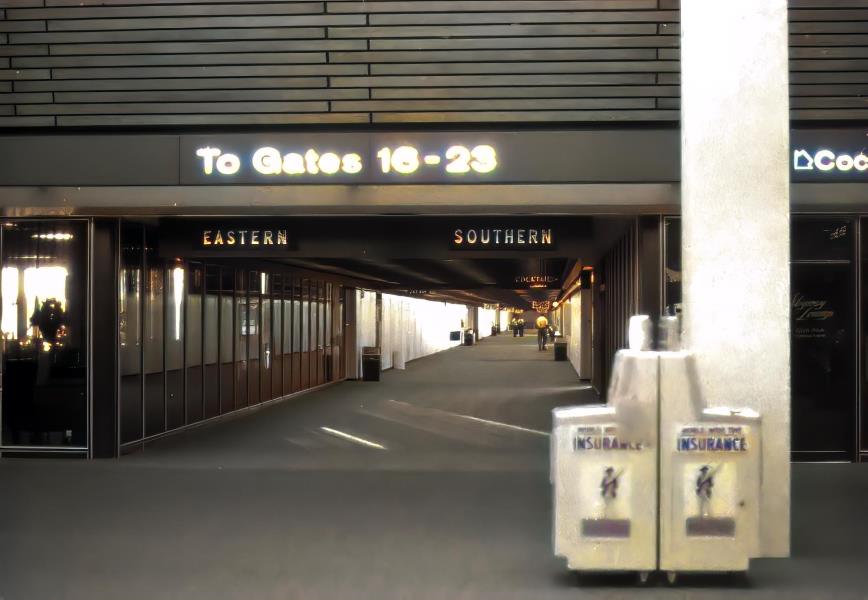
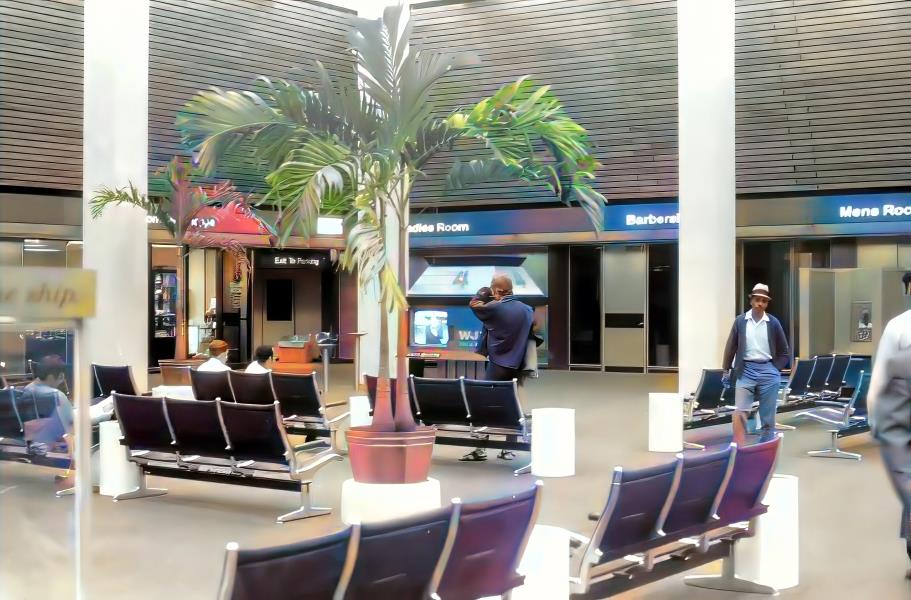
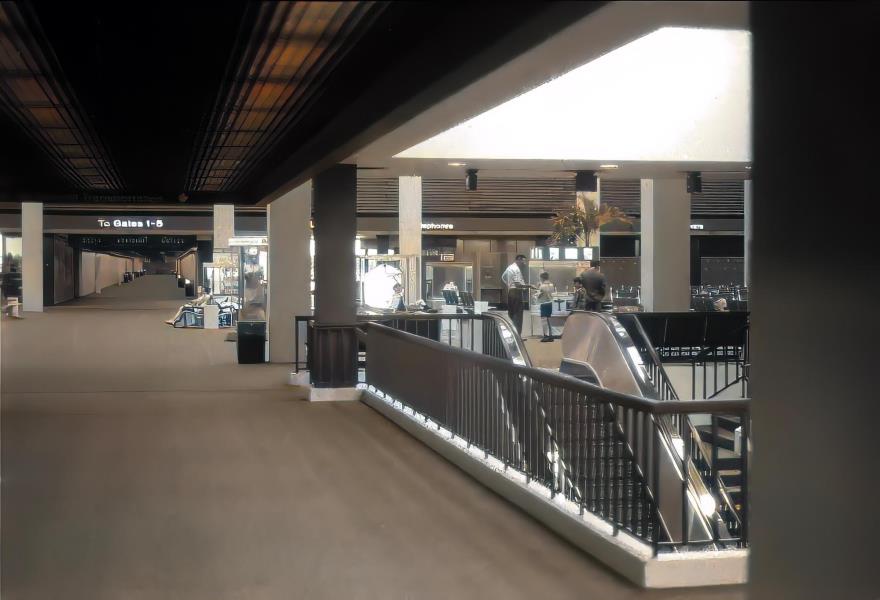
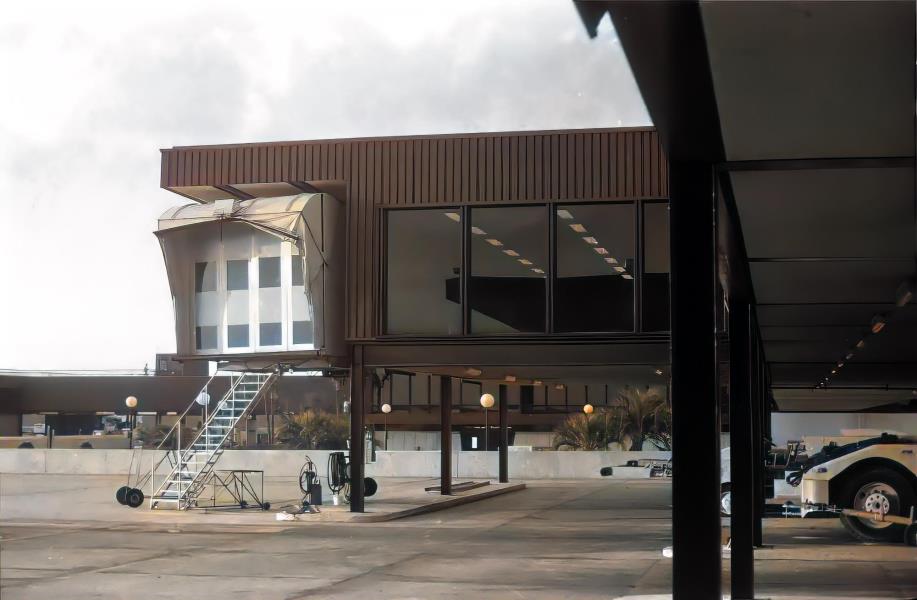
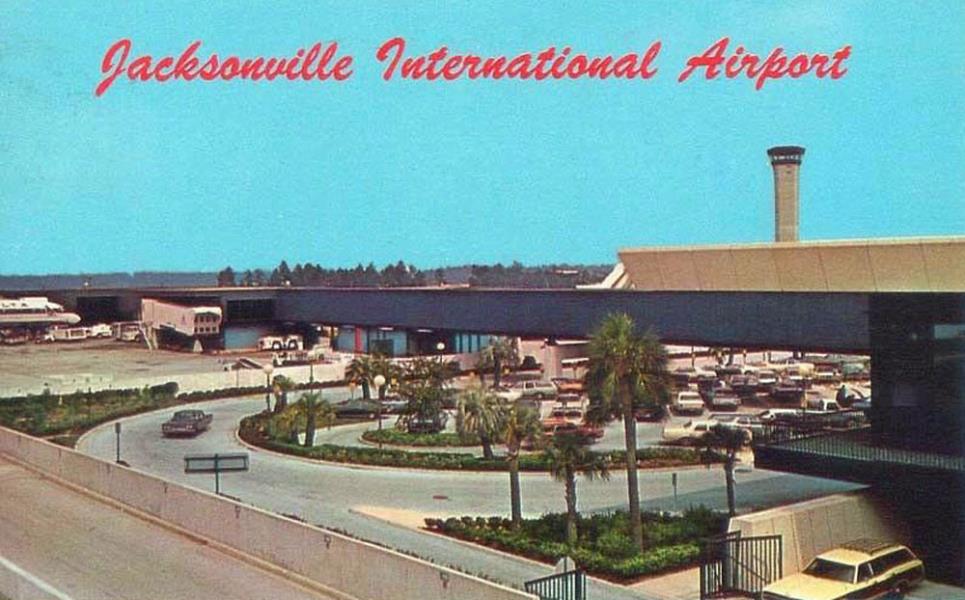
Jacksonville International Airport was originally built in 1965 to replace the older Imeson Airport,
which could not accommodate the growing demand for air travel and the advent of jet airliners.
The new airport was dedicated on September 1, 1968 and featured a modern terminal building with separate sides
for departing and arriving passengers. The terminal building was designed by a local architecture firm,
Reynolds, Smith & Hills, which also oversaw the subsequent expansions and renovations of the airport.
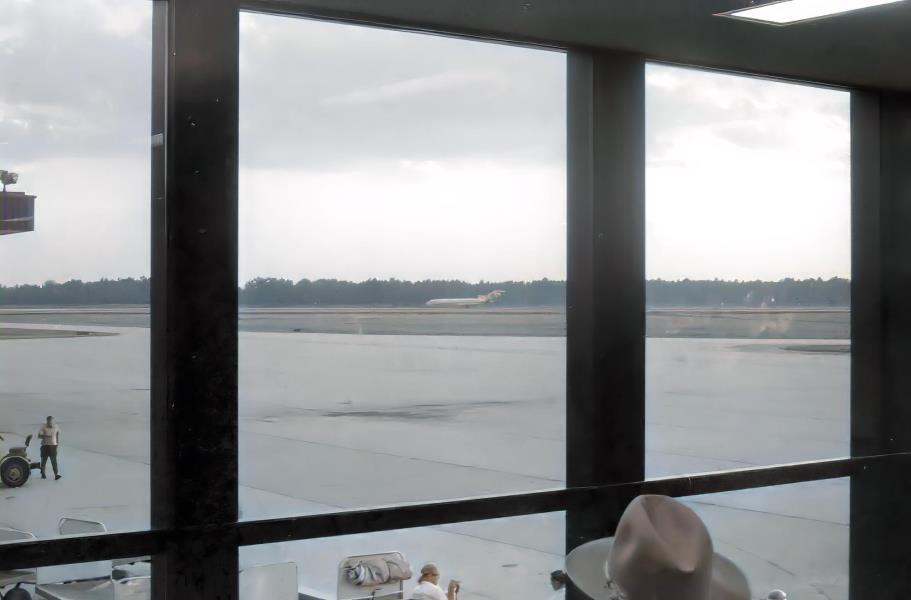
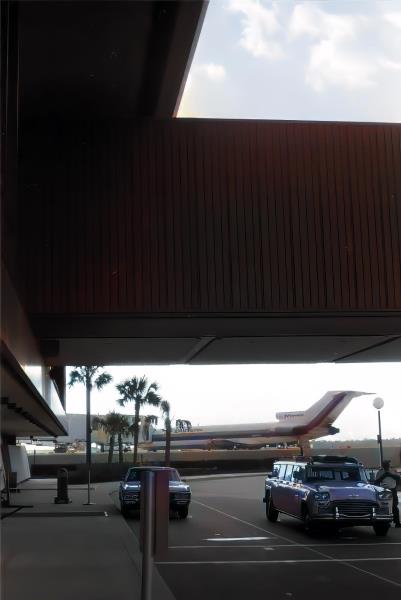
In my opinion Fotor did too mild a job on the following shots of Gramma's plane arriving, so these were done by Colorize (an Android app).
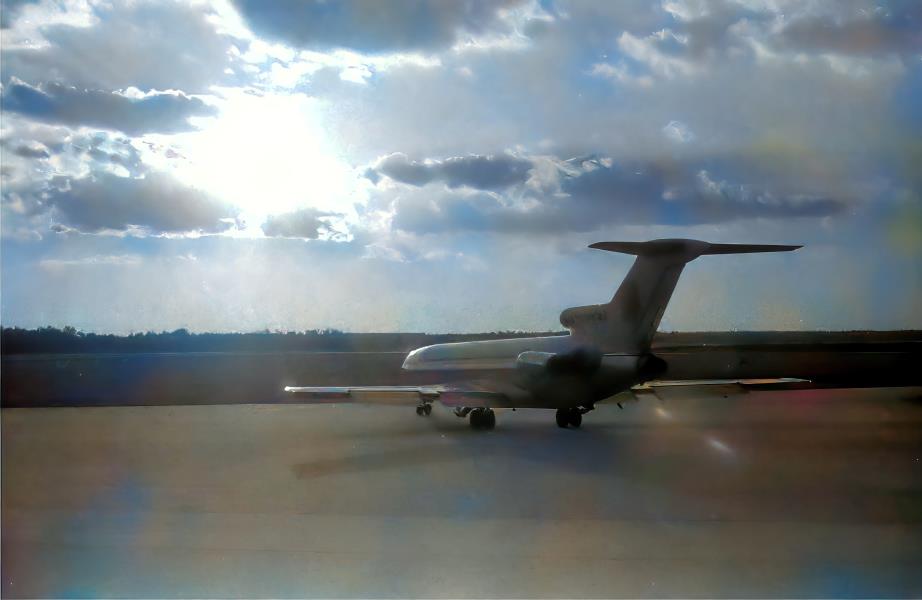
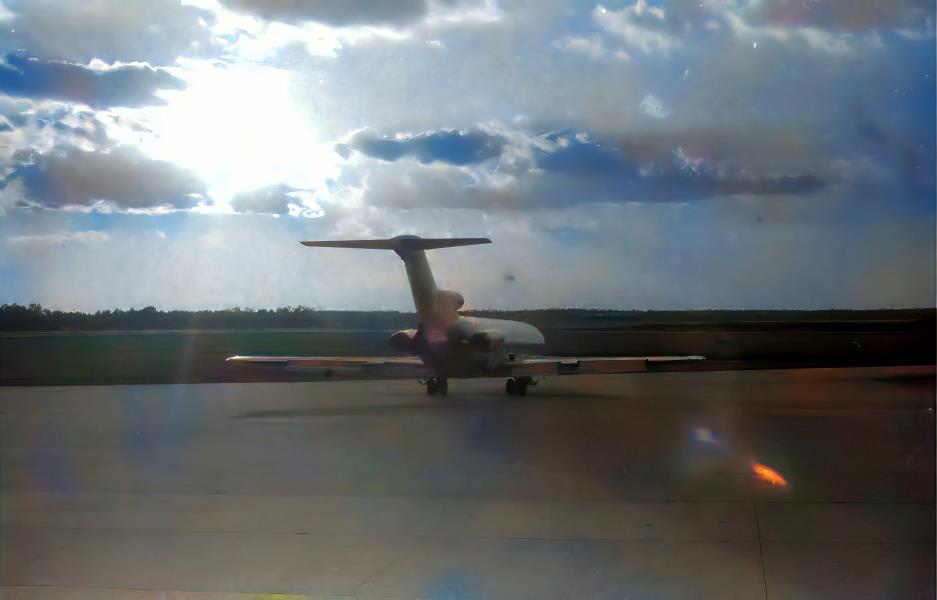
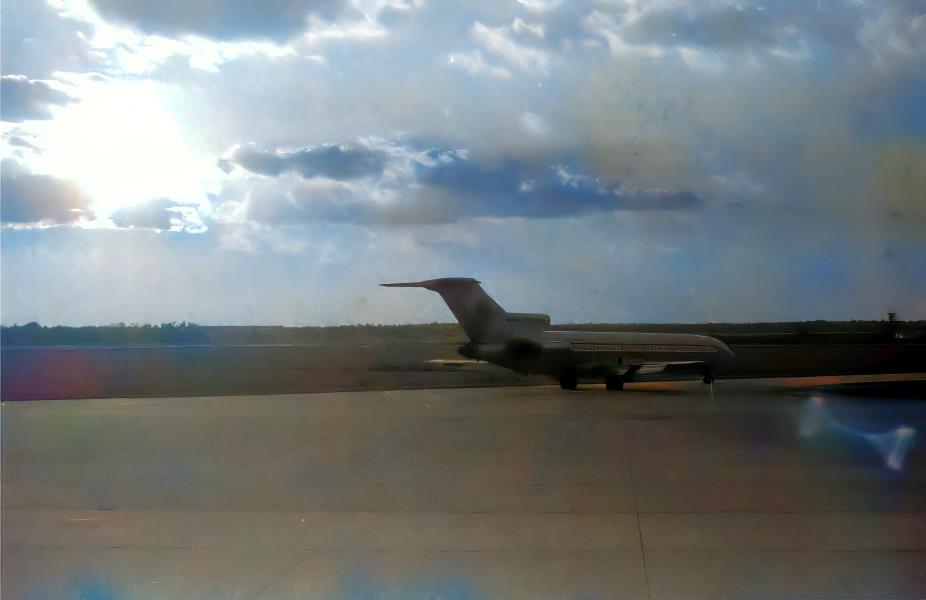
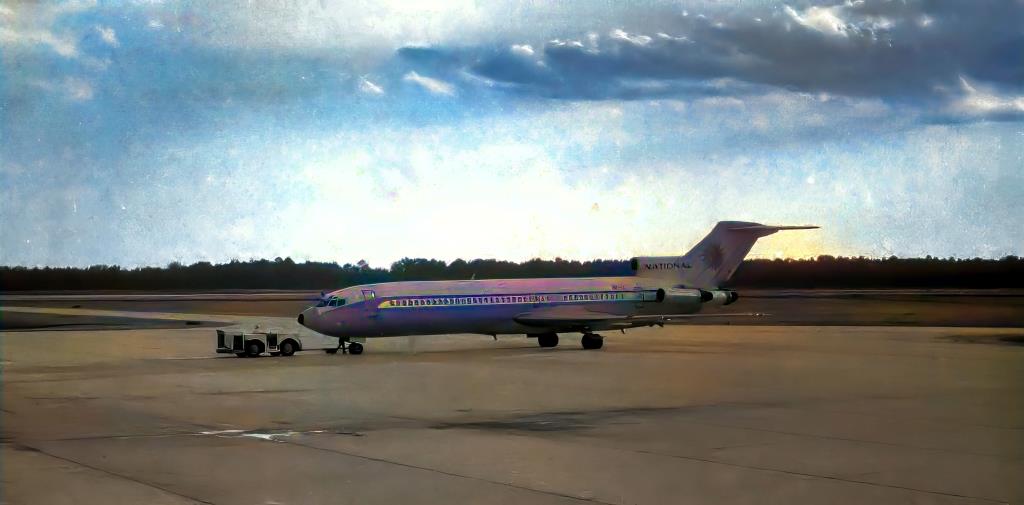
Anyway, after all that…Gramma arrived.
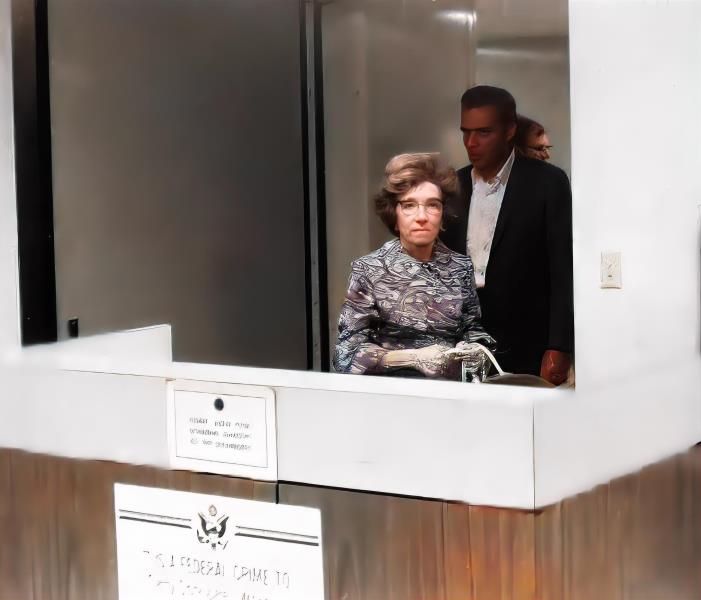
Hooray for modern air travel!