|
By: Paul S Cilwa |
Occurred: 8/1/1992
Posted: 9/23/2015 |
|
Page Views: 1,910 |
| Hashtags: #GrandCanyon #Rafting #WhitewaterRafting #OARS |
| Photos and narrative our our last day rafting the Grand Canyon Sampler. |
| Estimated reading time: 5 minute(s) (997 words) |
This morning Robby insisted that we swap boats. We decided to
ride with Scotty. Mike and Mary Ann stuck with Dottie and I.
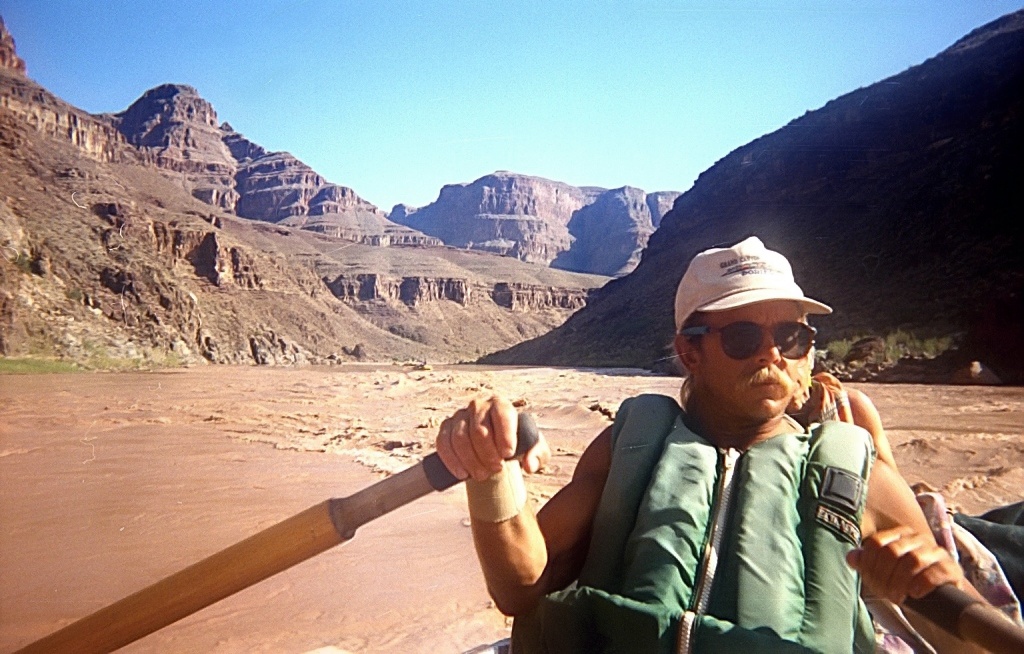
It was definitely different, riding with Scotty. He was a very cool guy,
equally good at telling Canyon stories as Robby, but a somewhat different
style of rowing. Robby seldom rowed the raft backwards, but Scotty did it a lot.
He said rowing was easier for him that way.
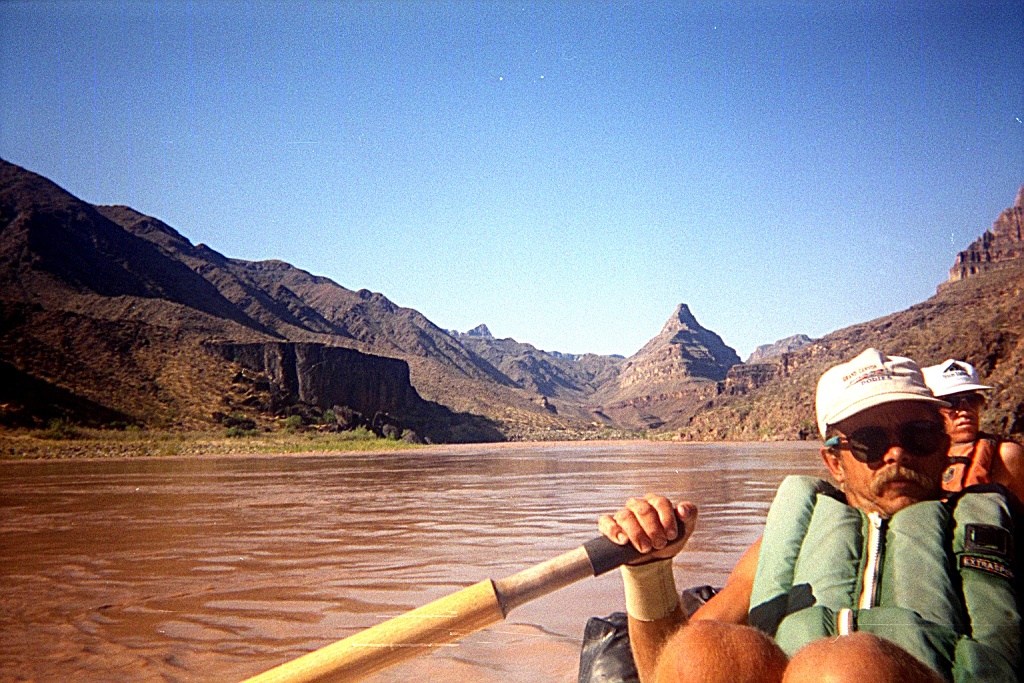
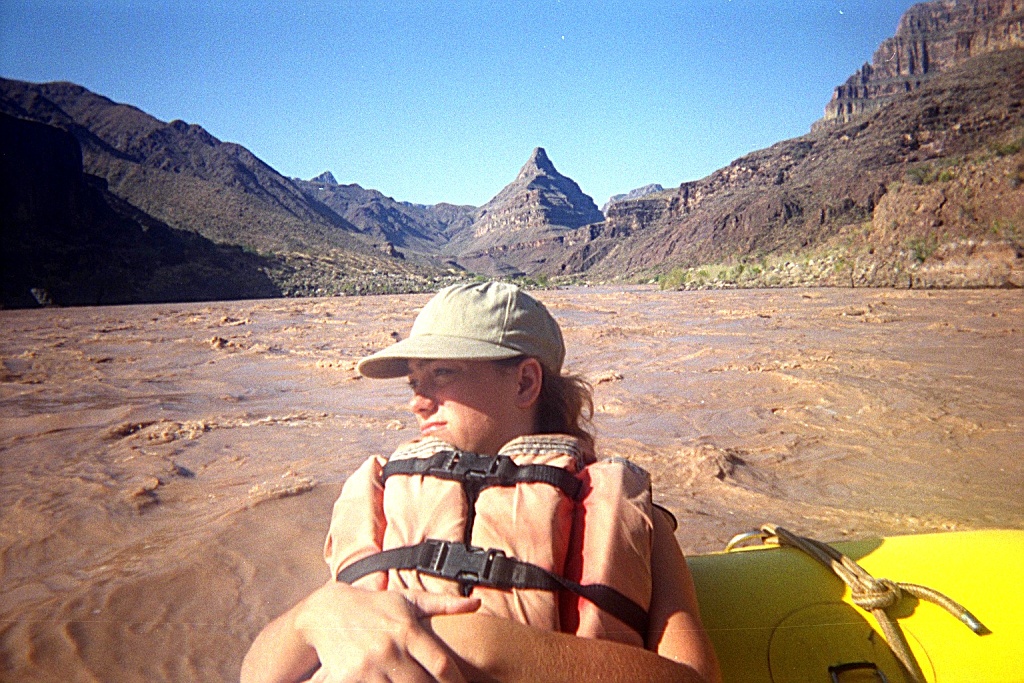
This was our last day, and it was over much too soon. We'd only spent three days on the
river, and my shorts were no longer anything remotely resembling white.

We didn't encounter any rapids. In fact, the surface of the river was almost glassy.
As Robby had said, this end of the river doesn't have all that much whitewater.
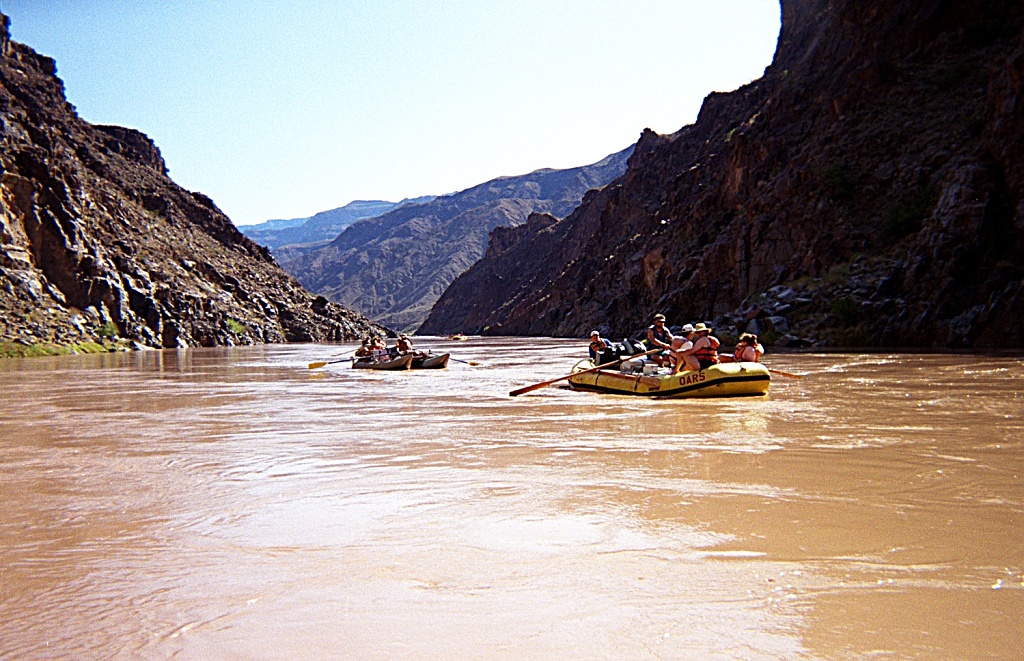
Diamond Creek, at Mile 226, is where almost all the rafting tours "take
out."
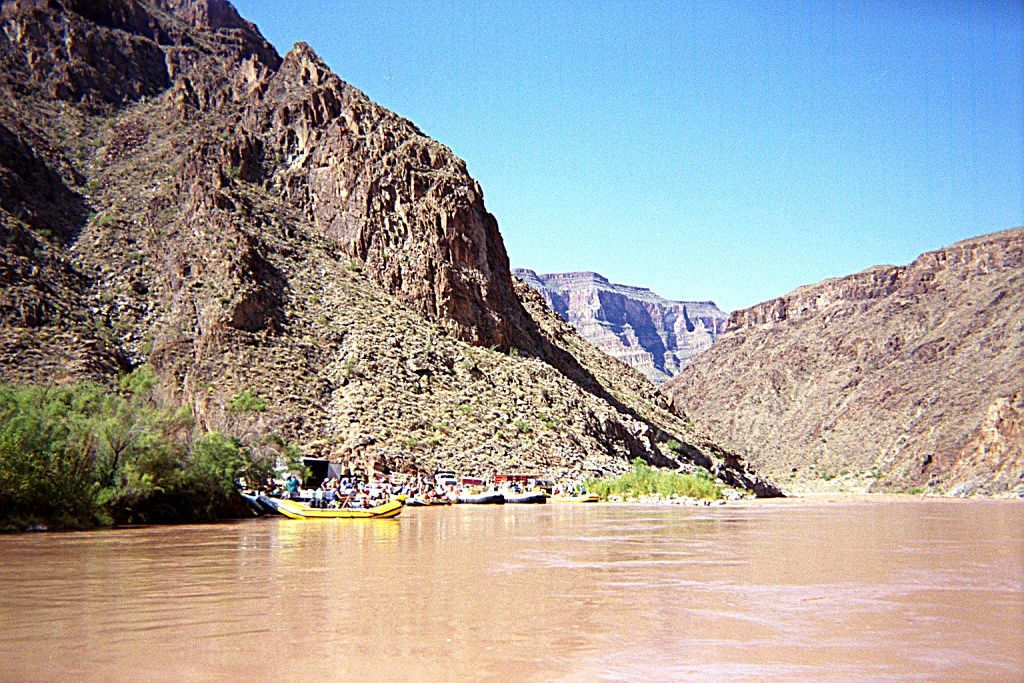
When we got there it was like a circus. There must have been
twelve or fourteen rafts partially pulled up onto the sand, being
unloaded, taken apart, washed and deflated.
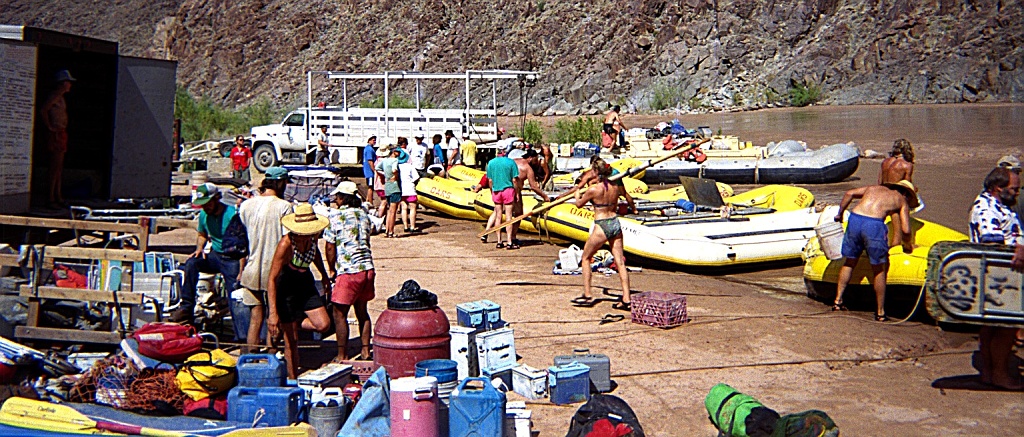
As guests, we didn't have to help but we all did anyway. No matter what, it would have
been better than standing in the sun, watching. But for me it was
part of the experience, a way to keep the vacation from ending quite
so soon.
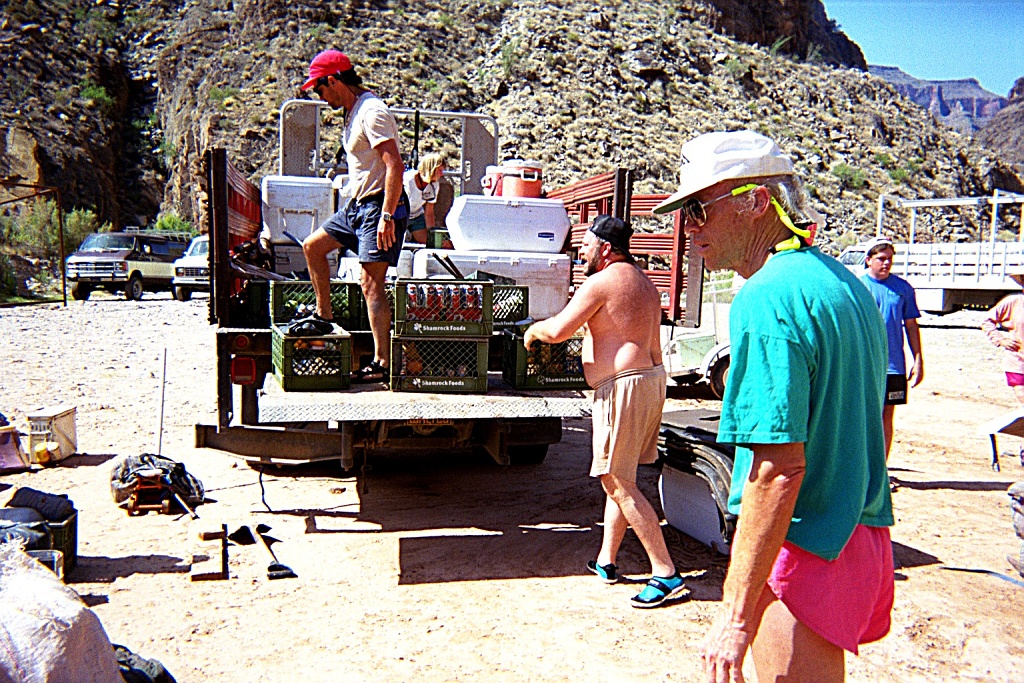
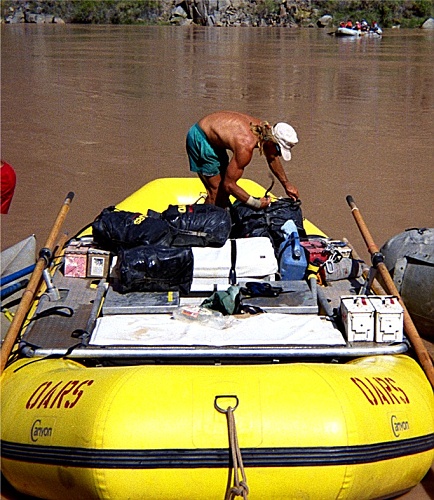
I hadn't given any thought to where the rafts came from, at Lee's Ferry; they
were just there when we arrived, inflated, stocked and ready, except for passengers'
belongings. But there was so much work involved in deflating the rafts,
that I began to get a feel for how much work had been involved before we ever got there.
In addition to stowing away all the gear and loading up the garbage we'd been carrying the whole
way (including the porta potties) because nothing gets left behind, the boats
had to be deflated and the limp remains loaded onto a truck.
But as all this was going on, and as I helped out as much as they'd let me,
I couldn't help but notice: Rafters are remarkably attractive people.
It made me feel more attractive, myself, just being among them.
Then, there was also the fact that, although we were all working
pretty hard…the surroundings were just so breathtakingly beautiful
that it didn't seem like work at all.
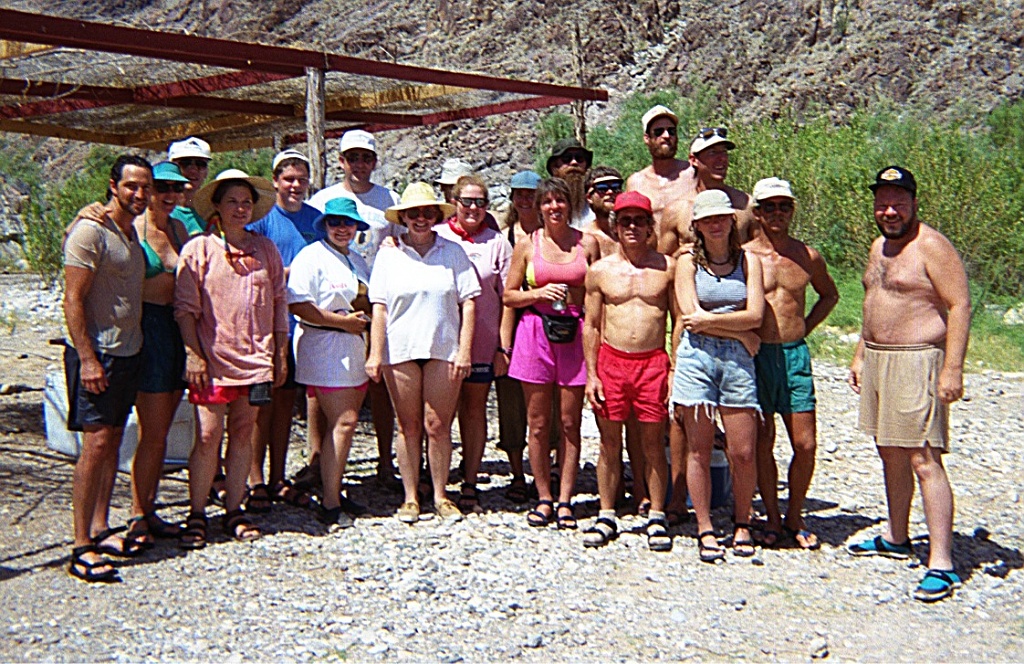
After the gear had been stowed in the trucks and vans, we had our
last lunch and stood together for group photos. Then we boarded the
van to head for the Canyon rim.
Diamond Creek is on an Indian reservation. Typically, the
Hualapai were given the least valuable land possible and told to
stay there. They are used to desert living, but this land offered
little in the way of places to grow food or graze animals. But then
they lucked out. In the 1970s, rafting became popular, and Diamond
Creek was the best place to take out at the end of a river run. So
the Hualapai charge $16.50 per person, and per vehicle, to use their
road to get from the Canyon to the highway. I've never been happier
to pay a toll. (Which, incidentally, was paid by OARS, the rafting
company, from the cost of the trip.)
The trip to Las Vegas was done in that van, with all fourteen of
us aboard. It took about four hours, including the hour from the
Canyon to the Hualapai village. I dozed for part of it, but when I
woke the scenery was so spectacular I couldn't go back to sleep. We
drove right over Hoover Dam; the road makes use of the dam itself as
a bridge to cross the Colorado.
Until Next Time…
River guides do not make much money. But Rob and the others
didn't seem to care. "You have to get bit by the bug early," Rob
confessed, "before you have any commitments." Rob was 31 and had been
running the river since he was seventeen. He said he couldn't
imagine doing anything else. Scotty, our guide on the third day, was
married and had a three-year-old girl he loved very much…but his
real life was on the river. He couldn't wait until his daughter is
sixteen or so and can go on river trips with him.
It's so clean and natural down there. After we got back, we had
to return to the airport. Dottie was flying out first, so we stopped
at McDonald's for a quick dinner before her flight. I drove through
the traffic—not that bad, really—and followed the stop lights and
signs and lines on the road. It all seemed so surreal. Life in the
Canyon seemed so honest. There's something about the experience,
about floating between these huge, cathedral-like monuments of
stone, that strips pretense away and leaves nothing behind that
isn't real. The layers of stone in the walls of the Canyon each
reveal a different age of the Earth. The lowest layer, the Vishnu
Schist, is 1.8 billion years old. Somehow, looking at that layer,
and the layers above it, all combining in such an exquisite
tapestry—somehow it all puts things in perspective. Bush and
Clinton, traffic, McDonald's…they're all such transient things,
relatively unimportant. By comparison, the Canyon is forever.
No wonder I knew, then, I would keep coming back.