|
By: Paul S Cilwa |
Occurred: 4/19/2009 |
|
Page Views: 1,612 |
| Hashtags: #Photography #WillisFrye #SouthMountain |
| All about the day Michael and I scattered the ashes of our friend, Willis, on South Mountain. |
| Estimated reading time: 6 minute(s) (1355 words) |
Willis died that night.
Yet we weren't really sad. Not only because both Michael and I are well aware
that "death" is an illusion and those who have passed on remain a part of our
lives, but also because Willis should have died six years ago; and he
spent those "extra" years living life on his own terms.
In the gamble of life, Willis had won.
Willis came to Arizona to die.
He'd been a heavy smoker all his life, and his lungs had just about given out
on him. In the lungs, surface area is everything; oxygen, meeting that surface,
is absorbed into the blood. To maximize surface area, the inside of the lungs is
a spongy material perforated with little holes. Those holes provide the most
surface area possible within the volume of the lungs. But tobacco smoke, inhaled
into the lungs over the course of years (and assuming it doesn't trigger the
growth of a cancerous tumor first), causes the little holes to coalesce, forming
a smaller number of larger holes. The larger holes provide a smaller surface
area. Eventually, the victim begins gasping for breath at the slightest
exertion, such as getting out of a chair.
In his home in Indiana, Willis was put on oxygen and urged to move to a drier
climate, where less moisture in the air would leave more room for oxygen and
make breathing a little easier. Thus, he found himself in a senior apartment
complex in Sun City, Arizona.
He'd been married twice, having children by his first wife and raising his
step-children by the second wife. Yet he had a secret he thought no one
suspected: Despite the marriages and a military career, he had always been
attracted to men.
Not that it much mattered, now that he was in Sun City, a dying man in his
late sixties. It must have really rankled to see other men his age dating and
even moving in with their partners. Desperate for human touch, one day he
contacted my husband, Michael, for a massage.
As soon as he told Michael that his doctor had given him six months to live,
Michael retorted, "And you didn't get a second opinion? Didn't you ask if
there was anything you could do to live your remaining time with some
degree of quality of life?"
Willis seemed surprised at the questions, but by the time Michael came for
Willis' next massage, he had asked them. Willis' heart and lungs were as damaged
by disuse as by his smoking, for when Willis had found it difficult to breathe,
he had simply stopped doing whatever led to the shortness of breath. Now, he
could hardly walk across his apartment, though he had a long oxygen tube that
would allow him to do so.
Willis' doctor told him that exercise might help.
And so Michael began working with him, at first helping him walk down the
hallway outside his apartment, eventually taking him down to his apartment's
pool and helping him walk through the water. Willis began to get out. He got a
motorized chair and a vehicle that would carry it, and Michael drove him to
restaurants and, eventually, to his great love, the opera.
Michael also encouraged Willis to be true to his nature. At first admitting
only to being "maybe bisexual", soon Willis came out to his unsurprised friends
and family as being gay. He was startled to find them accepting of him
regardless, and greatly relieved at no longer having to keep this weighty
secret.
By last year, Willis had improved so much—especially emotionally—that he
hosted a birthday bash, inviting friends and family from all over the country.
Michael and I attended (Michael and another friend catered it) and it was great
to meet the people Willis loved, who had previously just been stories to us.
Michael spoke with Willis on the phone the day before his stroke, and he was
in good spirits, planning a trip we were to make in September to Grand Canyon,
which Willis had never seen. He was also planning to attend a granddaughter's
wedding in Indiana in June, with Michael accompanying him as caregiver.
Though Willis wasn't able to do much dating in his physical condition, he was
able to indulge other aspects of his newly-freed personality. He had a penchant
for wearing custom-designed, flowing caftans at home. And he went regularly to
his "nail tech" (manicurist) and was quite proud of his acrylic nails. The last
time I saw him, at dinner, he held out his hand for me to examine his new, shiny
nails. "What do you think of them?" he asked.
I smiled and replied, "More to the point, what do you think of them?"
He said firmly, "I think they're perfect!"
"Then so do I," I agreed.
He then decided to have his nails given French tips…in black. His
"nail tech" refused at first.
"Are you telling me," Willis growled with as much indignation as he could
muster (which was a considerable amount), "that I can't have my own body
decorated as I wish?"
So when Michael visited Willis in hospice, Willis, who couldn't talk or open
his eyes, recognized Michael's voice and immediately held out his hand for
Michael's inspection. The shiny acrylic nails sported black, French tips.
Willis and Michael had had many discussions over what should be done with
Willis' remains. Willis wanted to be cremated, even though he was a little
disappointed that his fingernails would not survive that process. He asked
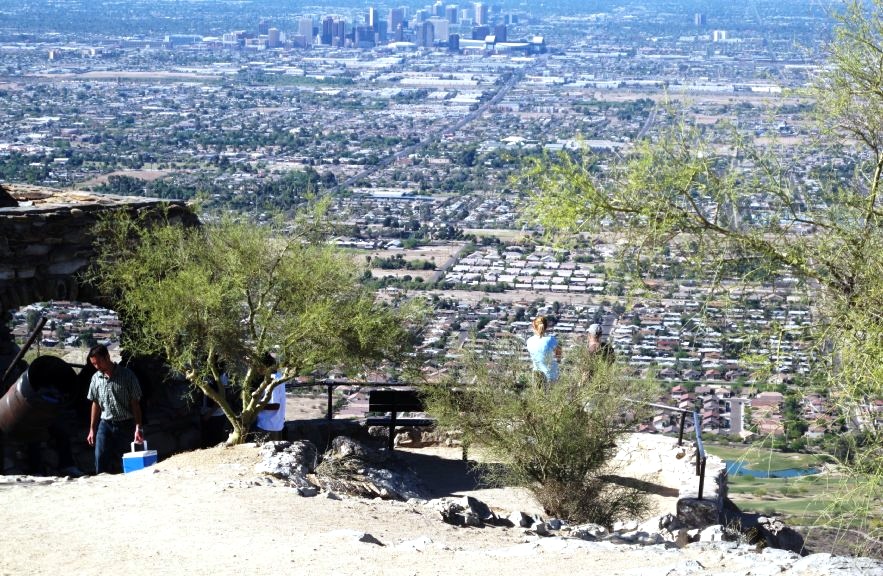
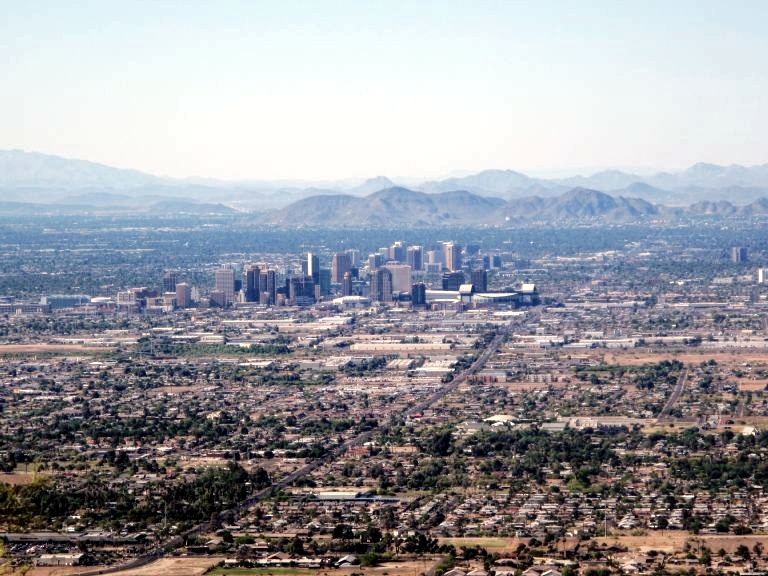
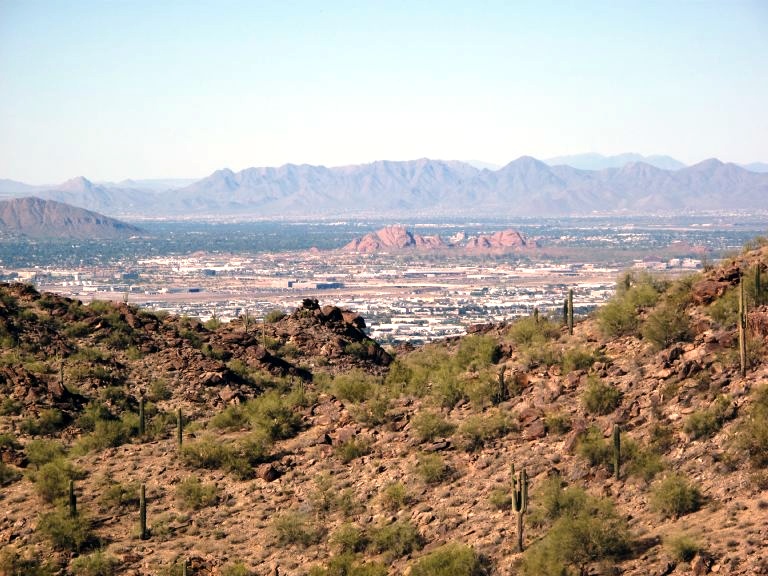
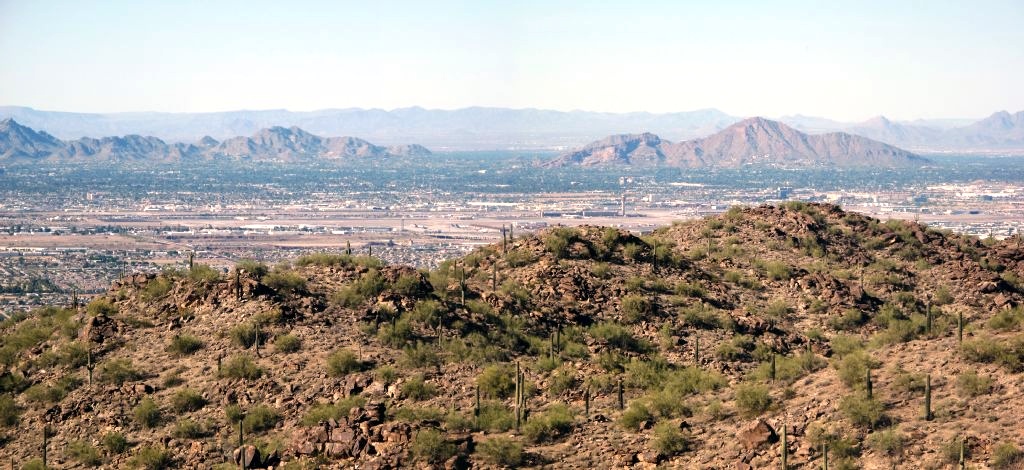
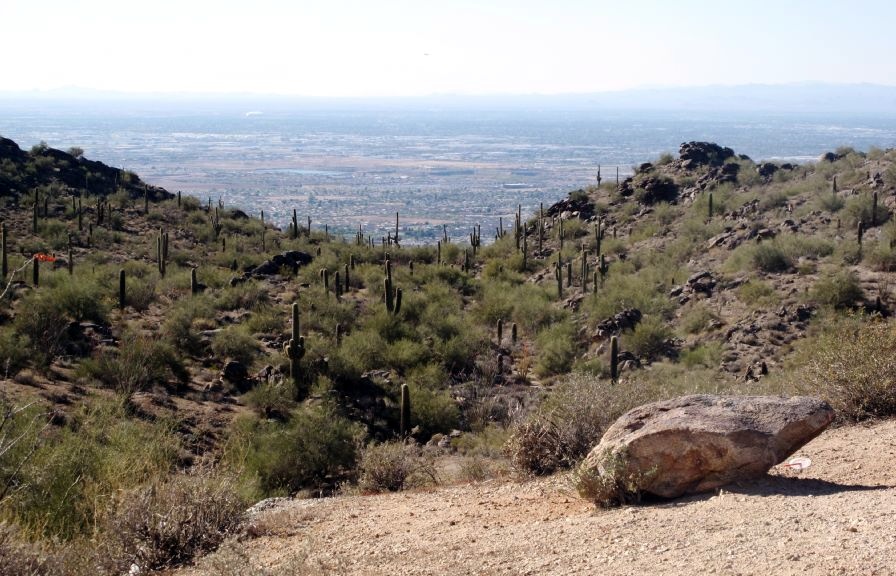
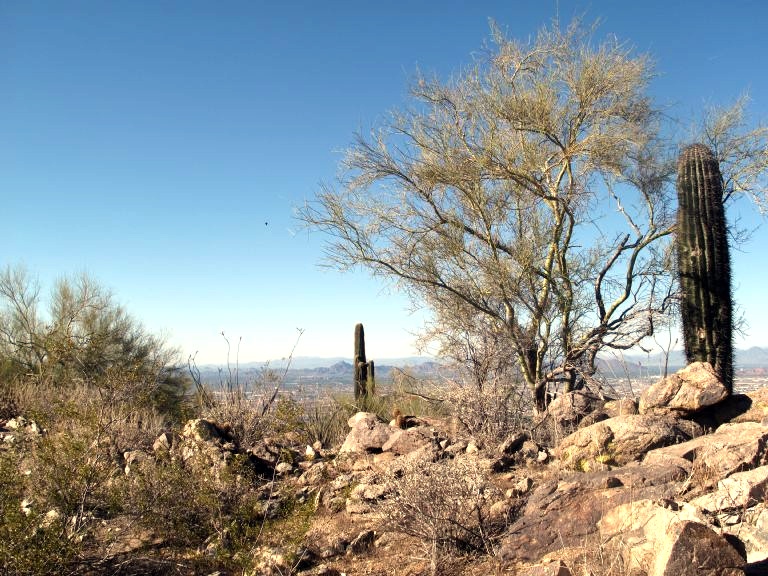
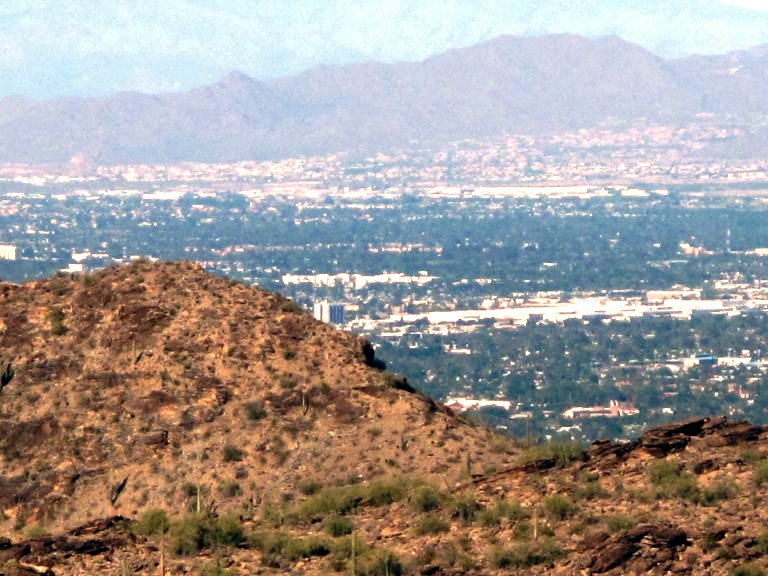
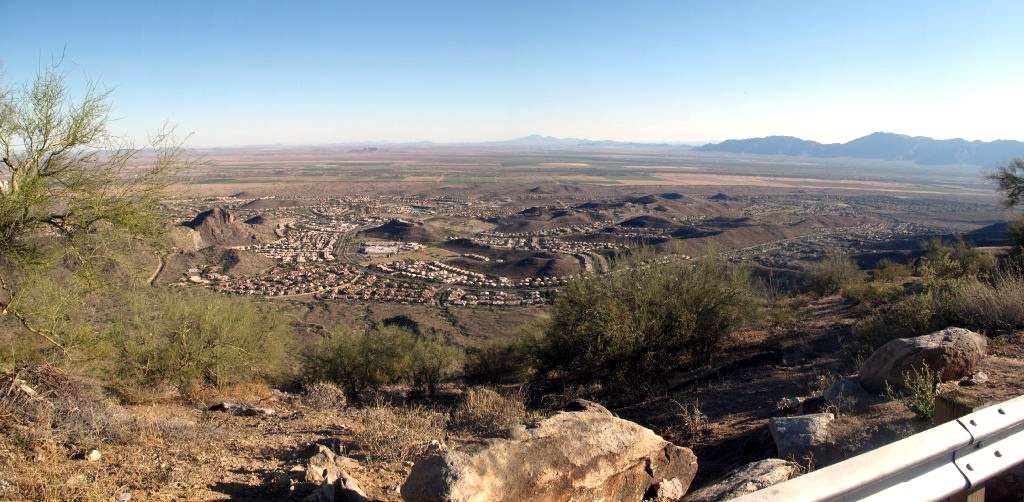
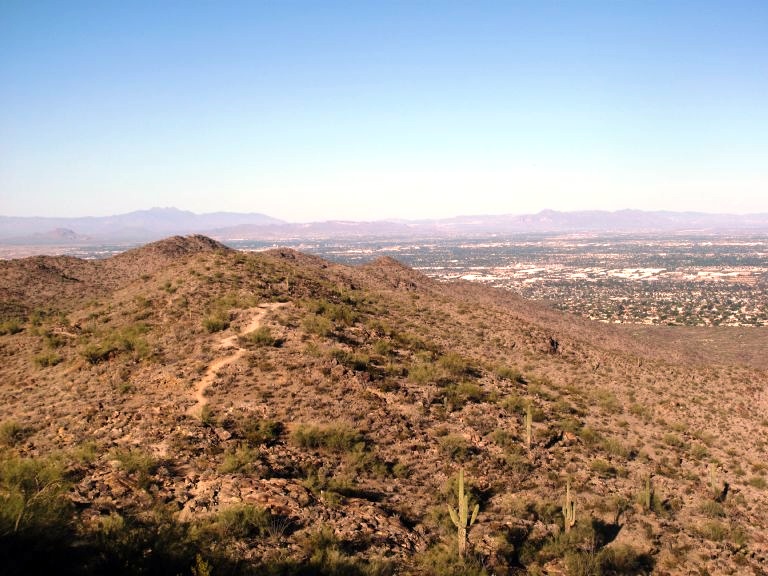
Michael and me to scatter his ashes on South Mountain, in a spot that overlooked
Phoenix.
So that's how we spent today.
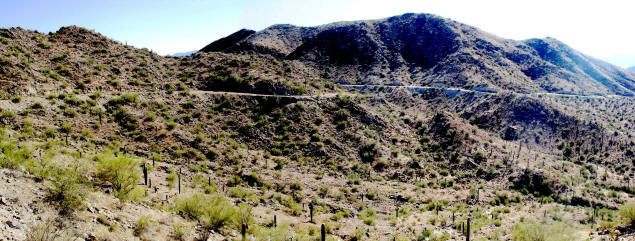
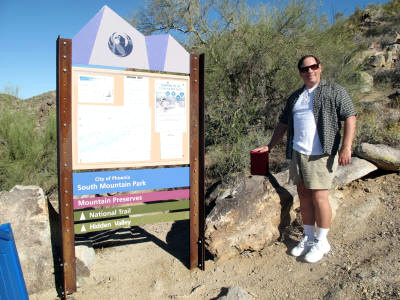
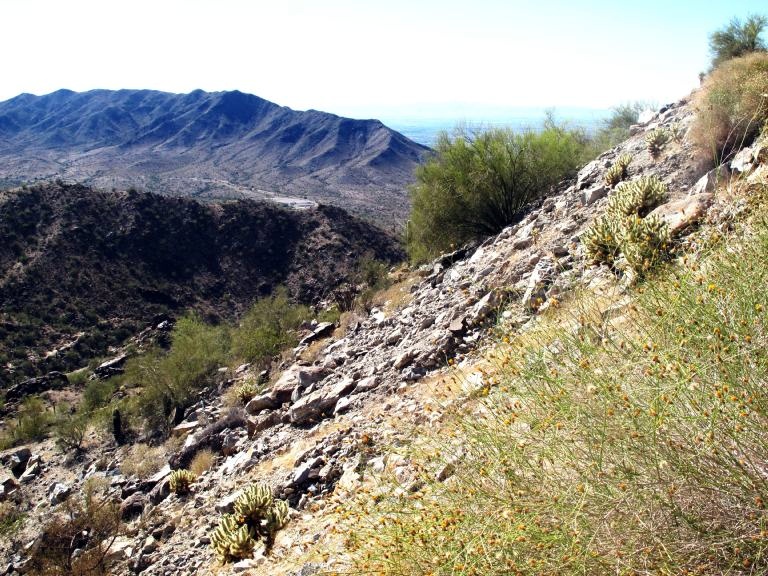
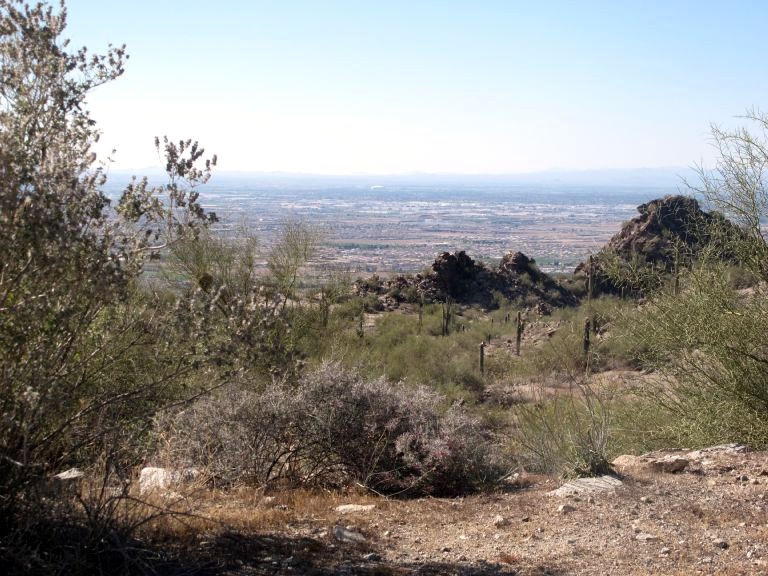
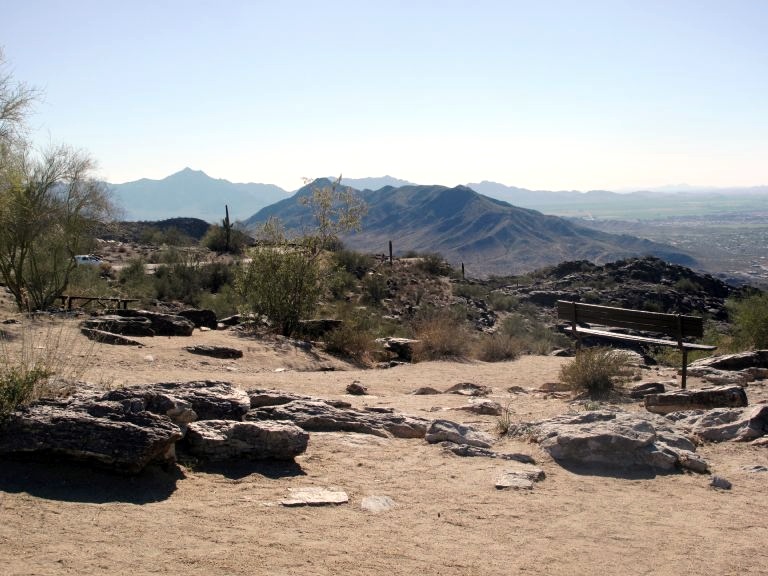
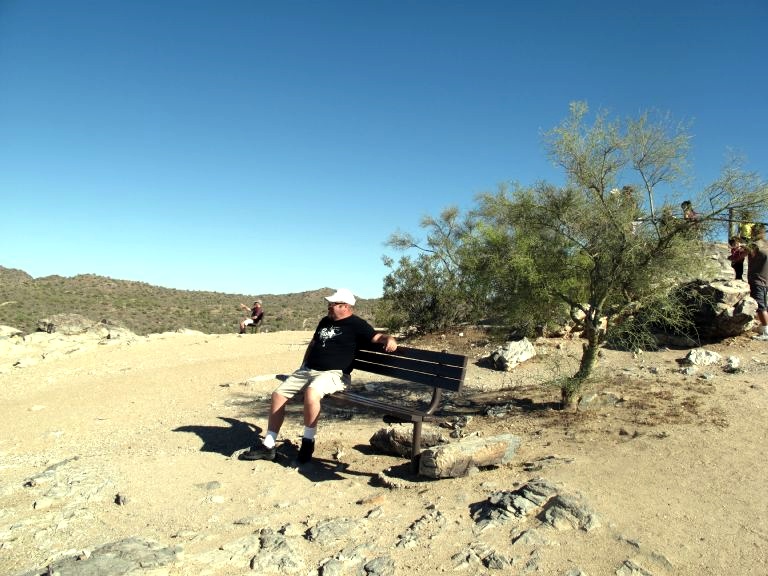
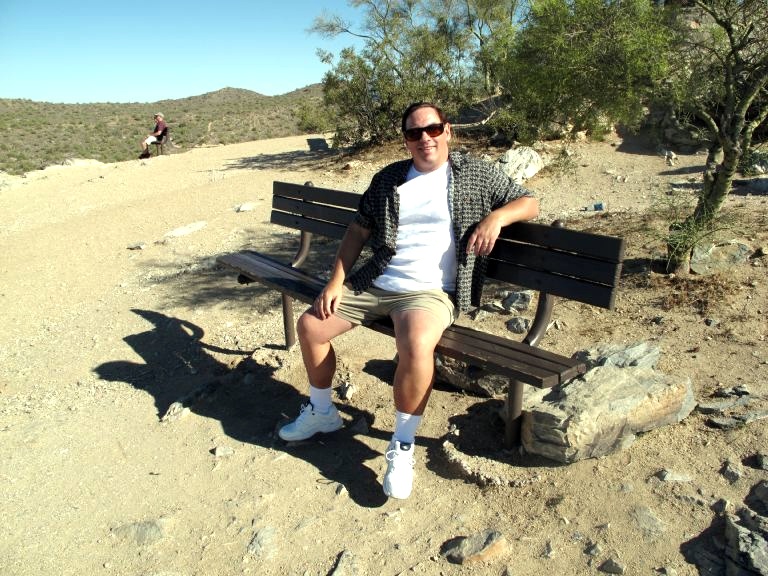
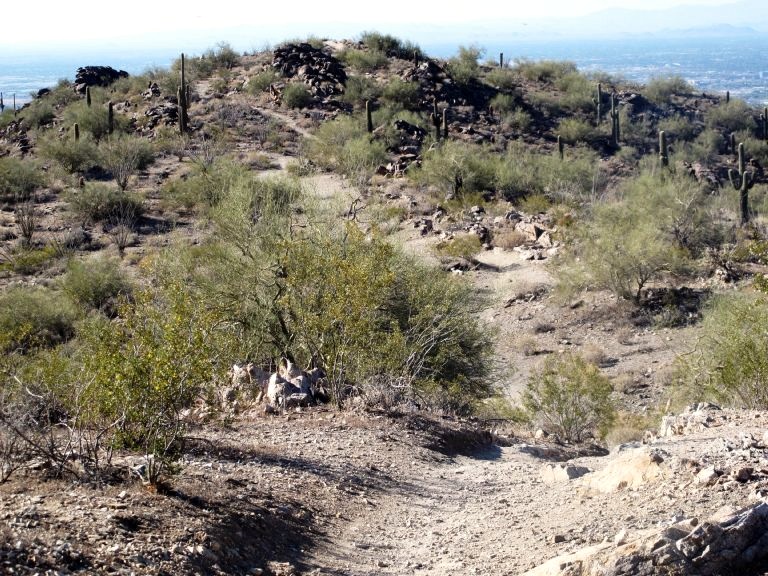
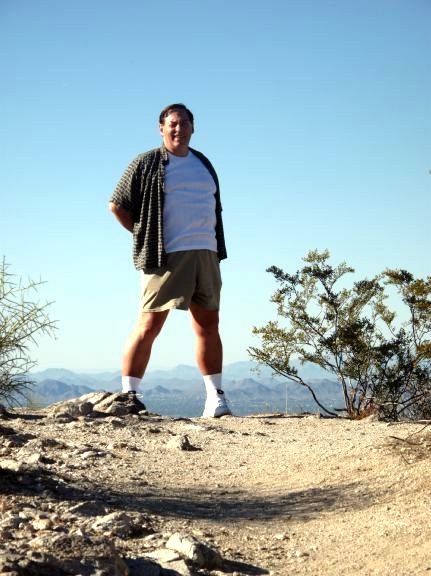
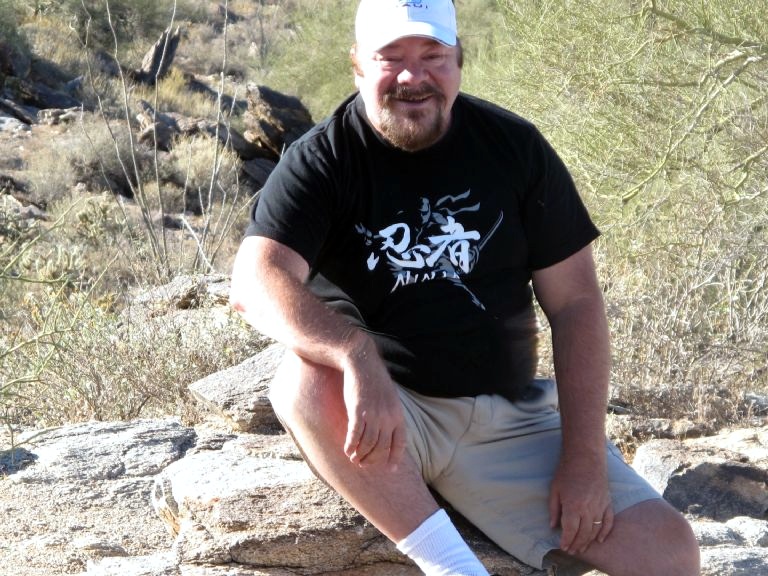
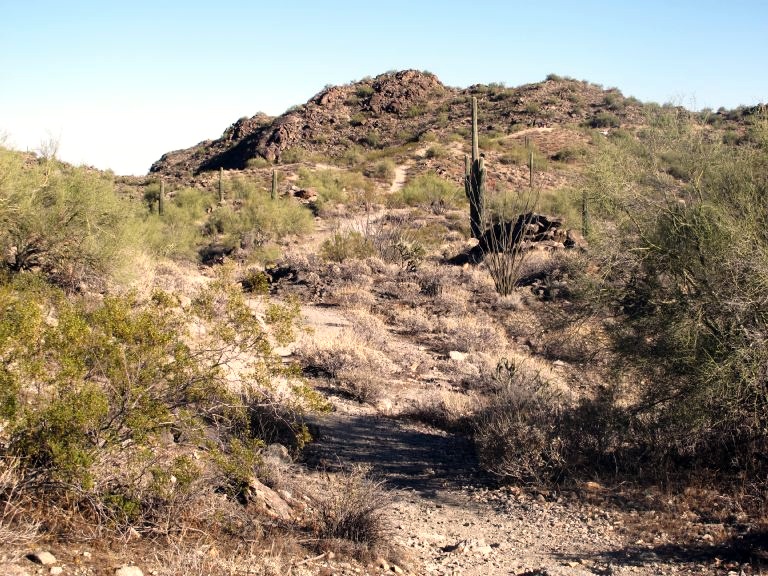
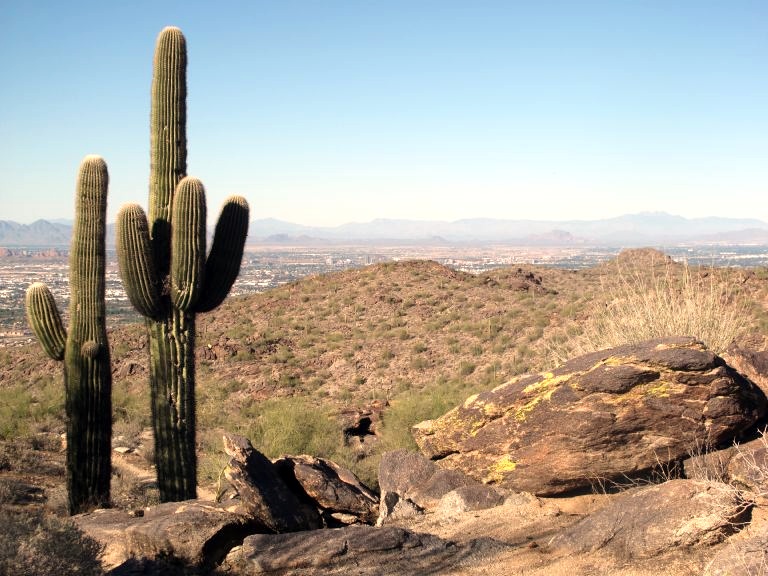
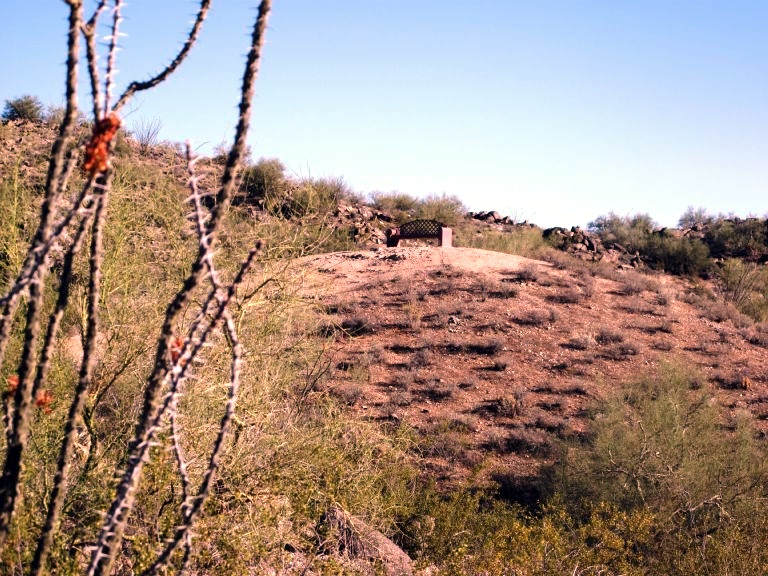
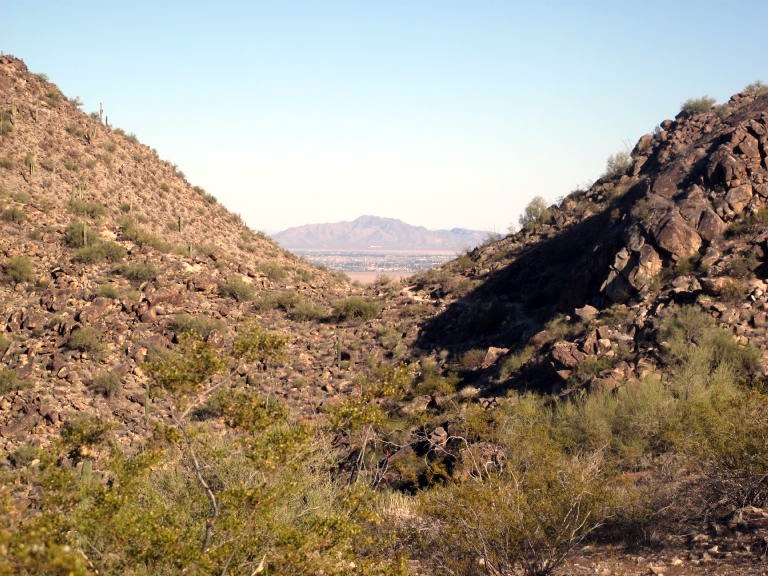
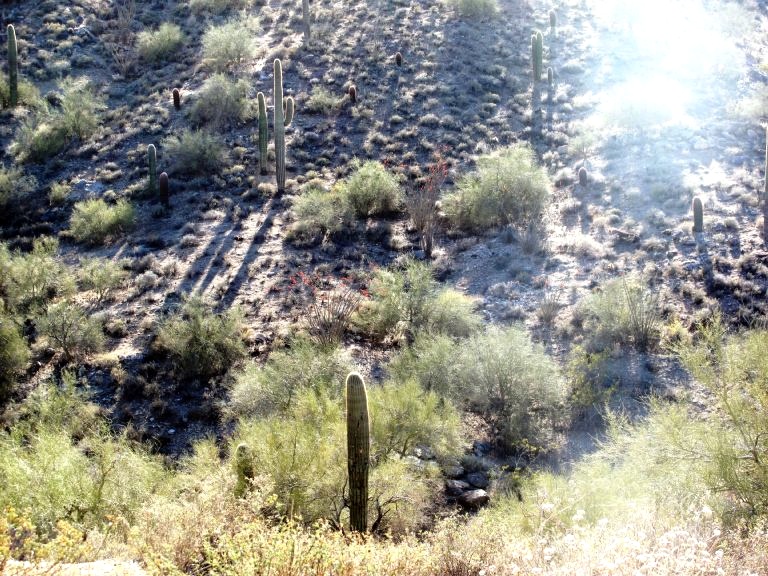
Since it was such a beautiful day, we started with some hiking and picture-taking.
Finally we found a quiet trail that seemed as if it would provide some solitude.
Willis' ashes were in a plastic, shoe-box-sized case in a red velvet bag.
Michael, who has scattered the ashes of other friends before, has occasionally
run afoul of laws that say ashes can't be scattered here. Technically,
when we scattered the ashes of my friend Tim O'Connor in Maine, we weren't
supposed to, either—but the ranger told us to be discreet and he would look the
other way.
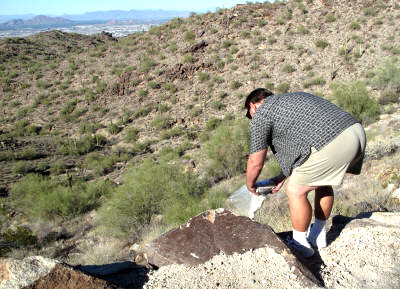
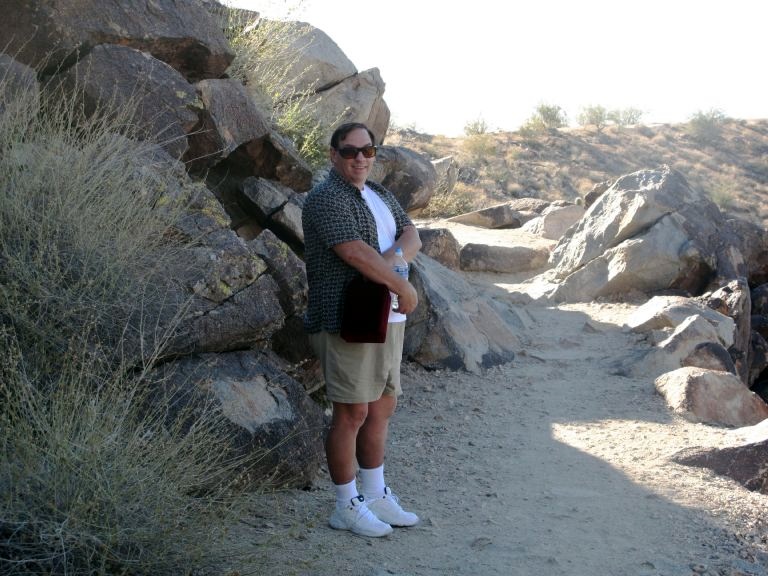
Anyway, Michael and I took off down the trail, Michael including Willis in the conversation as
we went. We didn't see anyone else as we went; so, when the trail curved in
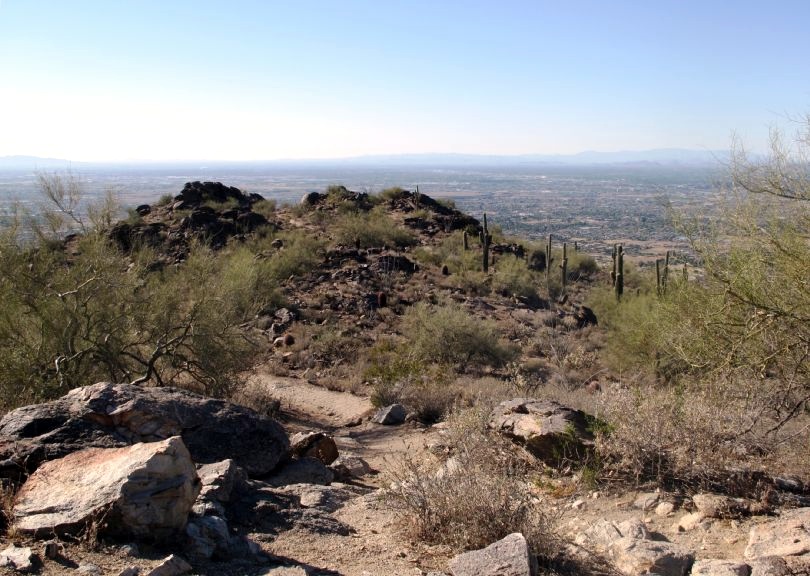
closer to the cliff wall, and we saw that it overlooked a splendid view of the
Valley, I announced, "This is the place!"
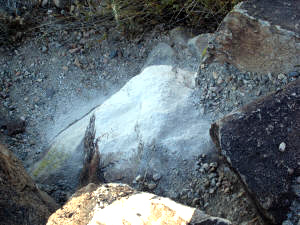
Michael opened the case and removed the bag of ashes from it; then fished
inside for the metal identification tag we'd been told not to scatter with the
ashes, and removed it. There was no wind, so Michael poured the ashes from the bag onto a ledge a few feet
below the trail. When the first rain or good wind comes along, they'll be gone,
and become part of the mountain, just as Willis wanted.
Just as we finished, and had returned the tag and the bag into the case and
put the case into the velvet sack, a couple of hikers came by, none the wiser.
It may not have been typical, but at last and with assistance, Willis had
managed to be discreet!
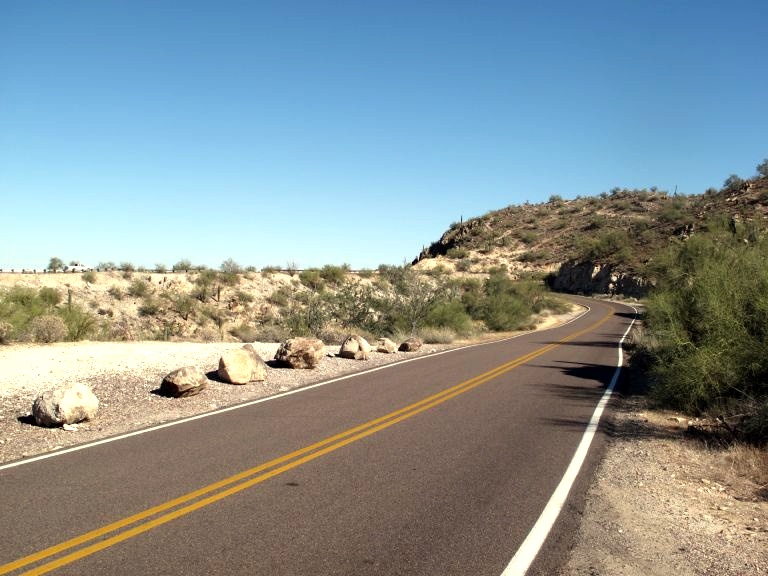
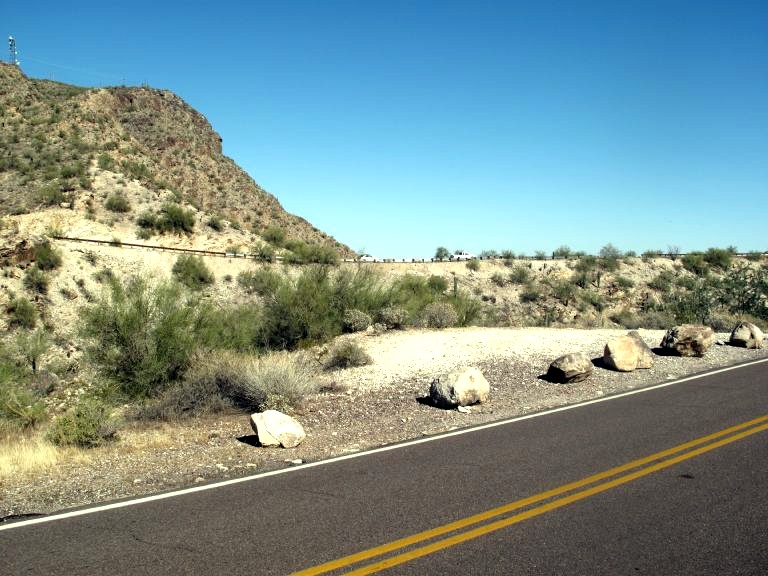
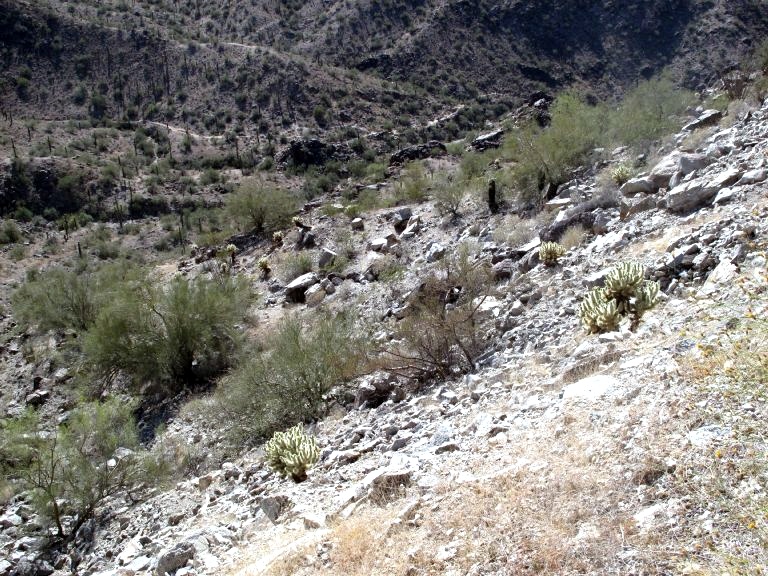
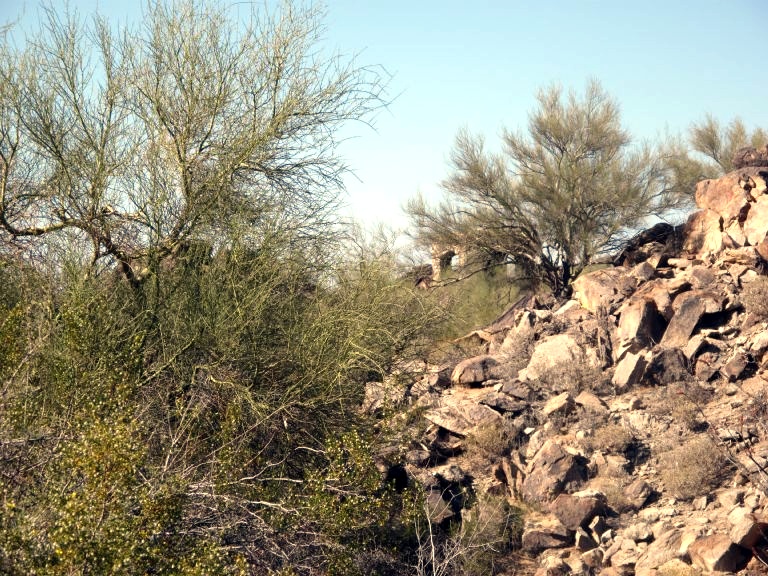
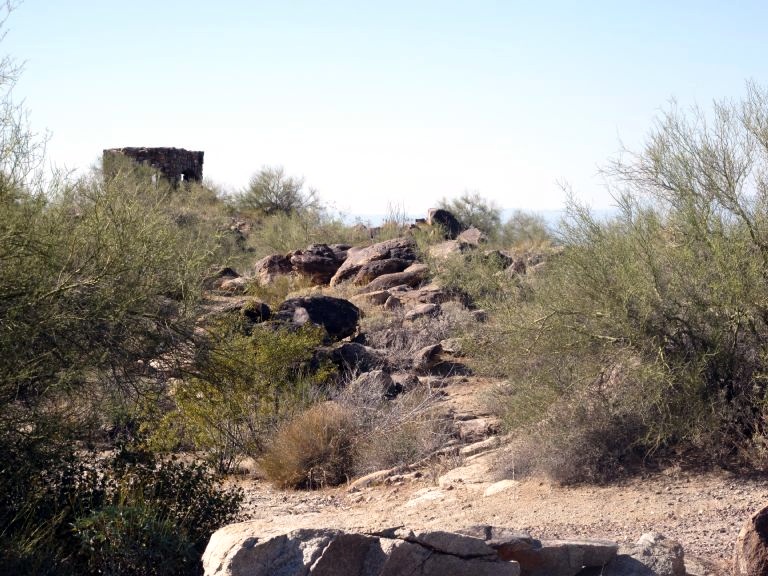
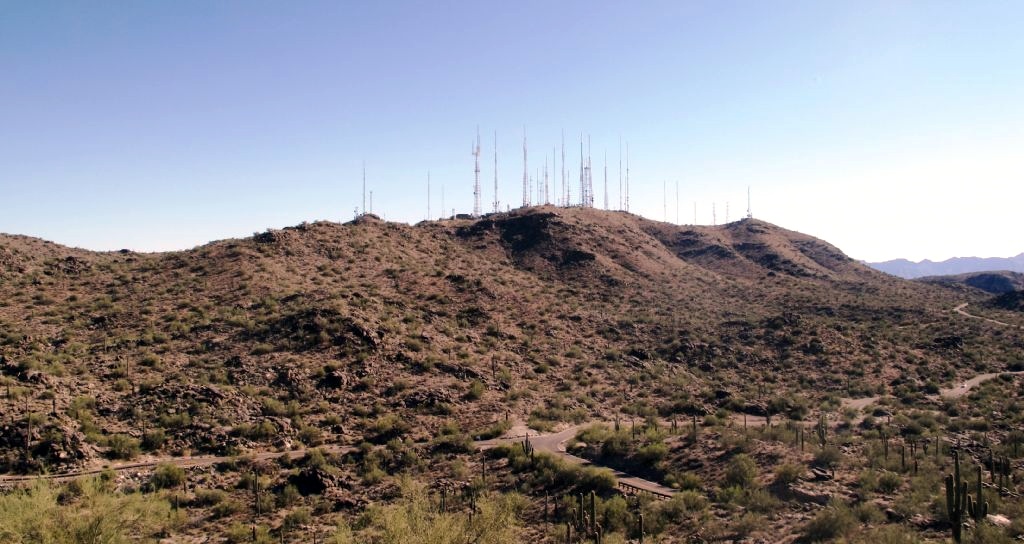
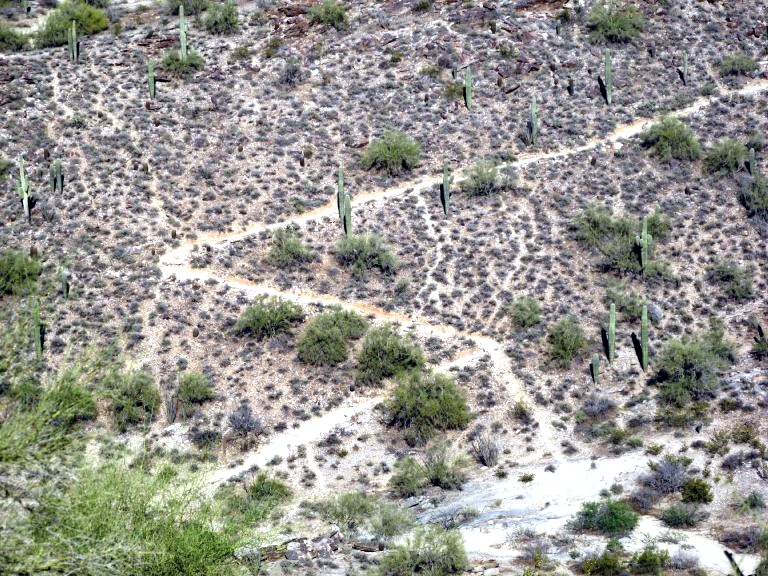
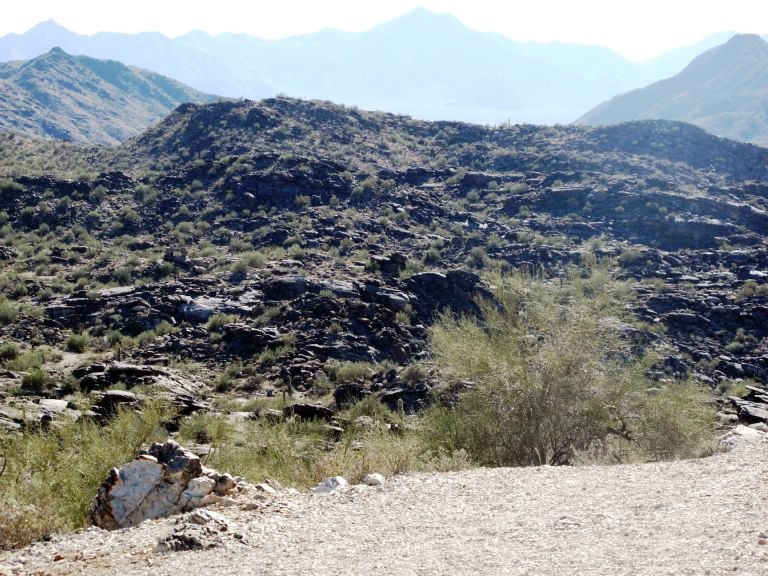
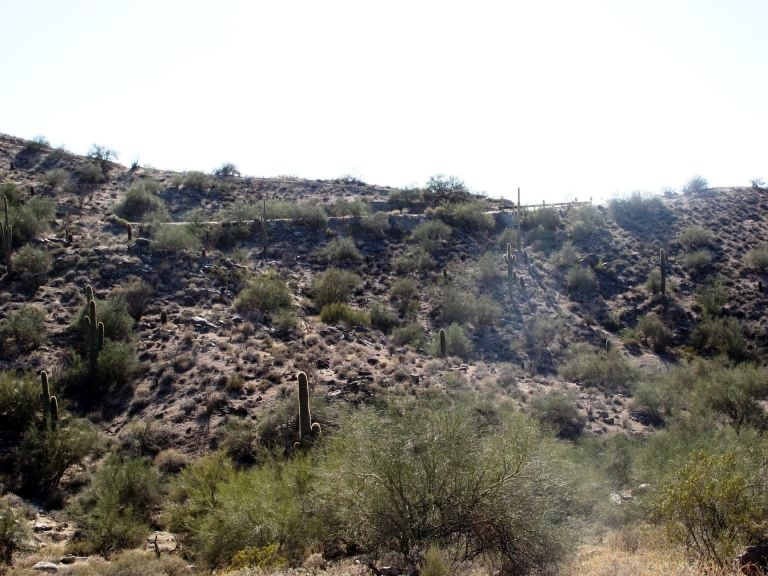
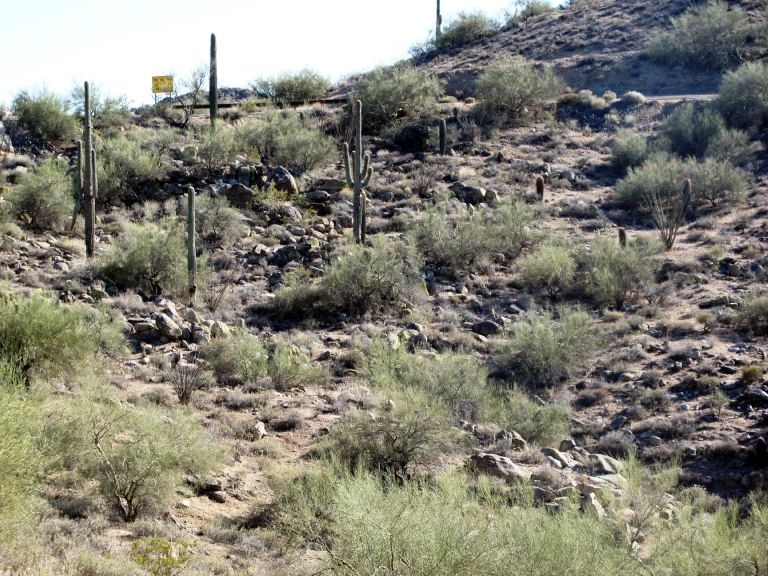
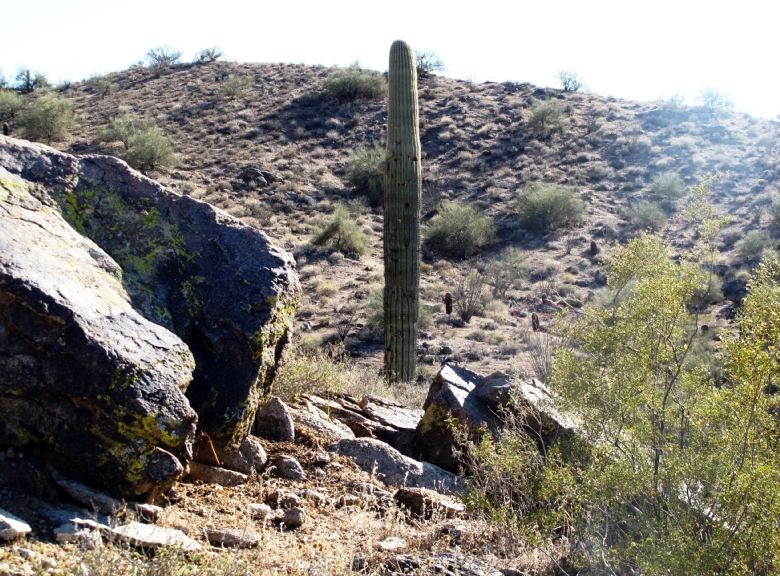
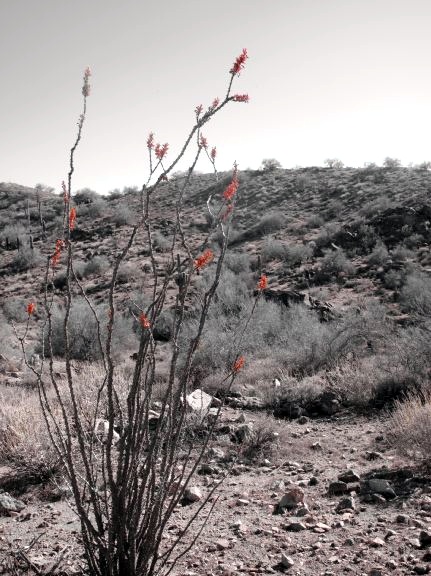
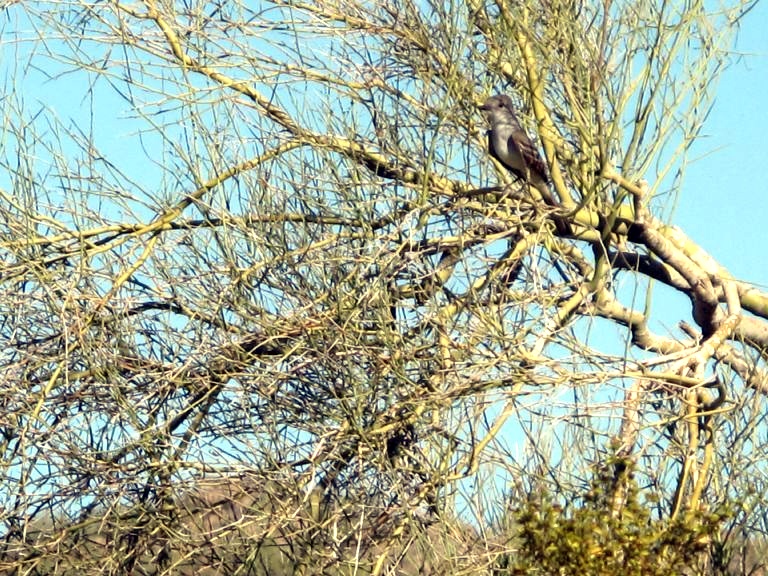
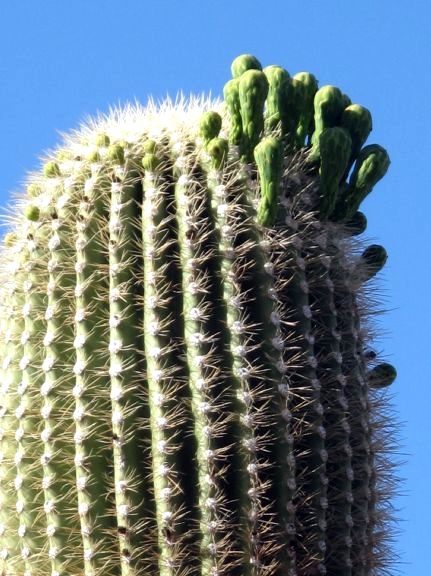
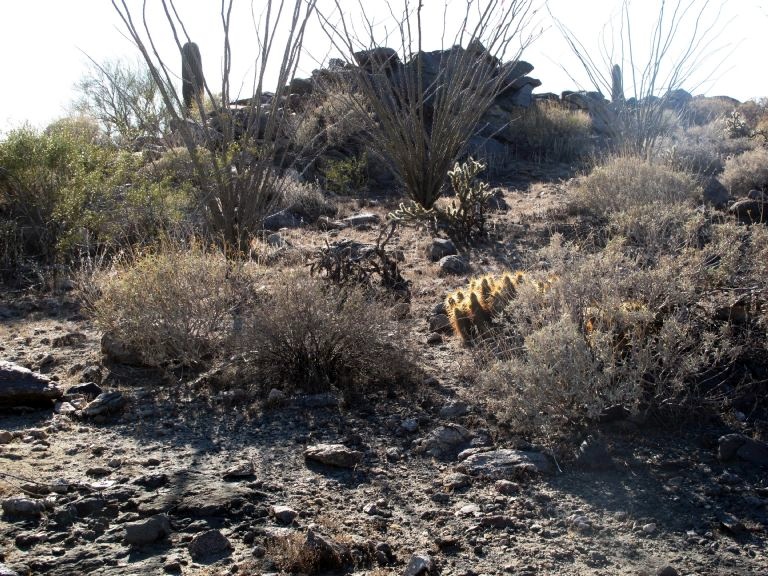
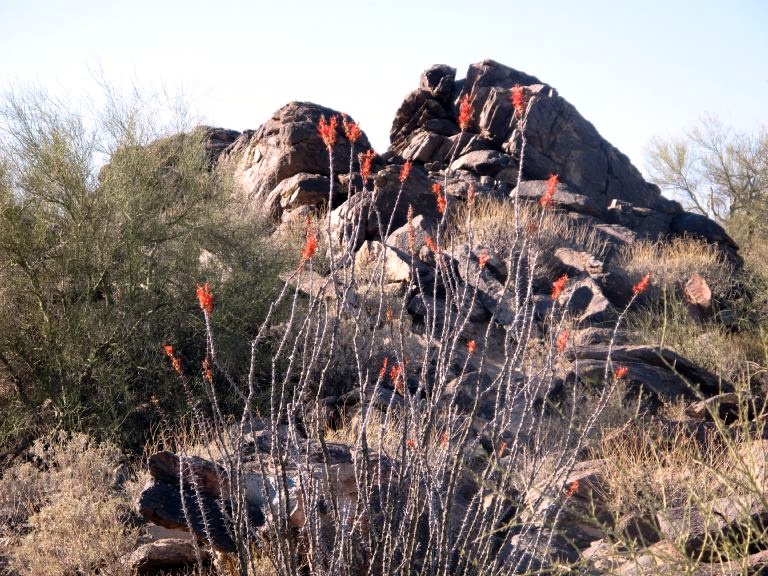
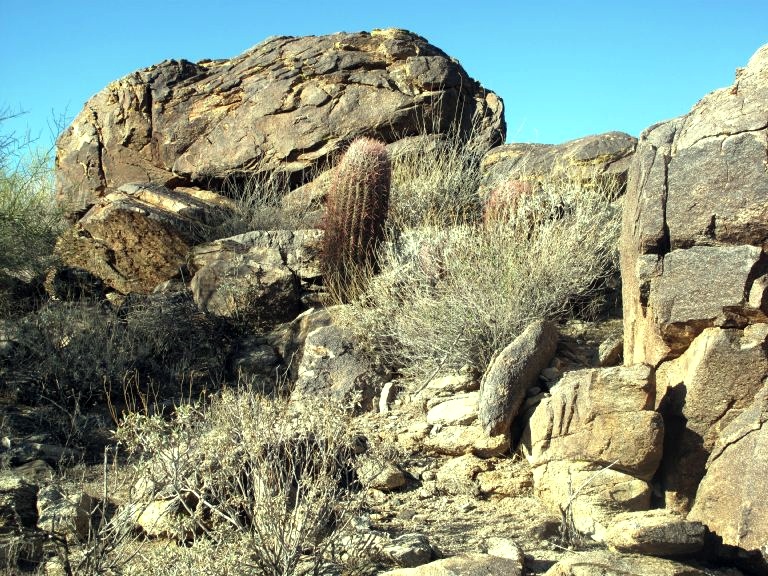
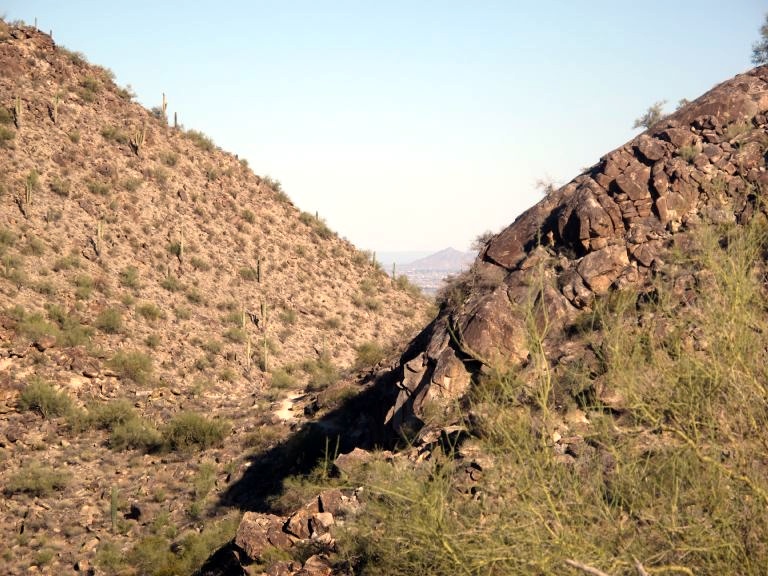
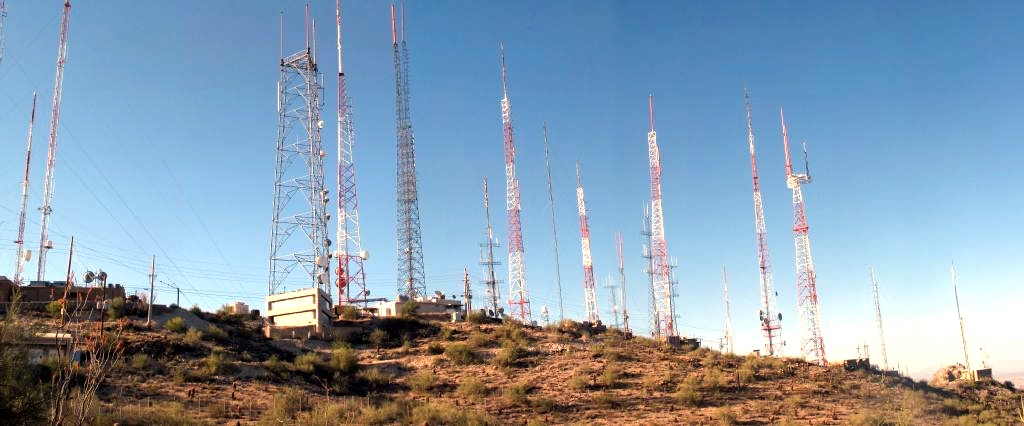
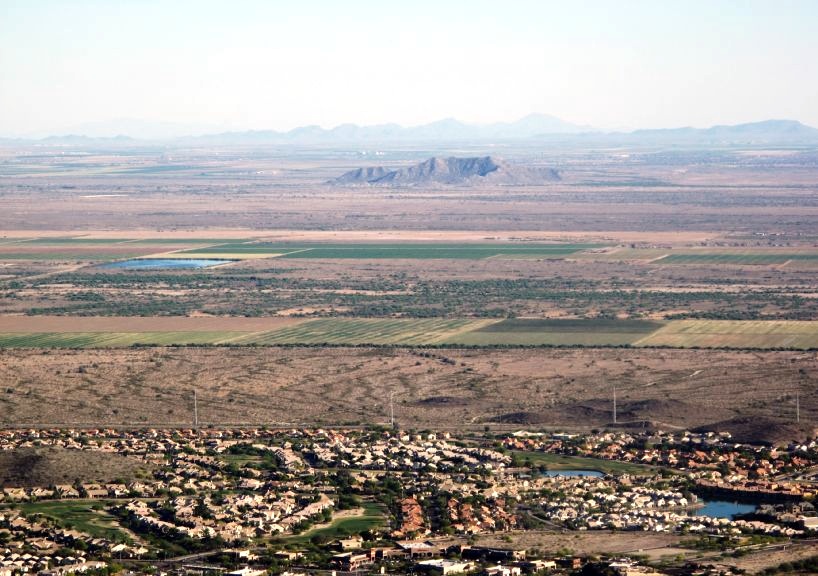
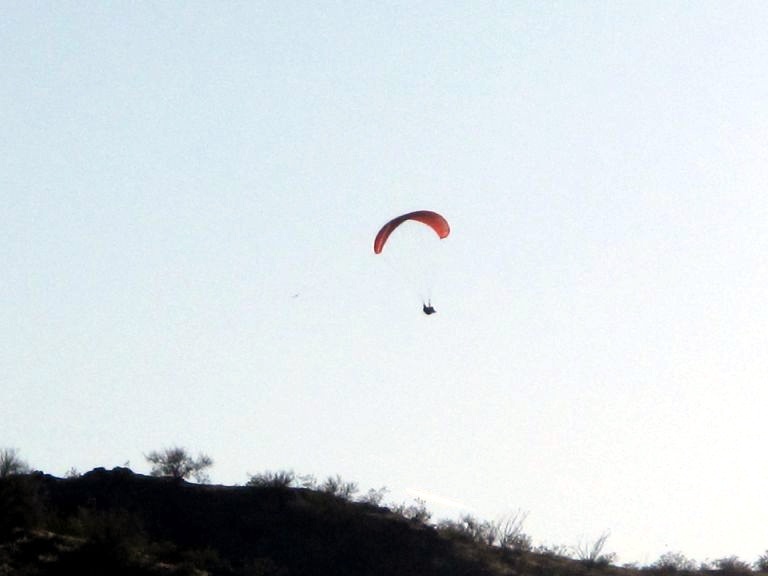
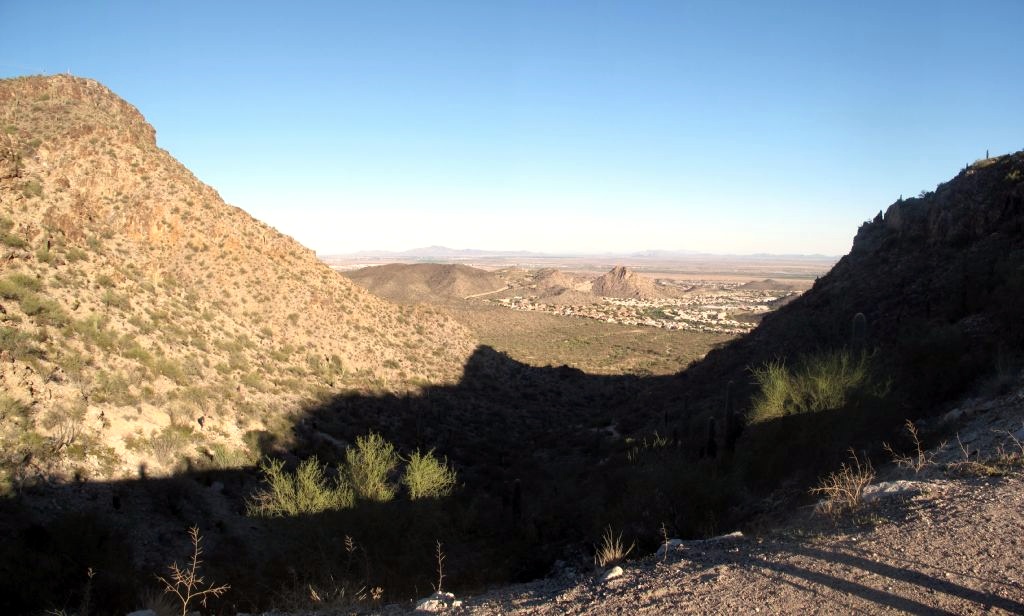
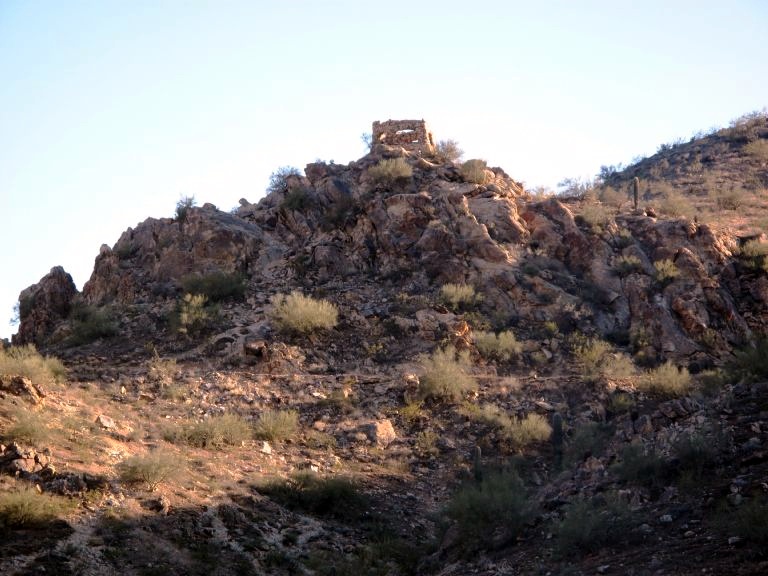
South Mountain is a beautiful place, one of the gems of the Phoenix Park
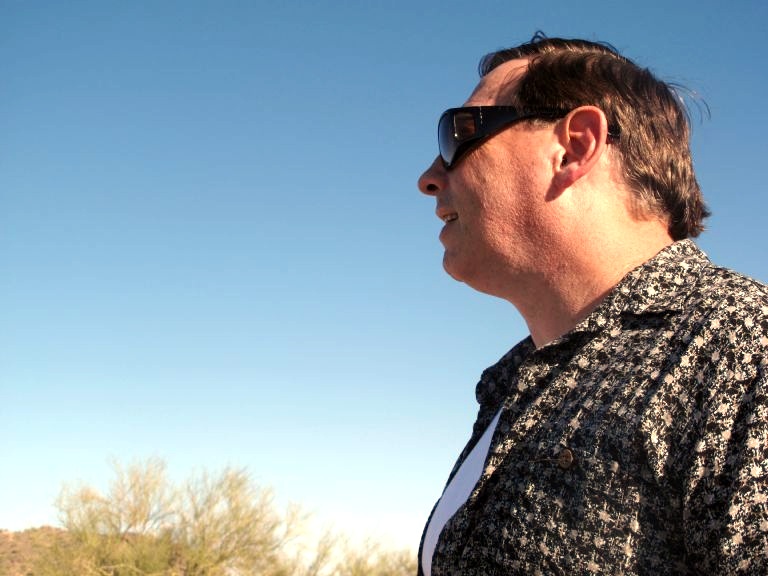
System. I took a lot of photos; enjoy the show.