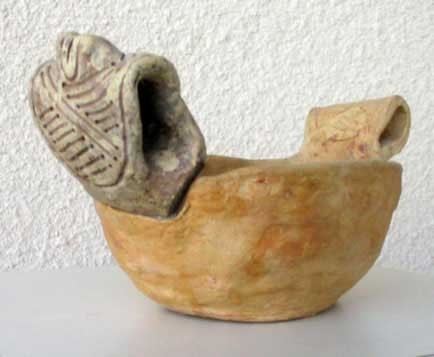
|
By: Paul S Cilwa |
Occurred: 7/7/2025 |
|
Page Views: 344 |
| Hashtags: #Places #Bahamas #LucayanPeople |
| The story of the Bahamas' original inhabitants ends sadly. |
| Estimated reading time: 4 minute(s) (765 words) |
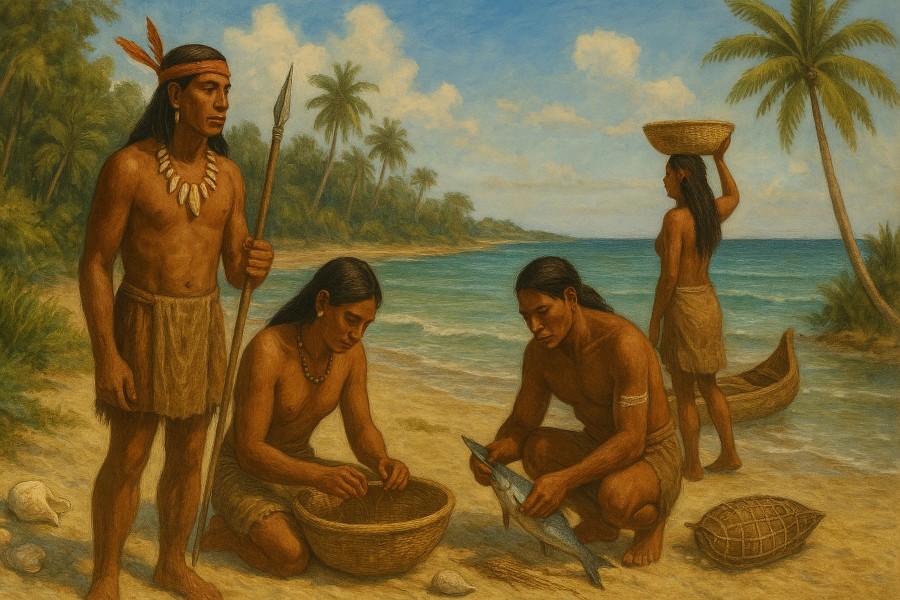
Long before the advent of cruise ships, pastel resorts, or the colonial footprint of Europe,
the islands of The Bahamas were home to the Lucayans—a peaceful, sea-faring people
who thrived amidst the turquoise waters and sandy cays for centuries. As a branch of the
Taíno civilization, the Lucayans were the first people to encounter Christopher
Columbus upon his landing in the "New World" in 1492. Though their society was tragically
short-lived following European contact, their story is rich with cultural vitality,
ingenuity, and environmental harmony.
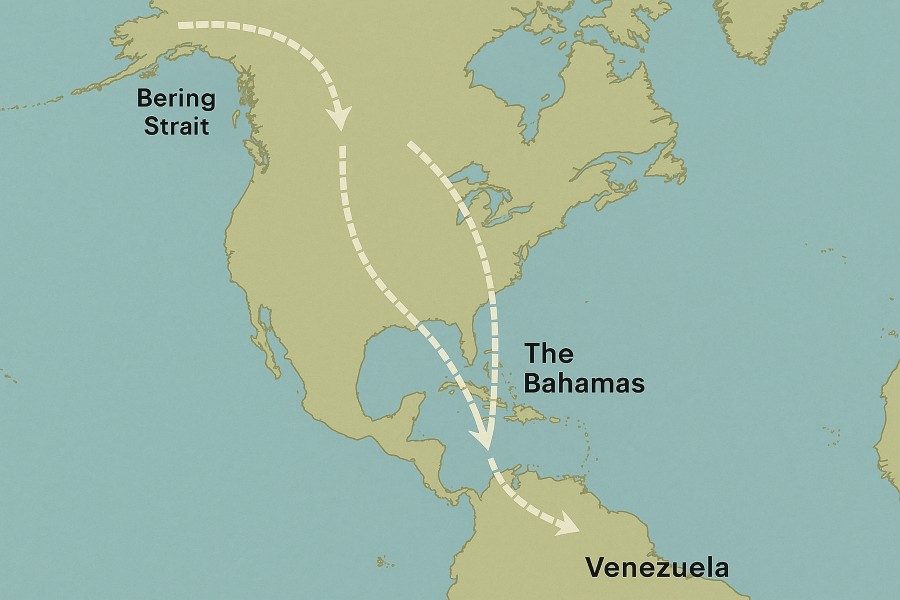
The Lucayans were part of the broader Arawakan-speaking peoples who populated the
Greater Antilles and parts of South America. Their ancestors likely migrated northward
from the Orinoco River basin in present-day Venezuela, gradually spreading through the
islands of the Caribbean over centuries.
By around AD 800-1000, they had settled the archipelago now known as The Bahamas,
adapting brilliantly to the region's limestone terrain and relatively limited fresh water.
The word "Lucayan" itself comes from Lukku-Cairi, often interpreted as "island people."
Their arrival marked the northernmost extent of the Taíno world and the Arawakan cultural sphere.
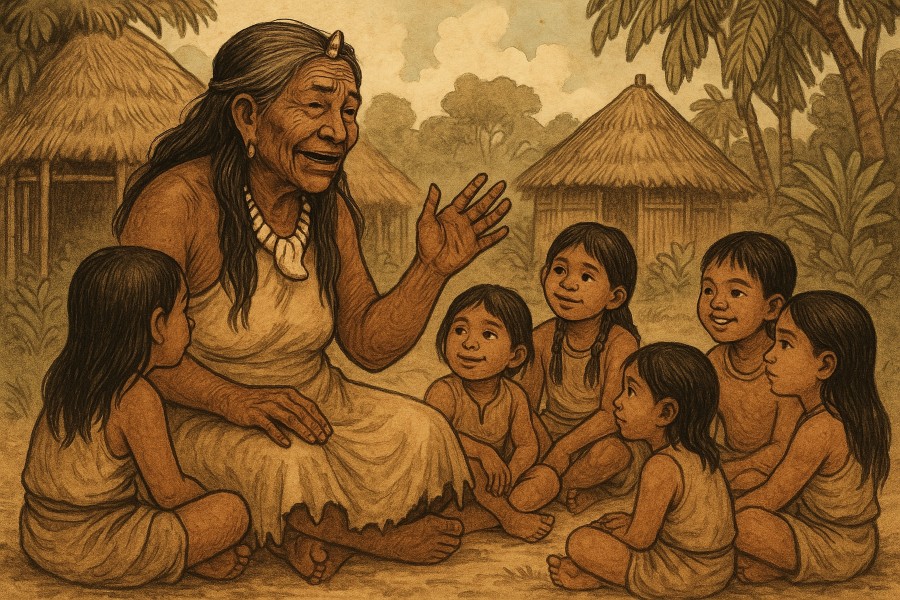
Lucayan society was organized around extended families and matrilineal lines, meaning
property and lineage were traced through the mother. They lived in small villages,
often near fresh water sources like blue holes or shallow wells dug in the porous rock.
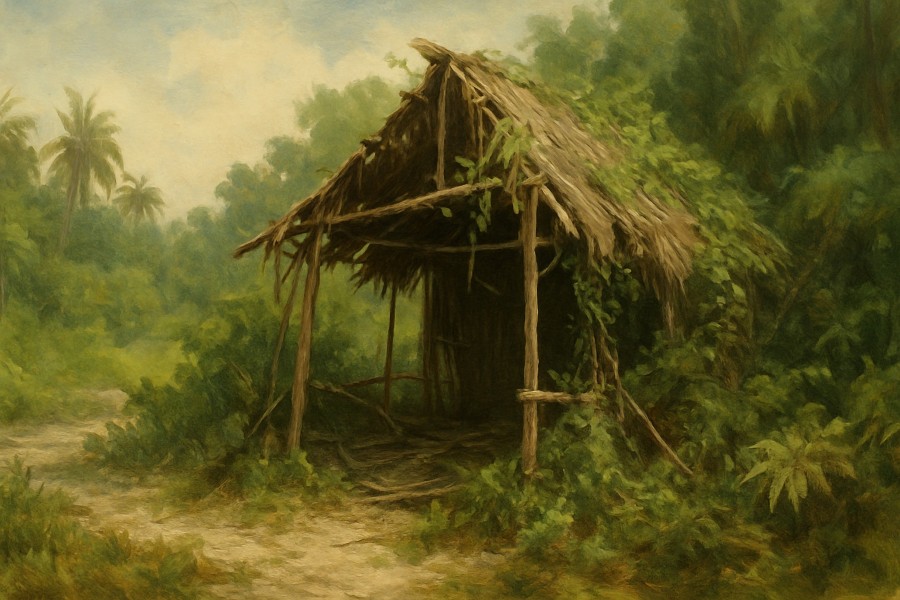
Homes—known as bohíos—were round, thatched structures made of wood
and palm fronds, offering natural ventilation ideal for the tropical climate.
Their economy was based on subsistence agriculture, fishing, and trade.
By the way, "subsistence agriculture" isn't "sub" anything, despite the name.
It just means growing food for one's own self or community, rather than for trade.
The Lucayans cultivated cassava (which requires a careful detoxification process),
sweet potatoes, peppers, and cotton.
Both men and women were adept at freediving, using nets, spears, and fish traps to
harvest the sea's bounty. They made tools from conch shells, bone, wood, and stone;
their relics show impressive craftsmanship and ecological wisdom. They also practiced
weaving, ceramic production, and body ornamentation using dyes, shells, and
feathers—evidence of a culture that was both pragmatic and expressive.
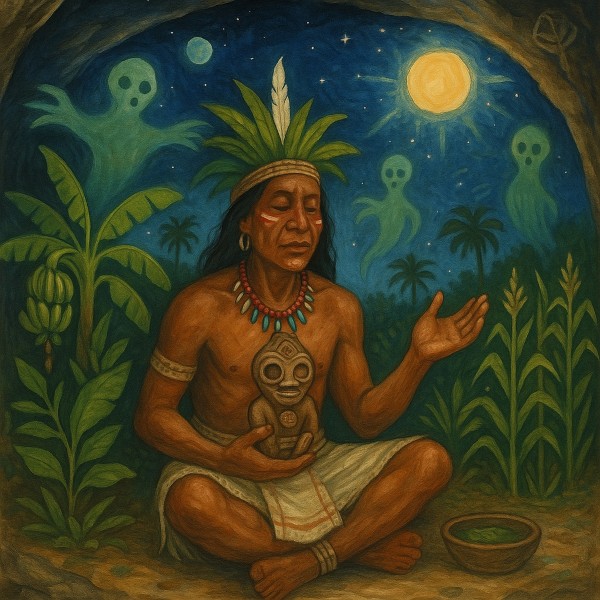
Lucayan spirituality revolved around a belief in zemis, ancestral spirits
who inhabited the world around them. These spirits could influence health, weather,
and the success of crops and hunts. Religious leaders, known as bohuti,
acted as healers, diviners, and ceremonial figures.
Their worldview was deeply animistic: caves were sacred, representing entrances to
the spirit world, while celestial bodies helped guide fishing, planting, and
seasonal migration. Petroglyphs and offerings have been found in submerged and
inland cave systems throughout The Bahamas, including some near New Providence.
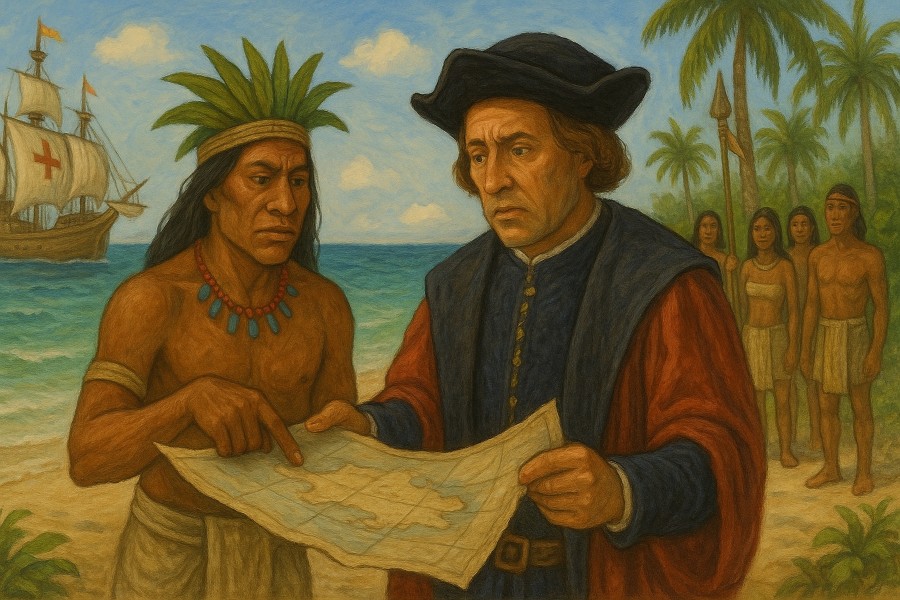
When Christopher Columbus arrived on the island of Guanahani (believed by many to
be modern-day San Salvador) on October 12, 1492, he encountered the Lucayans.
He wrote admiringly of their peaceful demeanor and physical beauty, noting their
generosity and curiosity. But what followed was catastrophic. Within twenty years
of that first meeting, tens of thousands of Lucayans were enslaved, deported to
Hispaniola to work in gold mines and plantations. Many died from European diseases,
to which they had no immunity.
By 1520, the entire Lucayan population was virtually eradicated from The Bahamas.
The total pre-Columbian population of the islands is debated, but estimates range
from 30,000 to 50,000 individuals. Their disappearance marked one of the earliest
and most complete cases of depopulation due to European colonization recorded.
The Lucayan narrative is one of loss from our perspective. But, although they were wiped
out in fewer than fifty years, we should also remember their resilience: an Indigenous
culture that flourished in harmony with the sea for over 500 years, long before ships
bearing flags and steel interrupted their world. In recent years, renewed archaeological
interest has turned toward cave systems and submerged sites, where the absence of oxygen
preserves wooden and organic artifacts. These may yet reveal more details about diet,
spirituality, and migration patterns.
Their story also forces reflection on the ethics of exploration and historical
remembrance: who gets written into history, and who vanishes between the lines?