|
|
Occurred: 12/9/1999 |
|
Page Views: 1,505 |
| Hashtags: #Places #Rome #Italy |
| Paul and Michael's visit to Rome, 1999 |
| Estimated reading time: 6 minute(s) (1299 words) |
The Glory That Was Rome
December 9, 1999
The rain had returned by the time we disembarked the train in Rome. We were
met at the station by a stranger who asked if we had a place to stay. I tried to
brush him off but Michael, ever the nice guy, wanted to hear what the man had to
say. "I represent a hotel in the neighborhood," he explained. "It is a very nice
hotel, and I can get it for you cheap!"
This sounded like a con game to me, but he did have an expensive brochure for
the place—which was called, "Hotel California", believe it or not—and he was
wearing what looked like an official badge identifying him as something.
I also noticed other people working the train station with similar badges. So,
the next thing I knew, we were following our new friend into the wilds of Rome
in search of the Hotel California.
I resolved to not go farther than the two blocks he had promised, and to bail
if the neighborhood started looking too seedy. But, there it was: just two
blocks from the train station, in an old building with a newly-refurbished
facade, the Hotel California.
I had another scare when we actually were escorted to our room: Although the
lobby had been renovated, the hallway hadn't been altered since Nero's last
visit. The elevator still had Otis' initials on it, a clunky thing with a cage
we had to open and close ourselves. But the room, itself, was very nice. Its
biggest problem, in fact, was one we were to encounter all through Europe: The
shower stall was definitely too small for a generous-sized American male.
The next day, we started our touring—using the Metro, as usual—with the
Coliseum.
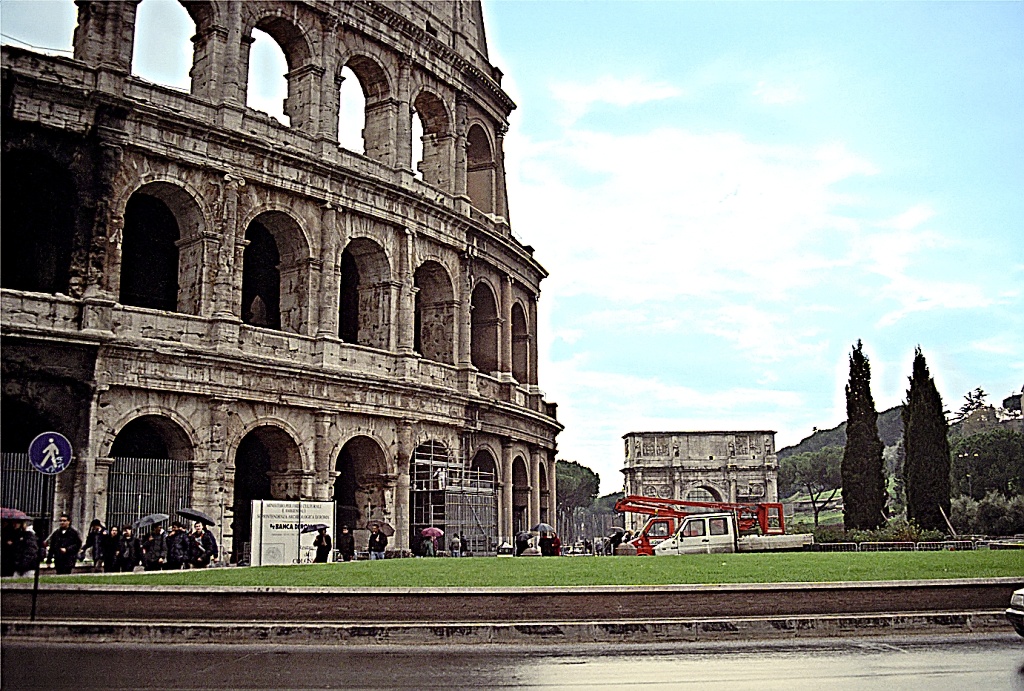
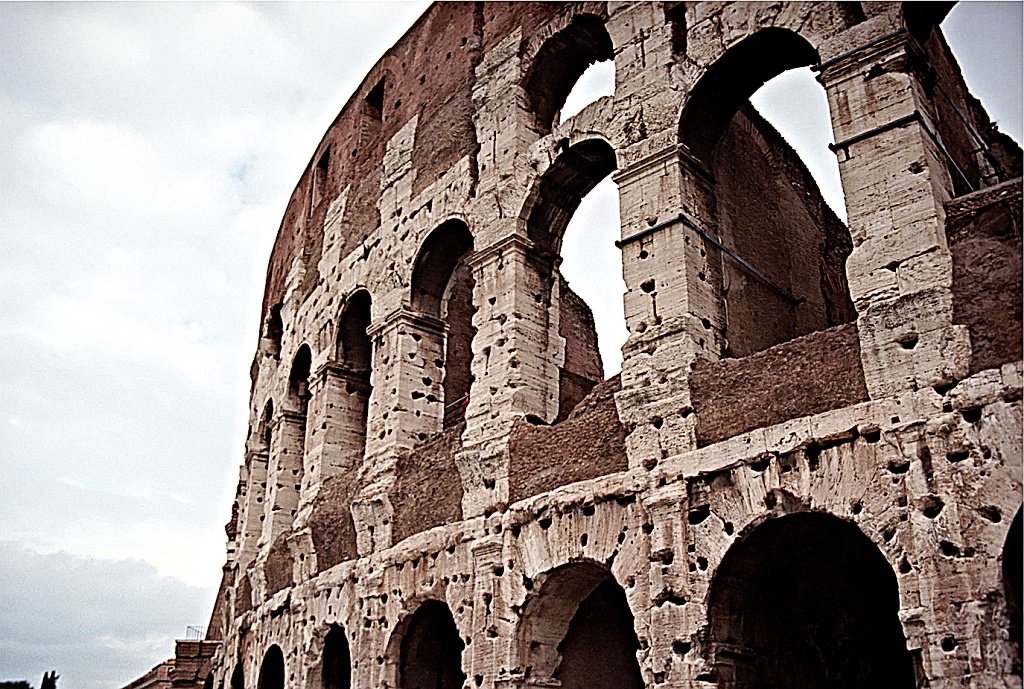
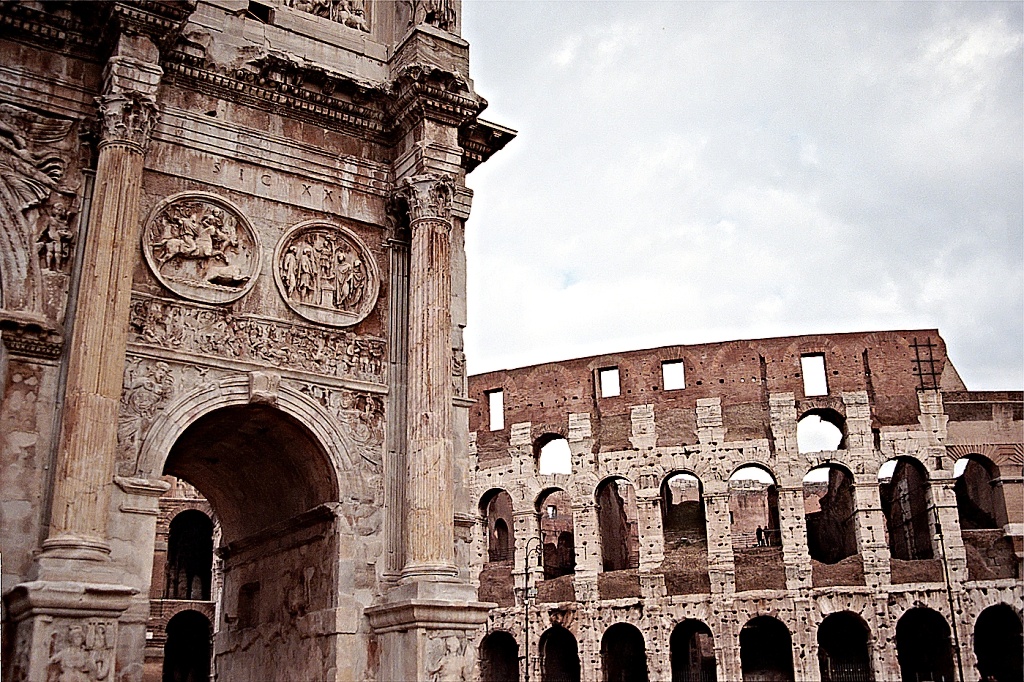
A block or so from the Coliseum was Palatine Hill. This is the start of an
archaeological park that runs through Rome. It is one of Rome's famous Seven
Hills, and 2,300 years ago was the place to live. Then most of the homes
were demolished to make way for temples to some of the gods.
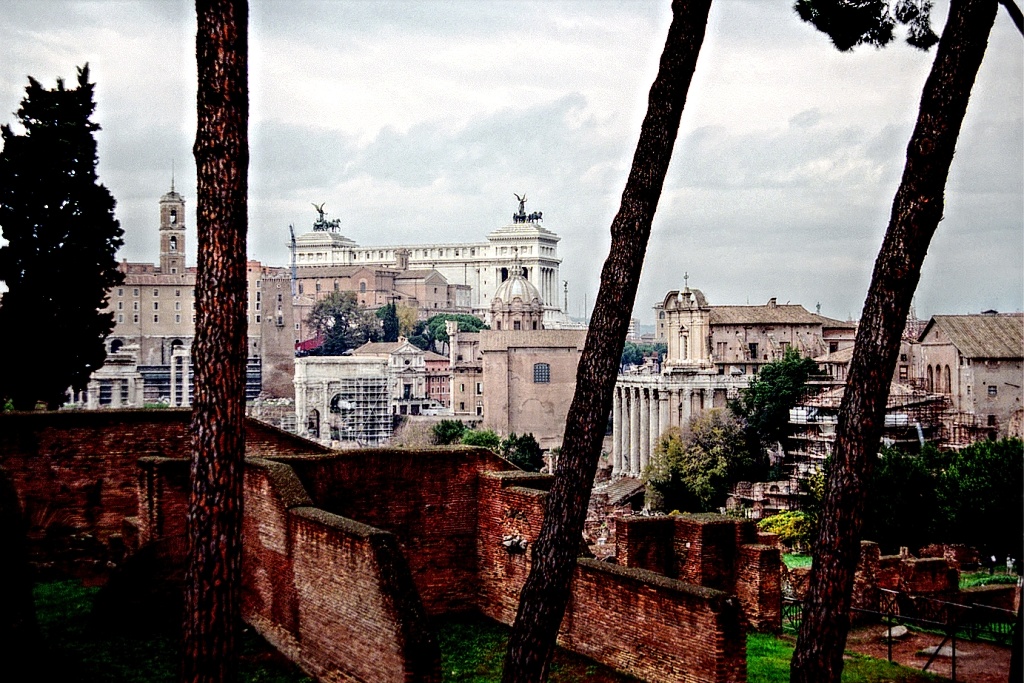
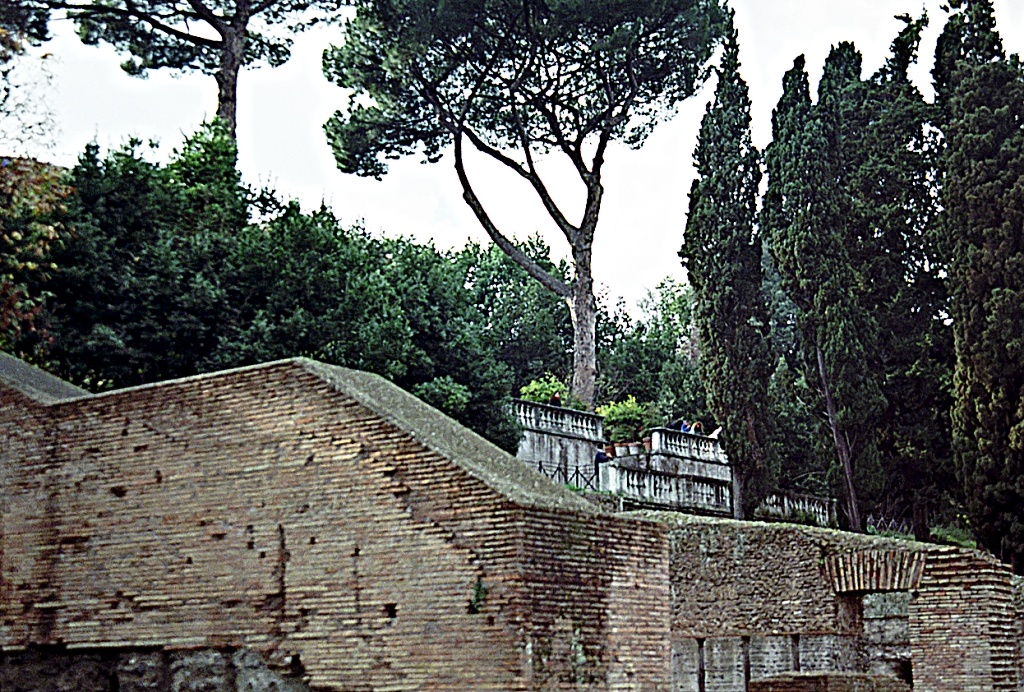
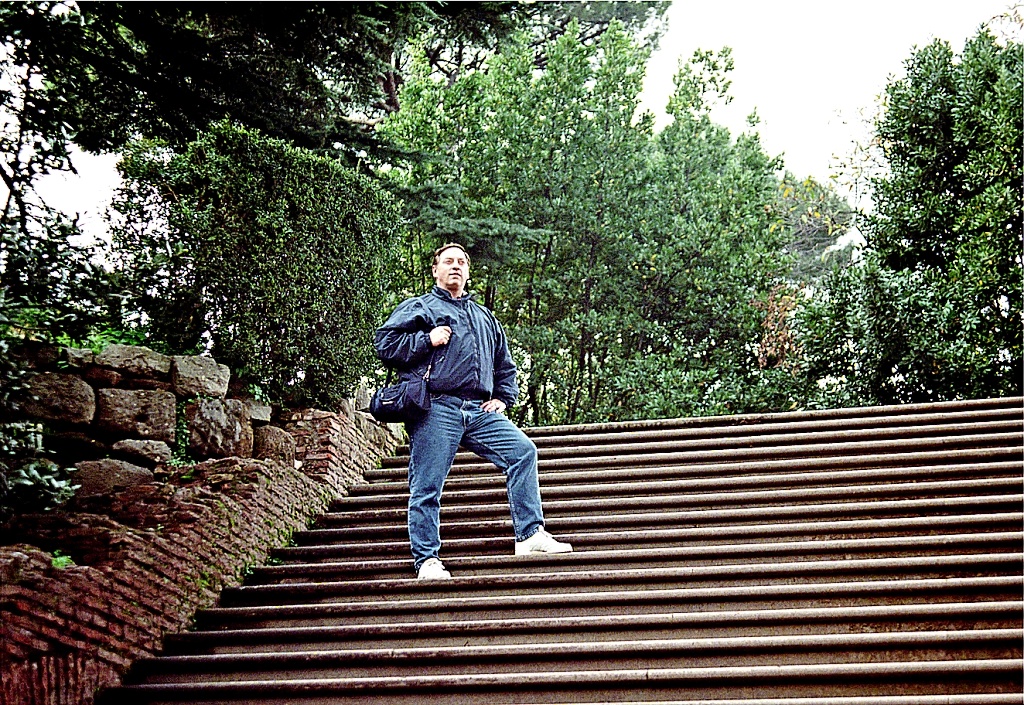
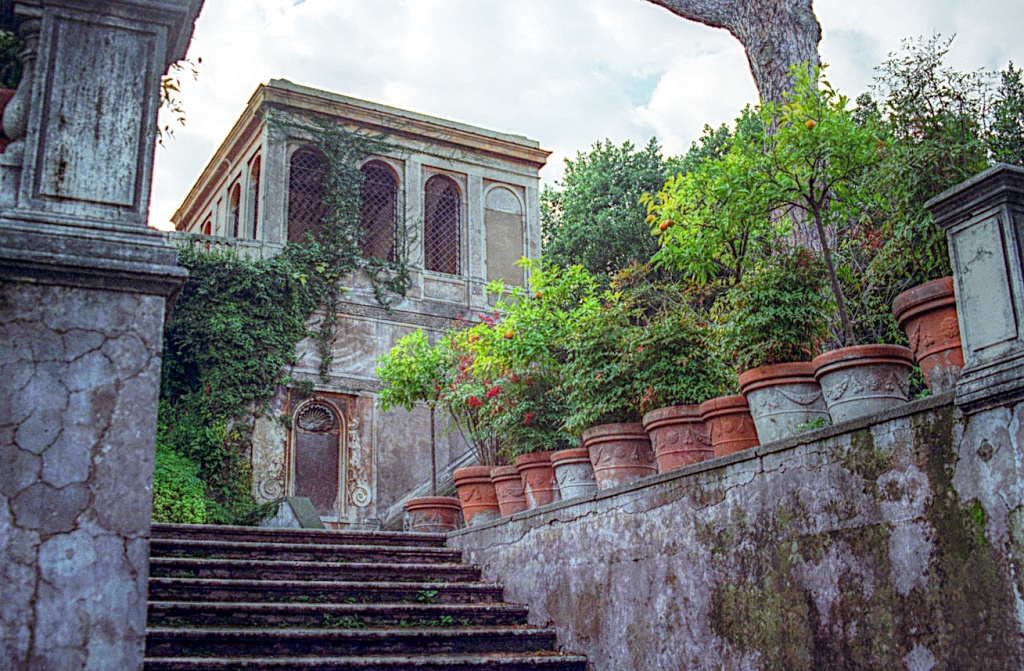
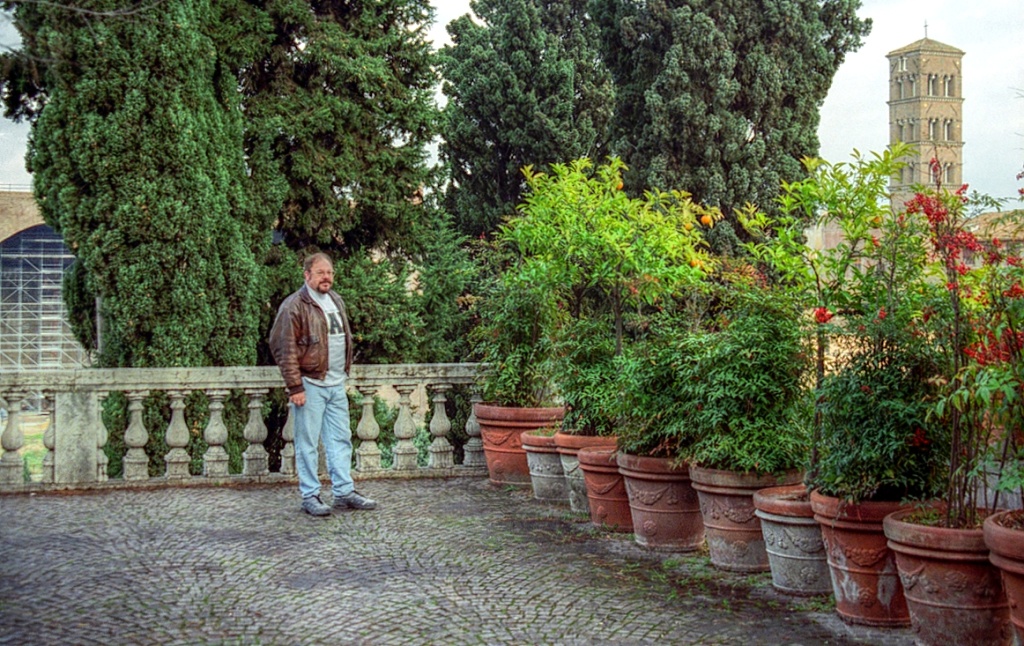
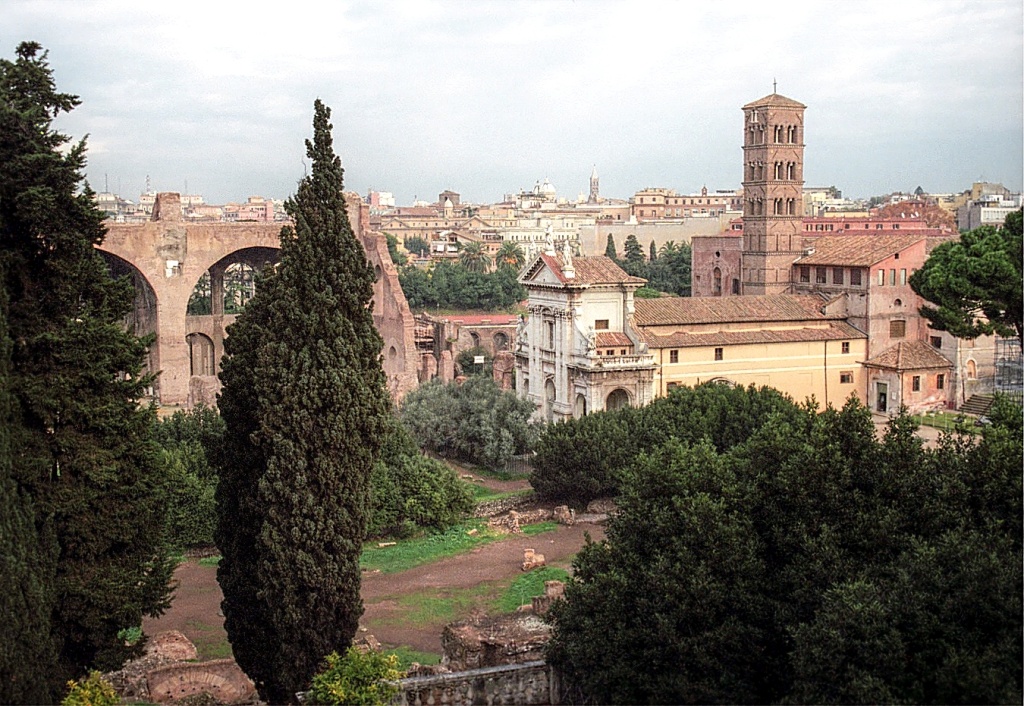
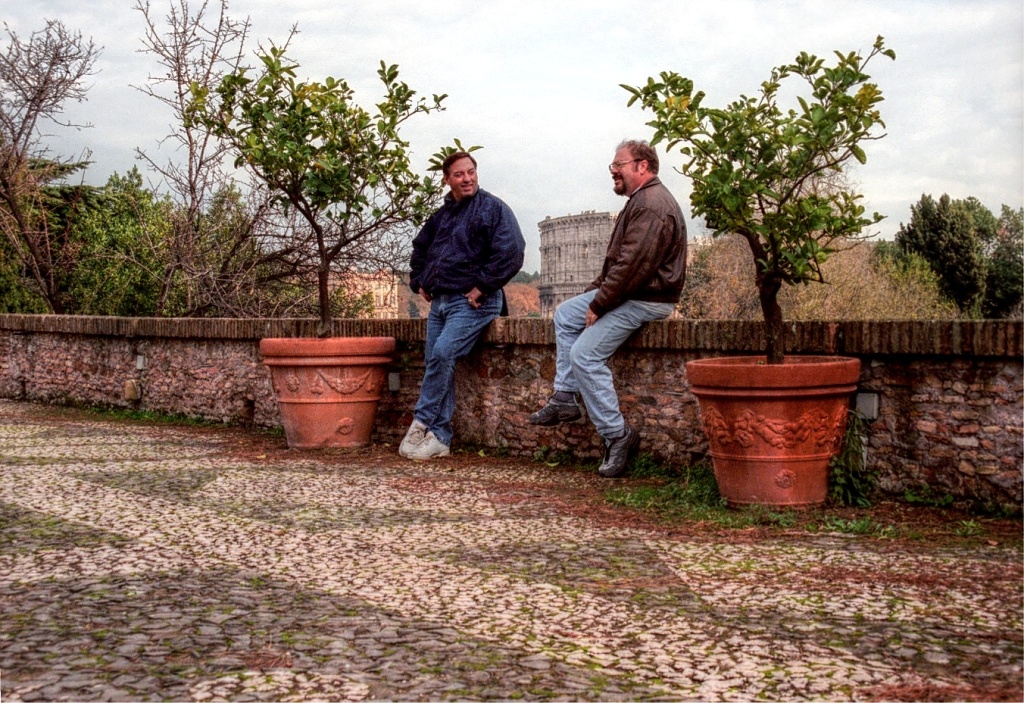
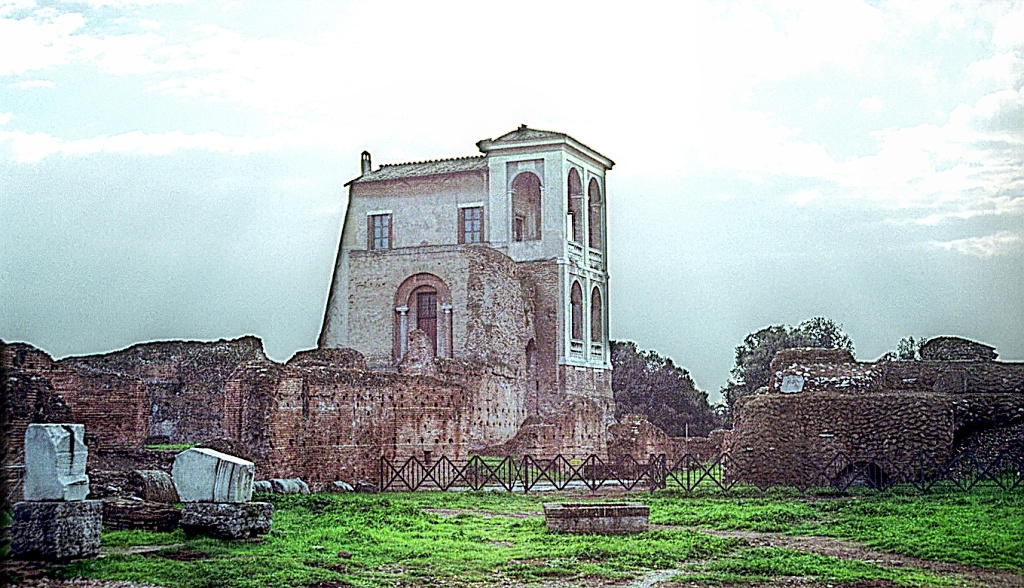
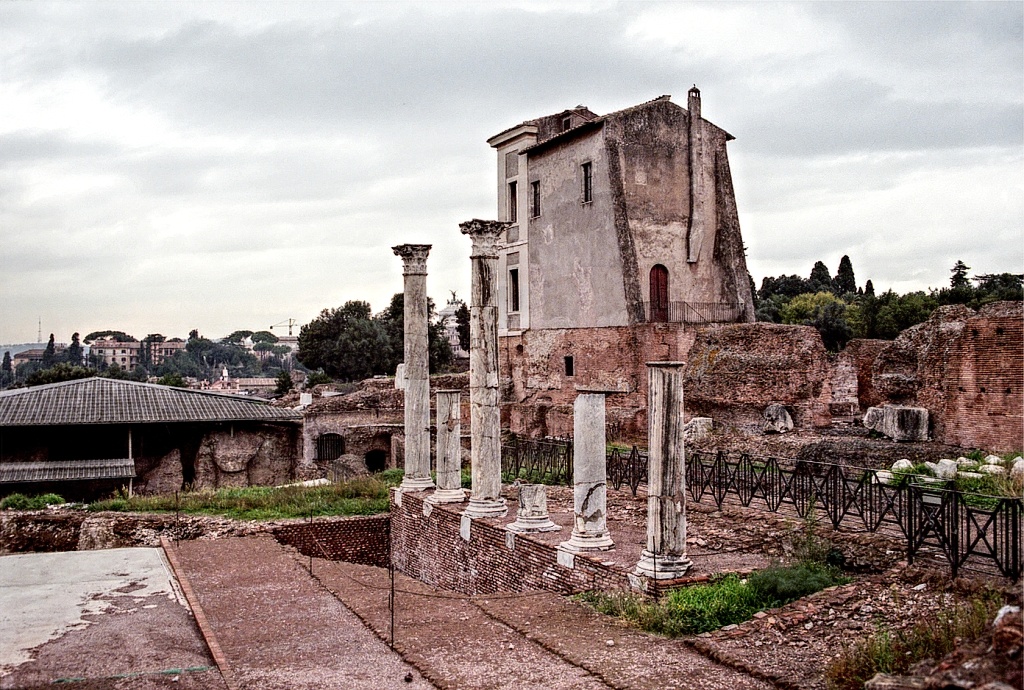
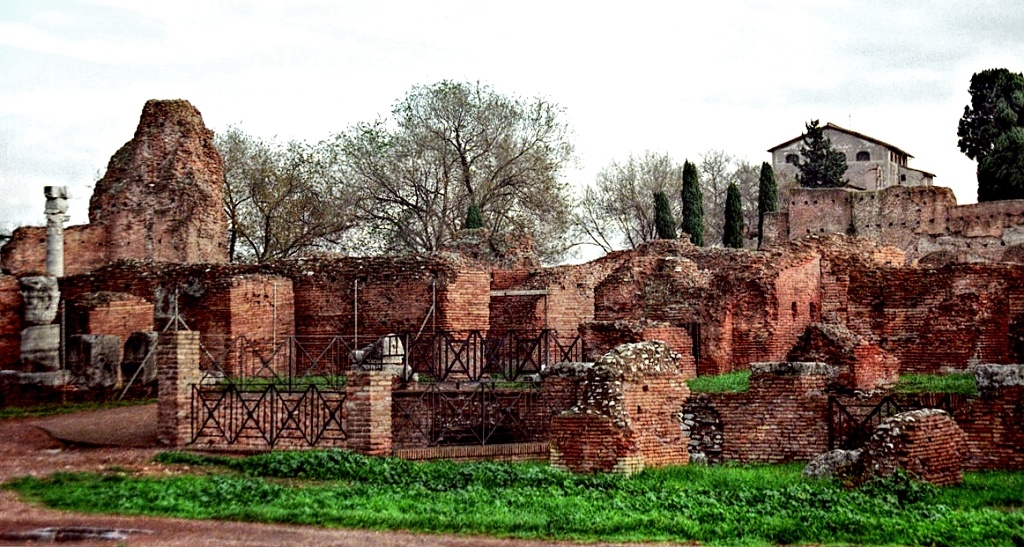
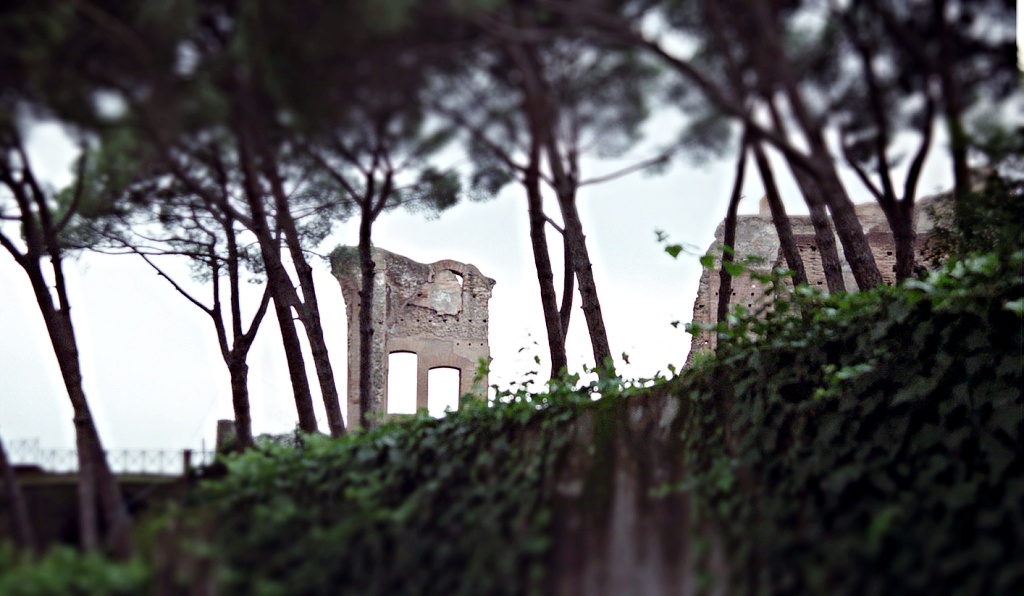
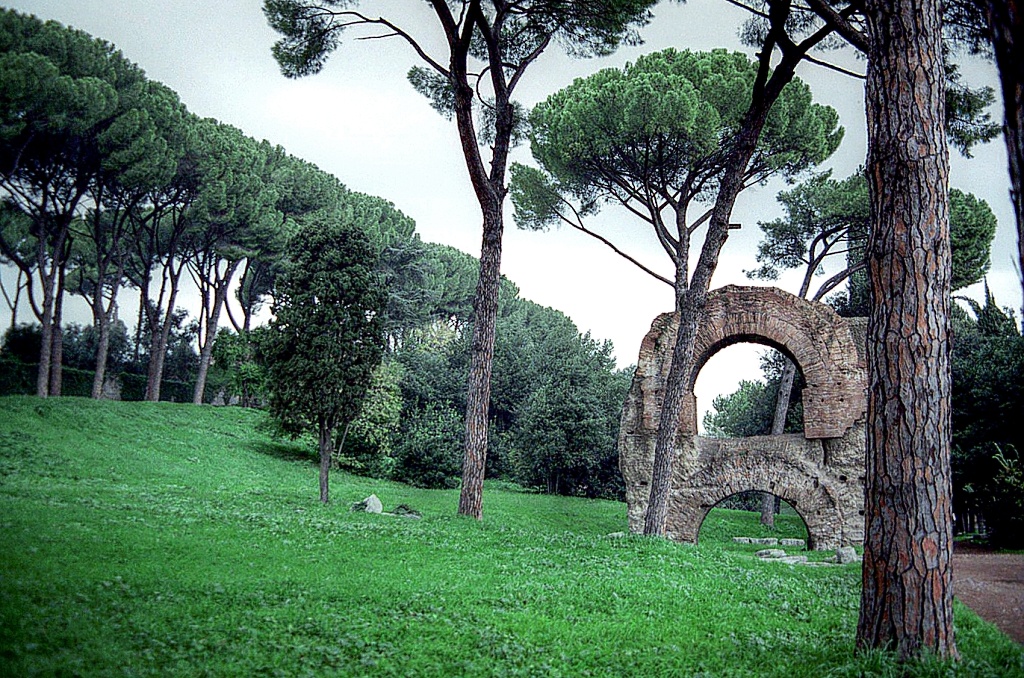
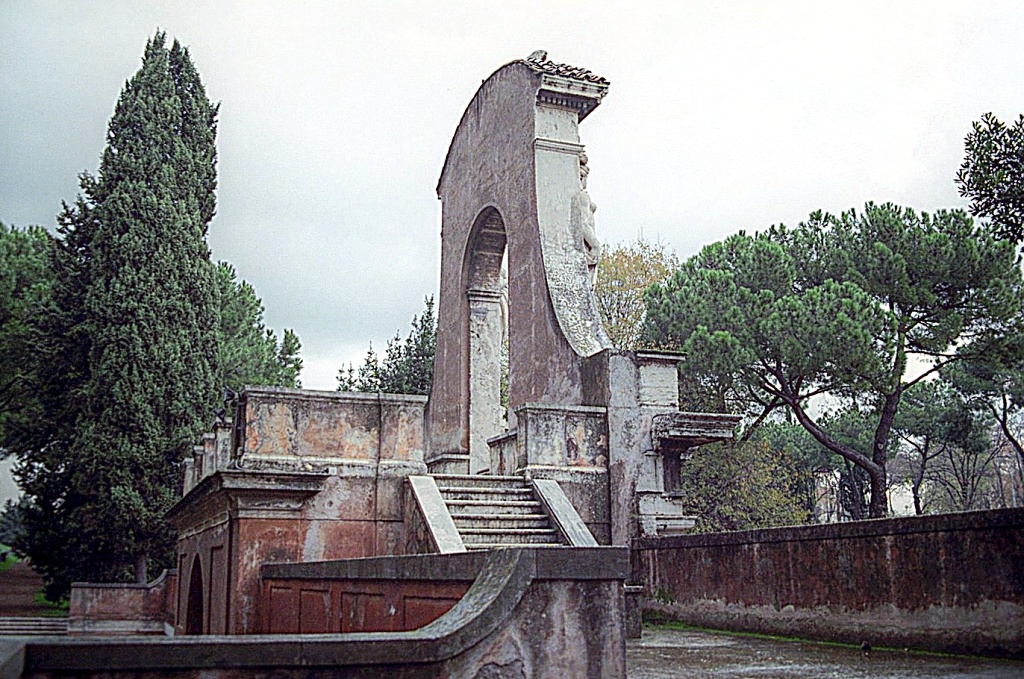
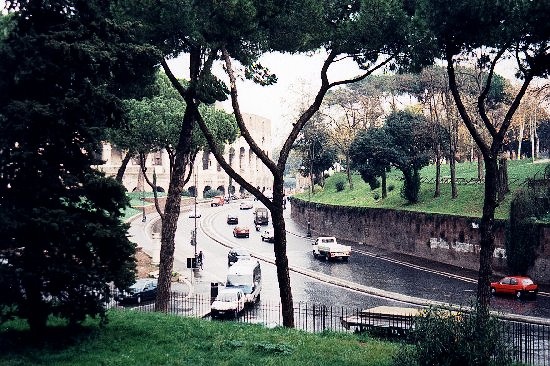
After a thorough tour of Palatine Hill, including a look at the
still-in-progress archaeological dig that is revealing more and more of the hill
(which was essentially hollowed-out by Nero), we strolled toward the Circus
Maximus, giving us a look at Rome's traffic…which, in turn, made us happy we
were walking!
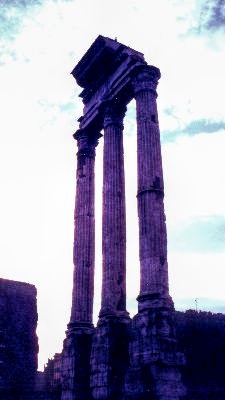
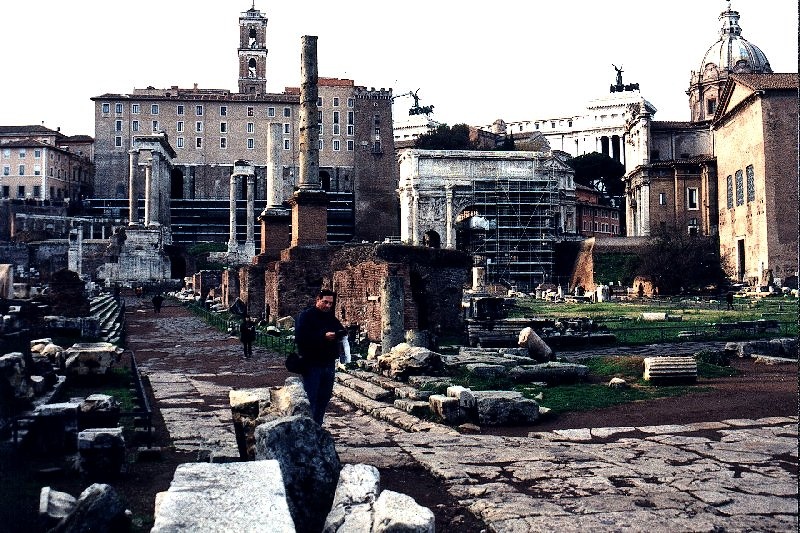
We then walked back to the archaeological park, where the Roman Forum is
being restored.
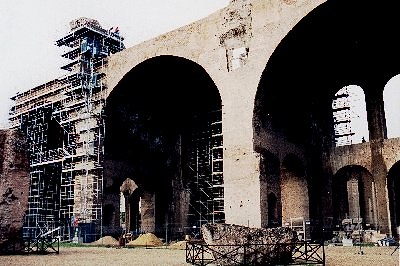
As it happens, Rome has had many
forums. Two thousand years ago, a forum was just a place for people
to gather, which they did for a variety of reasons—yes, to speak on
political issues, but also to entertain and to sell. So, basically, a
forum was then what a cable channel is now. And, like cable channels, a
new forum would appear, attract a lot of attention, then find its
popularity waning when a newer, sexier, forum was established.
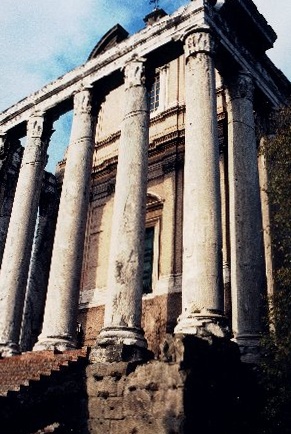
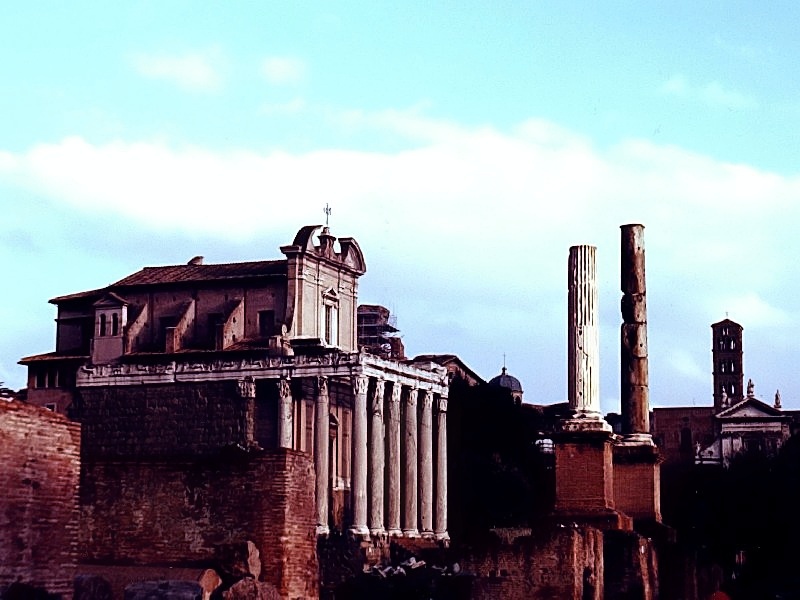
In the vicinity of a popular forum, temples and other
public buildings would spring up. In the Roman Forum archaeological park,
are the remains of many of these.
Wherever there were temples to the Roman gods, the Church later
gutted them and remade them into churches devoted to some saint or
other. In many cases, the Church's "improvements" have since also faded,
leaving nothing but the shell of the original building.
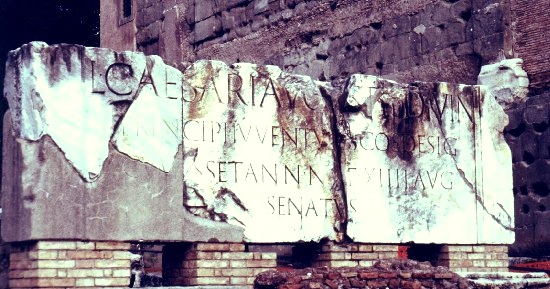
Still present, and even readable, is the original "sign" for the
Senate building. The building is also present; it, too, was made into a church,
but is now being restored.
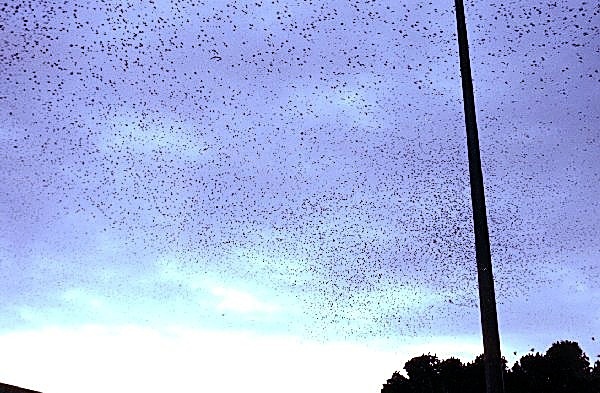
On the way back to the Hotel California, we had our attention
caught by a sight straight from Hitchcock: A flock of birds, surely numbering in
the hundreds of thousands, swarming to roost in a few trees just back of the
train station. No one else seemed to pay them any heed, but they darkened the
sky and their cries were nearly deafening.
Pantheon
December 10, 1999
The next day we had a few hours before our scheduled train to
Brindisi, from where we would catch the ferry to Greece. So we walked in the
other direction from our hotel, toward St. Peter's and the Pantheon.
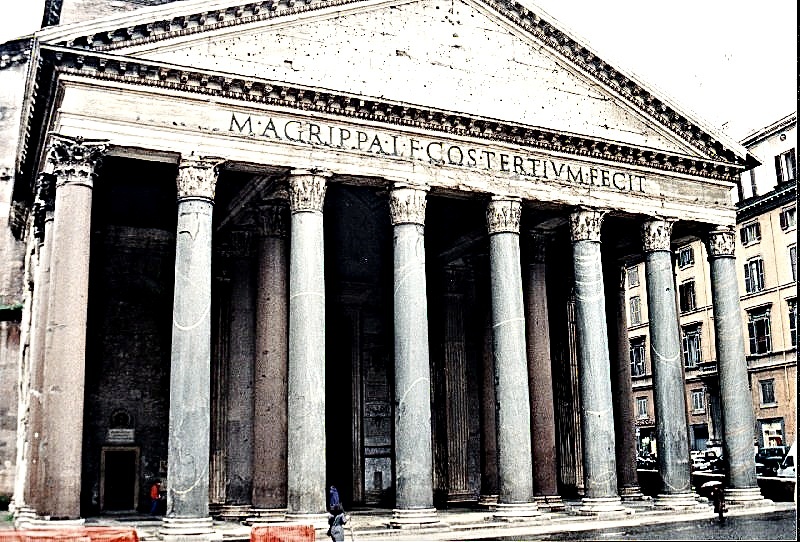
The Pantheon, of course, was built by the Romans to honor all
the gods…including any they might have inadvertently missed. It has since
been made into a church, of course; but in these ecumenical times people go to
see it as the pantheon it was. It is still decked out as a church, but we
all know its true purpose.
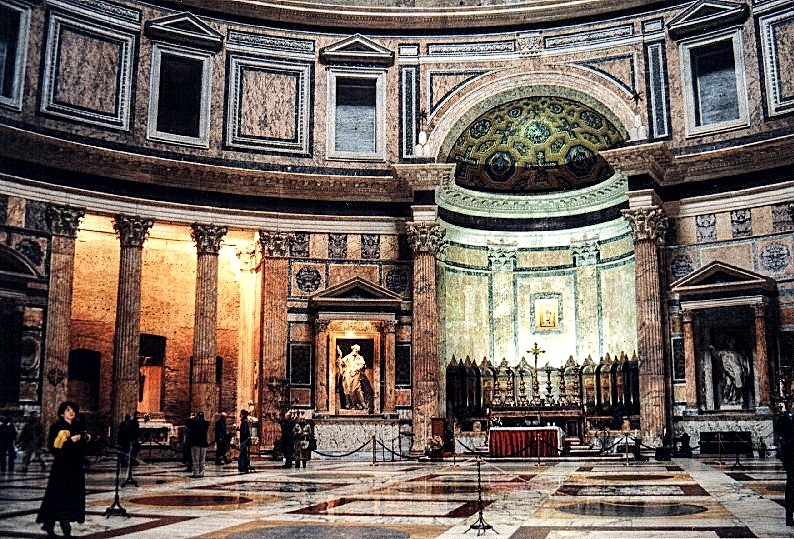
The dome has a hole in it to let in the natural light. It was raining
the day we visited, so the center of the interior was roped off—the
marble floor was wet and slippery.
Yes, the ancient Romans could do beautiful domes, but they weren't
quite up to floor drains.
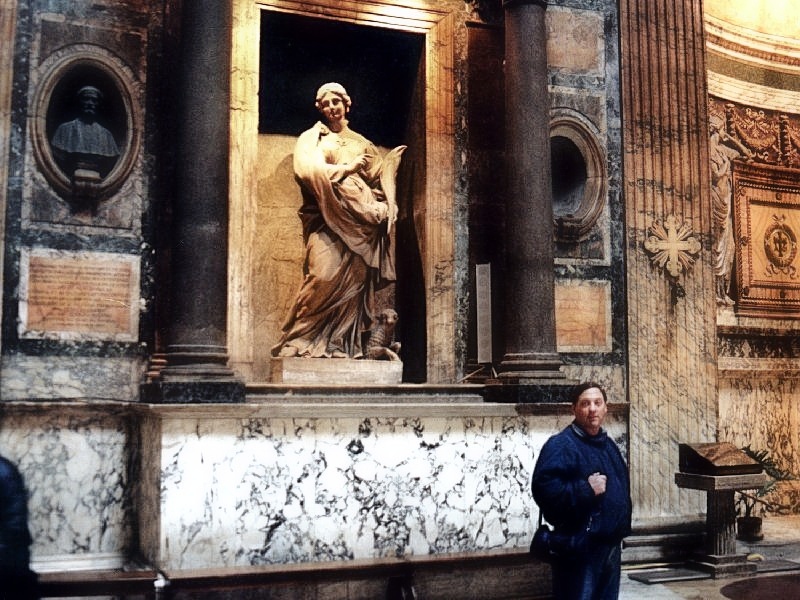
The architecture of the Pantheon is so stunning, that
Michelangelo made the trip from Florence just to study it. He then copied
its dome when he designed the Sistine Chapel.
We took a bus from the Pantheon to the vicinity of St. Peter's. On the way,
we got to talking to a commuter who warned us of "gypsy children". This was the
third warning we had received, about these kids who wander the streets of Rome,
picking the pockets of the unwary. As it happened, there was a band of these
children on our bus. Spotting them, our friend pointed and said, loudly, "I see
you! I know what you're doing!" (Or something like that; he was speaking
Italian.) The other passengers took up the refrain. What was interesting to me,
was, this wasn't done in anger or shame. It was more like grinning at a baby and
saying, "I know what you just did in your diaper!" It was all good-natured; the
kids were giggling, and got off at the next stop.
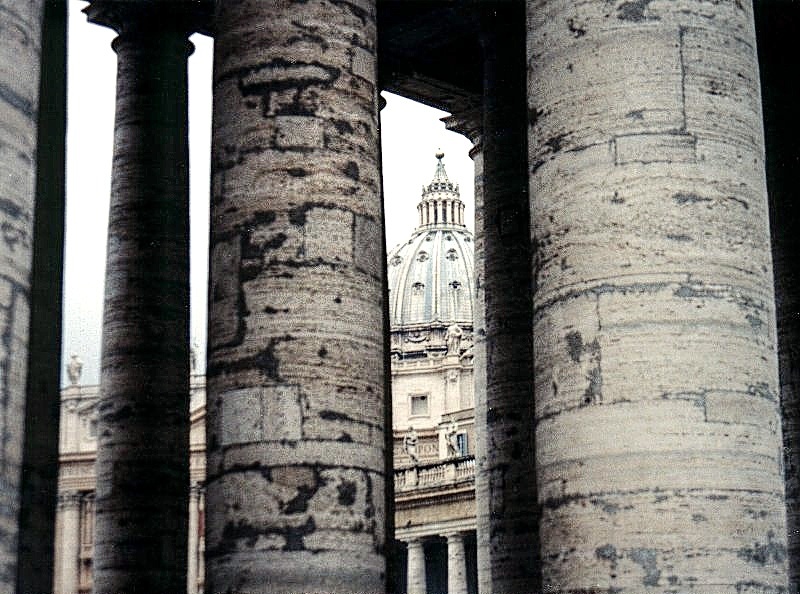
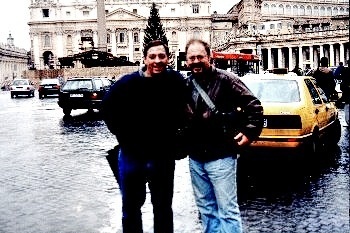
Someone who wasn't giggling, was the girl who took our picture. She and her friend were
visiting from Ohio, and her purse had been emptied of her wallet the day before.
Fortunately, it hadn't contained much money or her passport; but she had to go
through the hassle of canceling her credit cards and it was not a pleasant
memory for her.
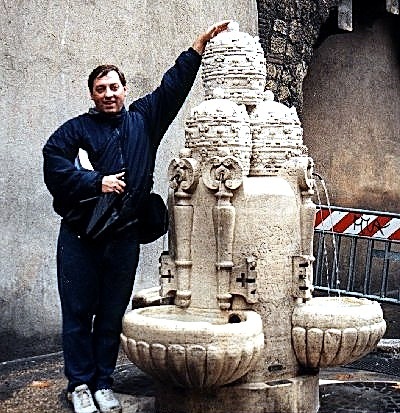
We considered visiting the famous Trevi Fountain (where you're supposed to
drop a coin, like the three women did in Three Coins in the Fountain),
but, as part of the Jubilee Year, the Trevi Fountain is also undergoing a
complete restoration and it is currently completely hidden under plywood and
canvas. So, we settled for a quick visit to the Spanish Steps before catching
our train.
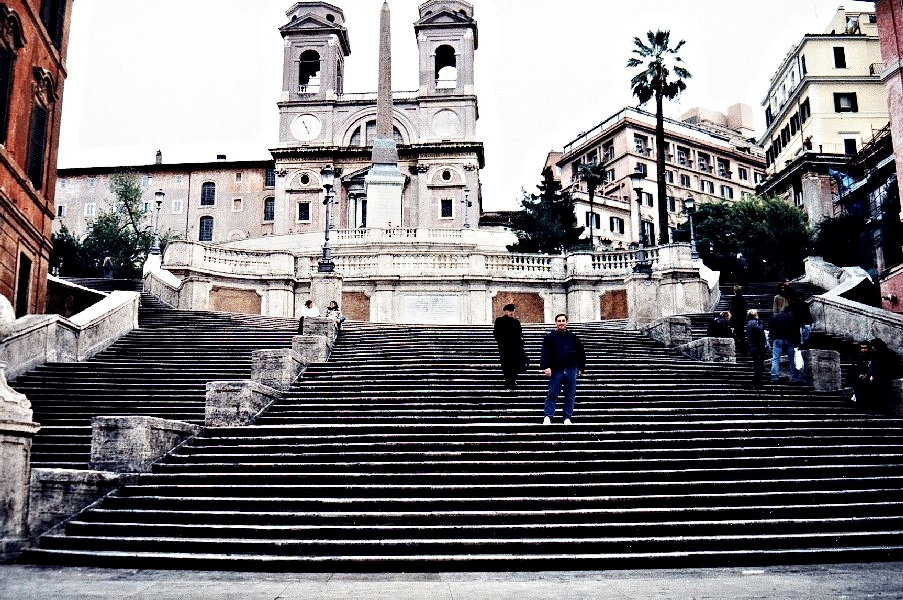
The Spanish Steps were designed by some famous Spanish guy that Michael
went on and on about; however we now can't remember who it was.
Anyway, they are an impressive set of steps—especially if you need
to climb them for some reason—but no substitute for an escalator, in
my opinion.
Now, ironically enough, we soon would have to climb an even higher set
of stairs, in Greece…but that's another story,
which will be told in the next section.