|
By: Paul S Cilwa |
Occurred: 12/12/1999 |
|
Page Views: 1,924 |
| Hashtags: #Places #Athens #Acropolis #Greece |
| Paul and Michael's visit to the famous Acropolis of Athens, Greece, 1999 |
| Estimated reading time: 5 minute(s) (972 words) |
The Acropolis
December 12, 1999
Finally, on our third day in Athens, we made it to the Acropolis!
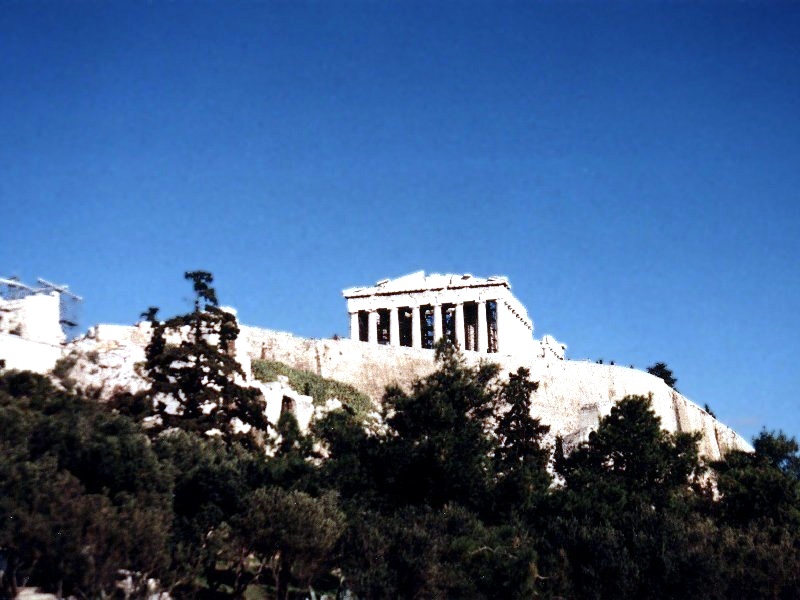
In ancient times, each Greek city had one: the meeting place of the gods,
the place where mortals could visit and commune with them, bring them their
"sacrifices" (really, food-as-tax to keep the gods and their priests and
priestesses fed), and in general have something to look up to. That
last point is important; like the Palatine in Rome, the architecture of each
acropolis is designed to be looked up at. While the structures,
themselves, are certainly impressive, they are most impressive when
seen from below.
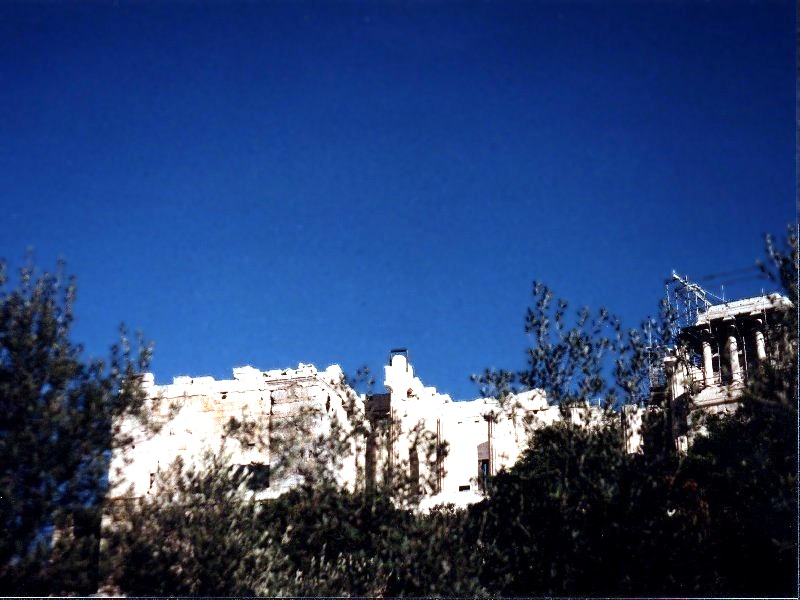
Since the Acropolis is, after all, on a hilltop, and does not feature a
parking lot on the hilltop, we, of course, must walk up the hill,
just as the ancients must have when they came to worship or otherwise deal
with the priests. And so, we got to see something of what they must have
seen on the approach.
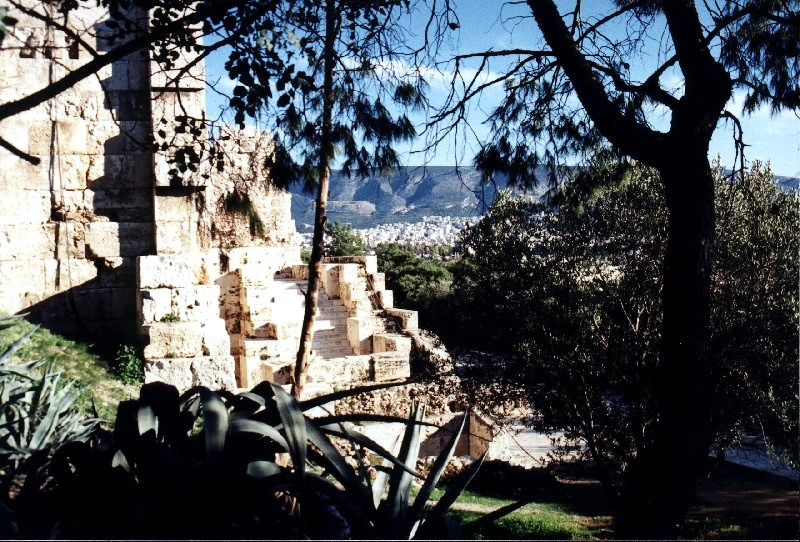
Of course, one difference is that, 2500 years ago, the buildings had
not fallen apart, and they weren't unadorned stone, either. Apparently
the ancient Athenians weren't as fond of marble as we are; they used it for
its endurance, not its beauty. The temples were gaily painted in light blues,
pinks, and other colors. Statues of people, animals, and gods were painted in
realistic colors.
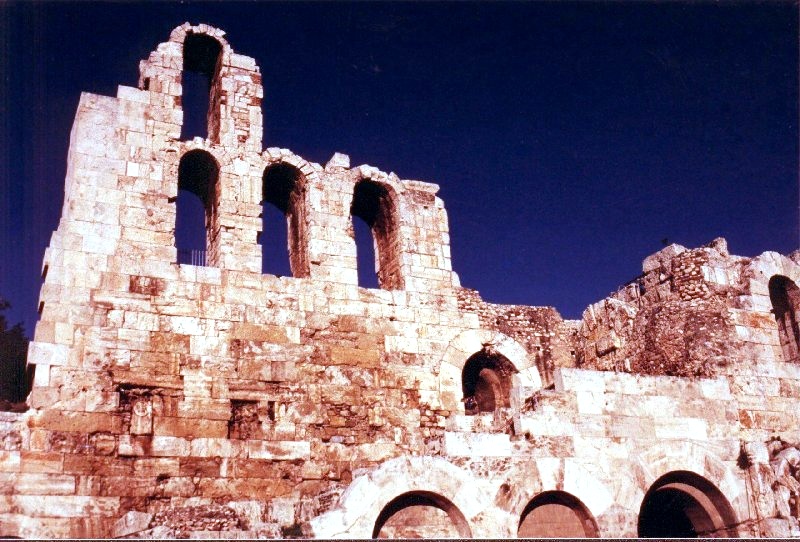
There were originally two, separate theatres flanking the Acropolis. One has
been restored and refurbished to modern standards, complete with electrical
lighting. However, modern sound equipment isn't needed for the actors; the
theatre is so perfectly and cunningly proportioned that an actor's whisper
can be heard clearly, even in the back row.
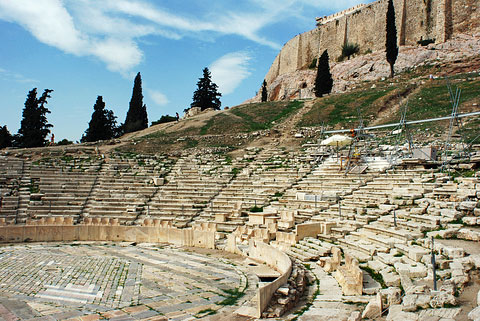
The other, the theatre of Dionysus, has been left in its ruined state.
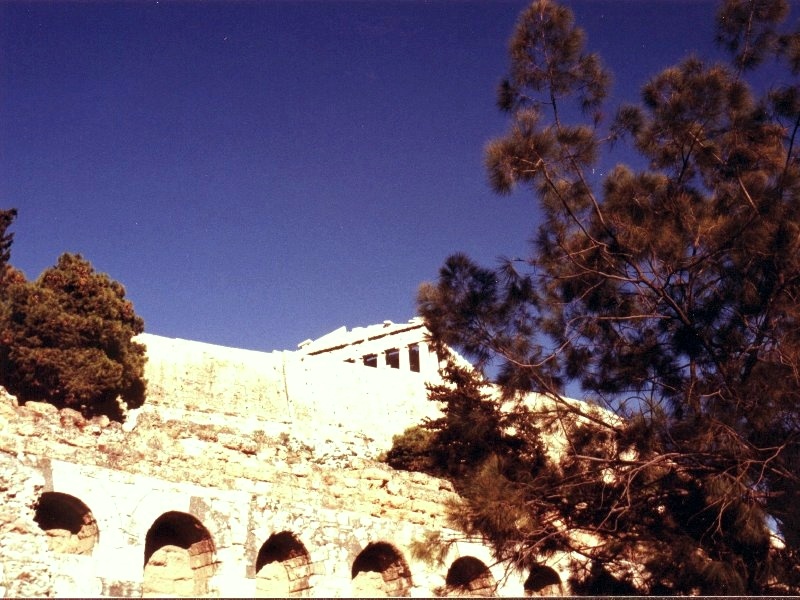
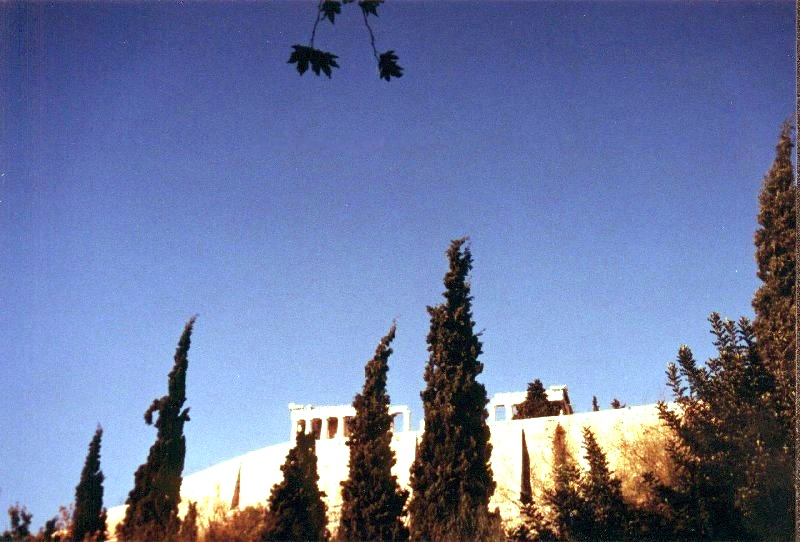
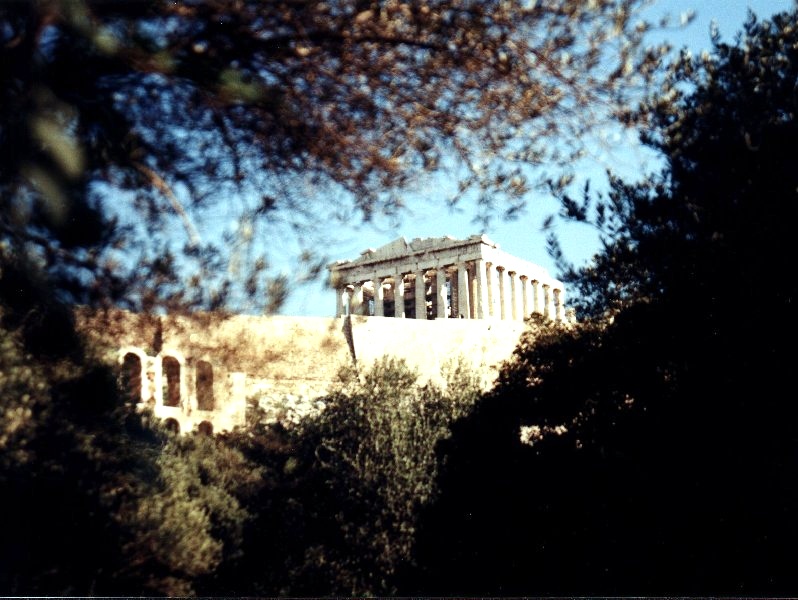
Notice that the buildings atop the Acropolis, look really good there.
The ancient Athenians knew how to exalt their gods and temples by placing them at
just the right spot on the various buttes that adorn the area.
In 1394, the Turks conquered Athens, though they were quickly displaced by
the Venetians. The Turks got it back, however, and built a mosque inside the
Parthenon. In 1640, gunpowder which had been stored in the Propylaea was
ignited by lightning and the whole building nearly collapsed.
Then, in the late 1700s, Thomas Lord Elgin, the British Ambassador to
Greece, took advantage of his position and the disinterest of the Greeks, to
dismantle portions of the Acropolis and ship the pieces home, for his
personal estate.
He removed most of the sculptures from the pediments of the Parthenon, a
column from the Erechtheion, one of the Caryatids, and many other sculptures.
When Greece complained, the government of Great Britain agreed that these
antiquities could not be made the personal property of anyone—but refused to
return them to Greece. They have been on display in the British Museum since
1916.
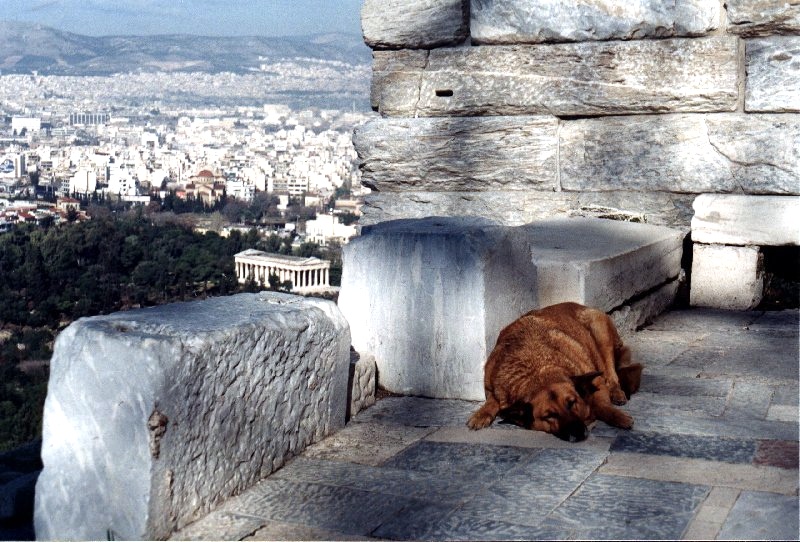
We were told, by sign, that we may not bring pets into the Acropolis
grounds. However, that doesn't seem to have stopped a few animals from
making the grounds their home. This dog was obviously quite comfortable, and
not ill-fed, either.
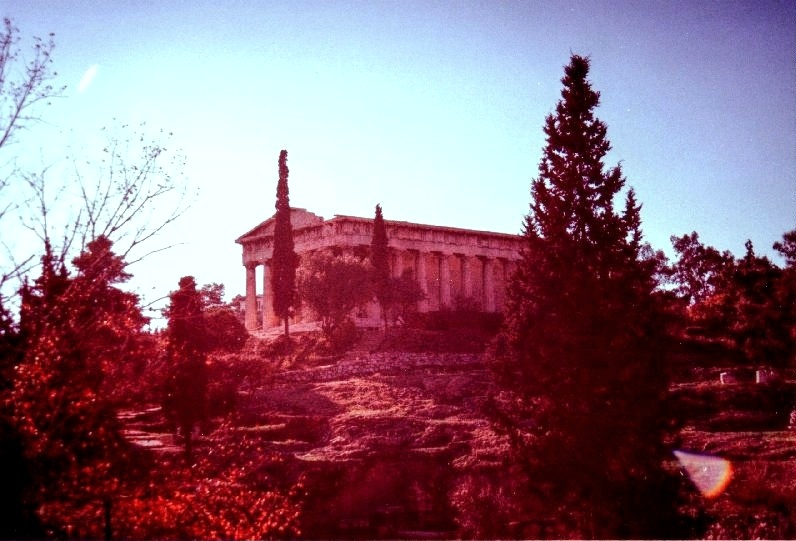
By the way, that's the Thission, the Temple of Hephaistos in the
background, just to show that not all the most beautiful antiquities
are on the Acropolis.
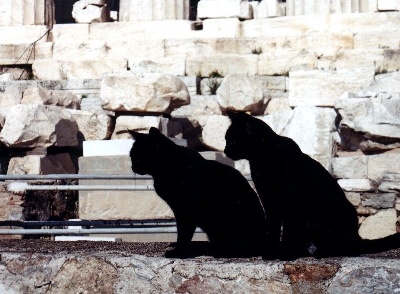
The dogs are far outnumbered by the cats, however, who
actually do "tricks" to get the attention (and hand-outs) from passersby.
The Porch of Caryatides is held up by the statues of maidens. It seems
unlikely that human females could have held up a marble roof like this; on
the other hand, these forms are several times the height of a person, so
maybe it isn't such a task, at that.
Great restorative work is currently in progress on the Acropolis. Someday,
when the work is complete, the experience of visiting will be more in keeping
with the original atmosphere. For now, however, I had to twist myself into
some very odd positions and places to get pictures of the antiquities that did
not include modern cranes, materials, and workmen.
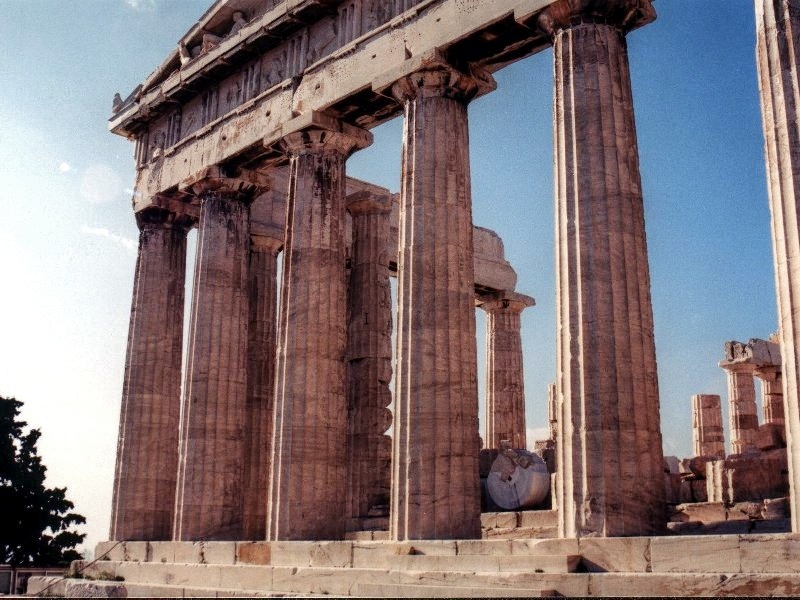
The present-day Acropolis temples and buildings (except for the new
museum) were built about 2500 years ago, on the ruins of temples that had
stood here previously but been completely destroyed by the Persians in the
summer of 479 BCE. Some of the material that had made up the older temples,
went into the construction of the newer ones. Here you can see the "newer"
marble sitting on a far more ancient foundation of porous stone.
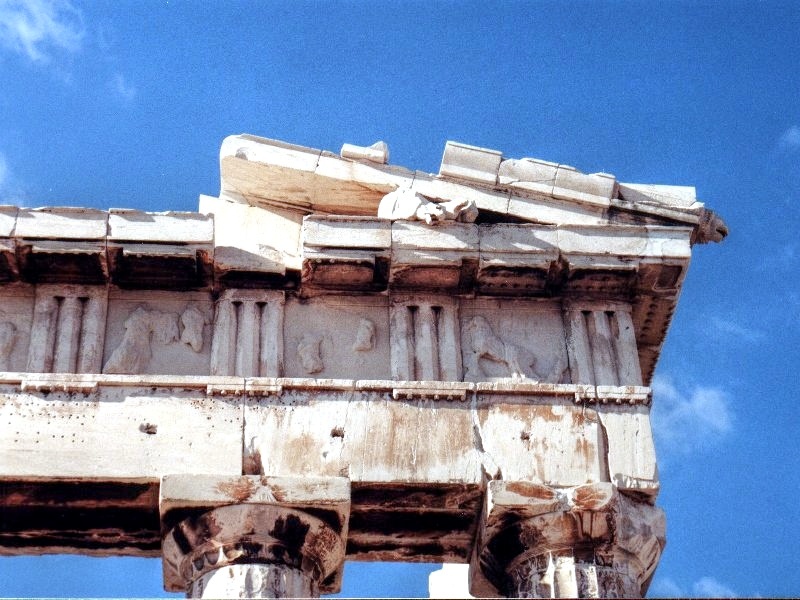
Although much of the pediment is gone (stolen away to England by Lord
Elgin in the 1800s), some, fortunately, remains. Note the expression of
shock on these two horses, who seem understandably surprised at being caught
up in the architecture of the temple.
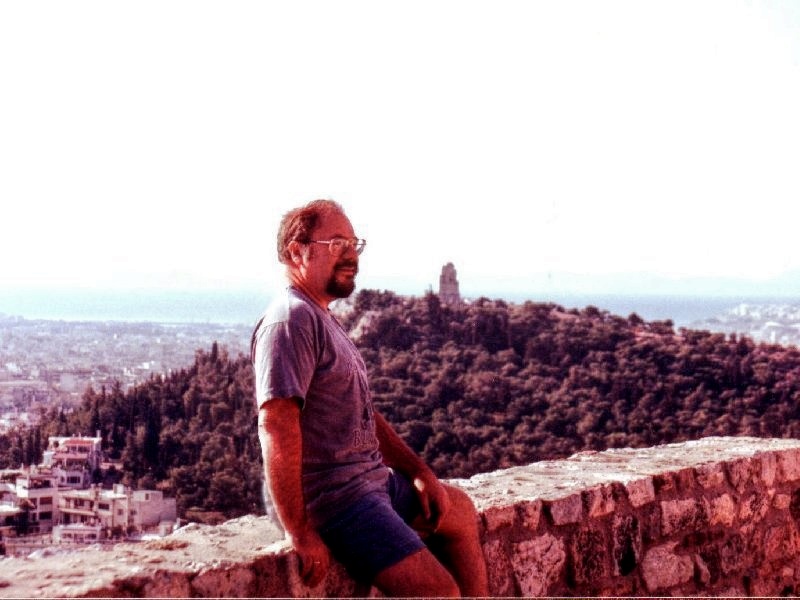
While Michael went into the Acropolis Museum, which is cleverly worked
into the Acropolis grounds so that it looks like just another temple, I
stayed outside to meditate. I seemed to remember a past life in this place.
There was a great amount of high-frequency, psychic energy in the ground.
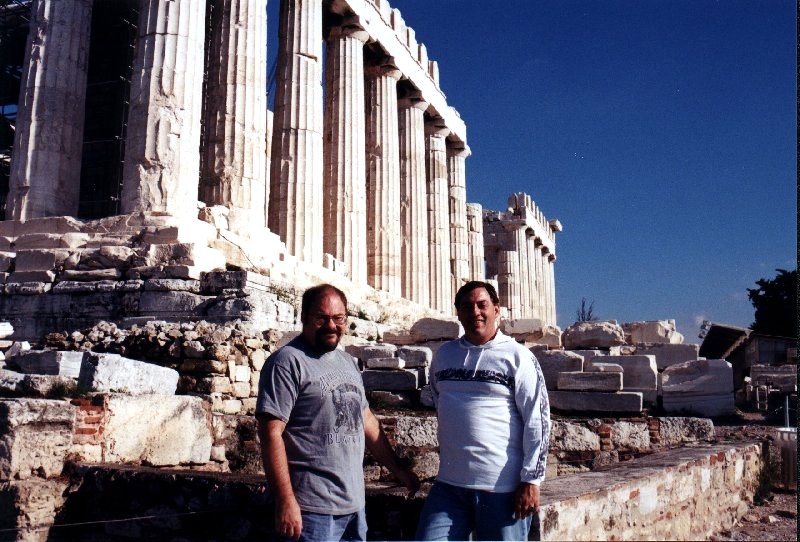
And then we got to see Athens, almost as it must have appeared to
the ancient Athenian priests and gods.
Our three days' wait, we agreed, was worth it.
But, even though the Acropolis closed early, we had to haul butt
to make it to the train in time for our next stop:
Patris.