|
By: Paul S Cilwa |
Posted: 7/10/2007 |
|
Page Views: 5,485 |
| Hashtags: #BrideyMurphy #MassMedia #Metaphysics #Reincarnation |
| How the media responded to a threat to popular belief. |
| Estimated reading time: 9 minute(s) (2048 words) |
There's a telling scene in the brilliant film
Thank You For Smoking, where tobacco lobbyist Nick Naylor, whom
Newsweek has called "The Sultan of Spin", is trying to explain to his son,
Joey, what he does for a living. As they sit having ice cream at a crowded
carnival, there is this exchange…
Nick Naylor: OK, let's say
that you're defending chocolate, and I'm defending vanilla. Now if I were to
say to you: 'Vanilla is the best flavor ice-cream', you'd say…
Joey Naylor: No, chocolate is.
Nick Naylor: Exactly, but
you can't win that argument… so, I'll ask you: so you think chocolate is
the end all and the all of ice-cream, do you?
Joey Naylor: It's the best ice-cream, I wouldn't order any other.
Nick Naylor: -Oh! So it's all chocolate for you is it?
Joey Naylor: Yes, chocolate is all I need.
Nick Naylor: Well I need
more than chocolate, and for that matter I need more than vanilla. I believe
that we need freedom. And choice when it comes to our ice-cream, and that
Joey Naylor, that is the definition of liberty.
Joey Naylor: But that's not what we're talking about!
Nick Naylor: -Ah! But that's what I'm talking about.
Joey Naylor: …but you didn't prove that vanilla was the best…
Nick Naylor: I didn't have to. I proved that you're wrong, and if you're wrong I'm right.
Joey Naylor: But you still didn't convince me.
Nick Naylor: It's not you I'm trying to convince. (Pointing into crowd.) It's them.
Nick Naylor is a fictional character, but his techniques, the spins
given to the public to confuse and mislead us, are not fiction. The
movie shows, in detail, how overwhelming proof that tobacco is
harmful can be turned into doubt in the public eye. We've also seen
as the energy industry, the number-one culprit in Global Warming,
has managed to convince a substantial number of Americans that
global warming may not exist at all (or may not be caused by human
activity) simply by encouraging their co-conspirators in the
mainstream media—that's Fox News to you and me—to bring on
individuals introduced as "experts" who state that there is
controversy where there is, in fact, none among genuine
experts.
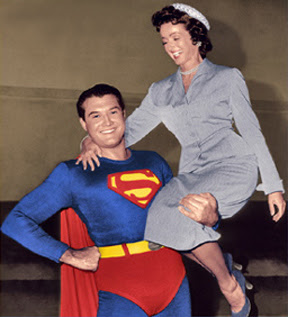
One of the most-lingering lies is that the press, the mainstream media as
it's now called, is "fair and balanced". We have an image from years of viewing
experience:
Lois and Clark
fighting at the Daily Planet (along with their boss, editor Perry White) for
"truth, justice and the American Way."
Mary Richards, who as
assistant producer of the 6 O'clock News
at WJM willingly went to jail to protect a "source".
Wikipedia lists 104 entries for the category "fictional reporter", including
Borat,
Howard Beale
(from the movie Network),
Sarah Jane Smith
(from Doctor Who) and
Will Tippin
(from Alias). Even
Wilma Flintstone
spent time as a reporter.
What do all these people have in common? None are from "literature". They are
all products of the very media they glorify. Superman first appeared in comic
strips, an art form that originated in newspapers; but his Clark Kent persona
blossomed in theatrical cartoons, radio serials, and TV shows. (Similarly,
Batman's girlfriend
Vicki Vale
was also a dedicated newspaper reporter.) The others are mostly TV reporters,
who first appeared on TV shows.
There's another thing they all have in common: Not one
of them was ever shown taking a bribe, or discovering their editor would not
allow them to run a story because of political or corporate implications.
In reality, being unable to run an important story is a fairly common
complaint of non-fictional reporters. Tabloids have exploited the reputation
that "newspapers will print anything" but, in reality, why is it that,
statistically, Hollywood stars are more likely to be reported driving drunk,
shoplifting, or abusing their kids than mayors or governors?
Why is it that none of the mass media has ever challenged president Bush on
the fact that no "weapons of mass destruction"
were ever found in Iraq, and that since none of the 9/11 hijackers came from
Iraq there was, in fact, no rational reason for our invading that country? (On
the contrary, conservative talk radio hosts still frequently
repeat the lie that such weapons were found, as has
PBS.)
To get away from such recent and therefore emotionally-laden topics as the
occupation of Iraq, let's go back fifty years to the phenomenon of Bridey
Murphy, to see how the mass media, even then, was so well-organized and thorough
in its attack on forbidden knowledge that a genuine mystery is now almost
universally believed to be a hoax.
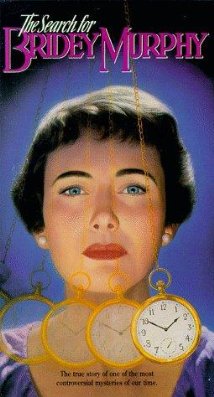
In 1956, the world—especially the publishing world—was taken by surprise by the publication of
The Search For Bridey Murphy, a non-fiction book written by Colorado
businessman Morey Bernstein. He had learned to hypnotize as a hobby—hypnosis
itself was new and exciting in those days—and on a lark, during a house party,
he hypnotized one of his guests, one Virginia Tighe (but given the pseudonym
"Ruth Simmons" in the book). Hypnosis is inherently a tad boring as parlour
games go, as it generally consists of a subject lying still. But Bernstein got
the idea of regressing Tighe to a very early event in her childhood. When Tighe
appeared to recall vividly her first birthday, Bernstein, heady with success,
decided to see if she could recall her birth or perhaps even incidents in the
womb. To his surprise, the memory she described after being regressed to a time
"before your birth" was as a colleen in Ireland more than a century before.
It was hard to say who was more surprised, Bernstein or Tighe. Nothing in her
life or interests had prepared her for the revelation that she had once been
spanked for pulling hay out of her barn's thatched roof! She still didn't
remember this, when awakened; she had to learn it from the tape recording
Bernstein thoughtfully made during the session. There were six sessions
altogether, all recorded. (A recording was sold separately from the book; it is
almost impossible to locate today.)
Over the course of the six sessions, Tighe described every part of "Bridey's"
life from birth to death (indeed, even a period after death!).
Inextricably a part of her descriptions, were the names of places involved in
her life: Cork, where she lived; Carrigan's, where she bought groceries; roads
she traveled, stories she heard, jigs she danced, songs she knew. She described
in casual terms the edgy relationship between the Catholics and Protestants
(Bridey was Protestant; her husband, Brian, was Catholic).
Bernstein, swept up by the enormity of what he seemed to have stumbled on,
quickly wrote the book without checking any of the information Tighe, as Bridey,
had presented. Bernstein's publisher decided to hire a reporter, William J.
Barker, to go to Ireland for three weeks and see how much, if any, he could
verify.
Barker was an excellent choice, as he had no interest either in religion or
reincarnation. The Irish, on the other hand, had a strong interest in religion
and a strong distaste for reincarnation. Their initial response for most
of Barker's questions was to say that "Bridey" was wrong, or that things weren't
the way she described them. However, in every single case it turned out,
on investigation, that the experts
were wrong.
Bernstein:
On one tape Bridey told us that Brian had bought "foodstuffs" from a
greengrocer whose name, she said, was John Carrigan. She gave us both his
first and last name, and even spelled the last name. A statement from a
Belfast librarian discloses that, indeed, there had been a John Carrigan who
carried on a business as a grocer at 90 Northumberland Street. And since
there was only one such John Carrigan in that business in Belfast at that
time, this fact would seem to be noteworthy.
On another tape Bridey had told us that she had purchased "foodstuffs" at
Farr's. She did not give us the first name, but she spelled the last name.
Research in Belfast brought confirmation. William Farr, the report said, was
a grocer at 59-61 Mustard Street, which lay between Donegall Street and
North Street. Here again there appears to have been no other Farr in that
business at that time in Belfast.
Both grocers were located near enough to where "Bridey" said she and Brian
lived to be believable.
Then, again:
There was more than one instance when experts and authorities disagreed
with Bridey's statements, yet it turned out that Bridey had been correct. A
case in point developed when Bridey was challenged as a result of her
insistence that Brian had taught at Queen's University. Brian, she had
contended, was Roman Catholic. Queen's University, though, was a Protestant
institution. That a Catholic could have taught at this particular school,
therefore, seemed inconceivable to at least one authority, who promptly
registered his objection. But research disclosed that instructors and
students were not barred on the basis of religion. The authority was wrong;
Bridey was right.
This essay is not about Bridey Murphy, but rather the media
response to Bridey Murphy. I strongly encourage the interested reader to
actually read the book, as most of the book's critics failed to do.
Bridey Murphy's story is really quite compelling, whether it is taken as
indicative that reincarnation exists or not. (Bernstein himself never
claimed that Bridey was "proof" of reincarnation.)
However, the response to Bernstein's book was volcanic. Rather than being
ignored, which would have been the case if the book had been "merely silly" as
responders claimed, naysayers came out of the woodwork, tumbling over each other
in their hurry to "debunk" Bridey. Tighe was outed as the true "Ruth Simmons";
she and her husband were forced to move to another town. A Hearst tabloid—you
know, the kind of newspaper that reports on the love children of aliens and
Laura Bush, from the newspaper chain that
created the Spanish-American War and was instrumental in
making marijuana illegal—printed an "exposé which alleged, on the basis of
interviews with people who claimed to have known Ruth Simmons, that all she'd
said under hypnosis as Bridget Murphy MacCarthy was merely a recollection of her
youthful days in this lifetime." Barker:
These debunking reports were widely reprinted. Life
magazine, among other publications, accepted the Chicago paper's "findings"
without question. Said Life whimsically, "Last week The Search for Bridey Murphy
was ended by a series of Chicago American articles."
To put this in contemporary context, imagine a current Newsweek
article using the National Enquirer as a source!
—And the "debunking" by self-professed "skeptics" never ceased. As recently
as the late '80s, The Straight Dope,
a column written by someone who was normally a seemingly sane author, was
printing scathing condemnations of the Bridey case as a "hoax" and responding to
experts who dared question this conclusion with personal attacks against their
qualifications!
Stan Freberg, a popular comic of the sixties, parodied Bridey Murphy with a
hit novelty record.
If you want to know the real truth about Bridey Murphy, or anything
else—find out for yourself. Read the book, which, though out of print,
can be found in libraries and used book stores. Try hypnosis yourself; it's easy
and safe (that it isn't, is another lie designed to scare you from trying this
very experiment) and my experience is that practically anyone can be
regressed to remember a past lifetime.
And when you have determined a truth that feels right to you…don't continue
to question yourself just because the mass media hasn't suddenly come to the
same realization.
Because they won't. Their job, their purpose, is to spin.