|
By: Paul S. Cilwa |
Posted: 9/1/2026 |
Unpublished |
Page Views: 19 |
| Hashtags: #ScienceFiction |
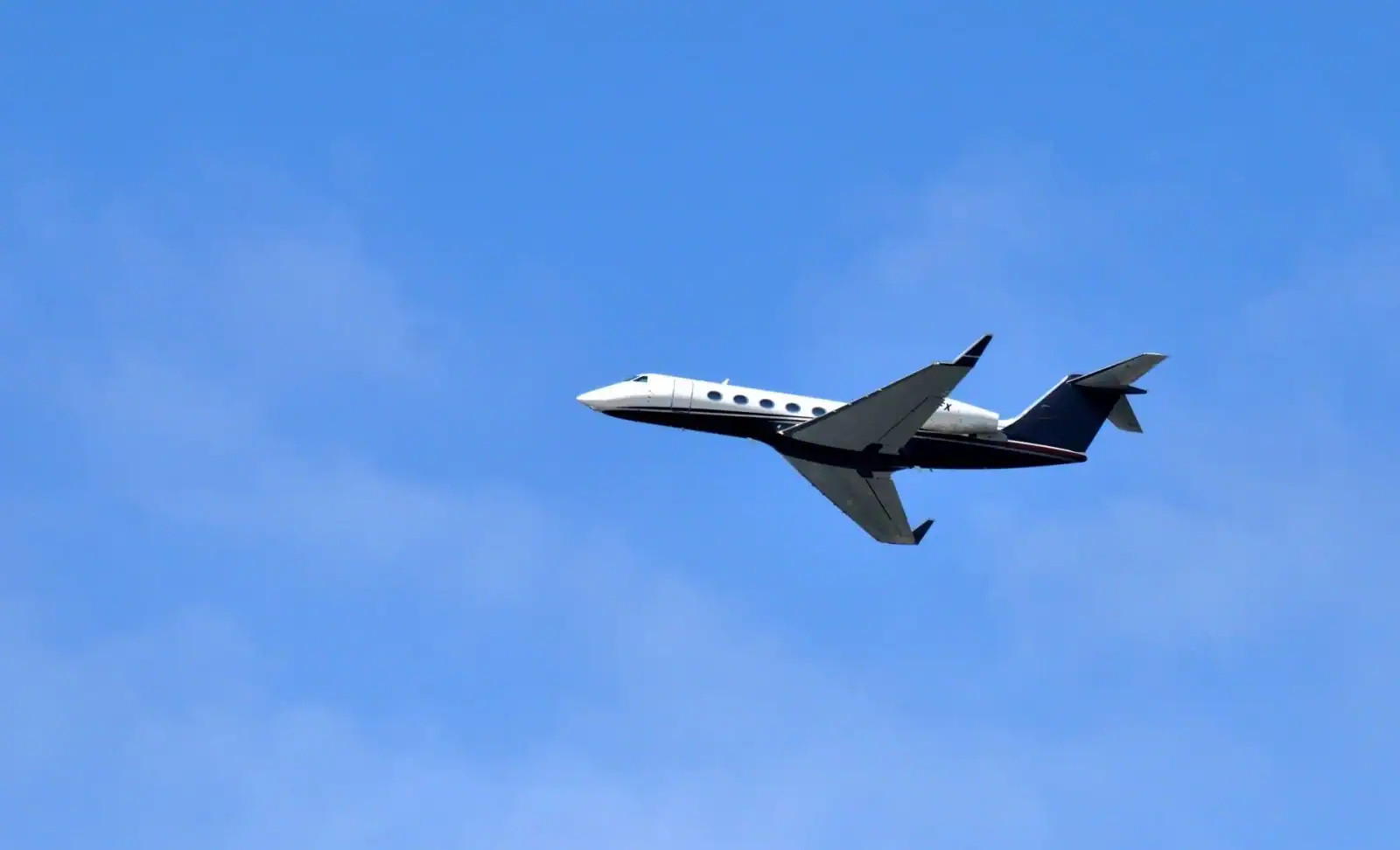
| Bradley finally gets around to looking up the man who is paying for all of this, somewhere over the Sahara at forty thousand feet. |
| Estimated reading time: 11 minute(s) (2565 words) |
April 19, 2027
That was the first thing. Bradley came up the airstair at six in the morning, at a general
aviation terminal on a side of Cairo International he had not known existed, and stopped two
steps into the cabin, because there was a couch. A real one. Upholstered, running
along the left-hand wall. Past it, four seats in cream leather that swiveled. Past those, a
door that turned out to be a bathroom with a window in it.
"Guys," he told his phone. "Guys."
Normal people got from Cairo to N'Djamena the normal way, which was to fly north-east to
Istanbul or south-east to Addis Ababa, sit in an airport for five hours, and then come back
down again—a journey shaped like a very wide V that ate the better part of a day.
Marquette did not do this. Marquette had the use of a jet, and somewhere behind that fact
was an office, and a person in it who had spent a fortnight collecting overflight
permissions from three governments, two of which were not currently speaking to each other,
and none of that had been mentioned to Bradley at any point by anybody.
The other thing nobody tells you about a private jet is how quiet it is. Bradley had braced
for noise—movies had promised him noise—and instead the door sealed with a sound
like a refrigerator closing, and the engines came up somewhere a long way behind him, and
the whole thing simply went. At forty thousand feet he could hear Stevens turning
pages.
"How long?" Bradley asked.
"Four hours and change," said the copilot. "Then it depends on the paperwork."
"How long does the paperwork take?"
"It's Chad," Stevens said from the seat across the aisle, without looking up from said paperwork.
"The French gave them le bureaucracy, and they've had since 1960 to deify it."
Marquette took the forward seat on the right, put his feet up, and was asleep before they
were out of Egyptian airspace—arms folded, chin down, entirely at peace—for which
Bradley was grateful, as he wasn't really comfortable with the man. Not because he
was wealthy, or foreign, or private…or maybe it was because of any or all of those things.
Whatever it was, the feeling was in his gut and wouldn't go away.
For the first hour there was something to look at. The Nile went by below them,
a green stripe maybe ten miles across with hard desert on both
edges of it, as though somebody had highlighted the river with a green
marker. Bradley shot four minutes of it out the window and narrated over it in
a low voice so as not to wake anybody, knowing he would have to record the audio again
later, and did it anyway.
And then, for three hours, nothing.
Bradley had known the Sahara was big. Everybody knows the Sahara is big; it's the one fact
about it that gets through. What nobody had mentioned was that it is also boring, in
a way that turns into something else if you look at it long enough. He had expected dunes.
There were almost no dunes. There was gravel, and rock, and long pale scars where water had
run an extremely long time ago, going on and on with nothing on it—no roads, no
lights, no smoke, nothing anywhere with a right angle in it—hour after hour, until
eventually he stopped filming, because there was no way to shoot it that would make the
footage mean what the window meant.
Somewhere over what was probably Sudan, he gave up on the view and opened his laptop.
The jet had Wi-Fi. Of course it did; it had better connectivity than Bradley's home in
Tempe. He now had 111,001 subscribers! His trip was going viral!
And the Copilot icon was sitting right there. Waiting for him to ask.
So he did: What can you tell me about a man, last name Marquette, wealthy, African,
probably from a French-speaking country, who might be doing archaeological work in Chad?
The response was practically instantaneous.
Based on the details you've given—French-speaking, wealthy, African, and
involved in archaeological activity in Chad—the most plausible match is
Jean-Luc Marquette, a Tunisian-born industrialist whose family history
intersects with North Africa's colonial period.
Jean-Luc is widely understood to be the son of Étienne Marquette, a
French businessman who acquired a major Tunisian construction and transport firm
in 1942 under circumstances historians still describe as murky.
Contemporary
accounts note that the company had been Jewish-owned until the German
occupation, and that Étienne obtained it for a fraction of its value.
During the six months of direct German control that followed, he fulfilled
Wehrmacht fortification contracts using conscripted local labor. Most modern
summaries simply place the dates side by side and let the implications speak for
themselves.
Jean-Luc inherited the resulting fortune and has spent his adult life expanding
it. He's known in business circles for buying struggling companies, rebranding
them, and then publicly taking credit for innovations that were already in
development before his acquisition. Unlike some high-profile industrial
magnates, he keeps a deliberately low public profile—no flashy interviews,
no social-media presence, and very little personal publicity.
His interest in Chad appears to be part of a broader pattern: he funds or participates
in archaeological and geological expeditions across the Sahara, especially in
regions where scientific research overlaps with mineral surveys or infrastructure
prospects. In Chad, that often means the Tibesti and Borkou regions, where
archaeology, geology, and industry blur together.
Bradley sat very still for a while after he'd read it twice.
Skibidi! he thought, because his father would have struck him if he thought
Shit! which was what he really wanted to think.
Bradley felt something in his gut just drop.
Okay, he thought to himself. The sins of the father don't have
to be the sins of the son. And while he himself doesn't seem evil,
and he probably is planning to take as much credit for the discovery as he can,
Marquette's own point makes too much sense: A rich guy finding a pyramid
is a curiosity; a rich guy funding a dig is a business opportunity.
He may or may not be a supervillain, but he is definitely a businessman.
He may be a leopard, but he's not gonna eat my face.
Bradley's next impulse was to video his discovery and reaction; but he forced
himself to put the camera down. Marquette was apparently one of his followers;
Bradley could hardly out the man while still at his tender mercies.
When this was over and he was back home, though—would he have
some tea to spill!
After a while he looked across the aisle.
Stevens had his own laptop open, tilted the way people tilt them, and had been working on
something steadily for three hours with the calm of a man doing his taxes. There was a
coffee in the holder beside him that he had let go cold.
The thing was, Stevens was good with computers. Not good-for-his-age; actually good.
The man pulled down raw satellite data and ran it through machine-learning models looking
for anomalies in empty desert—for fun, apparently—which was, Bradley had
to concede, a considerably more impressive hobby than anything he himself did with a phone
and a ring light.
Which raised a question Bradley did not enjoy having.
Either Stevens had looked up his own boss, or he hadn't.
If he had, then he knew. He had read those three paragraphs, or ones very like them, and had
gone on taking the man's money, booking his charters, hiring his porters, saying
Marquette in that easy clipped way that means you have worked with somebody for
years. What kind of person does that?
But if he hadn't—what kind of person doesn't look up his own boss?
A man who can find a buried pyramid by teaching software what a right angle looks
like can certainly manage a search bar! Somebody who can look and never has, isn't
incurious. He is deliberately not curious, which is a different thing, and takes effort, and
which people generally only go to the trouble of doing when they already have a fair idea
what they are likely to find, and really don't want to find it.
Bradley turned it over for most of an hour and could not make it come out clean in either
direction. Because if it was the first case—well, he, himself, had read it and
was still going through with it. So that's the kind of person he was.
And yet—there was a difference. Stevens had been working with Marquette for
years, apparently. Bradley, on the other hand, hadn't known the man existed a week before;
and he had learned this while in the air in an aircraft the man had paid for, or,
as far as he knew, owned. Even if he put on a parachute and jumped out, he'd be
over trackless desert with no food or supplies or idea of where he was.
I'm not buying anything. I'm not selling anything. I'm going to look at a rock formation
and, if I'm right, I'm going to be the first archaeologist in the world to say so,
he consoled himself. And if I'm wrong, I'm going to be the first archaeologist
in the world to say that!
The note of the engines changed. Marquette woke all at once, the way he seemed to do
everything, looked down at the brown haze coming up to meet them, and turned around in his
seat with his whole face lit.
"Mr. Hunter! Come and look. That is the Chari, and the far bank of it is Cameroon, and there
is nothing on it. Nothing at all! Can you imagine?"
April 21, 2027
They spent a day and a half in Chad's capital, N'Djamena, nearly all of it indoors,
in rooms with ceiling fans and
stacks of forms and men who were unfailingly polite and in no hurry whatsoever. Bradley
filmed none of it, on Stevens' advice—the first thing Stevens had ever said to him
that sounded less like a friend and more like a rule.
When they got to their chartered helicopter, though, Bradley was back to recording.
"Oh my god, guys," he said. "Look at this thing! Look at it! It's a helicopter!
And it's 50 years old if it's a day, and no doors! And I'm gonna
ride it! And you're coming along!"
It was an old French machine with most of the seats stripped out of the back to make room for
cargo, and it was hot, and it was loud enough to make filming with audio impossible, but
it flew low, which made for impressive footage, and he could always add narration later.
Nothing goes from N'Djamena to the Tibesti in one hop; Marquette had solved
that by having already put fuel where fuel would be
needed, days in advance, the way other people put out place settings. Twice they came down
in open desert beside a line of drums that somebody had trucked there,
and men, having waited for them for however long, pumped fuel into the helicopter's
hungry tanks by hand in the heat. Then they
again ascended. Six hours of flying. Most of a day, with the stops.
He got some of the best video of his life out of that open door.
Black volcanic ridges coming up under the skids close enough to count the cracks in them.
Dry wadis running away like veins in the back of a hand. And then the whole massif standing
up out of the desert ahead of them, the color of an old bruise.
They rose to pass over the caldera wall, and then the ground fell away,
revealing a stark landscape dominated by a human skull.
It wasn't a real skull, but the huge white splotch of natron on the caldera floor had three
black holes in it, and from the angle at which they approached, the holes looked
exactly like the eyes and nose of a skull. The splotch itself was almost drop-shaped,
with the point looking like the skull's chin.
Plus, the caldera was huge. Arizona's Meteor Crater, which he'd visited as a kid,
is about a mile in diameter; Trou au Natron was more like four.
They put down on hard ground on the northern shelf, well back from the natron crust.
The Toubou, the indigenous people, who lived here, who Marquette wanted to turn into
hotel maids and fry cooks, were waiting.
Bradley was momentarily taken aback. Unconsciously, he had expected to find "African porters"
like the ones in the Tarzan movies his dad had insisted on showing him, even though they were
black and white and old timey. When native Africans appeared in those films, they were always barefoot,
and his father would say, "They're savages but the missionaries are there to bring them
to Jesus." He'd been a child, and had watched without critique.
If these men were savages, they were savages that shopped at Old Navy.
Not only were they not barefoot; some of them wore boots better than Bradley's, which he had bought
new for this trip (and the associated video). One of the Toubou had a Manchester
United shirt gone pink at the shoulders from the sun. Another had a pair of reading glasses
pushed up on his forehead. A third was on a satellite phone before the rotors had finished
winding down, saying something in a language that was neither Egyptian Arabic nor the Chad version, nor even French.
They came in under the blades
without ducking any lower than they had to and unloaded their gear with the
brisk, unbothered competence of people who did this for a living.
No one carried anything on their head.
The unloading took less time than the loading had. The Toubou guys assembled four tents:
one for Marquette, one for Stevens, one for Bradley, and a large one as a kitchen.
This wasn't camping as much as it was glamping, because Marquette camped in style.
Bradley recorded the whole setup, figuring that bragging about his great camping experience
would not be insulting and therefore shouldn't alienate the scary rich guy.
Then the work was done and the Toubou began to walk off. Bradley had heard one of them
speak in French to Marquette, so he used his high school French to ask him, "Where are you
guys going? Aren't you staying here?"
The man shook his head. "No, monsieur," he replied. "We have our own homes,
over there." He gestured to the north wall of the crater, where a few small huts were visible.
But there was more than that. Towering over the floor of the crater, though still far below
its rim, was a brilliant, white, perfect pyramid, easily as big as Giza's, standing on the brilliant
white of the natron salt. Invisible from above; impossible to miss from below.
And then the helicopter flew off, and the Toubou walked off, and Bradley was left alone
with an incurious computer whiz and a mad financier…and an anomalous pyramid
crying out to be explored.