|
By: Paul S Cilwa |
Occurred: 6/20/1969
Posted: 10/30/2024 |
|
Page Views: 132 |
| Hashtags: #Autobiography |
| Serving up fun. |
| Estimated reading time: 4 minute(s) (891 words) |
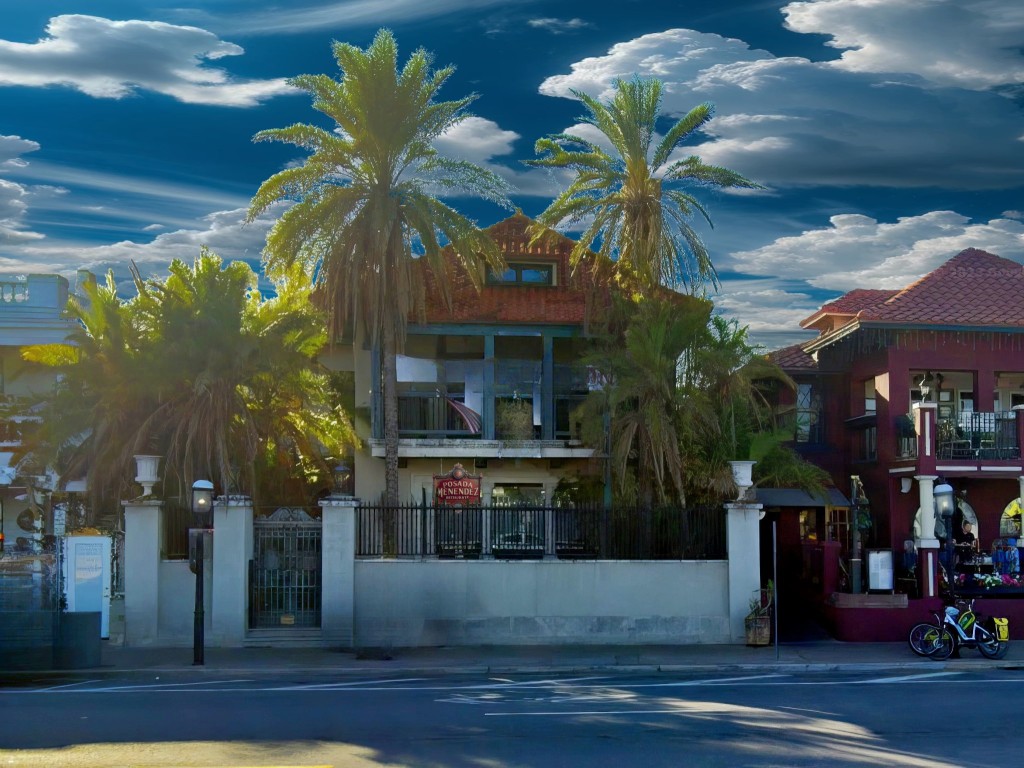
The Posada Menendez Restaurant was a notable spot in St. Augustine, especially around the
1960s when it added to the historical city's vibrant dining scene.
Of course, I knew nothing of such things at 18.
It was located in a building (that I was certain was haunted)
with Spanish colonial influences, echoing the area's deep-rooted Spanish heritage.
The restaurant was often celebrated for its atmosphere, which provided both locals and visitors with
a blend of classic Spanish cuisine and flavors reflecting St. Augustine?s history.

Typical dishes, of which we employees could have one per shift, included paella,
arroz con pollo, and fresh-caught fish. At this time I was unaware that a restaurant
hires a chef to invent the dishes to be served. I only knew that the cook was a
darling lady, a large woman who looked like she ate half of what she cooked, but
with a heart larger still. And I mention this because of its rarity in 1969: She was
Black. But the four owners of the place were not racists, and also hired
a diverse wait staff.
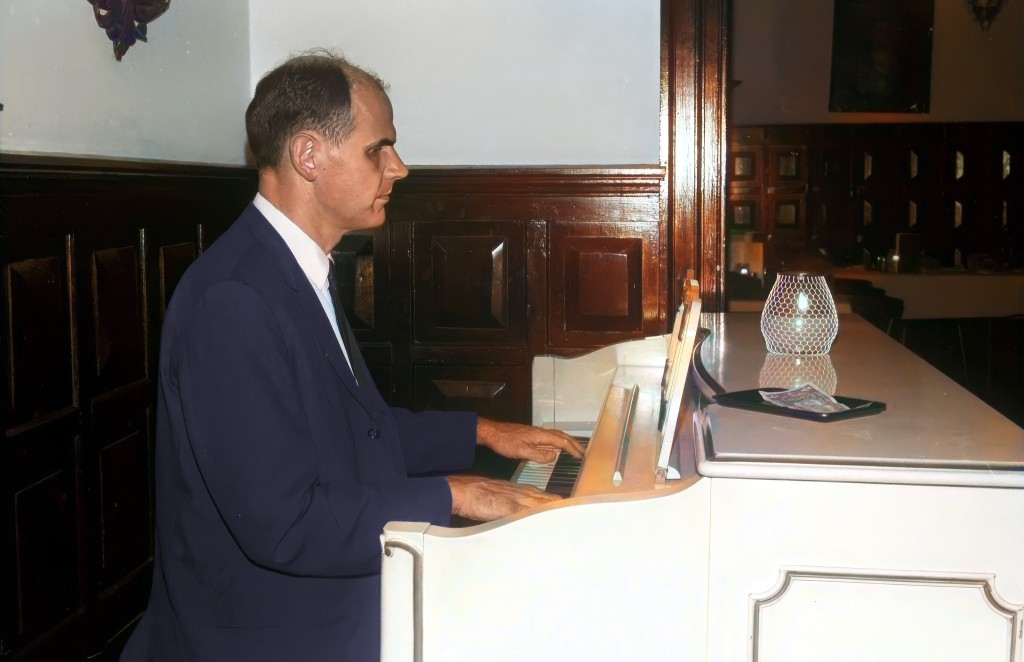
They also hired a blind pianist, Hubert Foster. Since I was (and am) a great lover
of music myself, we spent time chatting in between his pieces and my tables.
I've been trying to remember the names of the owners. It was two couples, a younger
one (in their early 30s) and an older one (in their 40s or 50s). The younger guy
was Pete, and I think the older guy was also Pete. I'll always remember the younger
wife telling me, as I was collecting dinners to take to the dining room, that
it would be faster if I used both hands instead of just one, to grab plates.
Then there was the day the vacuum cleaner broke. One of my jobs was to vacuum the
dark red wall-to-wall carpet that covered the floors. But, on this particular day,
the vacuum cleaner was broken. And the floor really needed it. Only a waitress,
Margaret, was there; I told her I was running home to borrow my mom's vacuum. Which I did.
Of course, I lived a good half mile from the restaurant, and I was on foot. So by the time
I got back opening time was just a half-hour away and Pete's wife (I'm thinking Andrea, but
I'm not sure. We'll call her Andrea for now) was livid. She found me vacuuming.
"We don't pay you to come to work 45 minutes late!" she screamed. (Today we'd call her a Karen.)
She didn't give me a chance to respond, and I didn't. But as soon as she'd calmed,
Margaret took her aside, explained that I had gone home to get my own vacuum cleaner
because hers didn't work, and that, in Margaret's opinion, I should be given a raise
rather than crap.
That was the first time in my life I remember anyone standing up for me.
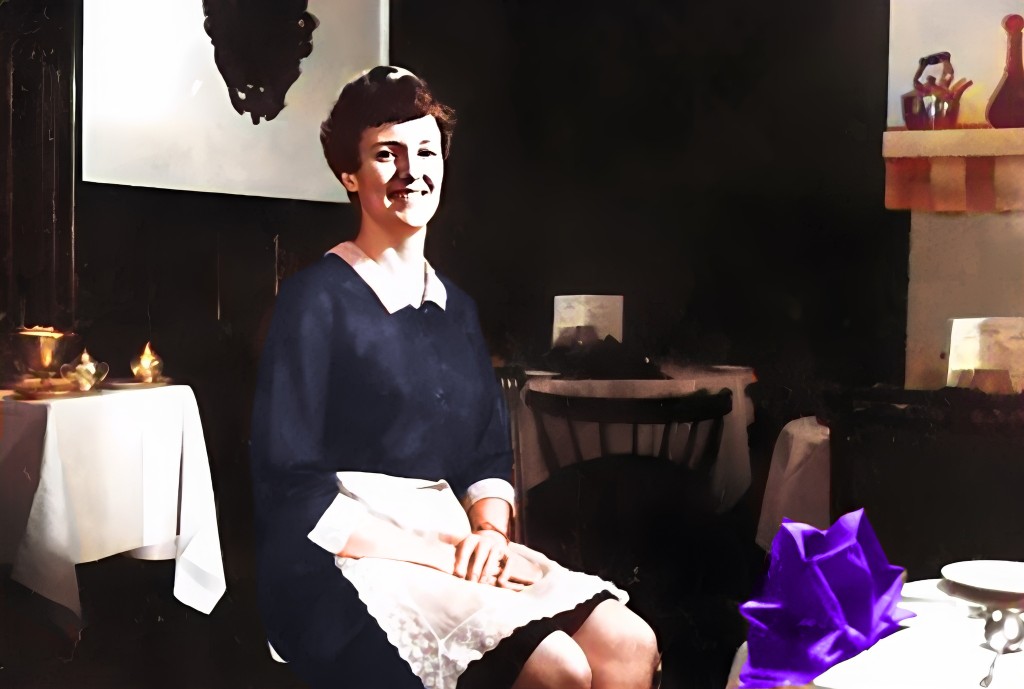
So Margaret and I became best friends, at least at work. But also out; I met her husband,
Don; we went to a hypnotist show together and Don hired me to work as a lifeguard
at the Ponce de Leon Motor Lodge, where he was night clerk and, apparently,
lifeguard manager.
Cleaning up after closing time, usually alone or with the Petes going over books
in the upstairs office, I first experienced that light-bending effect from the corners of
my eyes. That's where you notice a flicker of something off to the side, but when
you look, there's nothing there and nothing moving.
Years later, after I read The Celestine Prophecy and its sequel, The Ninth Insight,
I recognized author James Redfield's concept of soul fragments, which was introduced as
part of the Ninth Insight. According to the book, soul fragments are parts of our soul that
have become separated from us due to past traumas or unresolved issues. These fragments can
influence our lives by creating patterns of behavior or attracting certain experiences that
mirror the original trauma.
In the book, when the unnamed protagonist notices flickering off to the sides,
it symbolizes the presence of these soul fragments coming to the surface to help him solve
a problem or heal an old wound. The idea is that by becoming aware of these fragments and
addressing the underlying issues, we can achieve greater personal growth and spiritual awakening.
My own experience, in later years, is that I would see them whenever I had a particularly knotty
but exciting mystery to resolve.
But, anyway, I first spotted them at the Posada, though I am unaware of which problem they
may have represented.
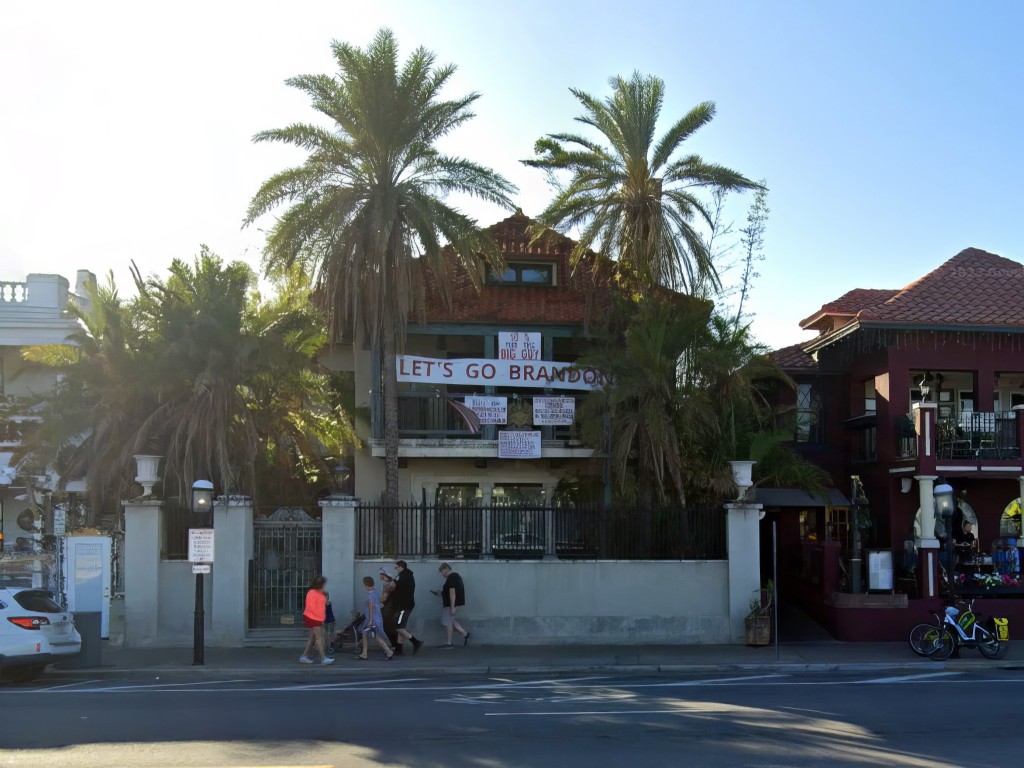
When I started this little exploration into my past, I of course Googled the Posada Menendez
Restaurant. The restaurant is long gone, but the historically-significant building remains
and, apparently, has been sullied by Traitors For Trump or whatever they're calling
themselves these days. How sad. The Petes and their wives would turn over in their
graves if they knew.