|
By: Paul S Cilwa |
Occurred: 10/12/1981
Posted: 11/23/2025 |
|
Page Views: 197 |
| Hashtags: #OlsenWeldingAndDesign #HaroldOlsen #TRS80 #RadioShack #BASIC #Aging |
| As I approached 30 with dread, he was approaching 70. |
| Estimated reading time: 11 minute(s) (2545 words) |
I just remember first hearing from Harold on the phone. I can only figure he must have gotten
my number from a co-worker. In any case, Harold was excited about the new small business computer
from Radio Shack. He was so excited that he'd already bought one, and discovered that
computer programming wasn't something he could work out on his own. So he wanted to hire me to
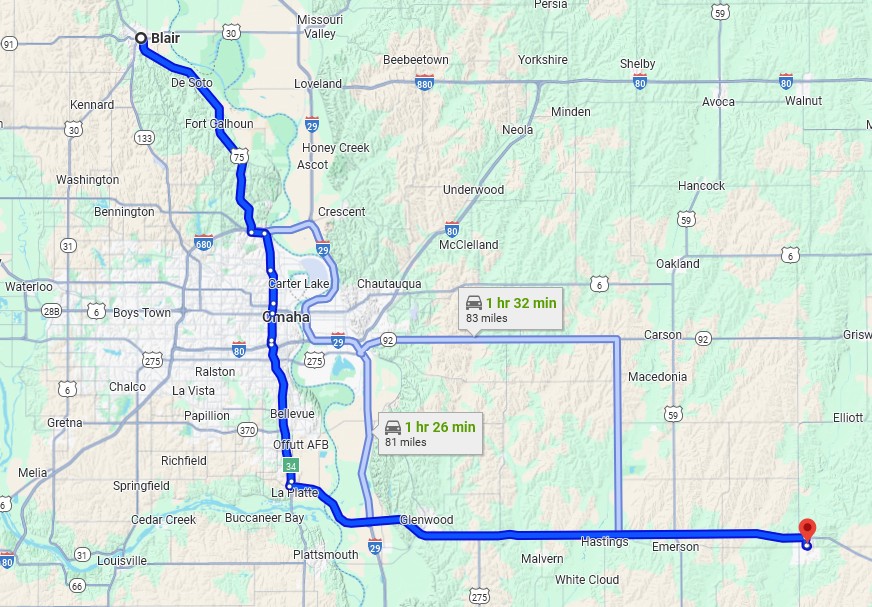
write an inventory system for his welding and design company. It would require my traveling
to him in Red Oak to work on the machine, about a ninety minute drive. And since I would need to
work on it both Saturday and Sunday (my days off from ACI), he offered to put me up overnight
in his home.
We agreed on an hourly rate and, the next Saturday morning I said goodbye to Mary and the kids and
headed to Iowa.
When I arrived at the Olsen Welding and Design building, Harold was ready for me, and took me
back to his office, where the TRS-80 Model II sat waiting for me to unlock its secrets.
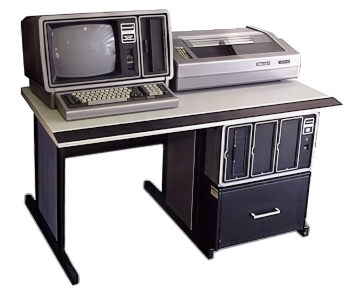
The TRS-80 Model II stood against the wall like a piece of office furniture that had somehow learned
to think. Its steel-gray chassis was larger than the hobbyist machines of the day, built not for
the basement tinkerer but for the small business that wanted to step into the computer age without
surrendering to IBM. With its crisp green phosphor screen and dual floppy drives, it carried an
aura of seriousness—no blinking arcade sprites here, but ledgers, word processors, and
databases that promised order in a world still ruled by filing cabinets.
What struck me most was its ambition. The Model II wasn't just another Radio Shack gadget; it was a
declaration that computing could belong to the storefront accountant, the local print shop, the
welding business down the street. Its 64K of memory felt like a vast frontier, and the
operating system opened doors to professional software that hobby machines couldn't touch. In
retrospect, it was a bridge—between the hobbyist glow of the TRS-80 Model I and the corporate
heft of IBM PCs. For a brief moment, it gave small-town America a taste of enterprise computing,
humming away in back offices where the smell of paper and ink still lingered.
But the Model II wasn't as easy to program as Radio Shack had led its customers to believe, which
is why I'd been called. The manuals spoke in the language of possibility—business
applications, streamlined BASIC routines, even the promise of CP/M compatibility—but the
reality was more stubborn. Floppy disks (this was before hard disks!)
had to be coaxed into cooperation, memory management
demanded a kind of patience that most shop owners didn't have, and the green glow of the screen
could turn from promise to puzzle in a single keystroke.
For me, the programming part was easy. BASIC had been my first computer language. But the inventory
of a welding company was another matter. I knew nothing about welding other than that it was
used to make pieces of metal stick together; and I knew nothing about keeping inventory.
Which I had made sure Harold understood before I took the job. No matter, he insisted;
it would be a collaboration with me basically translating his needs as stated to me,
into BASIC for the computer.

But, for all the fun it was for me to work on this little computer, that's not what I remember
about my contract in Red Oak. What I remember, is Harold.
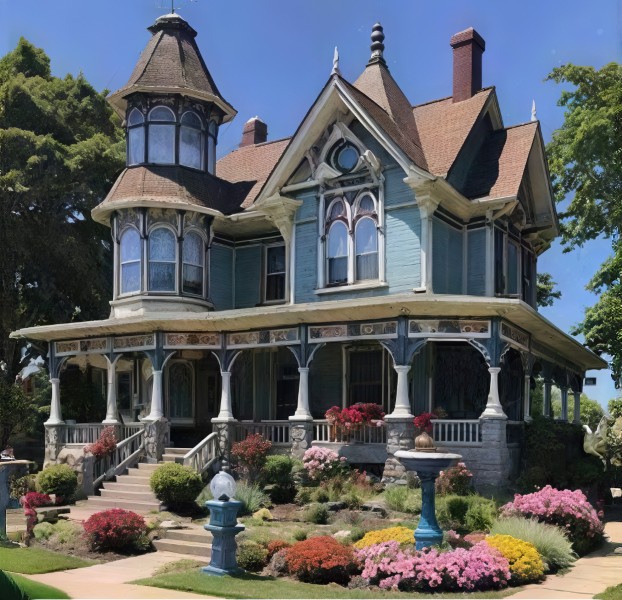
At the end of that first Saturday, I followed Harold to his home, which, frankly,
was a Queen Anne-revival mansion, complete with a turret. As we entered the front door,
I was immediately captivated by his art collection. His front hall and living room
looked more like a museum than a home. The paintings, large and heavily and ornately
framed, included works by well-known artists, some of whom I had actually heard of.
"It's an investment," he said, brushing off my awe. "Art is one of the few things that
appreciates in value with age."
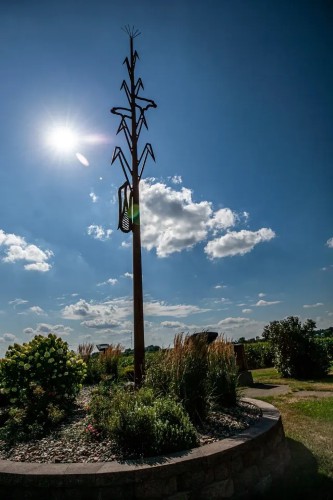
As it turned out, Harold didn't just collect art; he made it as well.
He was a skilled fabricator and in 1978 created a corn stalk sculpture installed at the I-80 exit
in Shelby, Iowa—a piece that blends agricultural symbolism with industrial artistry.
My previous experience with welding had been purely functional; it hadn't occurred to me
a welder would have an artists' sensibility. But, clearly, Harold did.
And, as such, perhaps it's not a surprise that he also seemed to bear a secret sorrow.
He bent forward slightly; his movements seemed more resigned than joyful. Of
course, he was a lot older than I. Maybe that's what happens to guys in
their fifties.
He had a dining room table that could easily seat 20. But Harold's girlfriend,
a lady in her late fifties named Flossie, had prepared our dinner and served it
cozily at one end of the table.
Flossie definitely listened to the dinner conversation, but it was mostly between
Harold and me. And what a conversation it was! We'd both been in the Navy,
he in the submarine service which, at one point, I had also been aiming at.
We covered metaphysics, science, history,
and how they interrelated. I had never before met someone I could talk with
about all these things that so fascinated me. And, as Flossie told me a few weekends
later, neither had Harold.
"He's so needed someone who can keep up with him!" she told me when he left the
room for a moment. "I'm so grateful to you for showing up for him now."
I could only assure her I enjoyed our conversations at least as much
as Harold did.
Harold, as it turned out, was 59 years old and his birthday was fast approaching.
It would arrive shortly before Christmas, and he would turn 60. And he looked
forward with dread at that milestone.
"I'm still myself," he told me one morning. "But I feel like I can feel it slowly
slip away. I'm still fast; I'm still strong. But I don't think I'm as
fast or strong as I was. And I know it makes no sense, but I feel like when
the 17th of December comes around, I'm just going to crumble."
I couldn't be very encouraging, because my own big three-oh would slam into
me in April and I felt pretty much about that as Harold did about turning
60. We both had rueful laughs at that, but you can't really stop a birthday from
coming, at least, not in a good way.
One night I didn't stay at Harold's house because a terrific blizzard hit Red Oak
sometime around noon and I became trapped in the welding shop. Luckily the computer
office had a bed in it, and, as long as the power stayed on, I'd be warm.
I took advantage of the extra hours to work on the inventory system; but eventually
I got tired and decided to read for an hour before going to sleep.
Now, the book I happened to be reading was non-fiction, about the making of the
Robin Williams movie, Popeye. As the wind howled outside, I was especially
but pleasantly surprised when someone entered the narrative I almost knew.
The guy director Robert Altman had gotten to compose the music for Popeye was a pop
singer named Harry Nilsson. (He originally went by just his last name.) He'd had
a lot of hit songs ("Without You", "Coconut", "Everybody's Talkin'") but for me,
his claim to fame was that he was from Palatka, Florida, where I had gone to
junior college. In fact, his brother, Gary, attended the same school; although
we never met, I'd seen him playing pool in the student commons. But the main thing
was, I knew Nilsson's mother.
Mrs. Nilsson worked in the cafeteria and served food. She was a tall, handsome Nordic
woman who wore a big pin with a photo of Harry and the legend, "NILSSON—The Real Thing".
When I asked her about it (an older woman wearing the merchandise of a '70s pop star?),
she proudly explained that she wore it because Harry was her son.
So that was cool, and we were always very friendly after that, and I felt like I
kind of knew Harry because I knew his mom.
So, when Harry showed up as a character, so to speak, in the non-fiction book I was reading,
I couldn't put it down. The wind howled and shook the metal walls and ceiling of the
shop. Intending to go to sleep, I just had one small reading light so it was the book
and me, surrounded by vague and unfamiliar shadows. I was far more aware of the filming
of Popeye than I was in my actual surroundings. And, because the book was written
in a lively narrative style similar to what one might find in a novel, I kind of
fell into the world of the book, because I felt like Harry Nilsson, who insisted on flying to
Malta to write the songs for the movie, was kind of almost a real-life friend of mine
and I would have done the same thing!
By 1 AM my eyes were bleary and I was about to give up when something horrible happened.
Filming got held up because Harry had to return home to Florida in the middle of the
project…to attend his mother's funeral.
My jaw dropped. My heart sank. I lost my breath. I suddenly felt separated from my body, as if I'd been
torn from the reality of Red Oak and dropped into this fiction-like world where this
nice lady I'd known in real life, suddenly died. I didn't even have the option of attending
her funeral, which had happened, unknown to me, a couple years earlier.
I turned out the light and went to sleep, and proceeded to have a startlingly realistic
dream. It started out with me camping with friends in Yosemite, which in fact I had
recently done.
We were at the crater lake we'd really been to. But, in the dream, I went swimming
in that lake, and swam across it to a cave entrance. I entered the cave and found equipment.
When I touched a button, I was suddenly teleported to an Enterprise-type starship
orbiting earth. And in that ship's transporter room, I got the idea to make Harold
young again.
And not just Harold! I "beamed" my mom and grandmother aboard and proceeded to rejuvenate
them. In the dream, I even knew how to do it! When the transporter beamed a person anywhere,
a computer (which, in the dream, was a TRS-80 Model II) recorded the position and state of
every atom in the person's body. Now, at that time, it had recently been determined that aging
is largely the result of little bits of DNA called telomeres getting shorter with each replication
of a cell. So, in my dream, I instructed the transporter to extend the telomeres and, thus,
reassemble the person being transported into a younger version of themselves.
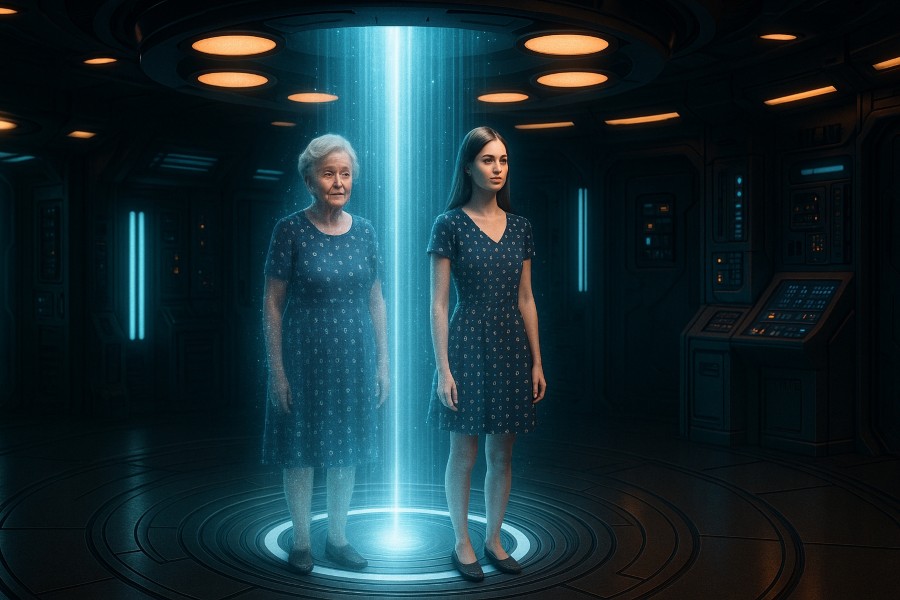
This would actually work, if we had transporters. However, it would only reverse a person's age,
without affecting their minds. But in my dream, not only the body would be rejuvenated;
so would the mind.
So I returned my folks to their youths; and Flossie, and then Harold. And, of course, now-younger
Harold said, "So, you were complaining about turning 30. Aren't you going to use this thing on
yourself?"
That took me by surprise. I'd been so wrapped up in the joy of being able to rejuvenate my
loved ones that I hadn't even thought of using it on myself.
But, now that I did think of it, I hesitated. After all, if you are going to make
yourself younger, you have to pick the age you wanted to be. How old did I want to be?
Well, I was almost thirty. Should I turn the clock back 10 years? But I thought about
the person I'd been at 20. And, frankly, I'd been an idiot. And I'd been dumber than that at
fifteen. Plus, I would never want to go back to high school!
And I came to a sudden realization: I didn't want to be younger than I was. I'd
earned every wrinkle I had (maybe two little crow's feet) and, dammit, I was proud of them.
I also valued every experience I'd had in those years. I was astounded to find
I actually wanted to be my own age.
So, in the dream, I made the decision to not undergo the procedure.
And, with that, a sudden crash of thunder knocked me out of the dream and, almost, the bed.
In the morning the storm had passed. Harold arrived with breakfast, and I shared the dream
I'd had. When I got to the conclusion, he was staring at me, slack-jawed, and with
his coffee cup at an angle that spilled a bit on his pant leg, making him jump.
"And now I know why I was moved to call on you to work on the computer," he said,
nodding slowly. We'd previously
found that we both believed in the New Age notion that "there are no coincidences," that
everything that happens is part of a plan. "Your dream message was meant for me, no doubt."
And, sure enough, that weight Harold seemed to have been lugging lifted. From then on to
when I completed the project, his step seemed lighter, his smile easier. Even Flossie
noticed. When I finally said goodbye, she hugged me and smiled despite a tear in her
eye. I promised we'd stay in touch, but of course we didn't.
In writing this, I thought to look up Harold. It turns out he passed away
on August 14, 2010, at the age of 88, having lived a full life that included service
in the U.S. Navy Submarine Division during World War II, ownership of Olsen Welding and Design in
Red Oak, Iowa, and the creation of a notable corn stalk sculpture installed at the I-80 exit in
Shelby, Iowa.
He'd thought his life was basically over at 60, but lived another 28 years!
Food for thought, especially now that I am about to hit 75. What age would I be if I
could choose? Well, I was an idiot at 70…