|
By: Paul S Cilwa |
Posted: 4/11/2015 |
|
Page Views: 5,522 |
| Hashtags: #Risk #Alcohol #Recovery #Drugs #Jason |
| Taking chances with risks. |
| Estimated reading time: 4 minute(s) (932 words) |

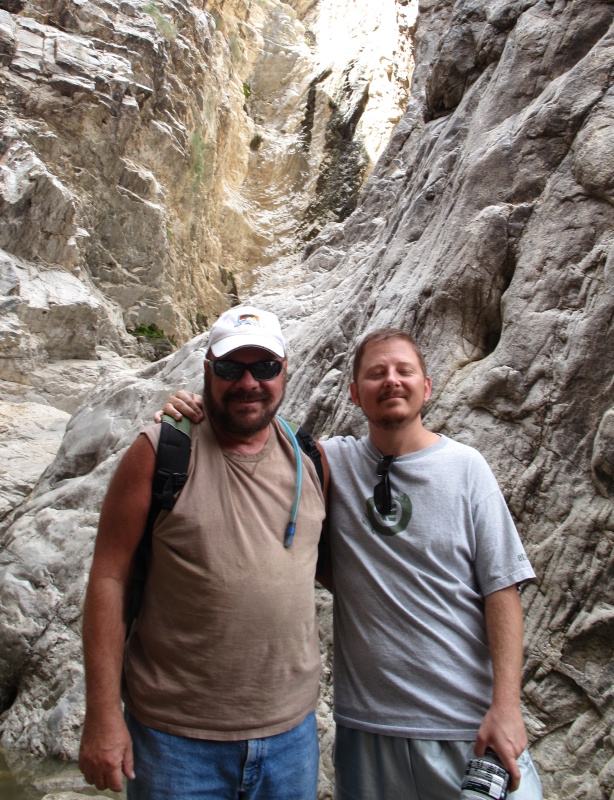
Anyway, our friend, Jason (who is also my ex-boyfriend of two years), has never been able to
stop drinking. He's been through a 30-day recovery program; he's
promised his husband he would stop drinking, claimed he had stopped drinking, all to no avail. So,
our mutual friend tells me, Jason is now in the hospital with
alcohol-induced hepatitis. He is "medically sedated" meaning he is
unconscious for the third day in a row. The doctors have to remove
fluid from his abdominal cavity. They say they believe they can save
Jason from
this occurrence; but if he ever, ever drinks again, it
will kill him.
We all engage in risky behavior at times. Usually the risks are
relatively small, like the risk of getting cancer from
artificially-sweetened soft drinks, or of diabetes from sugary
drinks. Sometimes they are somewhat greater, such as having
unprotected sex with someone one doesn't know well. But in each
case, when facing a new risk (new to us, that is), we instinctively
assess the risk and potential reward; if the reward is great enough,
and the risk judged acceptable, we move forward and, hopefully,
don't get killed in the process.
Generally, most of us do not start our risk-taking with base
jumping or shark baiting. But the thing is, risk is a percentage
game. A single Diet Coke is highly unlikely to kill; but tens of
thousands of them, over time, increase the risk of cancer, diabetes,
or obesity to an almost sure thing. Yet we tend to dismiss the risk
the more times we take a chance without disaster. So, as the risk
increases, we actually perceive it as being reduced.
Some risk-takers rejoice in their risk-taking. They say it makes
them feel more alive! Whitewater rafting, a favorite of mine, is
somewhat risky—more so than staying home watching Stargate:
SG-1, I would assume—but if I did die while on the river, it
would be while doing something I loved, and that would be a good
thing. (Would you rather die during a favorite activity, or while
saving an Excel spreadsheet at work?) Just because I, personally, do
not care for drinking or drugs doesn't mean someone else might not
find this to be a cherished activity. But…do they?
Really?
Another friend, this one from Virginia, died years ago from a
heroin overdose. He'd been using H for years, yet managed to
underestimate his ability to process it, and died, leaving an infant
daughter behind. He was not suicidal. He simply misjudged the
increasing risk and that misjudgment did him in.
The science of statistics maintains that "chance" doesn't change,
no matter how many times the dice are rolled. They say that, no
matter how often tails comes up, the odds are still 50/50 that
they'll come up again: No more, no less.
But people are not dice, and we are subject to what I call cumulative risk. One small dose of arsenic won't kill you, but
continued doses will. Same for heroin. Same for alcohol, if you
cannot control (or choose not to control) how much or often you
drink.
Most drinkers, I understand, drink as a part of a social scene
they enjoy. I submit that the drinking, in such a case, is not
really the core experience they enjoy; and so the alcohol could be
dispensed with without impacting the social experience.
Jason, on the other hand, is not a social drinker. For many
years, he drank secretly. And it doesn't give him enjoyment; he
drinks to achieve unconsciousness. Jason carries a great deal of
emotional pain (he had one of those horror-story upbringings), and
alcohol is how he tried to control that pain (as opposed to, say,
therapy). I assume that, when he started drinking, he had heard
warnings about alcoholism but found the risk/reward ratio to be
acceptable. And perhaps it was…for awhile. But, as I say, the cumulative risk increases with time, even as perception of that
risk makes it seem less likely.
And now Jason is on the precipice of death. This is not due to
lack of support from his friends. This is not due to our not being
willing to extend "another chance". This is due to the simple fact
that Jason learned, after repeated exposure to his drug-of-choice,
that he didn't die from using it. So far.
That's the thing about death. You only need it to happen once to
prove the risk wasn't, actually, worth it. And then, of course, it's
too late.
We all hope that Jason improves; that he takes the hint, goes to
therapy and a good recovery program, works it, and lives happily
ever after. The alternative, though, is the risk that he won't
follow this path, or that it won't work even if he does, and that he
will eventually die of his addiction.
And it's a risk of near-100% likelihood, based on past
performance.
As is the risk that we survivors will wind up suffering the loss
of our friend.