|
By: Paul S Cilwa |
Occurred: 8/6/2024
Posted: 9/26/2024 |
|
Page Views: 241 |
| Hashtags: #Autobiography #Maui #Haleakala |
| Making it to the top! (almost). |
| Estimated reading time: 5 minute(s) (1174 words) |
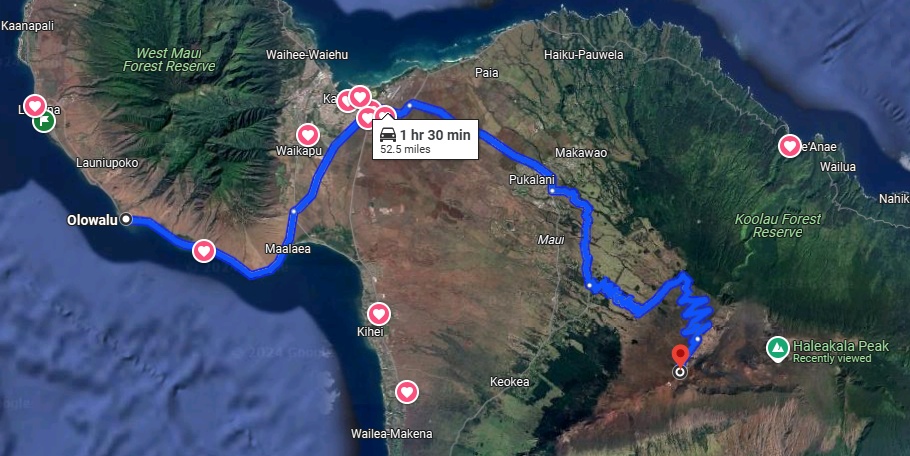
The ride from Olowalu to the top of Mount Haleakalā is a
scenic and exhilarating journey. Starting from the coastal area of
Olowalu, I drove through lush landscapes and charming towns like
Lahaina and Kula. As you ascend, the road winds through diverse
ecosystems, from tropical forests to arid volcanic terrain. The
higher you go, the cooler the temperature becomes, and the views
become more breathtaking. The final stretch to the summit of
Haleakalā, which stands at over 10,000 feet, offers
panoramic vistas of the island and beyond—sometimes.
As we drive across the isthmus of Maui, primarily along the Maui
Veterans Highway, the huge bulk of the volcano begins to rise up.
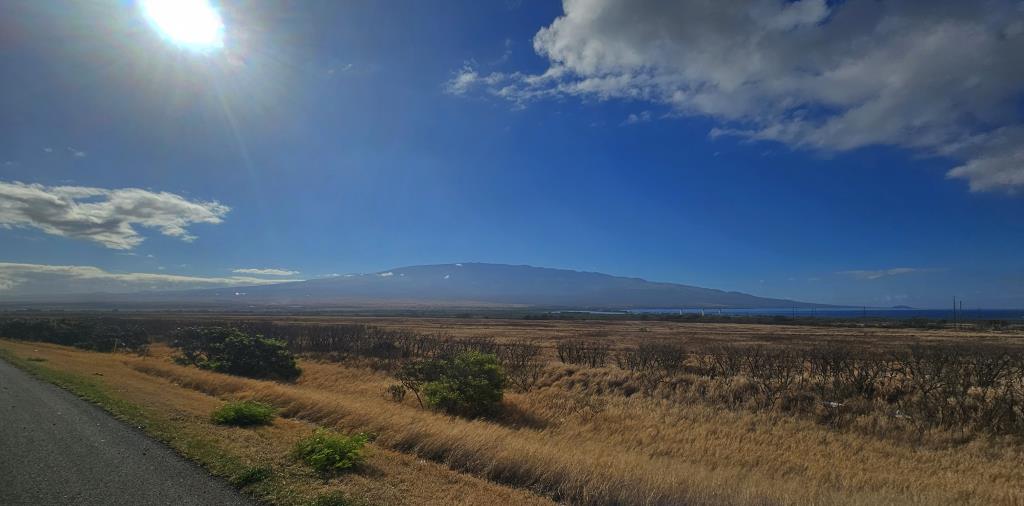
As we drive along the Maui Veterans Highway, the three smokestacks of
the Maalaea Power Plant come into view, standing tall against the
backdrop of the bay. This facility, built in 1971, has been a
significant source of electricity for Maui. The plant primarily uses
fossil fuels to generate power, and its industrial presence is a
stark contrast to the natural beauty surrounding it. As we pass by,
we can't help but marvel at the juxtaposition of human engineering and
the island's pristine landscapes. The sight of the smokestacks serves
as a reminder of the island's journey towards balancing energy needs
with environmental preservation. All new power needs are provided by
wind and solar, of course.
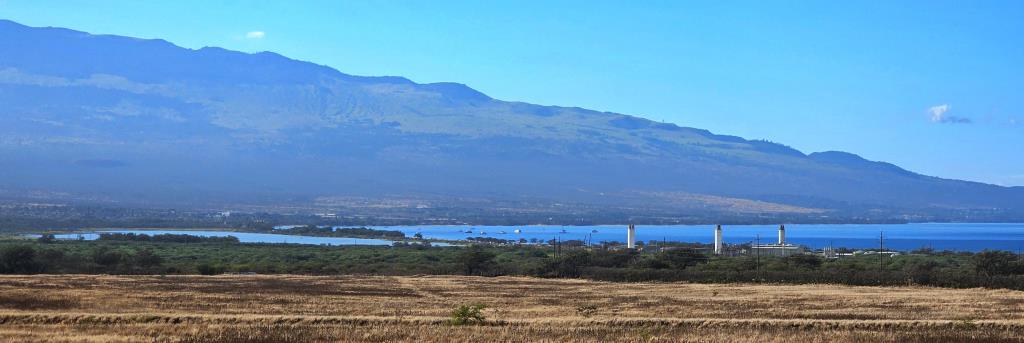
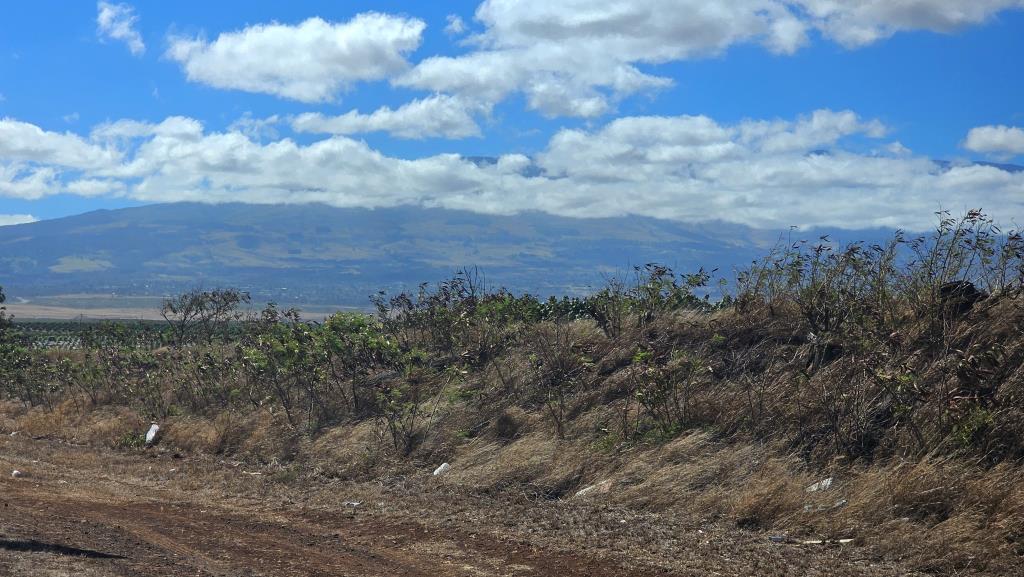
Closer to Haleakala, and as the morning evolved (the below
photo was taken about 9:30 AM), the layer of clouds dutifully
obscures the peak, as it does pretty much every day.
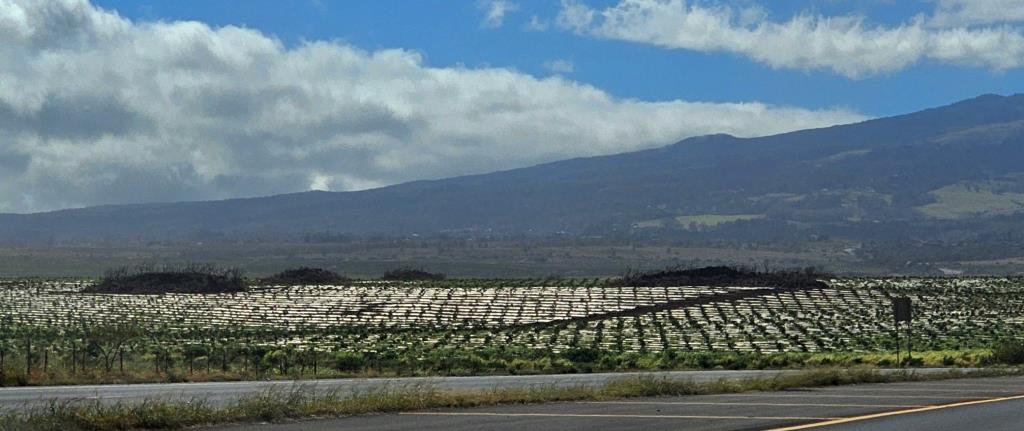
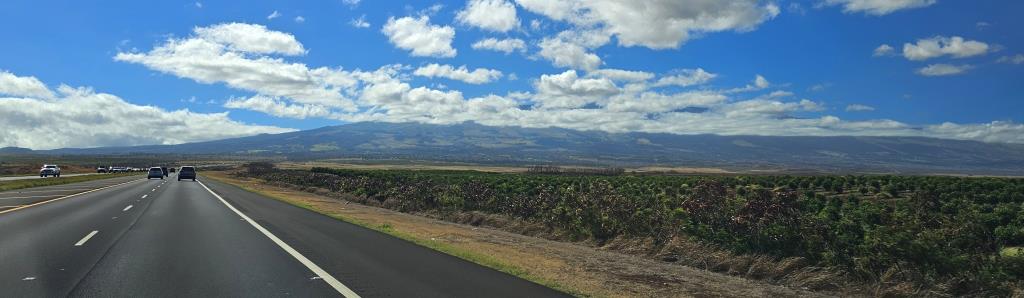
Now on Haleakala Highway, but still on the isthmus, I passed
extraordinarily tidy farmland on both sides. As I recall, one side
was orange trees and the other was pineapples.
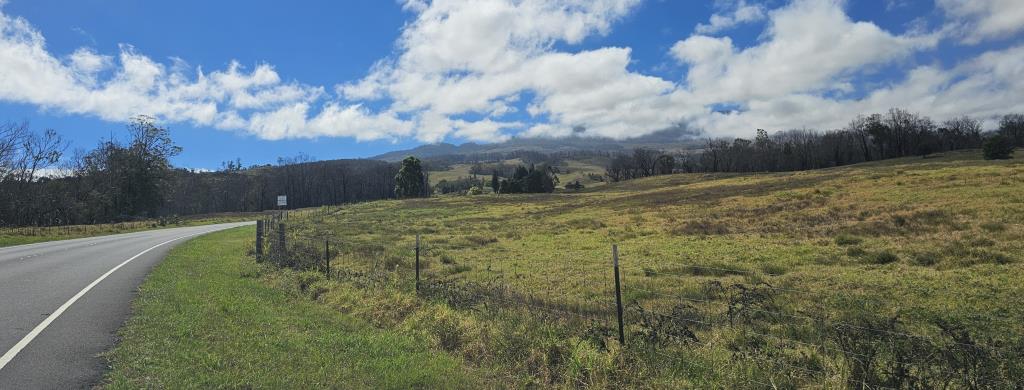
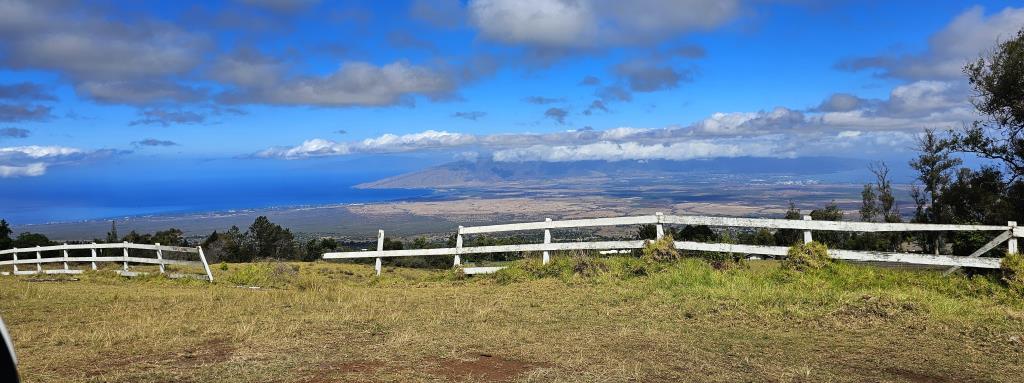
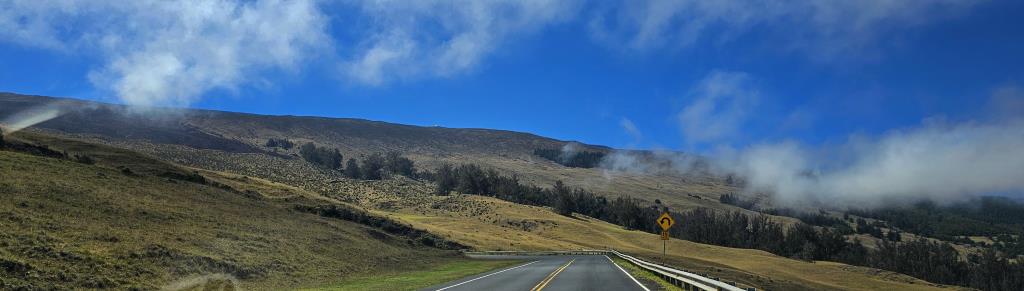
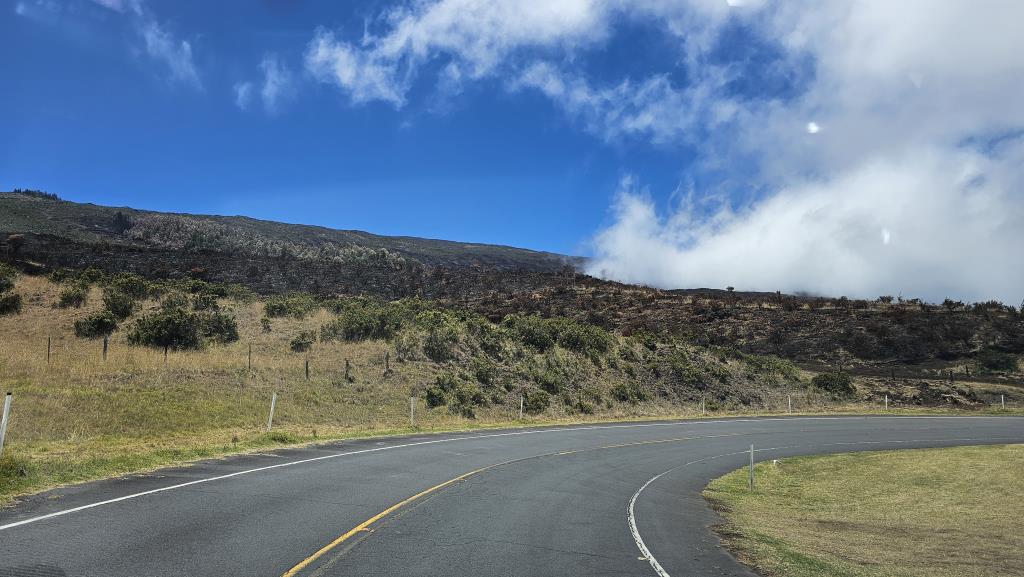
…gaining altitude with every switchback…
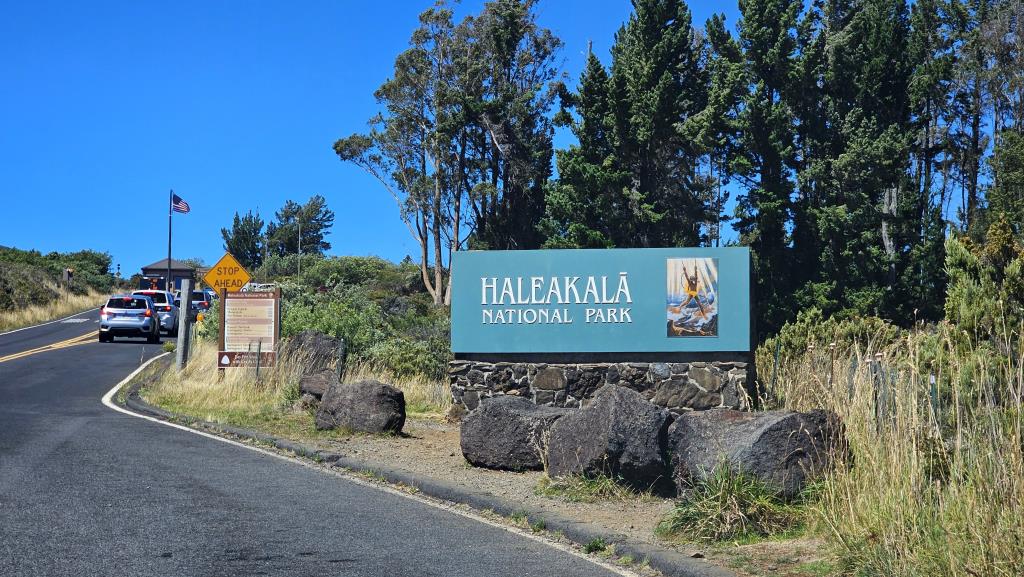
Finally, I reached the actual entrance to Haleakala National Park.
And, clever me, I had remembered to bring my Lifetime Senior Pass
with me, so I didn't have to pay a thing. (Otherwise, it would be $30
per vehicle.)
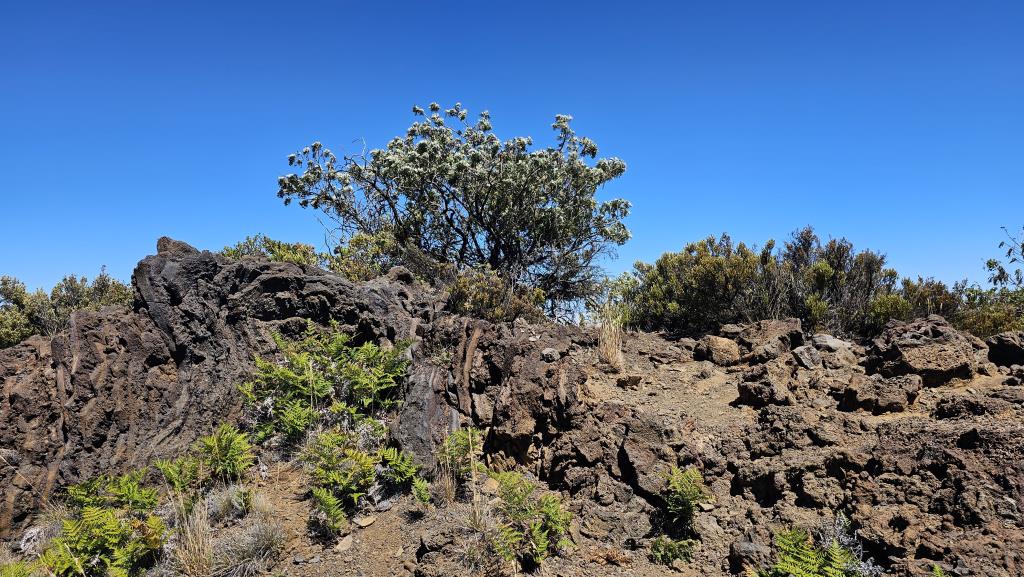
Once entering the park we find a variety of native grasses. Some of
the prominent species include Deschampsia nubigena, commonly known as
Hawaiian bentgrass, and Eragrostis atropioides, also known as
Hawaiian lovegrass. These grasses thrive in the sub-alpine shrubland
zone. The temperature was about 60°…a lot colder
than it was yesterday at the beach!
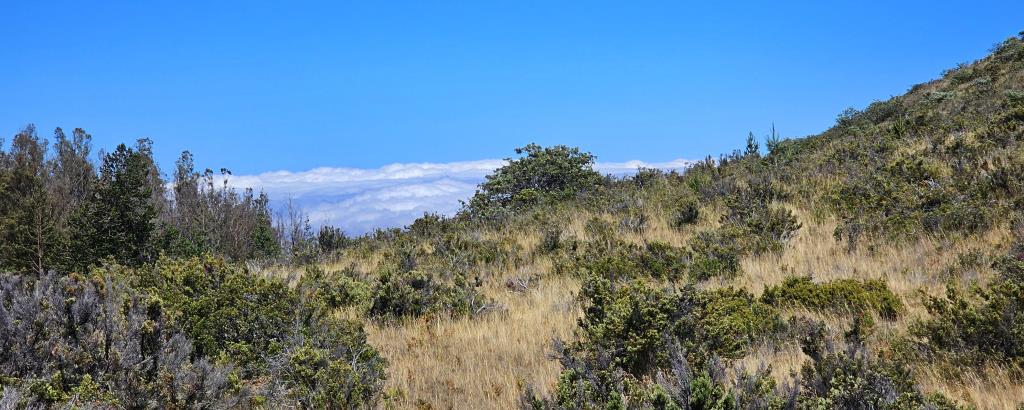
There's also a diverse array of native shrubs, ferns, and small woody
trees. Some of the dominant plant species in this sub-alpine
shrubland zone include pūkiawe (Leptecophylla tameiameiae),
ōhelo (Vaccinium reticulatum), nohoanu (Geranium cuneatum),
and aalii (Dodonaea viscosa). These plants create a lush tapestry of
greenery that covers the mountain, providing habitat for various
endemic birds such as the apapane, amakihi, and
nēnē.
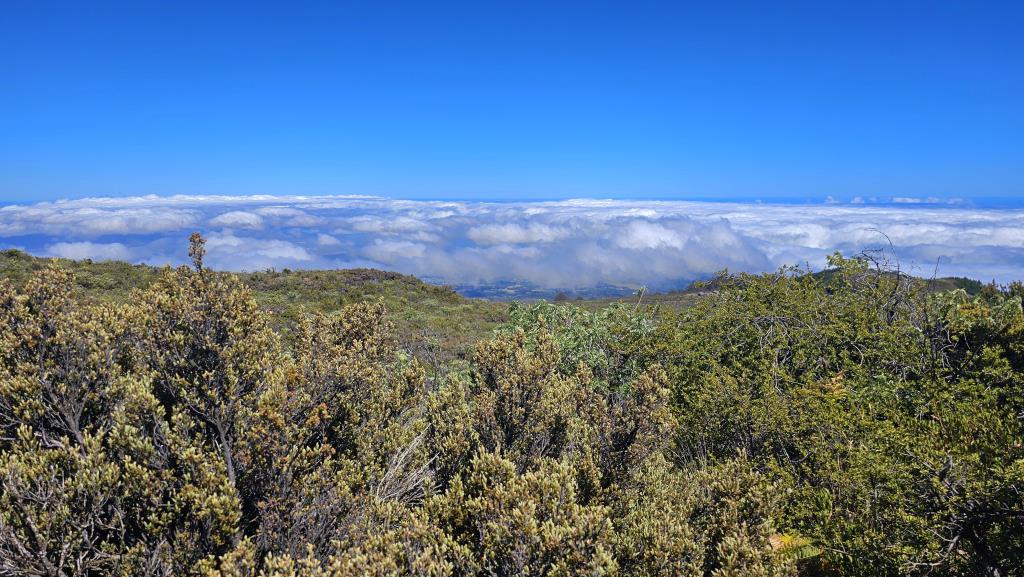
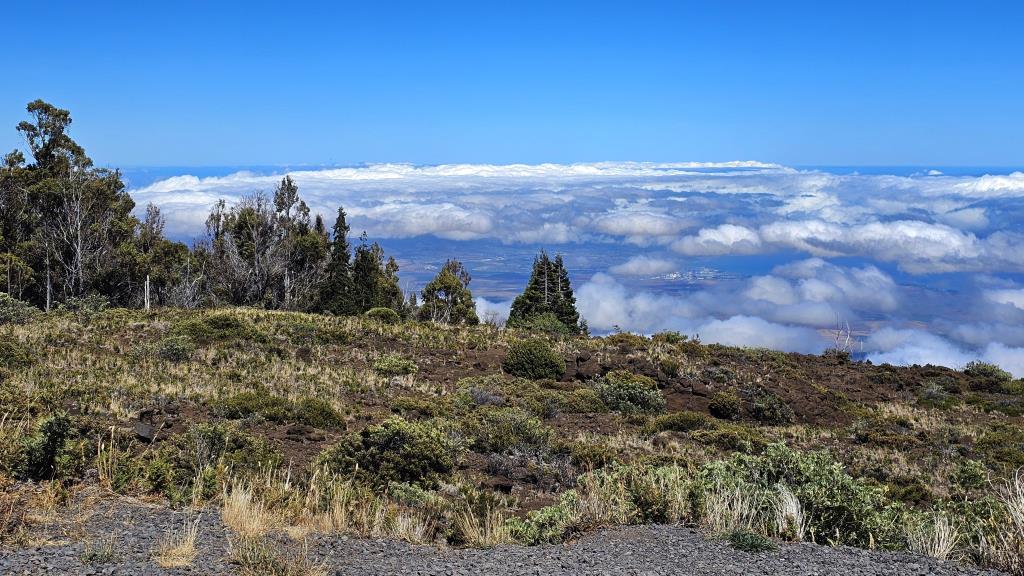
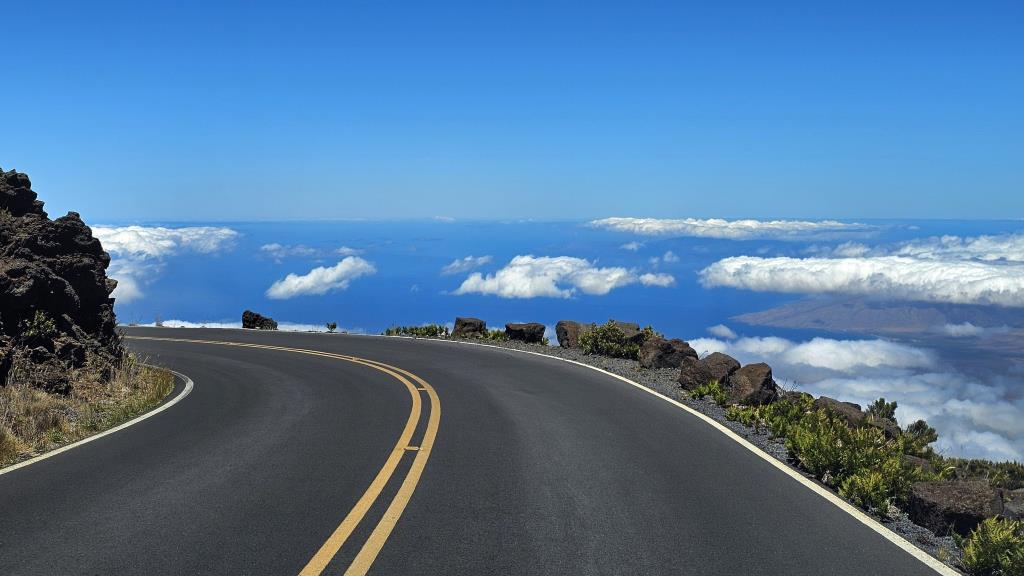
And now, we look down at those clouds! I've been
here overnight, and that's the only time those clouds are absent
(which gives a life-changing view of the lights below).
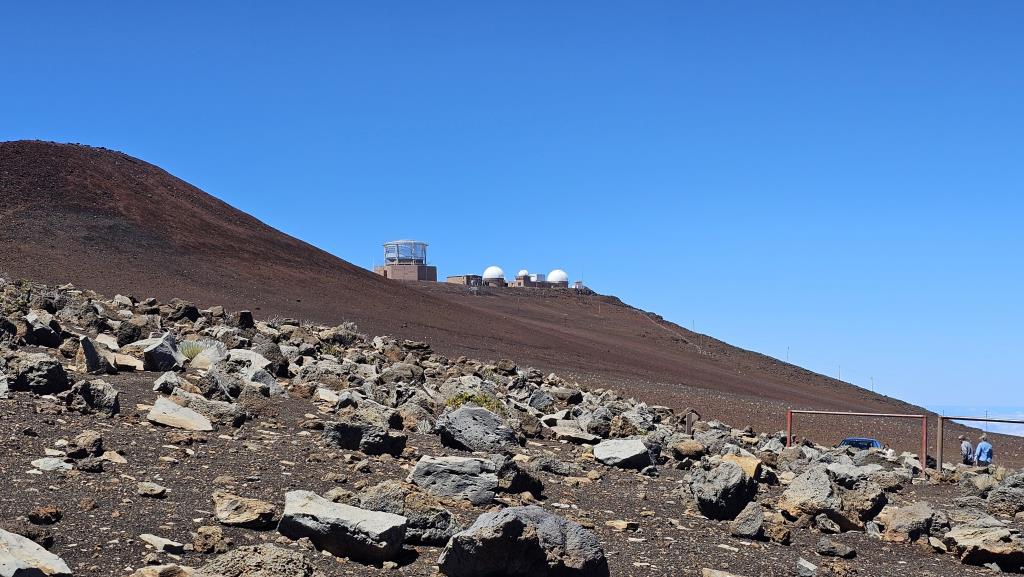
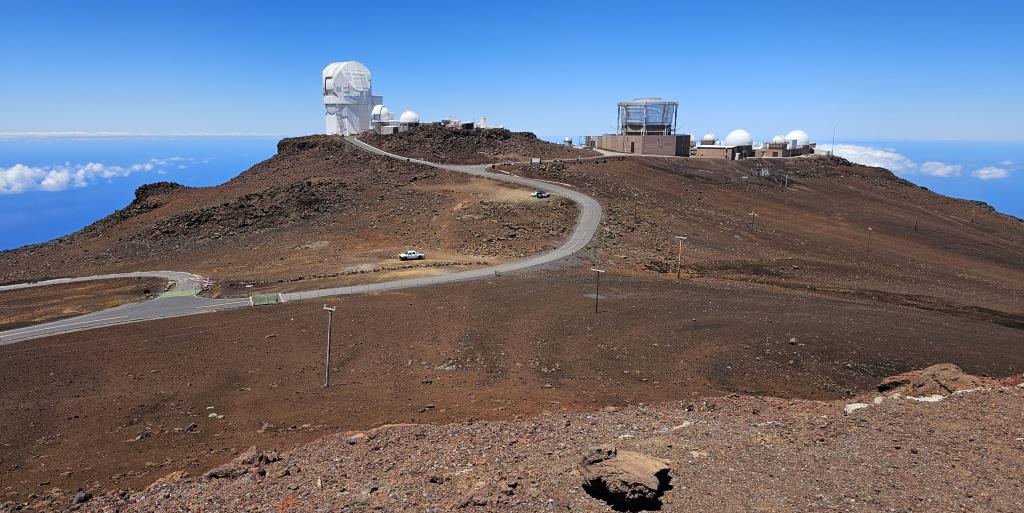
As we ascend to the summit of Haleakalā, the landscape transforms into
a surreal, otherworldly terrain. At over 10,000 feet, we reach the
Haleakalā Observatory, a premier site for astronomical research. Here,
the towering structures of the Daniel K. Inouye Solar Telescope and
the Pan-STARRS telescopes stand against the clear, blue sky. These
advanced instruments, including the world's largest solar telescope,
offer unparalleled views of the cosmos and contribute to significant
scientific discoveries. The observatory's remote location and high
altitude provide ideal conditions for observing the heavens. However,
the presence of telescopes on Haleakalā has sparked controversy, as
the land is considered sacred by Native Hawaiians, leading to ongoing
debates about the balance between scientific advancement and cultural
preservation.
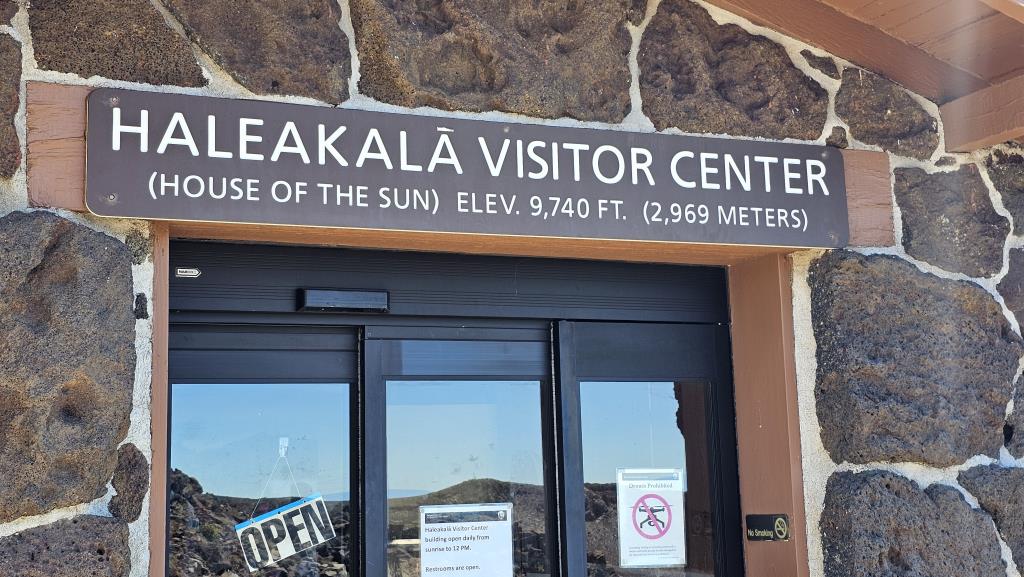
The Haleakalā Visitor Center, located at an elevation of 9,740 feet,
is a small stone building perched at the edge of a cliff. This center
has been welcoming visitors since 1936 and was constructed by the
Civilian Conservation Corps (CCC). The center provides restrooms,
water, and ranger services, offering visitors a chance to learn about
the unique geological and ecological features of the summit
area.
Probably because this was a weekday, the
parking lot at the summit wasn't very full. I gratefully hobbled to
the bathroom, went through the visitor center—nothing new
there—then got some shots of the faux caldera.
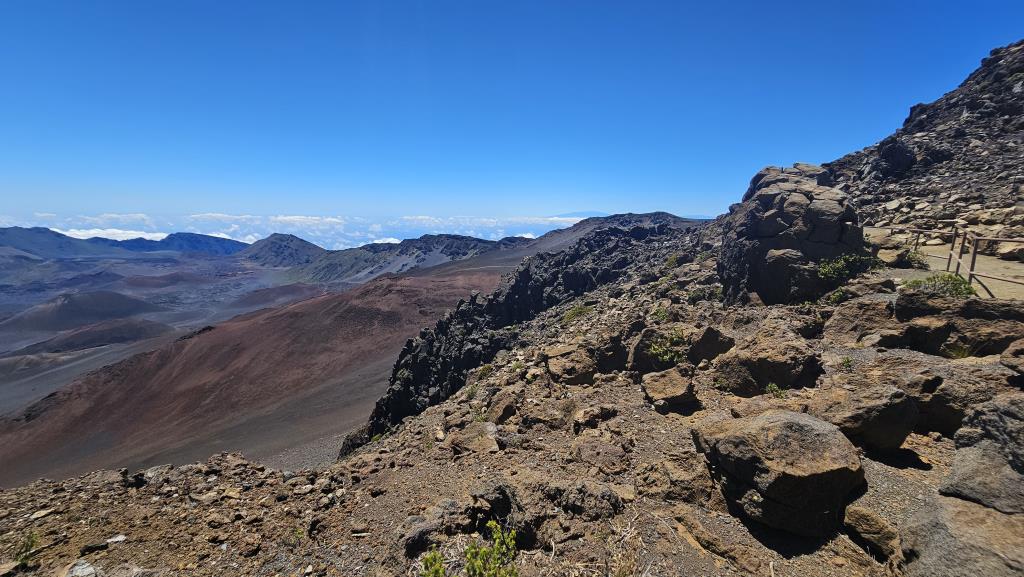
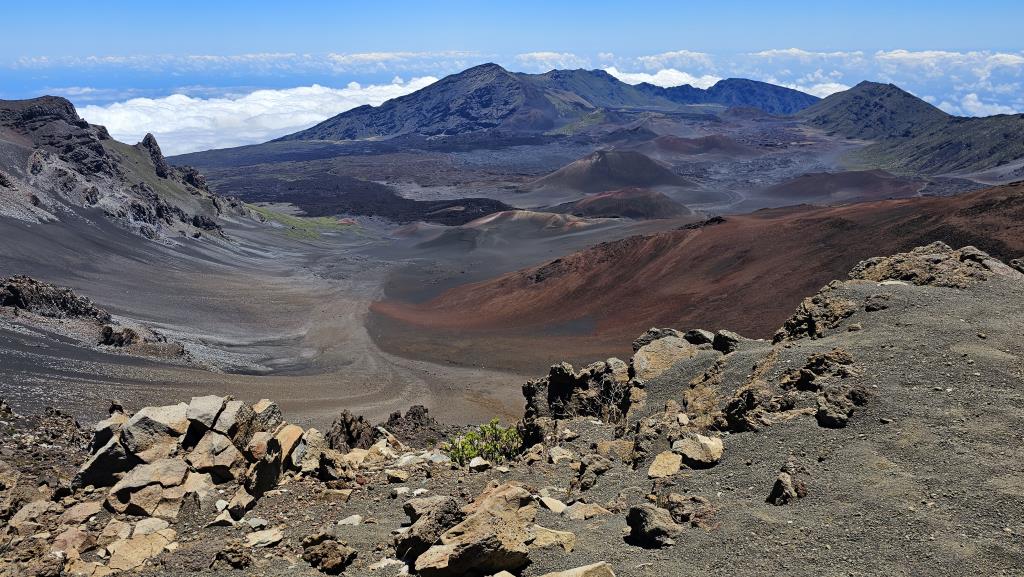
At the top, we find what many refer to as the crater, but this
impressive depression is not a true caldera. Unlike a caldera, which
forms when the summit of a volcano collapses after an eruption,
Haleakala's crater was shaped by the forces of erosion. Over millennia,
the headwalls of two large erosional valleys merged at the summit,
creating the vast and dramatic depression we see today.
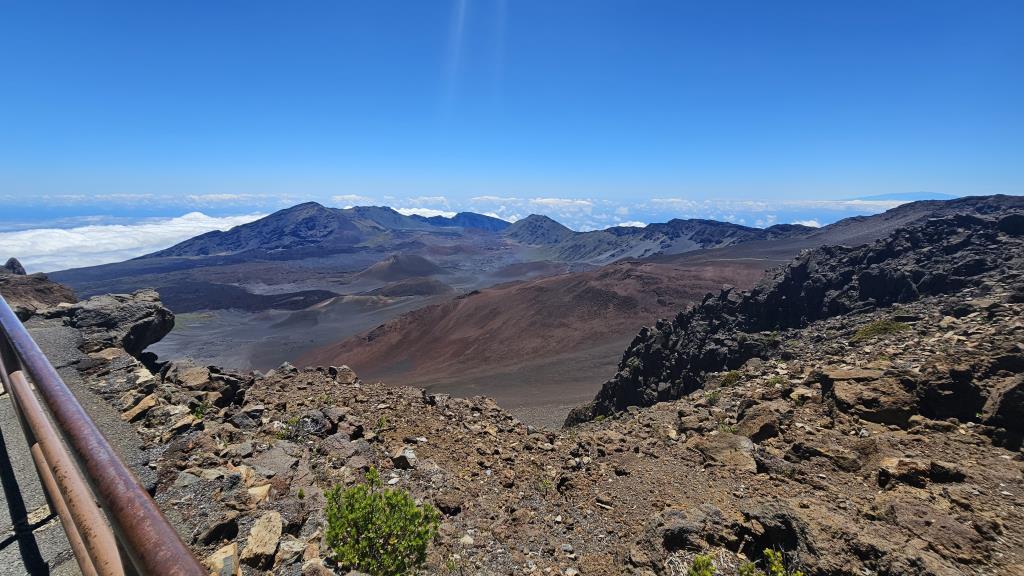
This erosional valley took shape after the rimrock lava flows erupted
around the top of the volcano approximately 145,000 years ago, give
or take about 10,000 years.
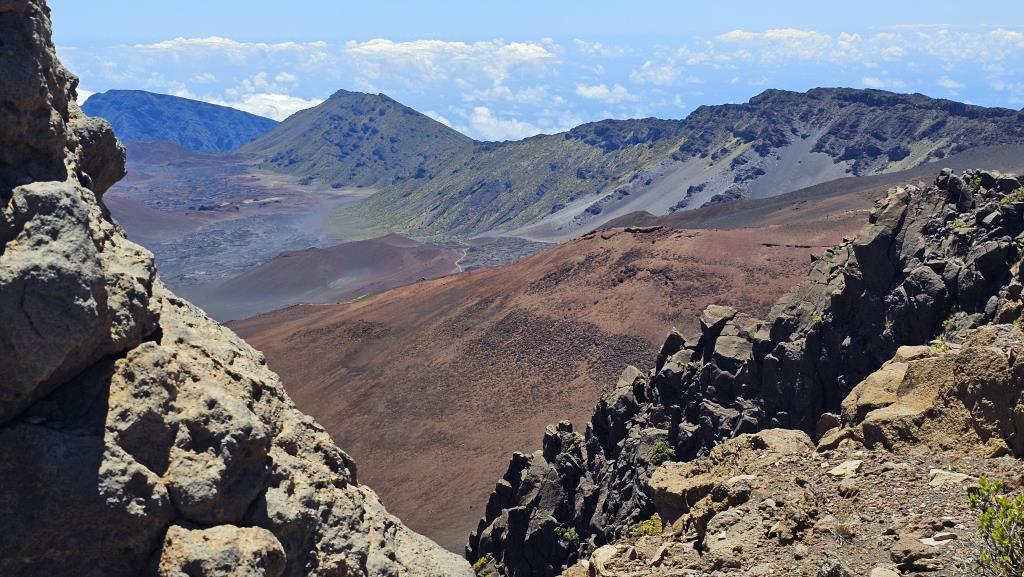
In January 1965, the Apollo 11 astronauts, including Neil Armstrong,
Buzz Aldrin, and Michael Collins, trained extensively on the ground
in Hawaii. The unique volcanic landscape of Mount Haleakalā provided
an ideal environment for simulating the conditions they would
encounter on the lunar surface. The training involved collecting
geological specimens, practicing site selection, and documenting
geological characteristics, which helped the astronauts prepare for
their historic mission to the moon.
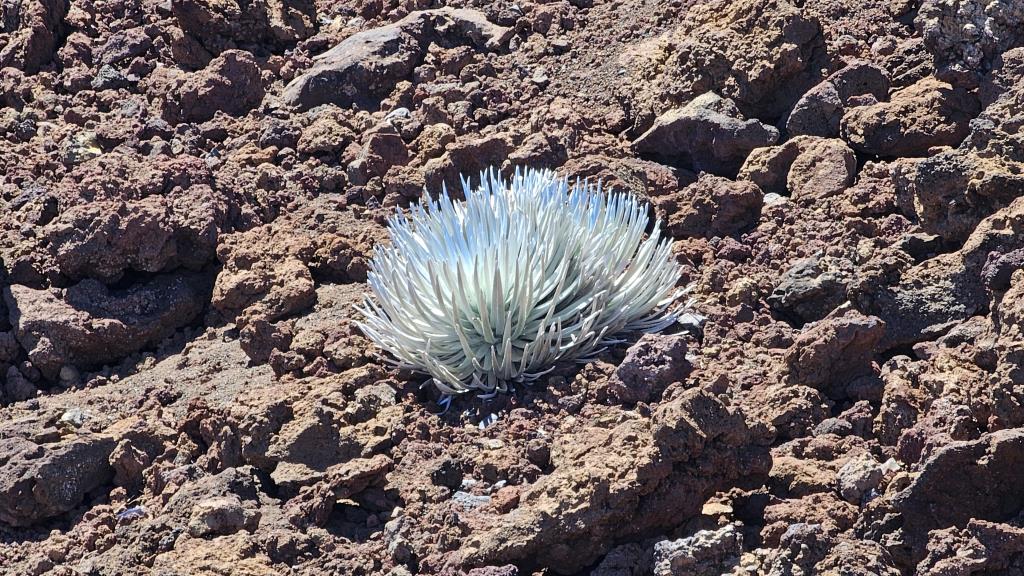
At the summit of Mount Haleakalā, the rare and striking Haleakalā
Silversword (Argyroxiphium sandwicense subsp. macrocephalum) stands
resilient. With its silvery-green leaves and blueish tips, this spiky
marvel thrives in the harsh alpine desert, a testament to nature's
adaptability and beauty.
I would love to have made the walk to the actual summit (10,023 feet
above sea level) and even started out, but between my hip, months of
reduced activity, and the altitude-thin air, I just couldn't make it.
But that's okay; I've been there before!
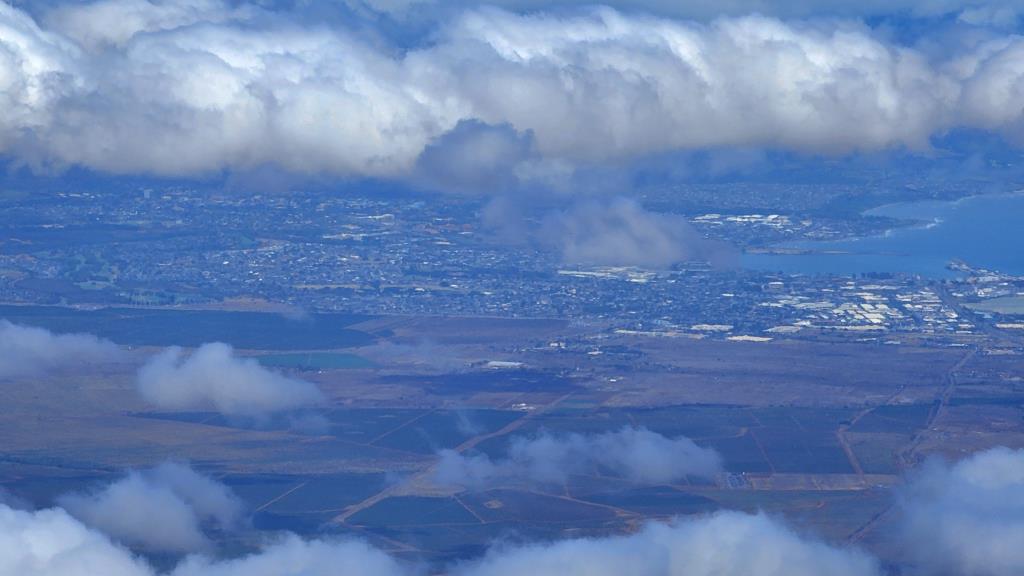
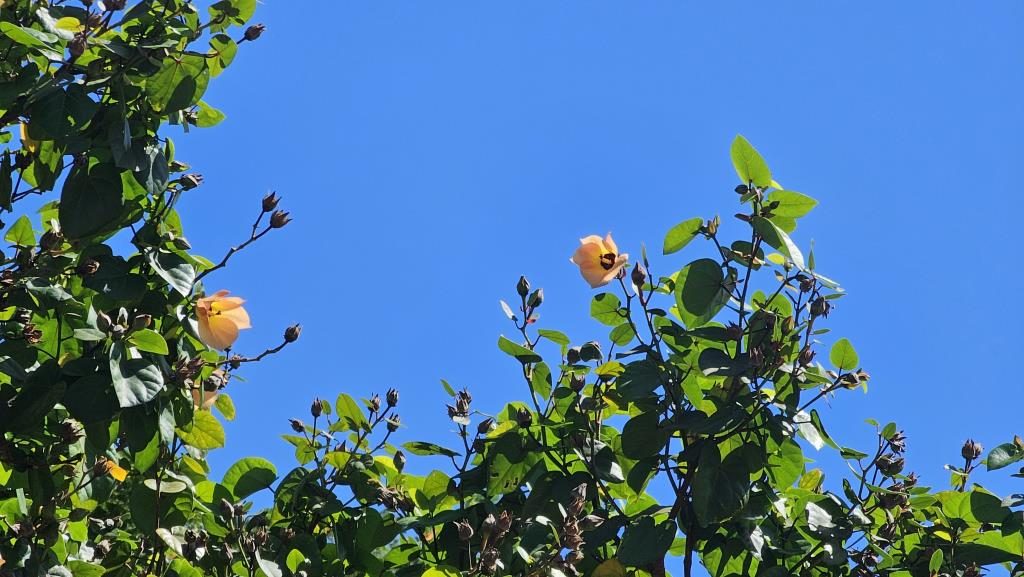
And now for our descent! Down from the sub arctic to the land of
flowering trees, and the warm waters of the Pacific.
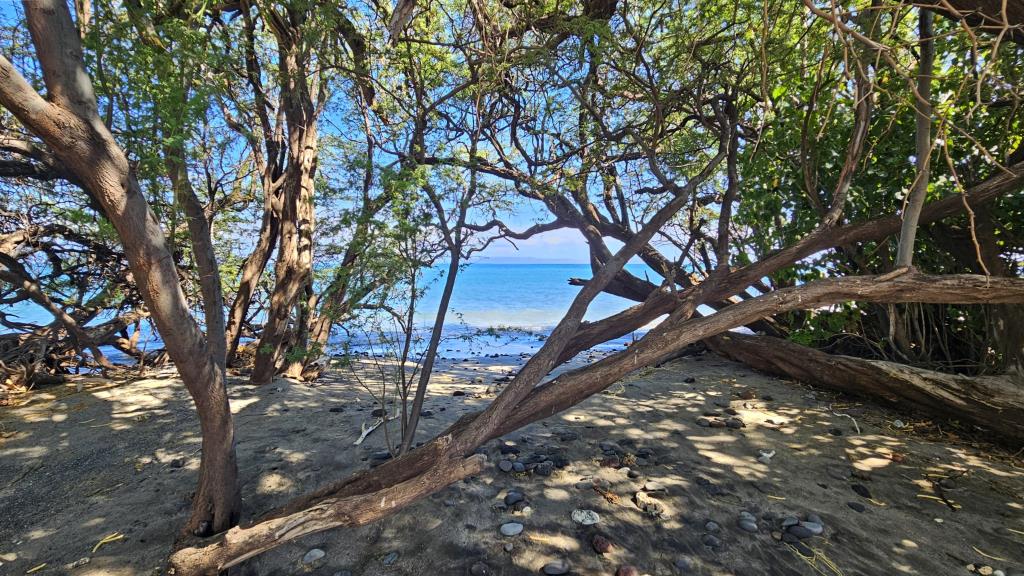
I made a quick stop at my beloved Papalaua Beach Park (they have a
Porta-Potty) and grabbed a couple shots before returning to my
campground.
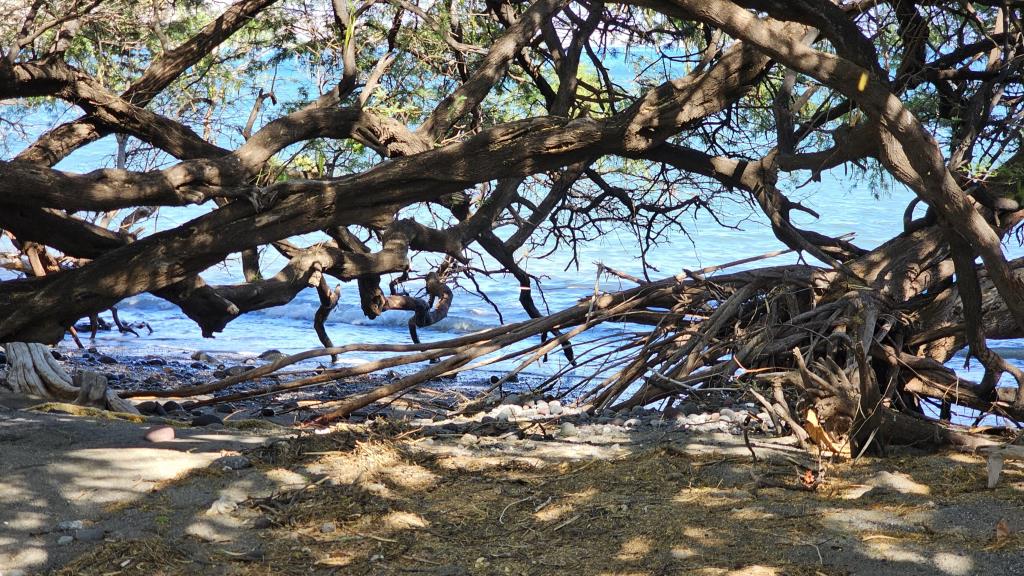
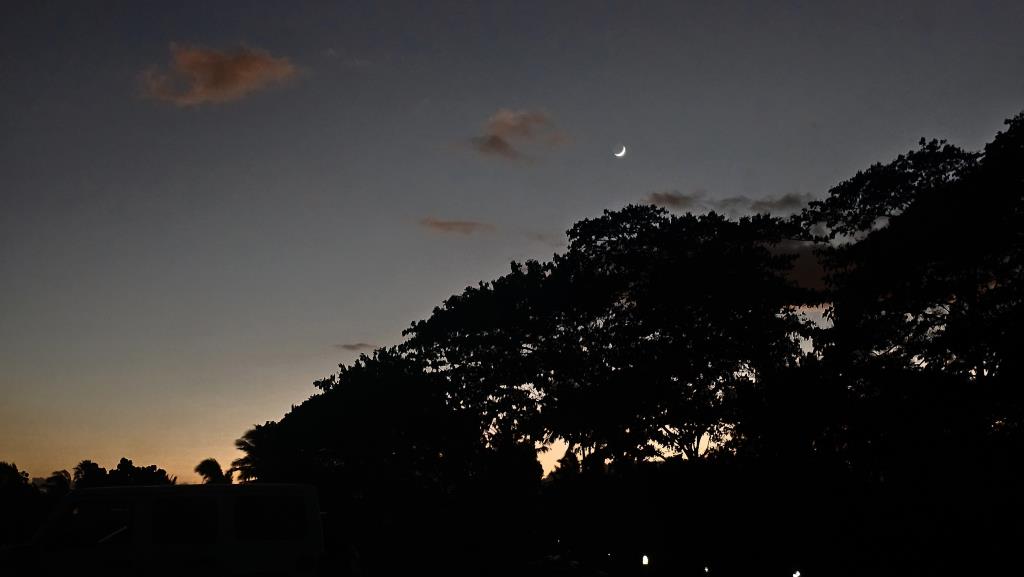
Surprisingly, I wasn't all that tired when I got to Camp Oluwalu. The
jet-lagging must've been pretty much over. So I chilled at the picnic
table, enjoying the twilight.
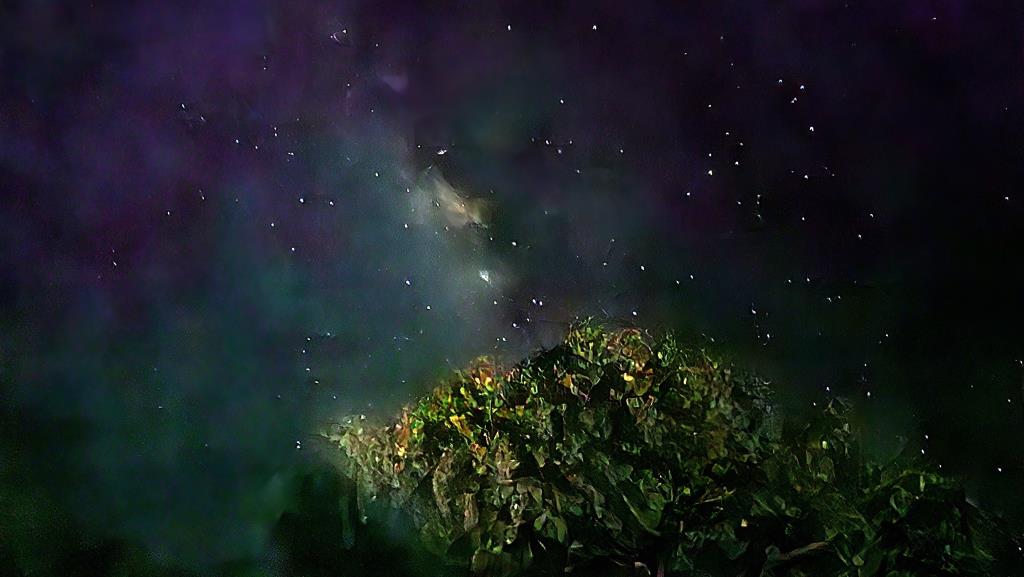
And when I woke (as usual) in the middle of the night, after the moon had set,
again I was treated to a festival of stars unlike anything you can
see in Phoenix. Even with a streetlight illuminating the tree, they
were brilliant. Plus, I'm not sure, but there's been a lot of extreme
solar activity lately, and this almost looks like an aurora photo.