|
By: Paul S Cilwa |
Occurred: 8/22/2024
Posted: 11/7/2024 |
|
Page Views: 133 |
| Hashtags: #Autobiography |
| I used to be a hippie, so I suppose this was inevitable. |
| Estimated reading time: 4 minute(s) (909 words) |
X-rays showed a narrowing of the tunnel through which the spinal cord passes.
The spine doctor thought a
lumbar laminectomy would help.
It didn't. So now they think I need a replacement for my right hip.
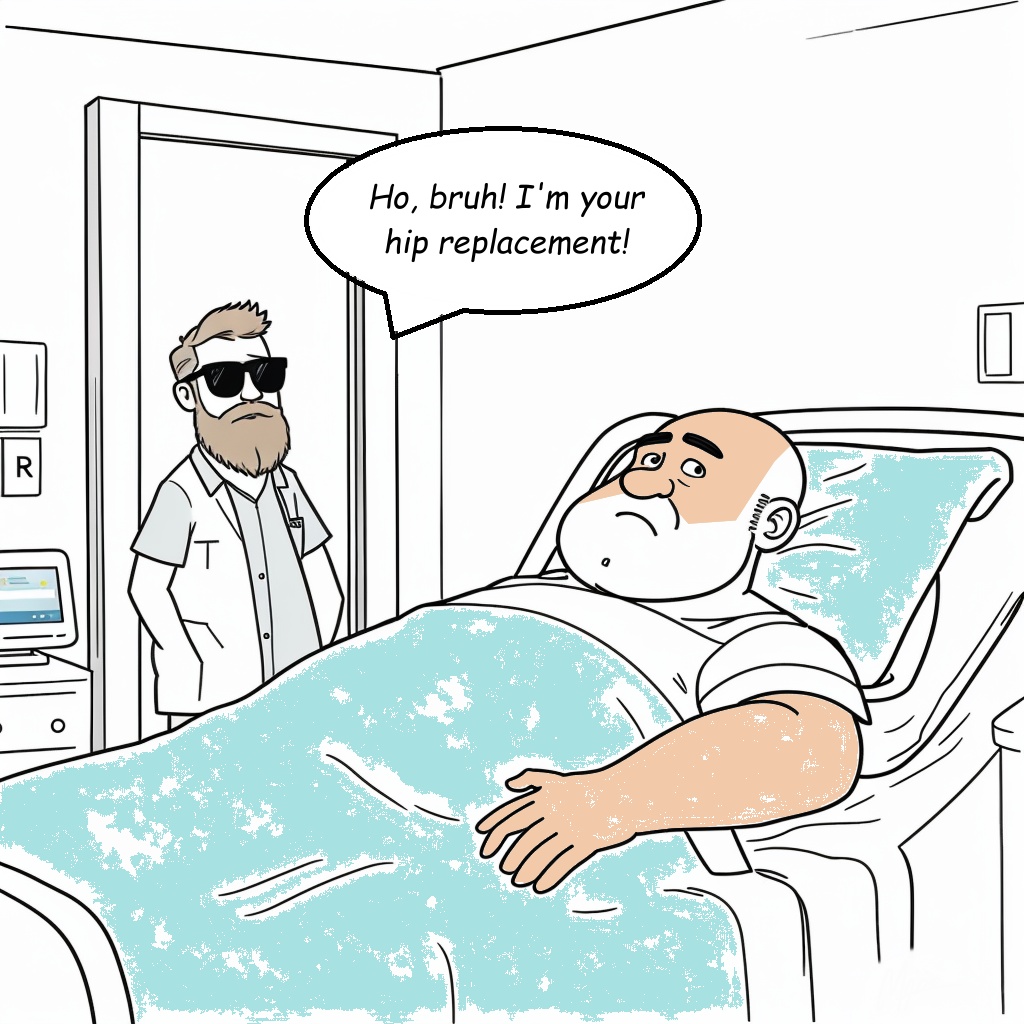
Which I was supposed to have done in June. However, I got screwed by my
then-primary care physician
and the next available date was today, August 22.
My ex (well, one of my exes) Michael was tasked with taking me to and from the surgical
center, since I wasn't permitted to drive myself. (Ironic, since technically my Tesla drives
itself; but the staff had explained that I could, possibly black out or have another medical
emergency on the way home, in which case my driver could turn around and return me to the ER.)
Also, they had prescribed some sort of relaxation pill for last night, which was still in my
system in the morning and might have compromised my ability to drive.
So Michael dropped me off at the surgical center this morning for my anterior hip replacement.
I expected to be nervous but in reality I was feeling mostly relief, possibly thanks to
last night's anti-anxiety pill, but
especially after I paid the $180 co-pay without incident. (I had the money; but you never know
when a computer glitch somewhere will cause the card to be declined.)
After a brief wait, a nurse escorted me to a pre-operative room, where I changed into a
hospital gown and settled onto a comfortable bed.
It was freezing. I had to ask for two warmed blankets. I wondered briefly if the intention
was to put me into suspended animation until hip replacements could be actually invented.
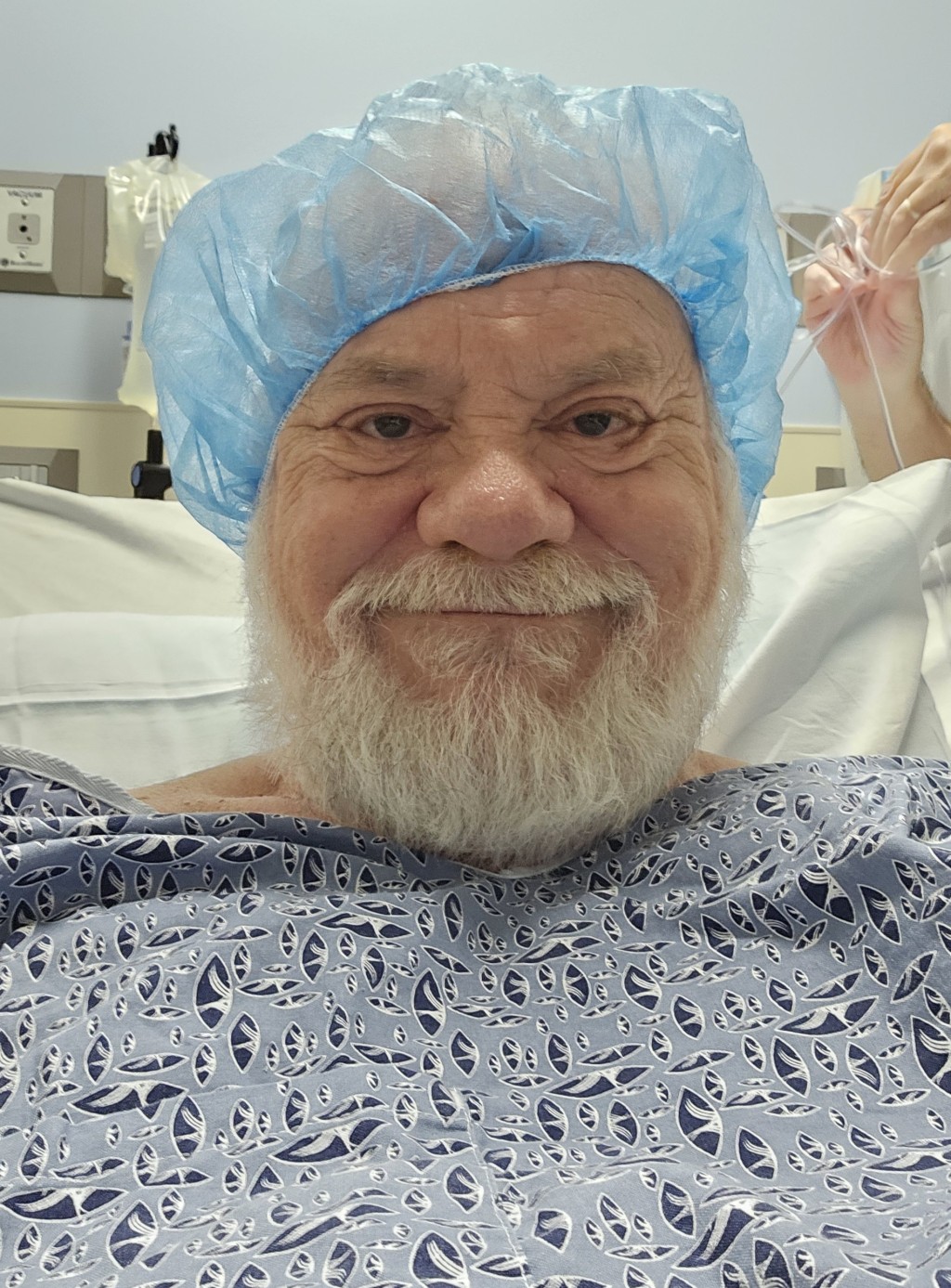
The medical team buzzed around, confirming my details and explaining each step of the process.
The anesthesiologist visited to discuss the anesthesia plan, to which I barely paid attention;
because:
- This wasn't my first rodeo; and
- I tend to trust experts unless they really catch my attention by doing something stupid.
An IV was gently inserted into my arm, and monitors were attached to track my vital signs.
As I lay there, the nurse spoke soothingly, and I felt a sense of calm begin to take over.
Moments later, as the anesthesia started to flow, my surroundings became a blur, and a
peaceful drowsiness enveloped me. The last thing I remember was the reassuring eyes of
the surgical team before drifting off.
Okay, in reality I remember none of that. The above paragraph was written by an AI, and I
suppose that's as likely a series of events as any. But since I've involved a non-sentient
but intelligent being, I may as well have it tell us about the actual surgery.
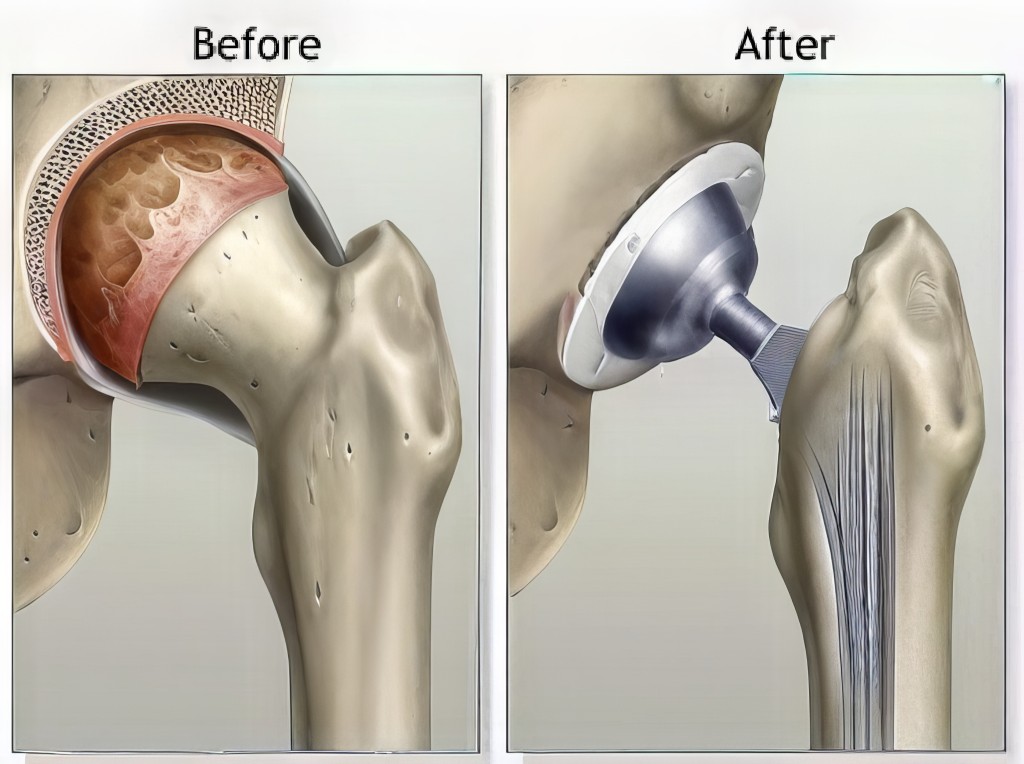
During the anterior hip replacement surgery, the patient is positioned supine to allow
frontal access to the hip joint. (Reminder: "anterior" is the opposite of "posterior",
your backside.) A small incision is made in the anterior hip area to
minimize muscle disruption. The surgeon employs a surgeon-controlled robotic system to
enhance precision and control during the procedure. Using this technology, the damaged
femoral head is carefully removed, and the acetabulum (hip socket) is prepared to
receive the implant.
The surgeon then implants a titanium prosthetic joint, consisting of both femoral and
acetabular components. The robotic assistance ensures accurate alignment and placement
of the implant within the bone structures. After confirming the proper fit and range
of motion, the surgical team closes the incision with sutures or staples. The minimally
invasive approach and robotic technology aim to reduce recovery time and improve
surgical outcomes.
After the surgery, I gradually became aware of my surroundings in the recovery room.
A nurse came over and told me it was time to try standing up. With her assistance, I
carefully swung my legs over the side of the bed and placed my feet on the floor. Using my walker
(which I had been required to purchase ahead of time and bring with me)
for support, I stood up slowly. They encouraged me to take a few steps, and together we walked
down the hallway. Each step felt more stable than the last, and I was amazed at how quickly
I was moving around. Returning to my room, I felt a sense of accomplishment and relief knowing
that the first hurdle in my recovery was behind me.
We didn't know until then if I would have to spend the night in the hospital.
But I guess my ability to walk meant I would go home.
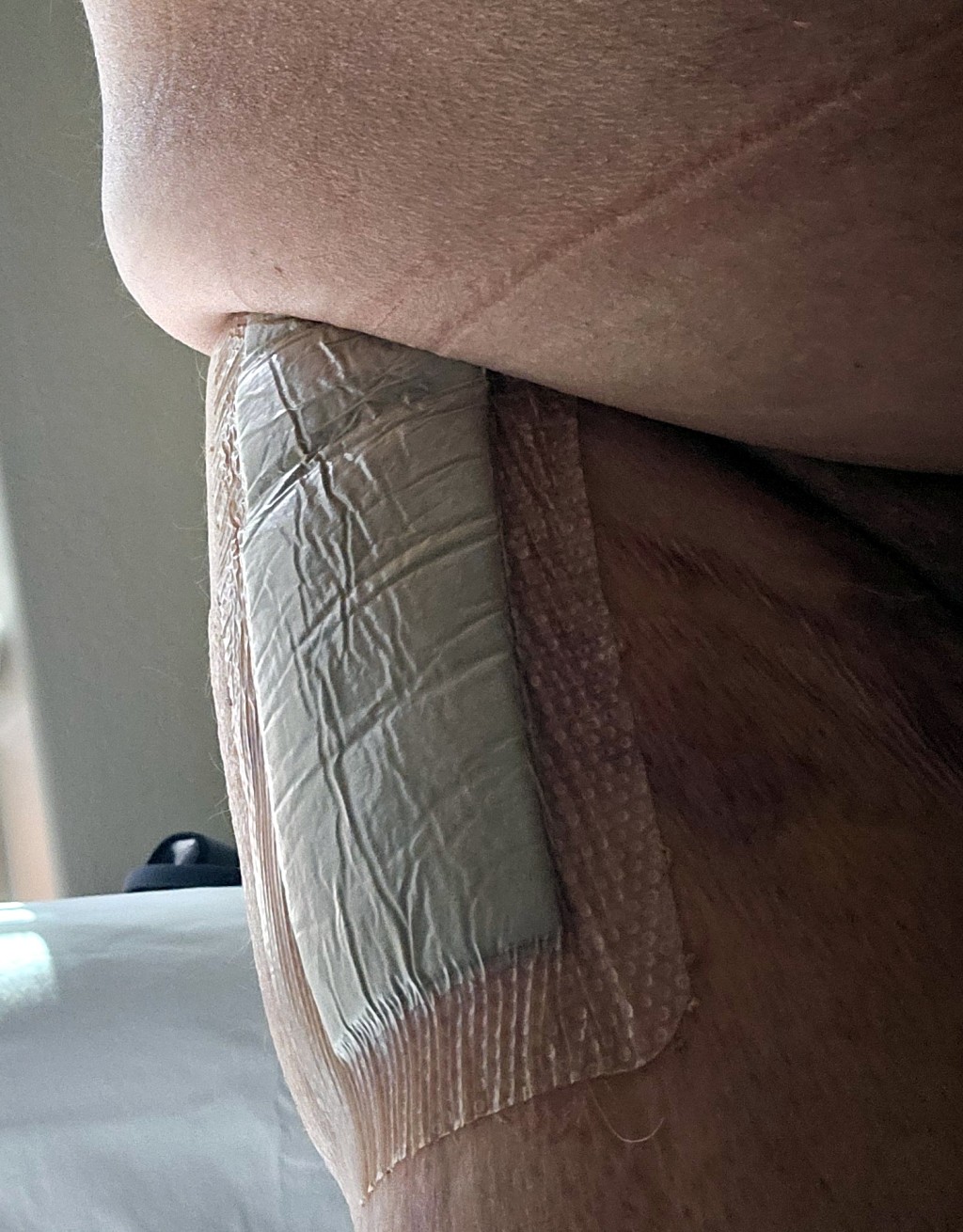
So, now I'm home (thanks to Michael.) My daughter is here (it's her house) and most
solicitous. The only external sign I had surgery is this large bandage I'm supposed to
keep on for a few days. (I'm not allowed to shower for a couple days.)
I realize now the steps I took in the hospital were still anesthetized,
because now I feel pretty darn sore.
But, it's done! And now I can look forward to as much as a year recovery.
But it's possible I could find myself hiking again, and that's what I'm
holding out for.