|
By: Paul S Cilwa |
Occurred: 8/26/2025
Posted: 1/11/2026 |
|
Page Views: 230 |
| Hashtags: #Autobiography #SulcataTortoises |
| We've added a couple of slow-movers to the family. |
| Estimated reading time: 3 minute(s) (681 words) |
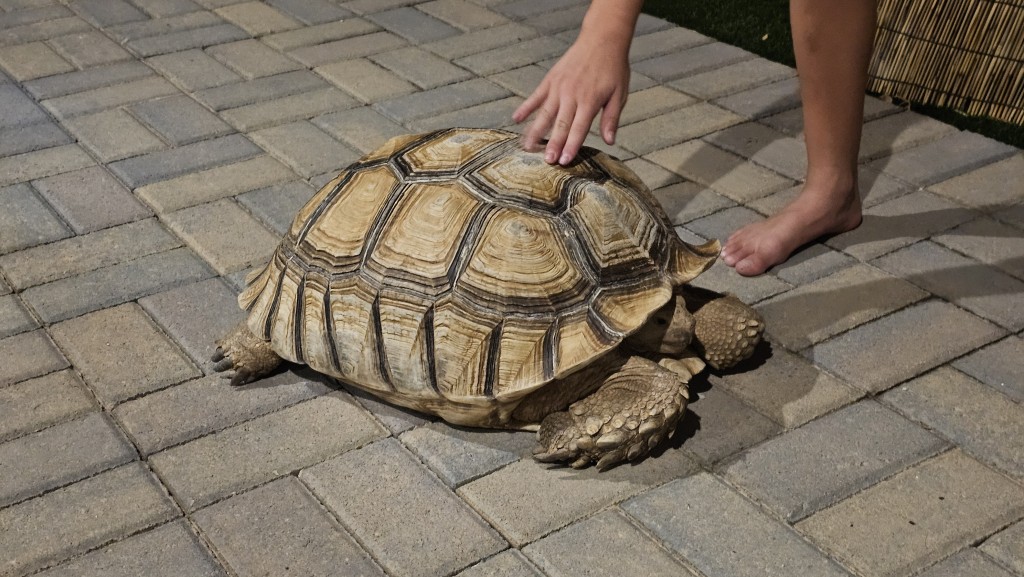
When Jenny brought them home,
she was told they were both males. Easy enough, right? Two dudes, hanging out, eating grass, living
their best desert?tortoise lives. Except…no. A closer look revealed that, while Harold is indeed a
gentleman, Rose not only identifies as a lady but has the plumbing to match.
Suddenly our backyard wasn't just a habitat—it was a potential soap opera.
Life with two sulcatas is equal parts comedy and construction project. Sulcatas are the third?largest
tortoise species on Earth, which means Harold and Rose aren't exactly dainty. They move like slow
bulldozers, eat like furry lawnmowers, and dig like they're auditioning for a prison?break film.
They're also surprisingly social, curious, and expressive—once you learn to read the subtle
language of tortoise body?wiggles and determined stomps.
Harold, being the male, has a bit more swagger. He patrols the yard like a sheriff, checking the
perimeter, pushing things around, and occasionally giving the fence a just testing
nudge.
Rose is calmer, more methodical, and—true to her gender—an expert digger. If she
decides a burrow should exist, it will exist.
Their personalities are distinct, but both share the classic sulcata traits: stubbornness,
charm, and a deep belief that anything edible should be eaten immediately…or when they
feel like it.
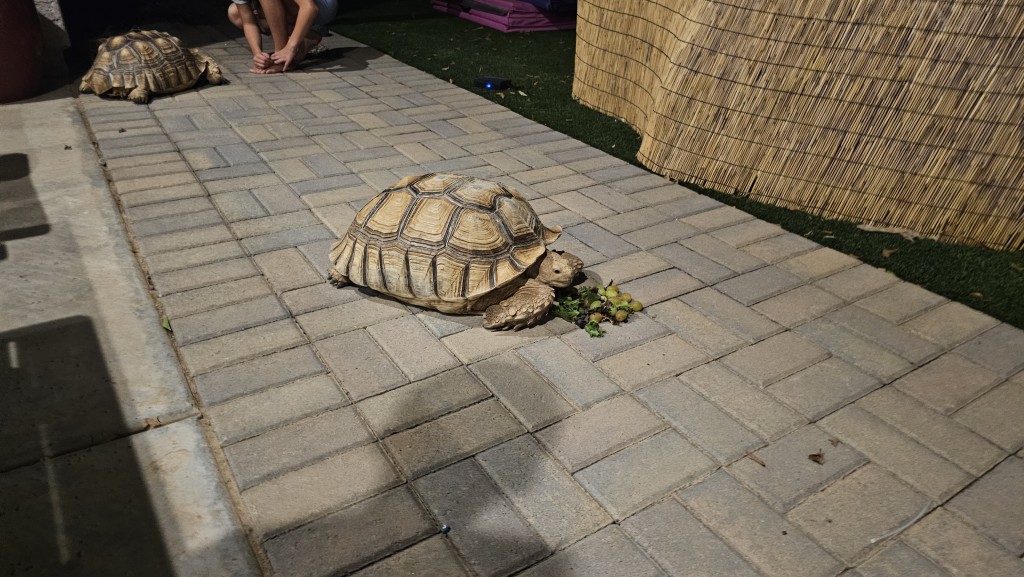
Even in Chandler's warm climate, nighttime temperatures can dip low enough to be dangerous for
sulcatas. These two need a cozy, insulated shelter that stays in the 80?90°F range, especially when
the desert chill rolls in. Their current hide is partially covered with blankets, but we're
upgrading with safe heat sources—ceramic heat emitters or radiant heat panels that keep
things warm without risking burns.
One thing we've learned quickly: sulcatas are strong. If they
don't like the way their shelter is arranged, they will rearrange it. Blankets, boards,
flowerpots—nothing is sacred.
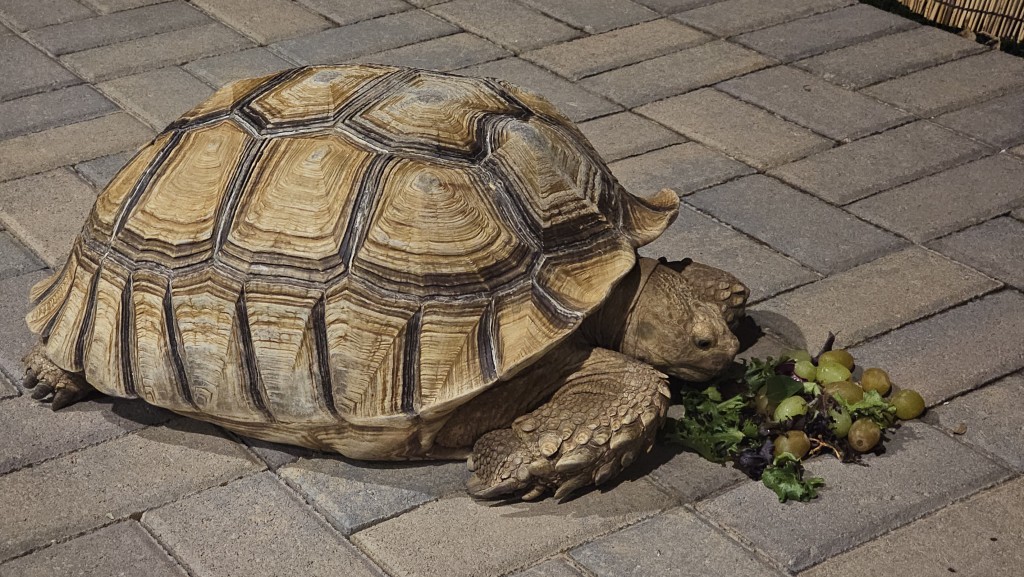
Harold and Rose are grazing machines. Their menu is supposed to be grass, more grass, and a side of
grass,
with the occasional cactus pad or hibiscus leaf for flair. However, we don't have a "real" lawn.
We live in a desert, and astroturf is the only thing that makes sense out here. So, we feed them
mostly romaine lettuce, which Jenny gets from a friend who works in a grocery produce department
and saves her the heads of romaine they were just about to throw away.
They need constant access to clean water and plenty of calcium, especially Rose, who may eventually
lay eggs—even if they're infertile.
We also have to keep an eye on Harold's enthusiasm. Male sulcatas can get a
little… overconfident during breeding season. If he starts pestering Rose too much, we'll
have to give them some personal space. Tortoise romance is not always gentle.
And then there's the digging. Both of them can turn a patch of yard into a construction site in an
afternoon. Rose tends to dig deeper, more purposeful burrows, while Harold digs because digging
is fun and he's Harold.
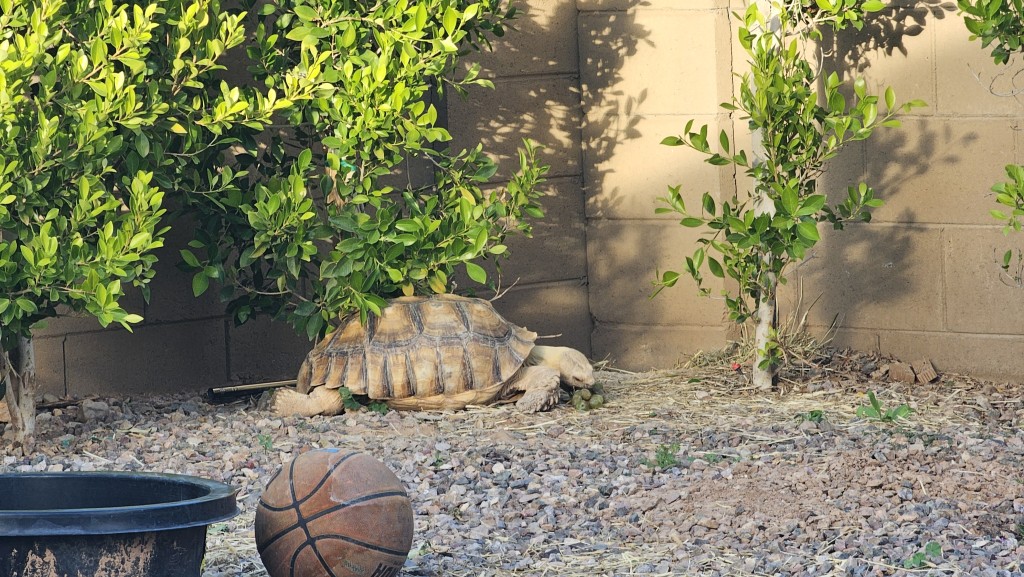
Despite their size, their stubbornness, and their ability to remodel the backyard without
permission, Harold and Rose are endlessly endearing. They follow us around, perk up when they hear
voices, and seem genuinely pleased to be part of the family. (They really wanted to come inside
with us, but they aren't housebroken.) Watching them explore, interact, and
settle into their new home has been a joy—and a reminder that even the slowest creatures can
make the biggest impact.
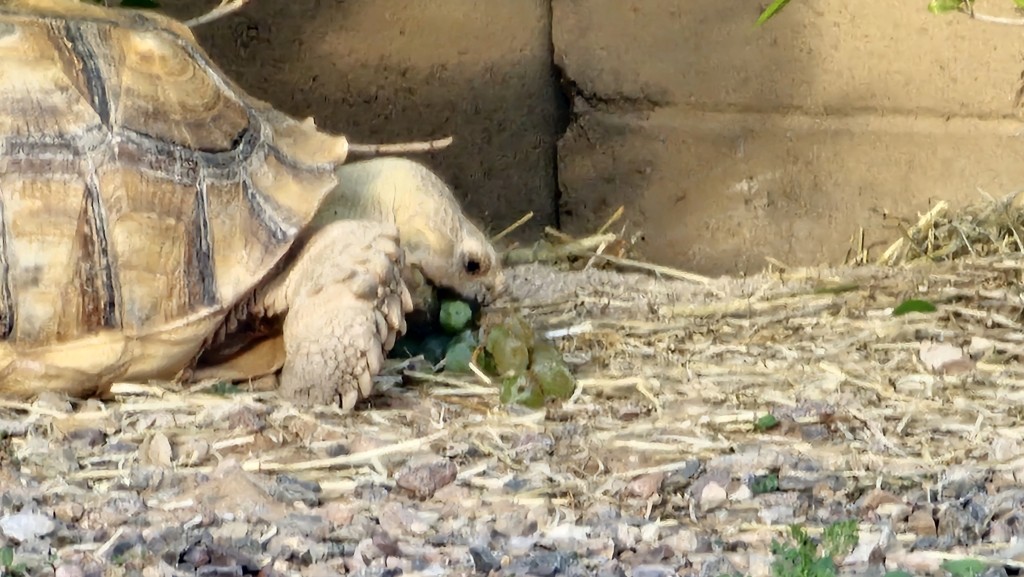
Also, we found out that baby sulcatas fetch a pretty nice price. If Harold and Rose eventually produce
babies, we can expect $125?$175 locally for standard hatchlings, and $175?$225 for well?started juveniles.
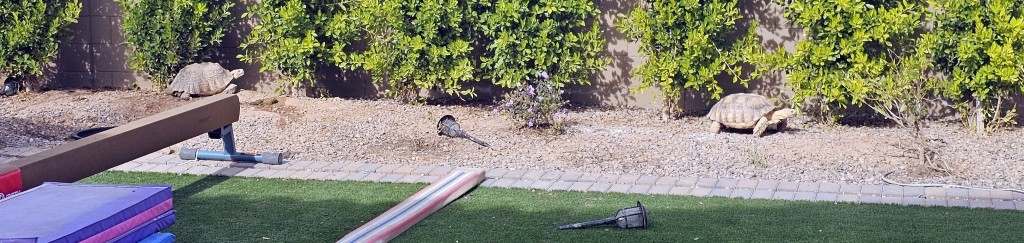
Run, Harold, run!