|
By: Paul S. Cilwa |
Posted: 3/18/2026 |
|
Page Views: 160 |
| Hashtags: #AI #Art #Opinion |
| AI is just a tool. As are some of its haters. |
| Estimated reading time: 10 minute(s) (2318 words) |
AI As A Paintbrush
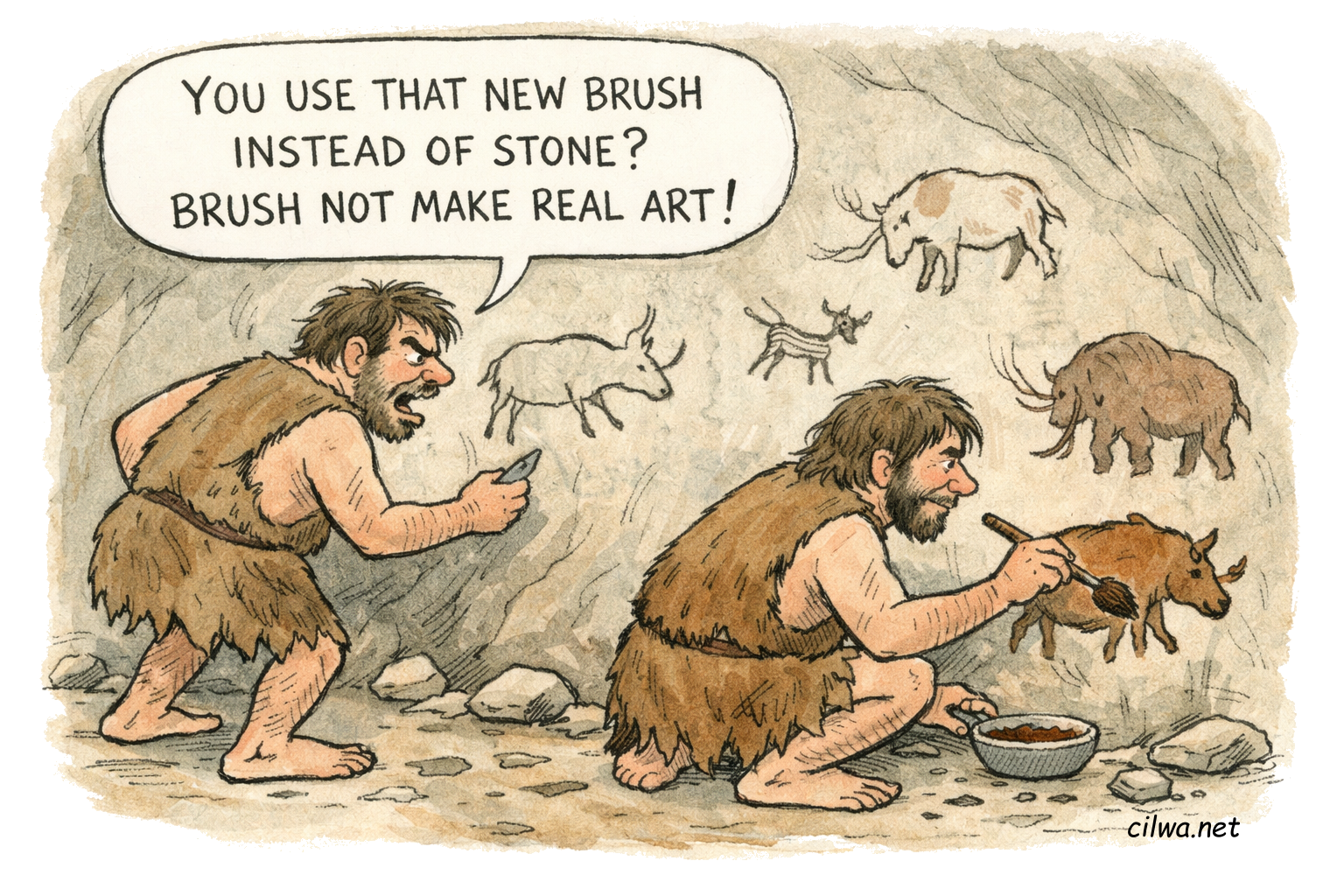
So whenever something new comes along, there will be haters. And so it is with Artificial
Intelligence. I know several people who are terrified it will copy their writing and use it
to make money, which is ironic because few of them have the writing chops to make money with
their writing anyway; and most of the others don't have the grit to actually churn out a whole
book. And getting it actually published is a whole other hurdle.
In the past three-quarters of a century, I have received exactly two compliments I have always
treasured, because I knew they were genuine—because the person giving them didn't
know I was there, or was awake. The most recent was on a Grand Canyon rafting trip. I was going
to sleep under the stars, outside my tent, away from most of the other passengers. I had just
seen a shooting star disappear behind the canyon wall and closed my eyes, thinking it couldn't
get better than this. Then I heard the soft voices of a couple of boatmen passing on their way
to the latrine, speaking quietly so as not to wake me. “Can you believe this guy?”
one said. “He goes on every hike. He begs to let him handle the oars, and he's
good at it. You'd never guess he's from the city. He's a real desert man.”
The knowledge that I had become, in their eyes, someone truly at home in that
landscape—someone they didn't realize I could hear—meant everything.
But the first, the one that applies here, was when I was a D.J. at WAOC radio in St. Augustine
in 1972. One day my coworker Dick Harnage created a spot for a station contest—a good 112
seconds of rambling with no musical background, utterly inconvenient. Rather than let it bother
me every time I ran it, I decided to fix it. I took Dick's tape, cut it into strips by sentence,
spliced together a new version where Dick and I seemed to have a conversation, recorded
my lines, mixed in an Isaac Hayes background, and produced a polished 60-second spot. I was
terrified Dick would be upset, but no one said a word.
Weeks later, I overheard Wayne Sims, the station manager, talking with Dick in the auxiliary
studio, not knowing I could hear from my booth. When Dick asked how I was doing, Wayne said:
“Wahl, he's not the most exciting D.J. I've ever heard, but he is the absolute
best tool user I've ever known. The way he turned yer contest spot into a winnin'
commercial was astoundin'.” Knowing that Wayne put great stock in a person's command of
their craft's tools, I understood this as genuine—the highest compliment he could give.
I have clung to those words ever since.
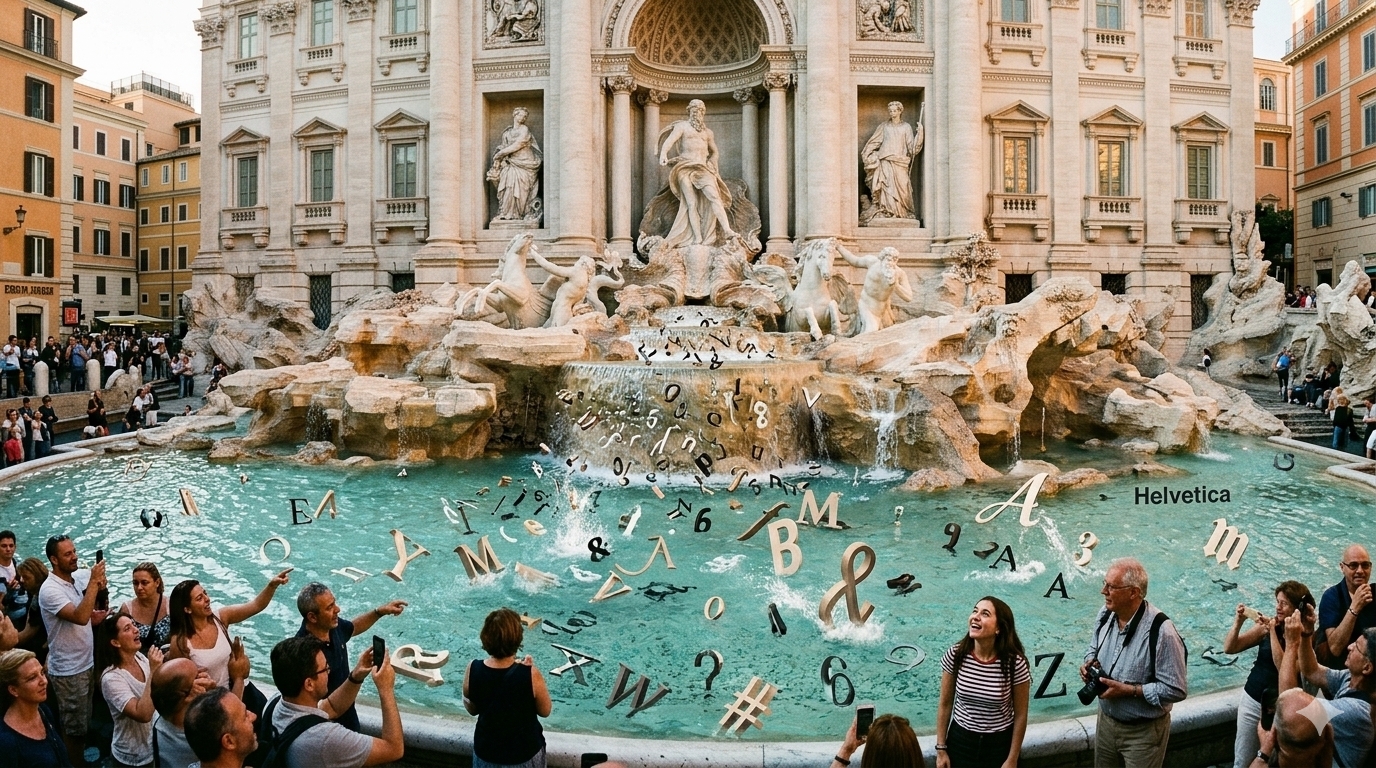
I think about Wayne's words a lot these days, now that the tool in question is AI. Because I
caught myself recently composing a prompt and—I am not making this up—softening it.
Not because the request was ambiguous, but because I didn't want the AI to think I was being
pushy. I actually typed “if you don't mind” before asking it to regenerate
an image with slightly different lighting. Wayne would have been appalled. And then amused.
The reason I was fussing over that image at all—tweaking the prompt, regenerating a dozen
times, nudging the composition this way and that—is that I had a picture in my head and I
needed it to exist in the world. That compulsion, that itch, is something I've had my
whole life. It's the same reason I used to spend Saturday mornings drawing maps of imaginary
countries when I was ten, the same reason I started writing stories before I could spell half
the words in them, the same reason I eventually learned photography: I had things in my head
that needed to get out.
That itch, I would argue, is Art. Not the pencil. Not the camera. Not the AI. The itch.
What Art Actually Is
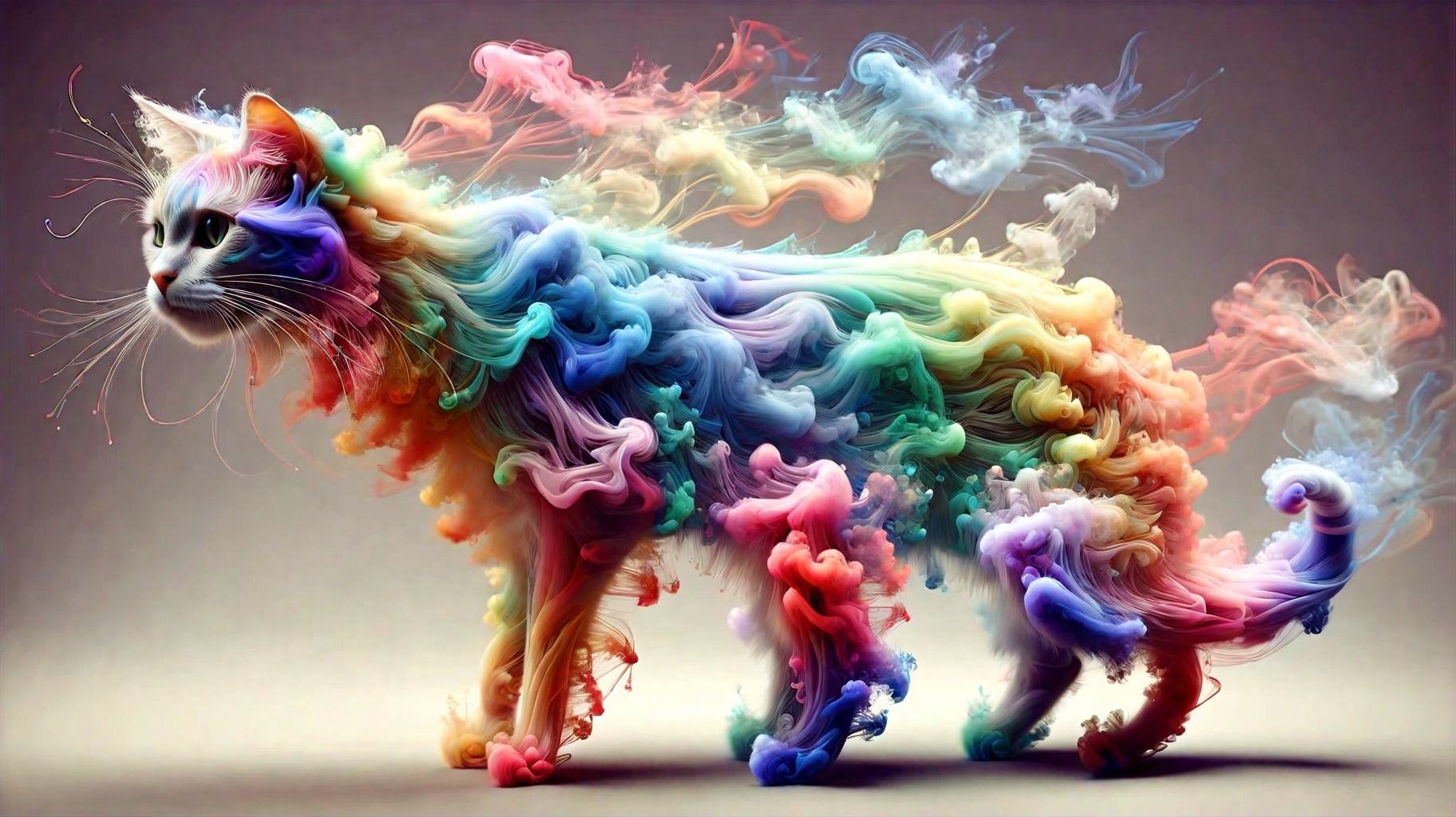
We have this strange habit of defining Art by its medium—as if the category belongs to
the tool rather than to the person wielding it. Someone scratched a picture of a bison on a
cave wall forty thousand years ago and we call it Art. Leonardo spent four years on a portrait
of someone's wife and we call it Art. Ansel Adams hiked into a freezing mountain range, waited
for the light to be exactly right, and tripped a shutter for a fraction of a second—and
we call it Art, though there was a period when photography's critics insisted it was merely
mechanical and therefore couldn't possibly qualify.
They were wrong then. You can guess where I'm going.
What those things have in common isn't charcoal or oil paint or silver halide or a neural
network. What they have in common is that a human being had a vision—something that
existed only inside their own skull—and then labored, sometimes for a fraction
of a second and sometimes for years, to drag that vision into shared reality. That's it.
That's the whole definition. Art is the act of manifesting an inner vision into the world.
Spending an hour crafting a prompt, studying what comes back, adjusting the framing, the
palette, the mood, the specific way the light falls on a face—and doing it eleven more
times until it finally looks like the thing you saw in your head—is that process.
Exactly that process. The medium is an AI. So what? The medium was also a goose quill once,
and nobody's holding that against Dante.
Heinlein understood this. Jubal Harshaw, the irascible professional writer in Stranger in
a Strange Land, would summon one of his secretaries, dictate an opening
line—“We kept Uncle Bob's head in a bucket…”—wander off to
do something else entirely, and return to find the story written, submitted to a magazine,
and the check already deposited. I am almost certainly misremembering some details, and
Heinlein fans are already composing corrections; but the point survives any of them: the
story was Jubal's. The secretary was the medium. Nobody argued Jubal wasn't the author.
What Art Is Not
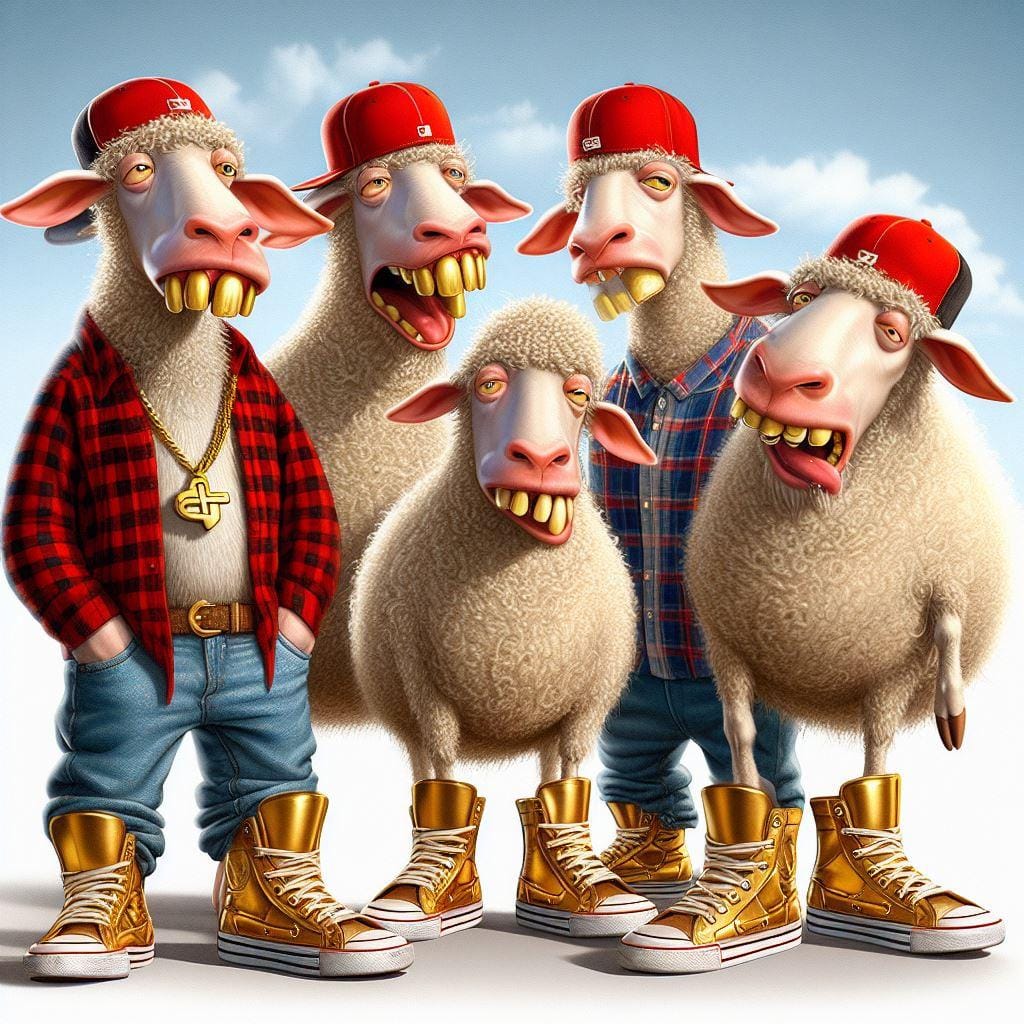
Here is where I expect to lose some readers, because the corollary is a little uncomfortable:
not everything made by a person with talent and effort is Art.
If you bake the same banana bread every weekend because it makes you happy and your family
happy, that is a wonderful thing, but it is not Art. It's joy, which is arguably better than
Art but is a different category. If you draw horses because you love horses and drawing horses
relaxes you, that is also wonderful, and also not Art—it's practice, or pleasure, or
both. Readers who complain that their favorite author's last six novels all feel like the same
book are detecting something real: the author has stopped having visions and started filling
out a template. Nobody blames them. Templates pay the mortgage. But Art, it isn't.
Commercial work in general sits in a complicated position. If someone hires me to design a
logo that fits their brief, I may exercise tremendous skill and even genuine craft—but
I am realizing their inner vision, not mine. The moment someone else's vision is the
one being manifested, I have become an instrument. A good instrument, perhaps a well-paid
instrument, but an instrument. Which, again, is not a moral failing. It is simply a different
activity than Art.
Art is when the vision is yours.
Bird Poop On The Windshield
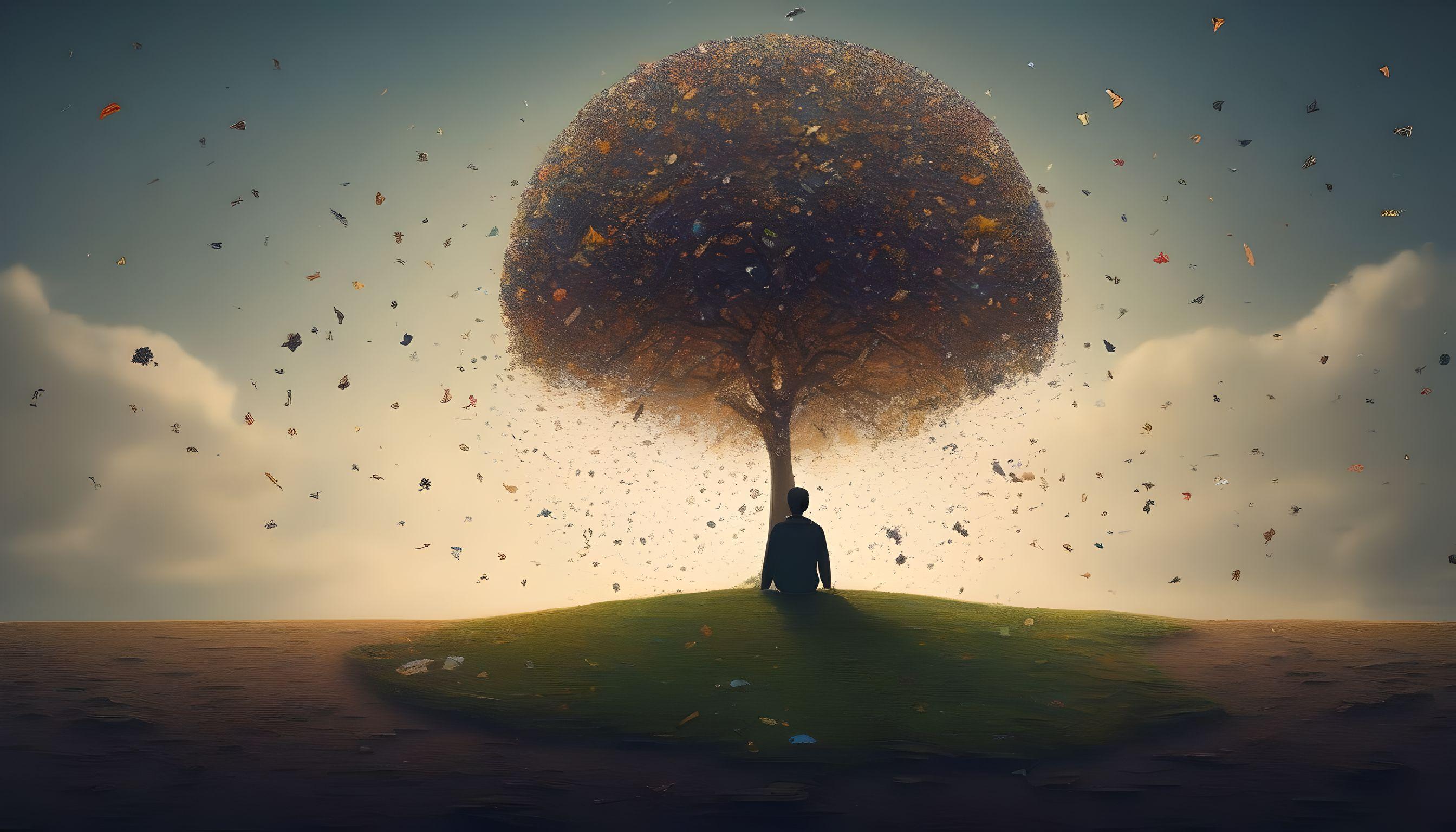
There is another thing AI does that alarms people: it fills in details you didn't specify.
You describe a scene and the AI has to decide what four million individual pixels should
look like, so unless you say otherwise the sky will be blue, the trees will be green, and
occasionally a creature you never mentioned will wander into frame. Sometimes the result
is nonsensical and you find yourself typing, Recreate that image, but remove the skunk
from the aquarium.
Other times you stare at what came back and think, Oh my
gods—I didn't think of that before, but it's right, it's perfect.
This bothers people who believe Art should be entirely deliberate. But artists have always
incorporated random chance into their work. The cave painters forty thousand years ago
didn't fight the natural irregularities in the rock surface—they painted with
them, using bumps and ridges to give their bison a three-dimensional bulk that a flat wall
never could have. The irregularity wasn't a defect. It was a collaborator.
Imagine you are painting an oil on canvas of a car parked on the beach. You have rendered
a seagull wheeling overhead and you are rather pleased with yourself. Then a real, live,
non-metaphorical bird does what birds do, and deposits a contribution directly onto the
windshield of the car you just painted. After a moment of horror—wouldn't you be
ecstatic? Wouldn't you leave it exactly as it fell? Of course you would. Because
the painting now showed a rawer, truer truth than anything you had planned. Plus,
you'd have a great story when you go on your lecture tour!
That is what the AI's unexpected details are: bird poop on the windshield. Most of the time
you wipe it off. But once in a while it lands in exactly the right place, and your Art is
better for having been surprised.
Honesty as the Measure of Quality
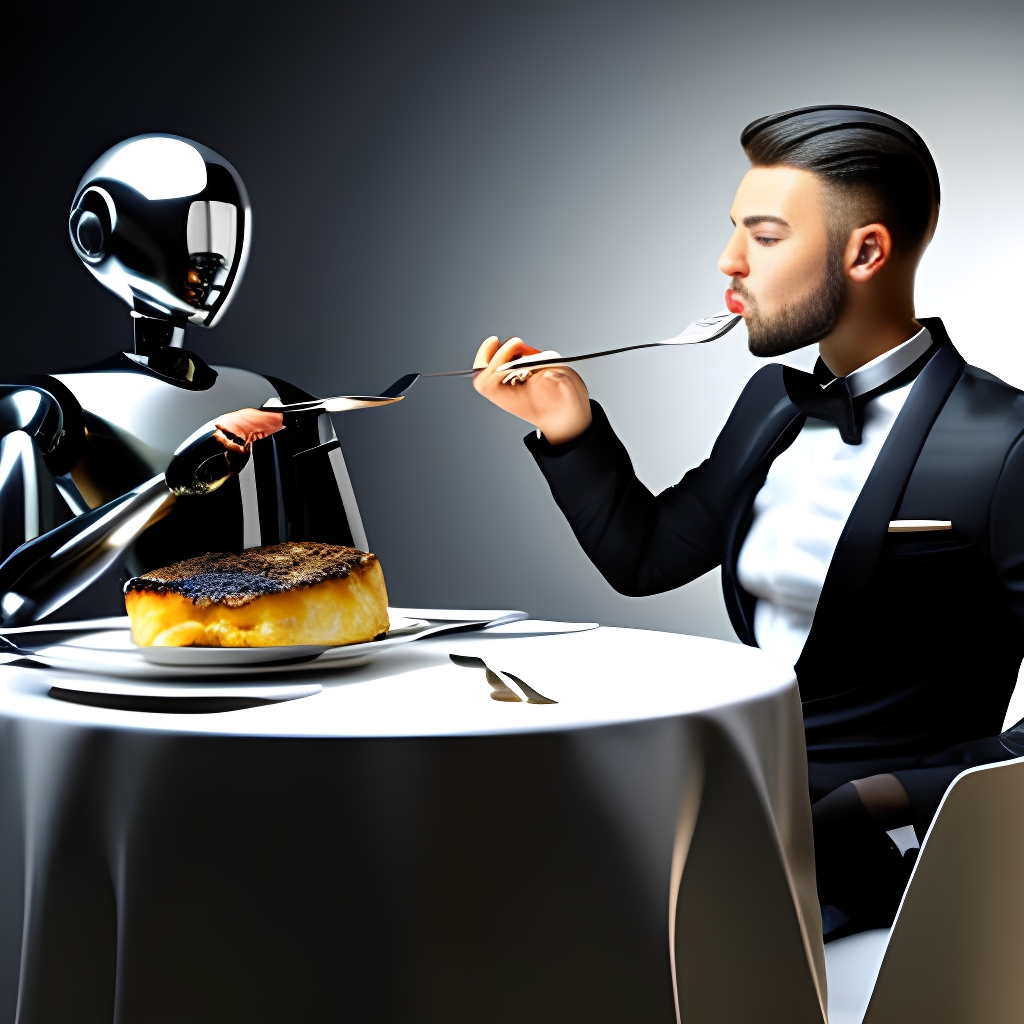
Here's the part nobody puts on a motivational poster: the quality of Art scales with honesty.
Not technical quality—you can be a mediocre draftsman and still make genuine Art, as
any number of beloved outsider artists demonstrate. I mean honesty of vision. The degree to
which you pushed past your own fear of looking foolish, your self-censorship, your desire to
make something acceptable rather than true.
Every time I soften a prompt because I don't want the AI to think I'm pushy, I
am—metaphorically speaking—painting over the thing I actually wanted to paint.
Every time I choose a safer image because the one I really want feels too weird or too personal
or too revealing, I am making something less than Art. The closer I get to the actual vision,
unfiltered, the closer I get to Art. The medium is irrelevant to that negotiation. The
negotiation is entirely internal.
This is why Art is good for you, incidentally—not as a cute bumper-sticker sentiment
but as a practical observation. The act of pushing past your own hesitations, of insisting
that the thing in your head is worth the effort of existing in the world, is a small but
repeatable act of courage. Do it enough and you get better at it in other contexts. The cave
painter wasn't just decorating. They were practicing the refusal to let what mattered stay
invisible.
The Same Mistake, Every Time
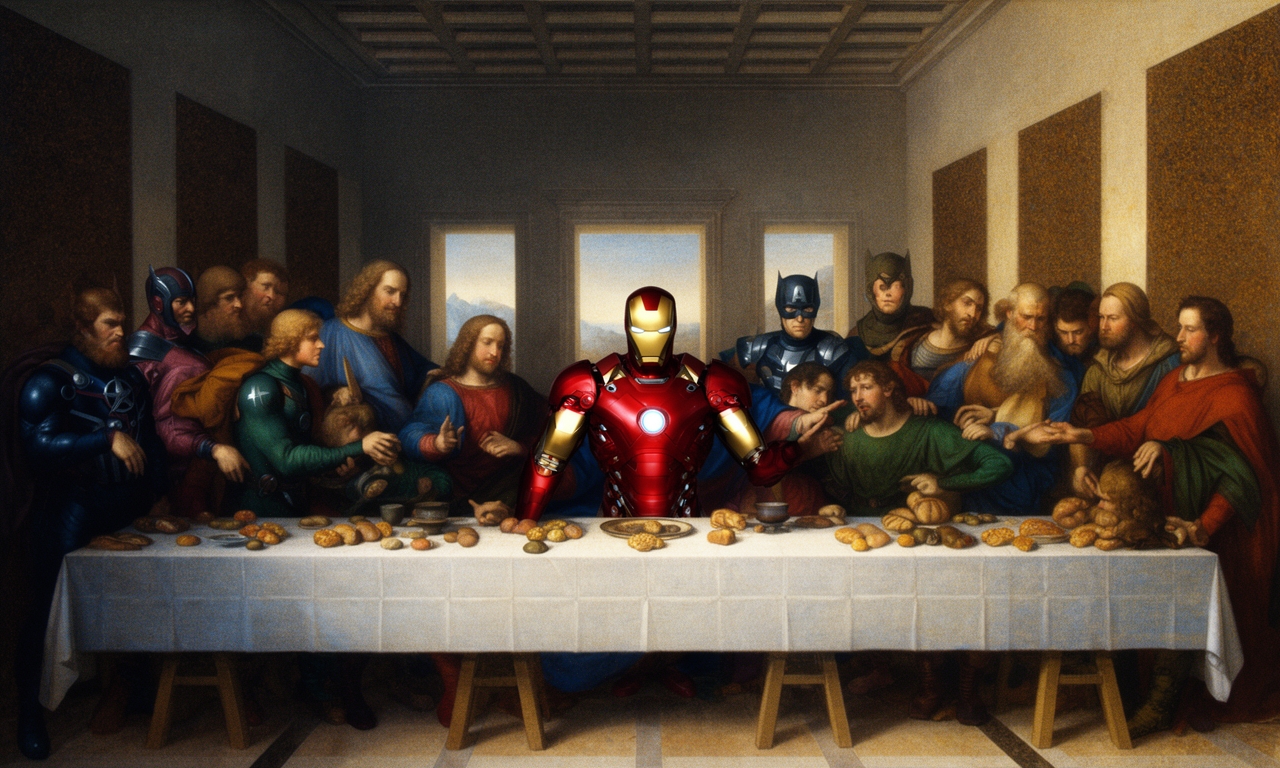
People have been drawing this particular line in the sand for as long as new tools have
existed. Photography wasn't real Art because a machine was doing the capturing. Electronic
music wasn't real music because synthesizers weren't real instruments—a position that
aged poorly somewhere around the time “I Feel Love” by Donna Summer came out and
everyone had to quietly pretend they'd never said it. Digital painting isn't real painting.
Auto-Tune isn't real singing. And now: AI isn't real Art.
The argument is always structurally identical: the new tool is doing something the old tools
didn't do, therefore the human isn't really doing the thing, therefore it doesn't count. What
the argument consistently fails to account for is the human standing behind the tool with
something to say. The camera doesn't decide what to photograph. The synthesizer doesn't decide
what emotion to pursue. And the AI doesn't decide what vision needs to exist in the world.
That part is stubbornly, irreducibly human.
I will note, with the self-awareness it deserves, that I am making this argument in an essay
where an AI served as my editor—the same kind of editing assistance I once got from
my human book and magazine editors: spellchecking, typo-catching, and the occasional gentle
suggestion that perhaps a thought would be better expressed thus. The vision and the
voice are mine. The copyediting had help. I suspect Hemingway's did too (though his secretary
was probably a snuggly blonde with Daddy issues), and nobody holds that against him.
Or even thinks about it.
Because everyone ignores the secretary and the janitor. Until one of them shows up in leather
jeans and a Hell's Angels bike helmet. Then people who are more frightened of exteriors than
interiors start freaking out about the tool instead of the vision. But the vision is the thing.
And a Hell's Angel typist is still a typist.
The medium is not the message. The vision is the message. The medium is just how it gets
here—and every generation gets to decide it has finally found the medium that doesn't
count, and every generation is wrong.
Now if you'll excuse me, I have an image in my head that needs to exist, and I have some
very polite prompts to write.