|
By: Paul S Cilwa |
Posted: 3/6/2026 |
|
Page Views: 157 |
| Hashtags: #Science #History #Technology #CommunicationAge #LongDistanceSignaling #Telegraph #Telephone #Radio #Satellites #Internet #FiberOptics #Smartphones #NeuralInterfaces #ConnectednessAge |
| How we eventually wound up with cellphones: The Communication Age. |
| Estimated reading time: 13 minute(s) (2906 words) |
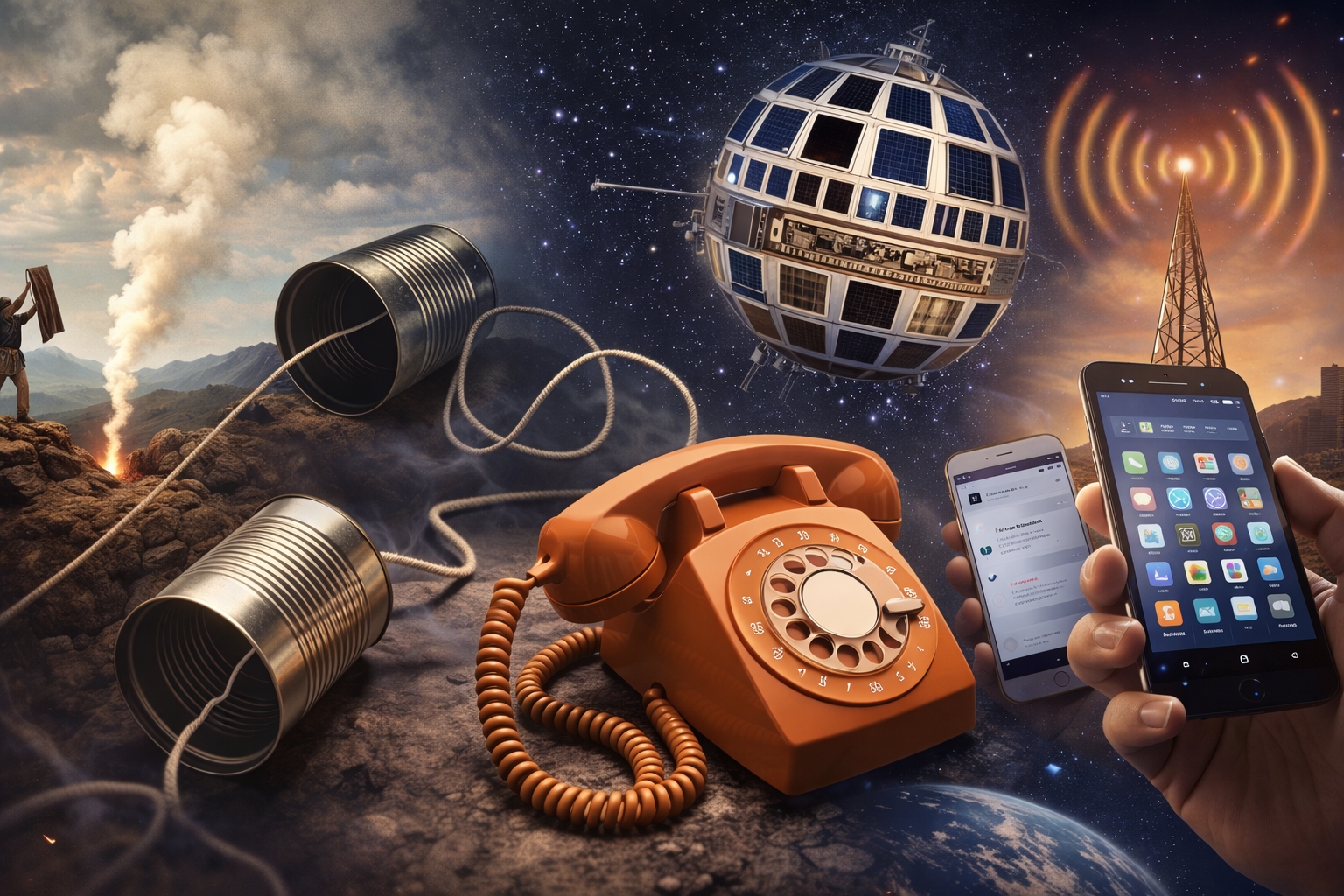
Pre-Electrical Signaling: When Eyes and Ears Were the Network

Long before anyone dreamed of electricity, cultures all over the world
figured out the same basic trick: if you want to send a message farther
than a voice can carry, turn it into something you can see or hear from
a distance. Smoke was a favorite. Indigenous peoples of the Americas used
it to mark locations, warn of danger, and summon the community. So did
cultures in Asia, Africa, and Europe. It was not a primitive hack—it
was a deliberate, semantic encoding system. A single column of smoke might
mean we are here; three puffs might mean run. Simple, but it
worked across miles.

Fire beacons took the idea further, trading nuance for speed. The ancient
Greeks used beacon chains to relay news of victory or disaster across
hundreds of miles in hours rather than days. Medieval watchtowers served
the same function across Europe, and the signal fires of China's Great Wall
could pass a military alarm from the frontier to the capital faster than
any horse. The network topology was dead simple—a line of hilltop
nodes, each one in sight of the next—but the latency was remarkable
for the era.
Acoustic systems solved a different problem: what do you do when there is
no hilltop, or when it is too dark or smoky to see a fire? Drums and horns
could carry encoded information through dense jungle or across open savanna
in ways that light signals could not. The West African talking drum is
perhaps the most sophisticated example—a communication technology so
capable that colonial administrators were genuinely unsettled by it, since
news of their movements often arrived in the next village before they did.
The most ambitious pre-electrical system was the semaphore telegraph, a
product of late-18th-century French engineering ingenuity. Claude Chappe's
network of mechanical-arm towers, built across France in the 1790s, could
relay a message from Paris to the coast in minutes. Operators at each
tower read the configuration of the arms at the next tower through a
telescope and reproduced it, passing the signal along like a game of very
high-stakes telephone. By the 1840s, semaphore networks crisscrossed
Europe. They were fast, they were reliable, and they were—for about
a decade—the state of the art.
The Electrical Age Begins: Wires That Could Sing

Then someone put electricity to work, and everything changed overnight.
Samuel Morse's telegraph, commercialized in the 1840s, was a genuine
paradigm shift. For the first time in human history, a message could travel
faster than a human could carry it. The key insight was Morse code itself:
a symbolic encoding of language into dots and dashes that a simple
on/off electrical signal could represent. It was, in retrospect, a
harbinger of every digital encoding scheme that would follow.
Telegraphy remade commerce, journalism, and warfare within a single
generation. Stock prices, battle reports, and presidential orders zipped
across continents at the speed of electricity. Newspapers that had relied
on dispatches arriving by horse or ship suddenly had wire services.
The Associated Press was essentially a telegraph-optimization business.
Time zones—which we now take for granted—were partially a
byproduct of railroads and telegraph networks demanding synchronized clocks.
Alexander Graham Bell's telephone in 1876 added something the telegraph
could not offer: one's actual voice. Real-time conversation over a wire felt
almost supernatural to early users. The telegraph required a trained
operator and a code; the telephone required only the ability to talk. It
was the first truly democratized long-distance communication technology,
and adoption was rapid. Within decades, telephone exchanges were threading
through cities, then countryside, then across national borders.
A popular joke of the 1940s illustrates, not only the speed of the new
technologies, but also the misogyny of the time: "What are the three fastest
ways to send a message? Telephone, telegraph, tell-a-woman." When I first
read this as a kid (in a Hardy Boys' mystery!), I had to get my
mom to explain it to me, as I'd never heard that stereotype before.
Connecting continents required going under the ocean. Undersea telegraph
cables began linking Europe and North America in 1866, and by the
turn of the century a patchwork of cables stitched together a genuinely
global communication network. The British Empire, keenly aware of the
strategic value, made cable infrastructure a priority—"All Red
Routes" that touched only British territory encircled the globe. Telephone
cables followed, though intercontinental voice calls remained expensive
and exotic well into the 20th century.
Wireless Communication: Cutting the Cord
The wire had one obvious limitation: you had to have a wire. Ships at sea,
armies in the field, and explorers in remote territory were all stuck the
moment the cable ran out. Guglielmo Marconi and his contemporaries solved
that problem in the 1890s by demonstrating that electromagnetic waves
could carry a signal through the air without any physical connection.
Wireless telegraphy—radio, though nobody called it that yet—let ships talk to shore and to each other. The Titanic disaster in
1912 is grimly illustrative: the ship's radio operators were able to call
for help, and rescue ships did respond, but the response was too slow.
The tragedy accelerated maritime radio regulations considerably.
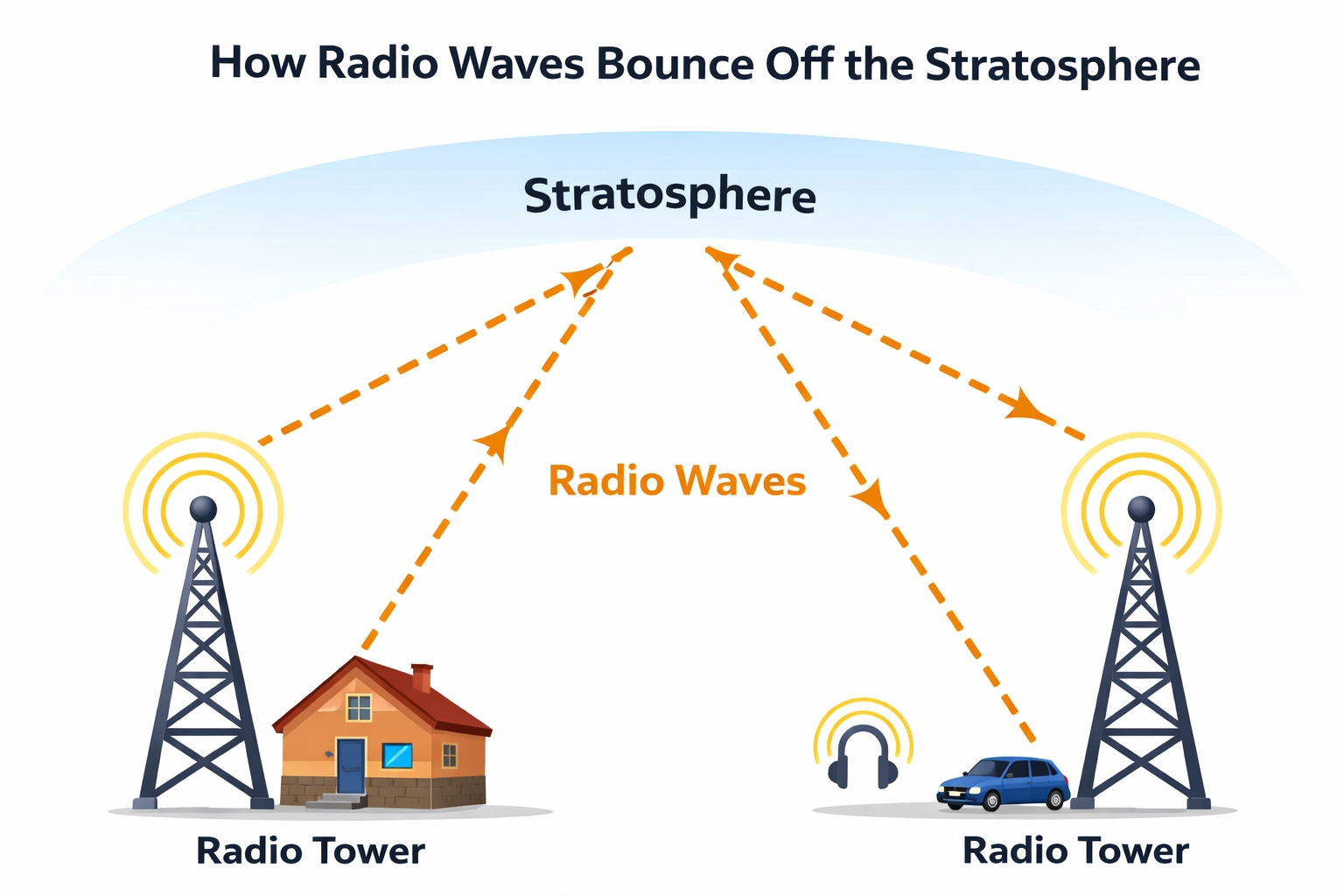
But wait—how did wireless signals communicate with a ship that was invisibly below the
horizon? They did it by exploiting the remarkable behavior of long-wavelength radio waves, which
don't travel in straight lines like light but instead bend and cling to the curvature of the Earth.
Early wireless telegraphy used very low frequencies that could hug the surface as "ground
waves," sliding over swells and beyond the visual horizon for hundreds of miles. Even more
astonishing, once experimenters pushed into higher power and even longer wavelengths, signals began to
bounce between the Earth and the ionosphere, creating a natural waveguide that let messages leap
far beyond line-of-sight. To the operators aboard those early ships, it felt like
magic—tapping out dots and dashes into the void and hearing an answer from a shore station
they could not possibly see—yet it was physics quietly doing the heavy lifting, turning the
planet itself into part of the communication system.

Within a decade, inventors realized that you could do more than transmit
Morse code over radio waves—you could transmit voice and music.
Broadcasting was born in the early 1920s, and it transformed culture in
ways that are hard to overstate. For the first time, a single sender could
reach millions of receivers simultaneously. The political implications were
immediate and not always benign; demagogues grasped the power of radio
faster than democrats did. But so did jazz musicians, news reporters, and
comedians. Radio was the internet of its day: chaotic, exhilarating, and
impossible to fully control.
Microwave and radar technologies, developed urgently during the 1930s and
1940s, pushed the frontier again. Microwave links offered high-bandwidth,
line-of-sight communication that became the backbone of long-distance
telephone networks in the postwar era. Radar, of course, was not primarily
a communication system, but it demonstrated that radio waves could be used
to gather information about the world at a distance—a capability that
would later be essential to weather satellites, GPS, and planetary science.
The Space-Age Leap: Getting Above It All
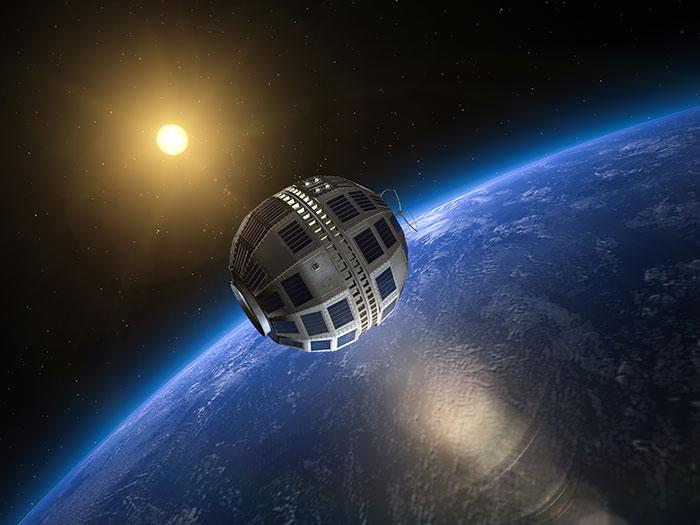
If you want to communicate globally without stringing cables everywhere,
the most elegant solution is to get your relay station high enough that
it can see the whole planet at once. That insight drove the development
of communication satellites in the 1960s. Telstar, launched in 1962,
enabled the first live transatlantic television broadcasts. Syncom 3,
in 1964, was the first geostationary satellite—parked 22,000 miles
up so that it appeared to hover over a fixed point on Earth—and it
carried live television coverage of the Tokyo Olympics to American
audiences. The effect was electric. Suddenly the world felt smaller.
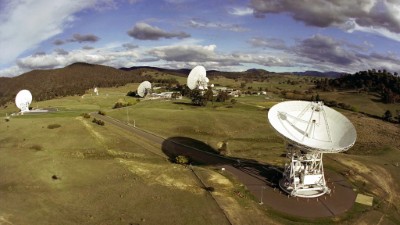 NASA's Deep Space Network consists of three antenna complexes placed
roughly 120° apart around the globe—in California, Spain, and
Australia—so that at least one dish always has a line of sight to
any point in space. The largest dishes are 70 meters across.
NASA's Deep Space Network consists of three antenna complexes placed
roughly 120° apart around the globe—in California, Spain, and
Australia—so that at least one dish always has a line of sight to
any point in space. The largest dishes are 70 meters across.
Through the 1970s and 1980s, satellite networks multiplied and diversified.
Weather satellites gave meteorologists a god's-eye view of storm systems.
Military satellites enabled secure global communications and surveillance.
GPS—the Global Positioning System—began as a military
navigation tool and became, eventually, the technology that tells your
phone where you left your car. Commercial satellite telephone and data
services brought connectivity to ships, planes, and remote corners of the
world that would never see a fiber cable.
At the far end of the dial, quite literally, is deep-space communication.
NASA's Deep Space Network has been exchanging signals with spacecraft since
the 1960s. The Voyager 1 probe, launched in 1977 and now more than
15 billion miles from Earth, still sends back data. The signals travel for
over 22 hours each way at the speed of light. The fact that we can maintain
a conversation—however slow—with a machine that far away is one
of the genuinely astonishing things our civilization has accomplished, and
it almost never gets the recognition it deserves.
Digital Networking: The Mesh That Ate the World
While the space race was unfolding, a quieter revolution was brewing in
university computer labs and Department of Defense research offices.
The problem these engineers were wrestling with was not bandwidth or
distance—it was resilience. A traditional circuit-switched
network, like the telephone system, dedicated a physical path between two
callers for the duration of their call. That was efficient for voice, but
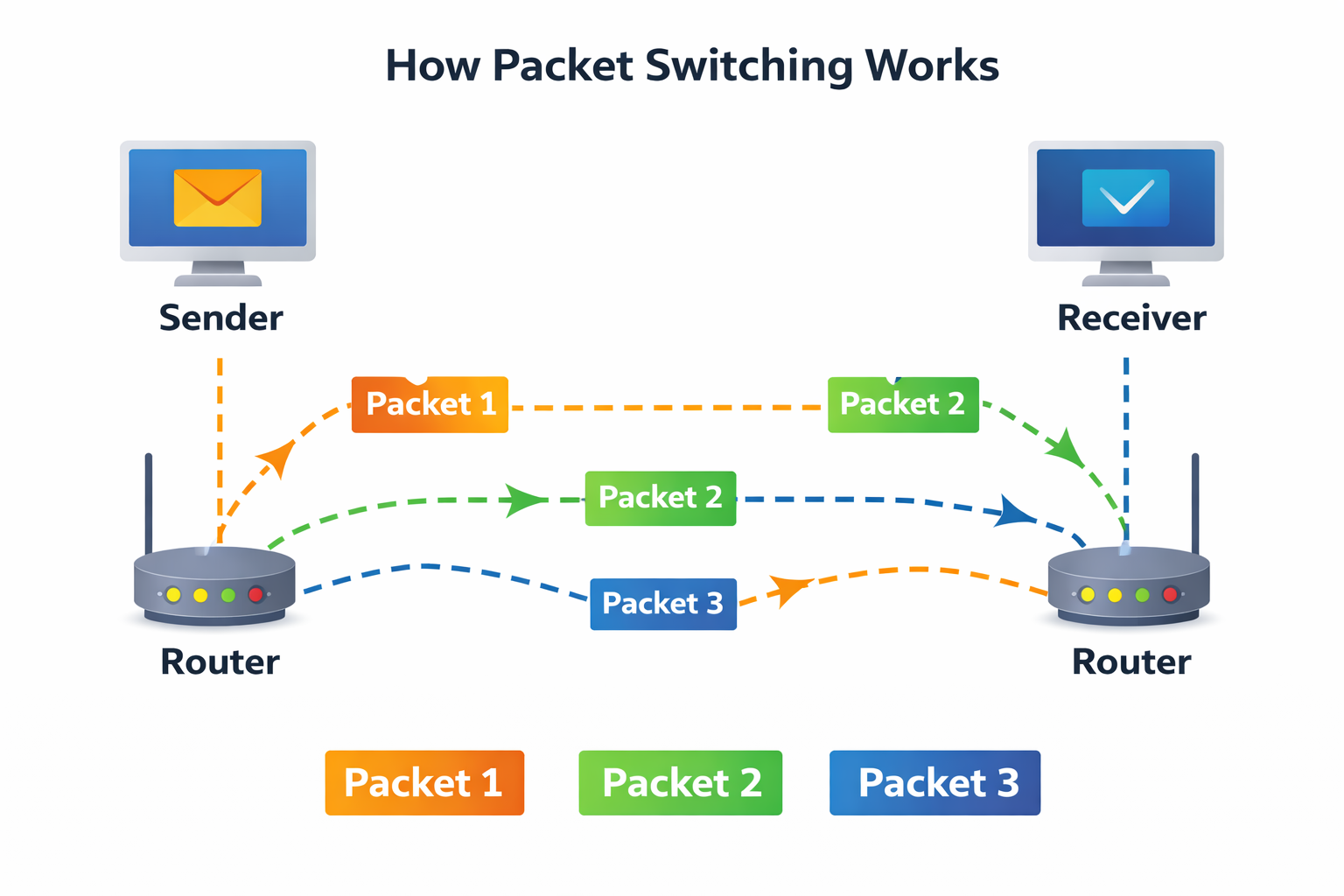
brittle: cut enough links and the network failed. Packet switching, the
foundational idea behind ARPANET (and ultimately the Internet), broke
messages into discrete chunks—packets—that could each find
their own route through the network and be reassembled at the destination.
No single point of failure could bring the whole thing down.
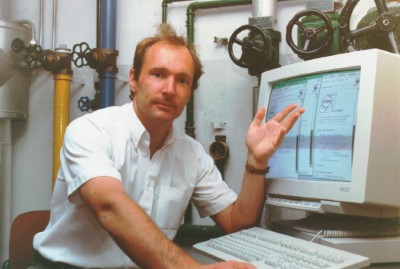
ARPANET went live in 1969 with four nodes. By the 1980s it had grown into
a broader Internet, and by the 1990s—with the invention of the
World Wide Web by Tim Berners-Lee—it had become a mass medium.
The pace of adoption was staggering. Radio took 38 years to reach 50
million users; the Internet did it in four.
The physical backbone of that Internet was, increasingly, fiber optic
cable—thin strands of glass that carry data as pulses of light.
Fiber offered bandwidth and signal integrity that copper wire simply
could not match. Undersea fiber cables, beginning in the late 1980s,
replaced the old copper telephone cables and gave the Internet its
intercontinental reach. Today, more than 95% of international data
traffic travels on undersea fiber cables, not satellites. The "cloud" is,
in large part, underwater.
Mobile networks added the final ingredient: untethering. First-generation
cellular networks in the 1980s offered analog voice—better than
nothing, but not much. Second-generation digital networks in the 1990s
improved voice quality and added SMS. Third and fourth generation networks
in the 2000s and 2010s delivered mobile broadband, transforming phones
from voice devices into internet terminals. The smartphone—iPhone
arriving in 2007, Android shortly after—put a supercomputer
connected to the sum of human knowledge in a billion pockets. Fifth
generation networks promise lower latency and higher density, enabling
everything from self-driving cars to remote surgery.
Human-Machine-Human Interfaces: Getting Closer to the Thought

Every generation of communication technology has moved us closer to
the ideal of pure, frictionless exchange—reducing the gap between
what you mean and what the other person receives. Smoke signals required
elaborate pre-negotiated codes. The telegraph required Morse. The telephone
transmitted your voice but not your expression. Video calls added your face.
The next frontier is starting to look genuinely strange: what if you could
skip the voice and the fingers entirely?
Brain-computer interfaces (BCIs) have moved from science fiction to early
clinical reality. EEG-based systems—which read electrical activity
through the scalp—have allowed patients with paralysis to control
cursors, select letters, and operate prosthetic limbs using thought alone.
These systems are slow and noisy by the standards of a keyboard, but they
exist and they work, which was not obvious that they would.
Neural implants push further. Companies like Neuralink and academic
research groups have demonstrated devices that place electrodes directly
in brain tissue, recording from individual neurons with far greater
precision than surface EEG allows. Early human trials have shown patients
able to control computers and communicate at speeds that, while still
below a fast typist, represent a dramatic leap over earlier BCI systems.
The ethical questions multiply as fast as the technical capabilities do.
The most speculative—but not entirely hypothetical—application
is human-to-human communication mediated by machines. Researchers have
demonstrated "brain-to-brain" communication in which one person's neural
signals are read, transmitted over the Internet, and used to trigger
responses in another person's brain via transcranial magnetic stimulation.
The bandwidth is currently laughable—a few bits per session in early
experiments—but the principle is established. Other work has explored
transmitting motor intentions, haptic sensations, and navigational
knowledge between individuals via neural-signal relays and robotic
intermediaries.
The Present and Near Future: Everywhere, All the Time, and Then Some
We are living, right now, in a communication environment that would have
been indistinguishable from magic to anyone born before about 1980.
A person with a smartphone in their pocket can send text, voice, video,
and data to nearly anyone on Earth, essentially instantly, for a cost
approaching zero. Translation apps dissolve language barriers in real
time. Video calls connect grandparents to grandchildren across ten time
zones. A teenager in Lagos can watch a streamer in Seoul react to a game
and chat with them live. The infrastructure underpinning all of this—satellites, undersea cables, cell towers, data centers—is so vast
and so reliable that we treat it as a utility, the way we treat running
water.
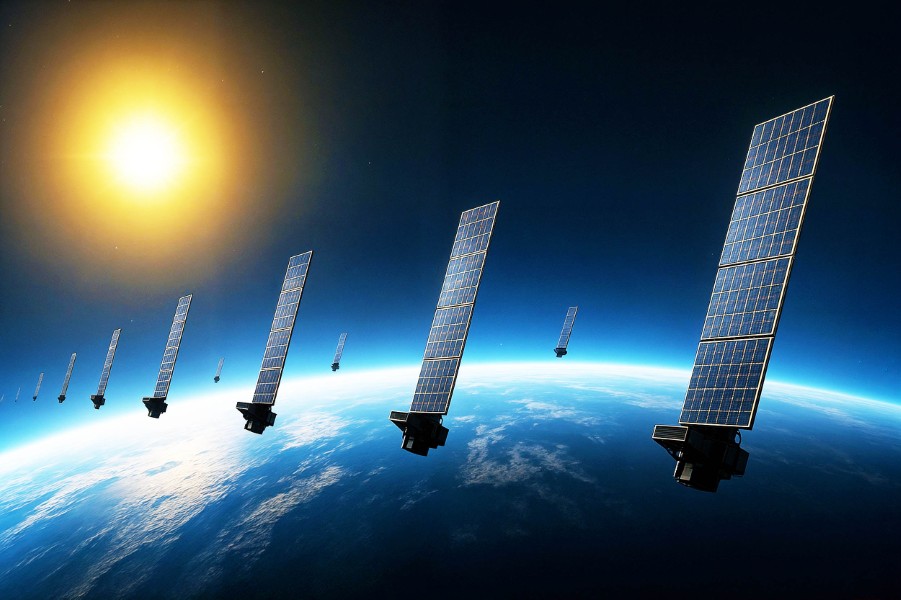
Satellite constellations are filling in the remaining gaps. Low-Earth-orbit
networks like Starlink are providing broadband to rural and remote areas
that terrestrial infrastructure never reached—fishing boats, mountain
villages, Antarctic research stations. The coverage is not yet universal,
but the trajectory is clear. In the not-too-distant future, there may be
no inhabited place on Earth without a usable connection to the global
network.
And then there is the longer arc to consider. From smoke signals to
semaphore to telegraph to telephone to fiber to satellite to smartphone,
each step reduced friction, increased bandwidth, and moved the technology
closer to the human. The next step—neural interfaces, machine-mediated exchange of intent and sensation rather than words and images—is not around the corner, but it is no longer pure speculation either.
Whether or not you find that prospect exciting or alarming probably depends
on how you answered the same question about the telephone in 1876. What
is certain is that the urge driving all of it—that deeply human need to reach across distance and say, I am here—is not going anywhere.
What comes after the Communications Age? Well, we're smack dab in the middle of
this one. The Connectedness Age doesn't arrive with a single invention—it erupts the moment humanity
discovers that ideas can leap from one mind to another without ever sharing the same room. From the
first cork bulletin boards in grocery stores to the global firehose of social media,
from webcams perched on every street corner to AIs quietly stitching the world's data into
something that feels eerily like collective thought, this is the age when communication stops being
a tool and becomes an environment. We don't just send messages anymore—we live inside the
network.
The call is coming from inside the house.