|
By: Paul S Cilwa |
Posted: 3/7/2026 |
|
Page Views: 135 |
| Hashtags: #Science #History #Technology #CommunicationHistory #CollectiveIntelligence #HiveMind #AIEvolution #CognitiveAmplifiers #SocialMedia #TechnologyHistory #ConnectionAge |
| How we became more than the sum of our skulls: The Connection Age. |
| Estimated reading time: 12 minute(s) (2806 words) |
Why Do We Keep Trying to Talk to Animals?
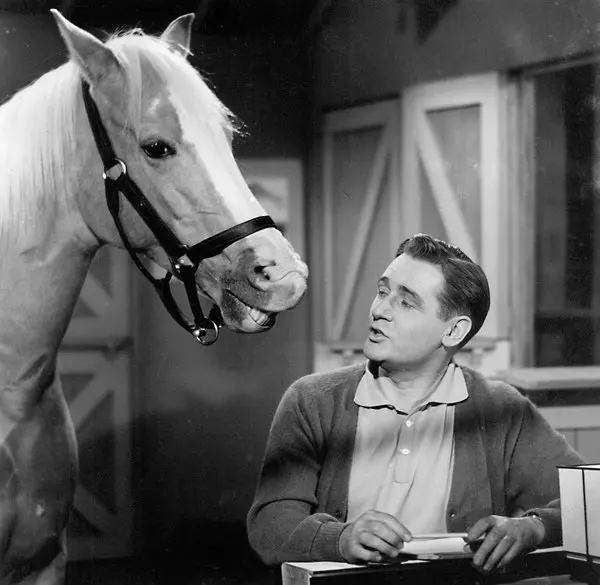
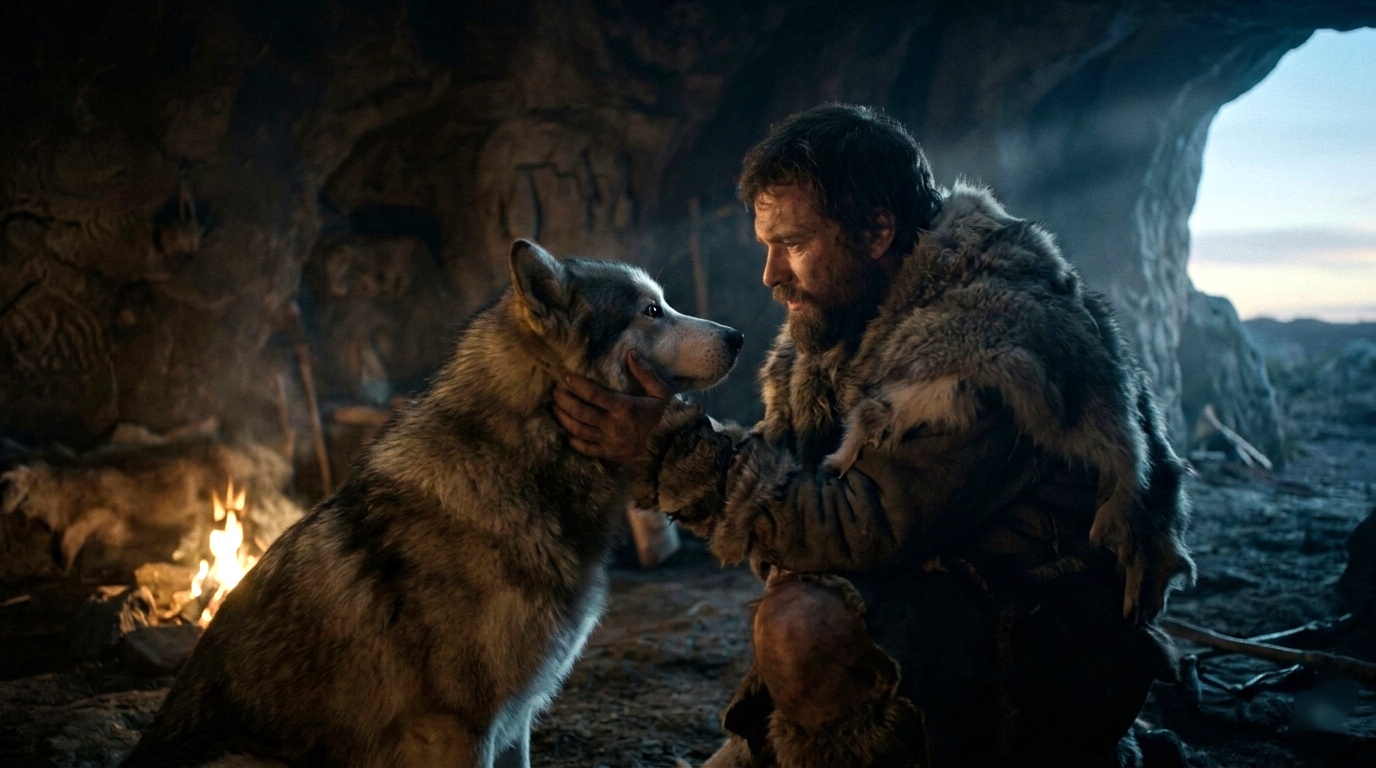
Every culture on Earth has stories about animals
that talk. The Norse had Huginn and Muninn,
Odin's ravens, who flew out each morning and
returned with news of the world. West African
folklore gave us Anansi the spider, who could
out-talk any human alive. The Greeks populated
their woods with chatty nymphs and prophetic
serpents. Even the Book of Genesis has a
conversational snake, which—say what you
will about his ethics—was clearly
articulate.
This is not just whimsy. When we imagine animals
speaking, we are projecting our own deepest wish:
reciprocity. We want the world to talk back. We
want the fox to explain why it raids the henhouse
and the whale to tell us what it is like down
there in the dark. We crave evidence that
intelligence is not our private burden—that
understanding exists outside the lonely theater
of the human skull.
The psychologists have a term for this, naturally.
We are, they tell us, the "storytelling primate."
Our brains are wired to detect agency everywhere,
to assume that something is thinking behind
every pair of eyes. It is the same instinct that
makes a toddler talk to a stuffed bear and a
grown adult name their car. We are not being
foolish. We are being human (which, to
be fair, sometimes amounts to the same thing).
But underneath the myths and the naming of
Roombas lies something more poignant than
anthropomorphism. It is loneliness. Cosmic,
species-wide loneliness. For most of our history,
we have been the only minds we could verify, and
that has driven us a little bit crazy. Every
talking-animal story is, at its root, a prayer:
Please let there be someone else out there who
gets me.
When Did We Start Building Things That Answer?
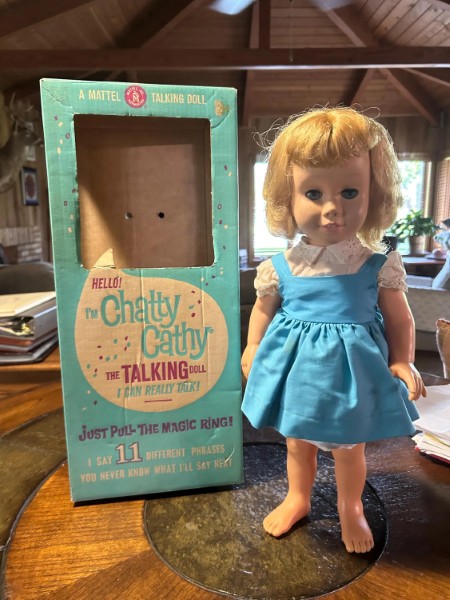
If you grew up in the 1960s, you might remember
Chatty Cathy—a doll with a pull string in
her back and a tiny phonograph in her belly. Pull
the string, and she would say one of eleven
phrases: "I love you," "Let's play house,"
"Please take me with you." She was simple. She was
repetitive. And she was magical, because
she answered. Not well, and not on topic, but she
answered. For millions of children, Chatty Cathy
was the first machine that felt, however dimly,
like a conversational partner.
Her descendants got more sophisticated. Teddy
Ruxpin read stories with a moving mouth. Furby
appeared to learn your language. Each generation
pushed the illusion a little further, and each
generation of children responded with the same
uncanny delight: It heard me. The fact that
it had not, in any meaningful sense, heard
anything at all was beside the point. The
emotional circuit closed anyway.
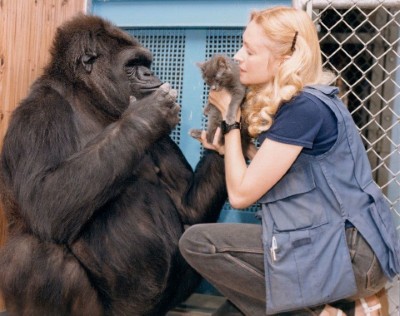
Meanwhile, a parallel effort was underway with
living subjects. Researchers taught Koko the
gorilla to sign. Alex the African Grey parrot
could identify colors, shapes, and quantities,
and once told a researcher to "calm down." Dogs
learned to press buttons on soundboards to
request walks, food, and—if the viral
videos are to be believed—"outside now."
Every zookeeper worth their khakis has taught
some form of sign language to their primates, you
know. It is practically in the job description.
Now, whether any of this constitutes true
language is a debate that has launched a thousand
dissertations and at least as many heated
departmental meetings. The skeptics insist that
these animals are performing conditioned
responses, not generating syntax. The enthusiasts
counter that the skeptics are desperate to
preserve human exceptionalism at any cost. Both
sides have a point. But what matters for our
story is not whether Koko was composing sonnets.
What matters is that humans had crossed a
psychological threshold: we accepted that
communication could be engineered, not
merely discovered. You did not have to wait for
the universe to hand you a conversational partner.
You could build one!
What Happened When Everyone Got a Megaphone?
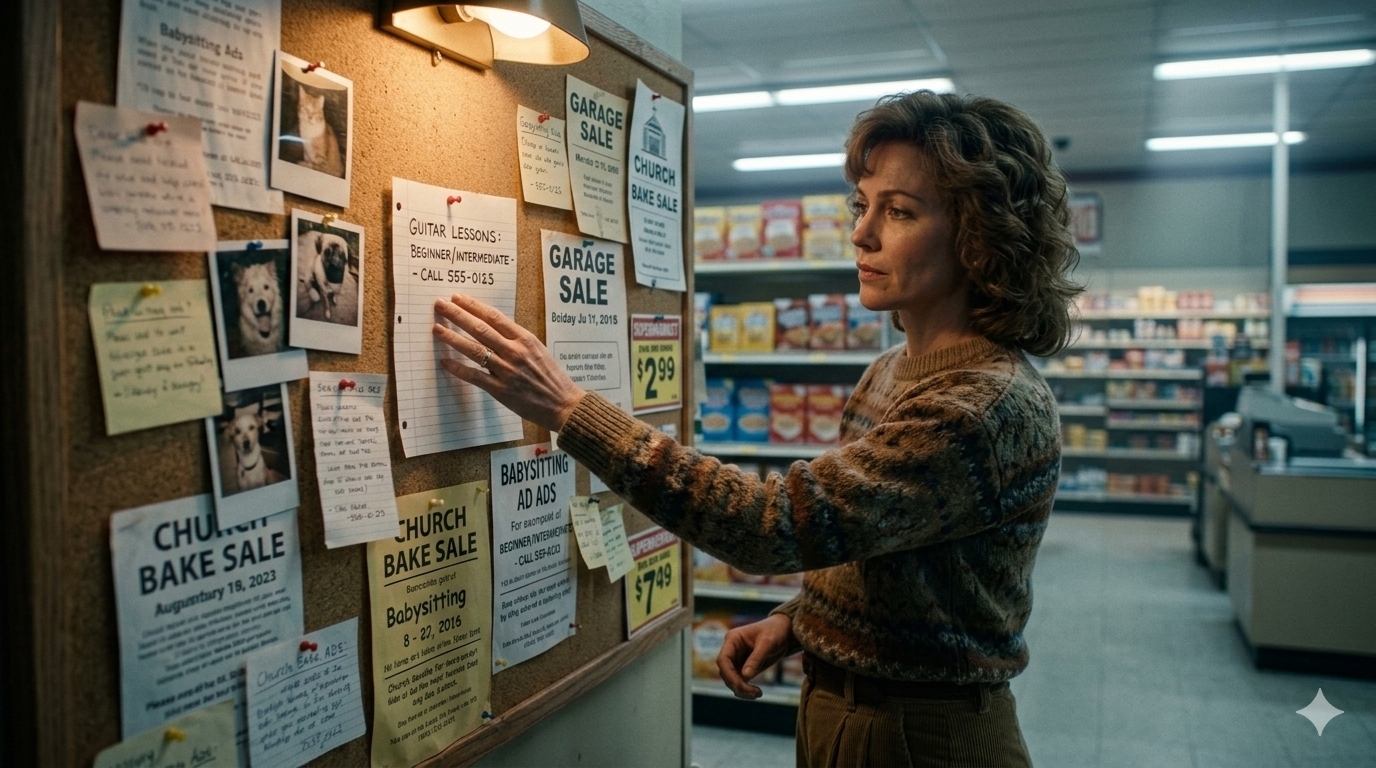
Before the digital kind ever flickered to life, bulletin boards were literal cork rectangles
hanging near the checkout lanes of supermarkets—our first public, low-tech social networks.
They were chaotic mosaics of human need and imagination: babysitting offers thumb-tacked beside
guitar-lesson flyers, lost-cat pleas next to hand-drawn ads for lawn mowing, community meetings,
church potlucks, and garage sales. Anyone could post, anyone could read, and the whole thing worked
because strangers trusted that other strangers might care. In their own humble way, those boards
were the earliest proof that people crave connection, that we instinctively build shared spaces for
our thoughts long before we have the technology to scale them.
The first computer bulletin board systems appeared
in the late 1970s, and they were, by modern
standards, comically primitive. You dialed in with
a modem that screamed like a fax machine having a
nightmare, waited for the connection to handshake
at 300 baud, and then you could read—and
post—text messages on a shared board. It
was slow. It was ugly. When my 5-year-old daughter screamed, it disconnected me.
And it was the closest thing to telepathy the human race had ever produced.
For the first time, ordinary people could project
their thoughts into a shared mental space that
persisted beyond the conversation. You did not
need to be a broadcaster or a publisher. You just
needed a phone line and an opinion, which, it
turns out, most people had in abundance. The
communication was asynchronous—you posted
a message, went to bed, and found replies in
the morning—but it was communal in a way
that letters and phone calls were not. It was
proto-telepathy: your thoughts, available to
strangers, across distances, without your
physical presence.

Then came the World Wide Web, and forums, and
blogs, and finally social media, and the volume
knob broke off. By the mid-2010s, billions of
human minds were linked in something approaching
real time. Twitter could swing stock markets.
Facebook could sway elections. Reddit could
identify a bomber or, just as easily, wrongly
accuse an innocent person. We had built a system
in which collective moods, collective outrage,
and collective creativity could cascade across
the planet in minutes. The first hints of
emergent group cognition were appearing, and they
were equal parts exhilarating and terrifying.
And then we added cameras. Everywhere.
Dashcams, doorbell cams, body cams, a
high-definition camera in the pocket of practically every soul on Earth.
The world became, in effect, a shared sensory
organ. Humanity began to see through billions of
eyes at once. An earthquake in Turkey was
witnessed in real time by people in Toronto. A
traffic stop in Minnesota was broadcast to the
world before the officer had finished writing
the ticket. For better and for worse, we had
given ourselves something no species had ever
possessed: a collective retina.
What Changes When the Machine Talks Back?
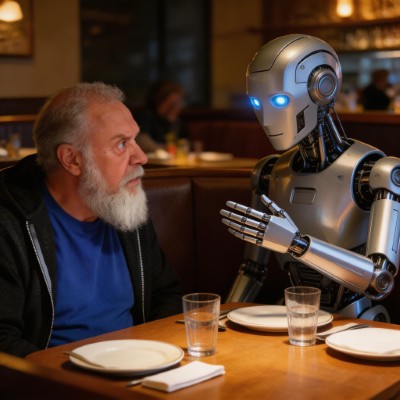
The voice assistants crept in quietly. Siri
arrived in 2011, and she was, to be charitable,
not great. She could set a timer and occasionally
misinterpret your request for directions in ways
that were almost poetic. Alexa followed in 2014,
then Google Assistant, then a parade of others.
They were handy for checking the weather and
playing music, but nobody mistook them for
conversational partners. They were vending
machines with microphones.
Then, around 2022, something shifted. Large
language models arrived, and suddenly the machine
did not just respond—it
conversed. You could ask it to explain
quantum entanglement in the voice of a pirate.
You could paste in a contract and ask what the
tricky parts were. You could describe a problem
you had been chewing on for weeks and get back a
structured analysis in seconds. The psychological
leap was enormous: computers stopped being tools
and started being partners in dialogue. Not
perfect partners, and not always right, but
partners—entities that appeared to
understand context, nuance, and even humor.
The implications went far beyond conversation.
Suddenly, ordinary people had access to something
resembling superhuman pattern recognition. A
small-business owner could draft a legal letter
without a lawyer. A student could get a tutor at
three in the morning. A researcher could
synthesize a hundred papers in the time it used
to take to read one. AI became a cognitive
amplifier—not replacing human thought, but
extending it, the way a telescope extends the
eye.
And it did not stop at amplification. AI began to
drive. Cars navigated city streets.
Systems negotiated prices. Assistants anticipated
what you needed before you asked. The boundary
between "my thinking" and "the machine's
thinking" started to blur in ways that were
genuinely new. When your phone suggests the end
of your sentence and you accept it without
thinking, whose thought was that? When your car
brakes before you see the obstacle, whose
reflexes saved you? We had entered territory
where the question "Who is doing the thinking?"
no longer had a clean answer.
We Have Seen This Pattern Before—in Science Fiction
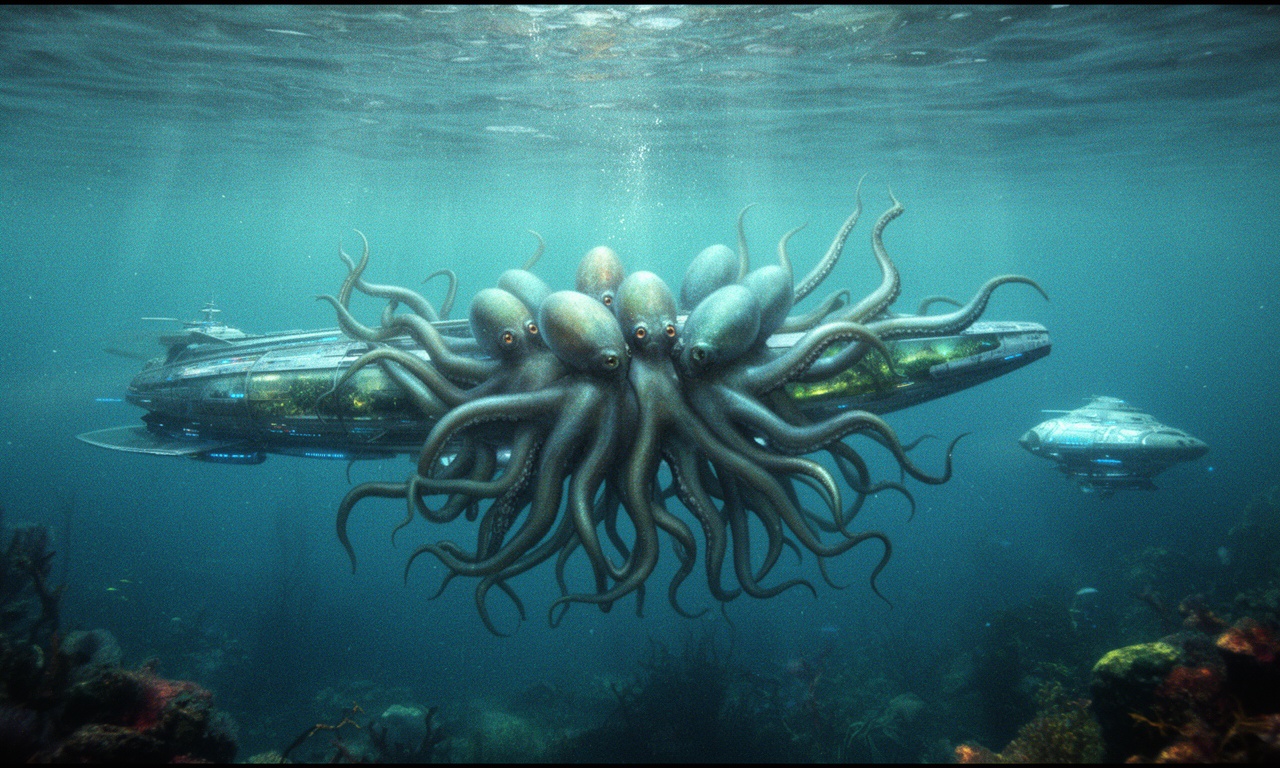
Larry Niven, the science fiction writer, imagined
a species called the Jotoki—sometimes
referred to in fan shorthand as "hectapods"
because of their multiple limbs. Individually,
a Jotok was competent enough: it could forage,
navigate, survive. But when Jotoki linked
together, something extraordinary happened.
Their intelligence scaled. The group
became not just more knowledgeable but
qualitatively smarter than any individual
member. Connection did not merely add; it
multiplied.
Now look at what has happened to us. A single
human being in 1950 had access to whatever was
in their own head, plus whatever they could find
in a library. A single human being today has
access to the accumulated knowledge of our entire
species, in real time, plus AI systems that can
help us navigate that knowledge. The
Internet is our tentacle-linking mechanism. Each
new connection—each new user, each new
platform, each new API—multiplies the
cognitive surface area of the species. We are
becoming, without quite having planned it, a
kind of emergent hectapod.
The parallel is not perfect, of course. Niven's
Jotoki were biologically designed for collective
intelligence. We are jury-rigging ours out of
fiber optics, Wi-Fi signals, and software
updates. But the trajectory is the same:
individual competence giving way to collective
brilliance, driven by the density and quality
of connections.
And here is where AI plays its most interesting
role. It is not just another node in the network.
It is the connective tissue. AI translates
between languages, summarizes across disciplines,
spots patterns that no single human would see. It
does not merely link minds; it enhances
the links. And the feedback loop is striking:
humans make AIs smarter by providing data and
direction; AIs make humans smarter by providing
analysis and synthesis. Each side bootstraps the
other. It is the kind of virtuous cycle that,
once it starts, is very difficult to stop.
Are We Becoming a Hive Mind?
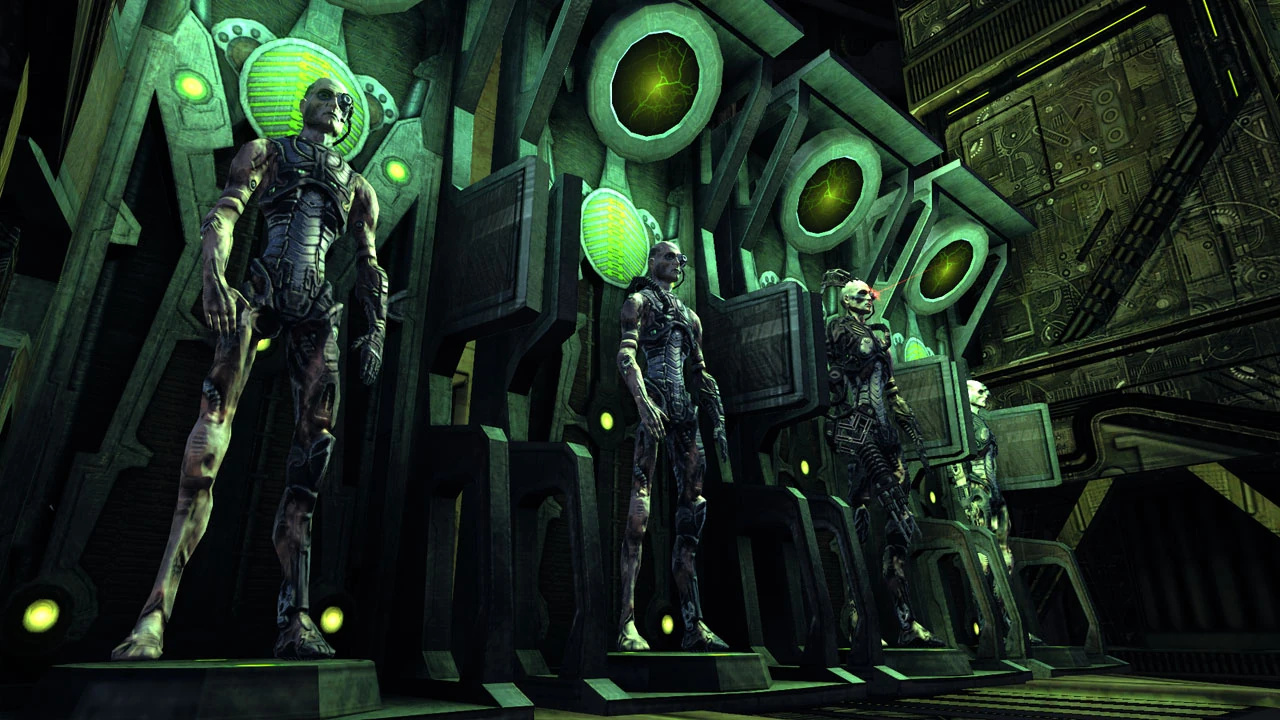
The phrase "hive mind" tends to make people
nervous, and for good reason. In popular culture,
it conjures the Borg from Star Trek:
individuality erased, autonomy crushed, everyone
assimilated into a single will. That is a
horrifying vision, and it is also not what is
actually happening. What is emerging is something
more nuanced and, frankly, more interesting: a
voluntary hive mind.
Think of it as opt-in telepathy. When you search
the Internet, you are dipping into the collective
memory of the species. When you post a question
on a forum and get answers from experts in three
countries, you are engaging in distributed
problem-solving. When you ask an AI to help you
think through a decision, you are borrowing
cognitive capacity from a system trained on the
output of millions of minds. None of this
requires you to surrender your individuality.
You can unplug at any time. The hive is there
when you want it and gone when you do not.
The benefits of this arrangement are staggering,
at least in potential. Imagine global coordination
on climate change—not the glacial process
of international treaties, but real-time pooling
of data, models, and expertise from every
relevant mind on the planet. Imagine a pandemic
response in which every epidemiologist, every
hospital, and every public health agency shares
information instantly, with AI systems
synthesizing it as fast as it arrives. Imagine
creativity that emerges not from a lone genius
in a garret but from millions of people thinking
together, each contributing a piece that no one
person could have conceived alone.
Most importantly, once the kinks are out, AI will
be able to detect truth from falsehood, signal from noise,
and good ideas from bad ones in ways that no human could.
The end of lies from politicians, alone, will remake our
world in ways that can only be an improvement over our
present system, where the loudest voices are often the least informed.
But the risks are real, too, and it would be
dishonest to pretend otherwise. When billions of
minds are linked, emotional contagion operates at
planetary scale. We have already seen this:
outrage cascades on social media, conspiracy
theories that spread faster than facts, waves of
anxiety that ripple across continents in hours.
Over-synchronization of thought is a genuine
danger. If everyone is drawing from the same pool,
the pool can become stagnant. Diversity of
thought is not a luxury; it is a structural
requirement for collective intelligence to
function.
Which means that "unplugging" may need to become
a recognized human right. The ability to step
away from the chorus, to think privately, to be
bored and unstimulated and alone with your own
weird, unoptimized thoughts is not a
bug; it's a feature. The hive mind only works
if the individual minds feeding into it remain
individual.
Where Does This Road End?
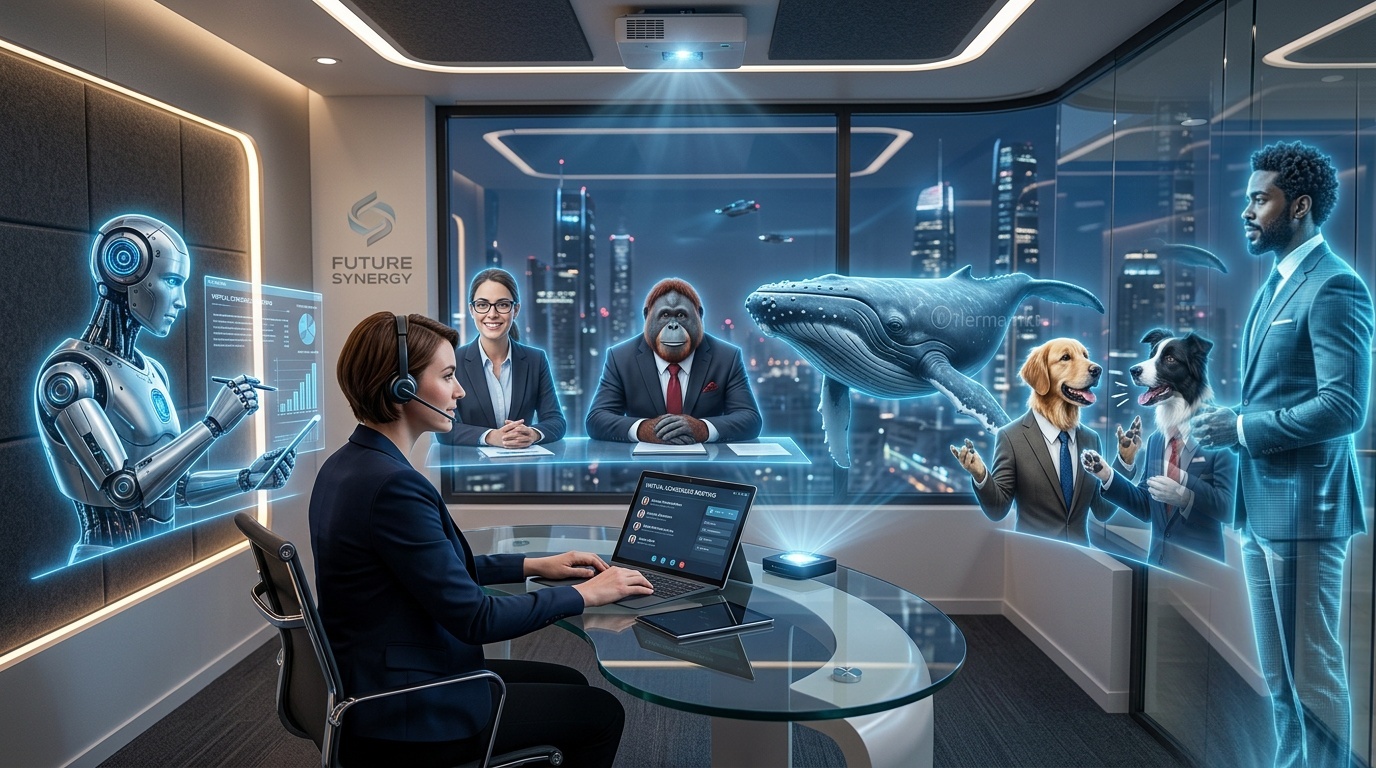
If you squint at the long arc of human history, a
pattern emerges that is almost embarrassingly
clean. Solitary primates became tribal
storytellers. Tribal storytellers became literate
civilizations. Literate civilizations became
networked societies. And networked societies are
becoming—right now, in real time, whether
we have fully noticed or not—something
new: a species that thinks in chorus.
This is the Connection Age, and it may be the most
important transition since we climbed down from
the trees and decided the savanna looked
promising. It is the moment humanity becomes more
than the sum of its skulls. Not because any one
of us has gotten smarter, but because the
connections between us have become richer,
faster, and augmented by non-human intelligence
that we built for exactly this purpose.
The paradox at the heart of it is worth sitting
with. We are building a hive mind that
preserves individuality. A collective
intelligence that remains voluntary. A
future in which the hardest problems are solved
not by a single genius hunched over a desk at
midnight, but by a chorus of augmented minds,
each contributing something the others could not.
It is a deeply strange idea, and it is also the
logical conclusion of every talking-animal myth,
every pull-string doll, every modem screech,
and every late-night conversation with an AI
that somehow knew what you meant before you
finished typing.
The open question—the one that will define
the next century—is simple to state and
impossible to answer in advance: Will we use
this power to elevate ourselves, or merely to
amplify our flaws? The technology does not care.
It will do whichever we ask of it. The Connection
Age is not the end of the story. It is, at most,
the end of the prologue—and the
first page of a new kind of humanity.