|
By: Paul S Cilwa |
Posted: 10/15/2007 |
|
Page Views: 1,685 |
| Hashtags: #Biosphere2 #Arizona #Travel |
| We pay a visit to the world's largest greenhouse. |
| Estimated reading time: 8 minute(s) (1675 words) |
John had to work, and Rachel was enjoying a visit from her mother; but the
rest of us crammed into the SUV and took the short route from our house east on
US 60, then south on AZ 79. Except for passing through the town of Florence,
whose claim to fame is a huge prison facility, the road cut arrow-straight
through the beautiful desert. Had the drive taken more than an hour, it might
have grown boring no matter how beautiful it was. But '80s rock 'n' roll
kept us occupied and soon we reached AZ 77, just a couple of miles from our
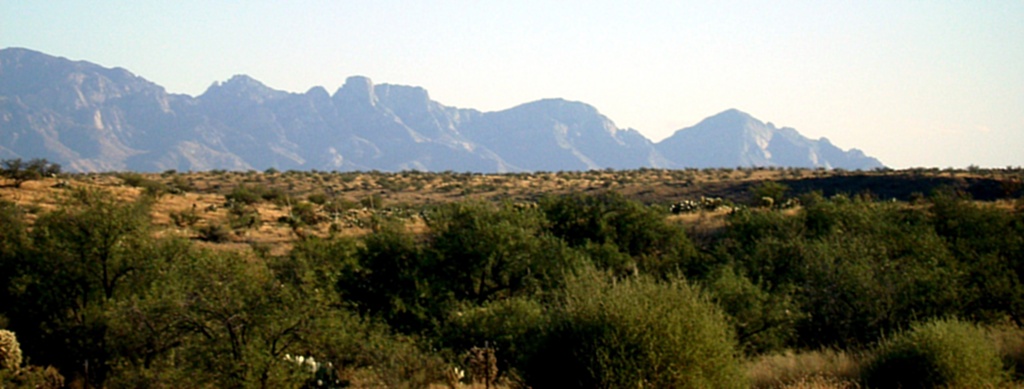
destination. As we drove southward,
the ramparts of Mount Lemmon loomed before us (another place I'd like very much to
visit—but that will have to wait for another trip). It was very much in sight,
however, bordering the steep valley in which Biosphere 2 is located.
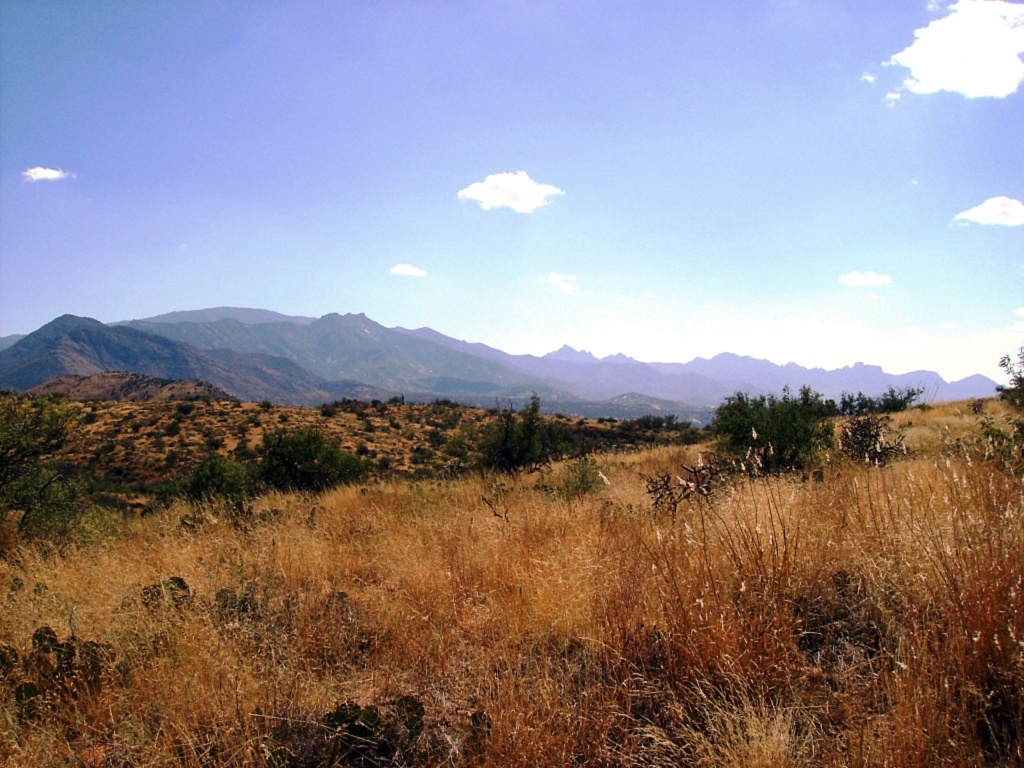
When Edward Bass decided to build Biosphere 2 with his then-friend John
Allen, they chose this spot primarily because it receives 300 days of sunlight a
year.
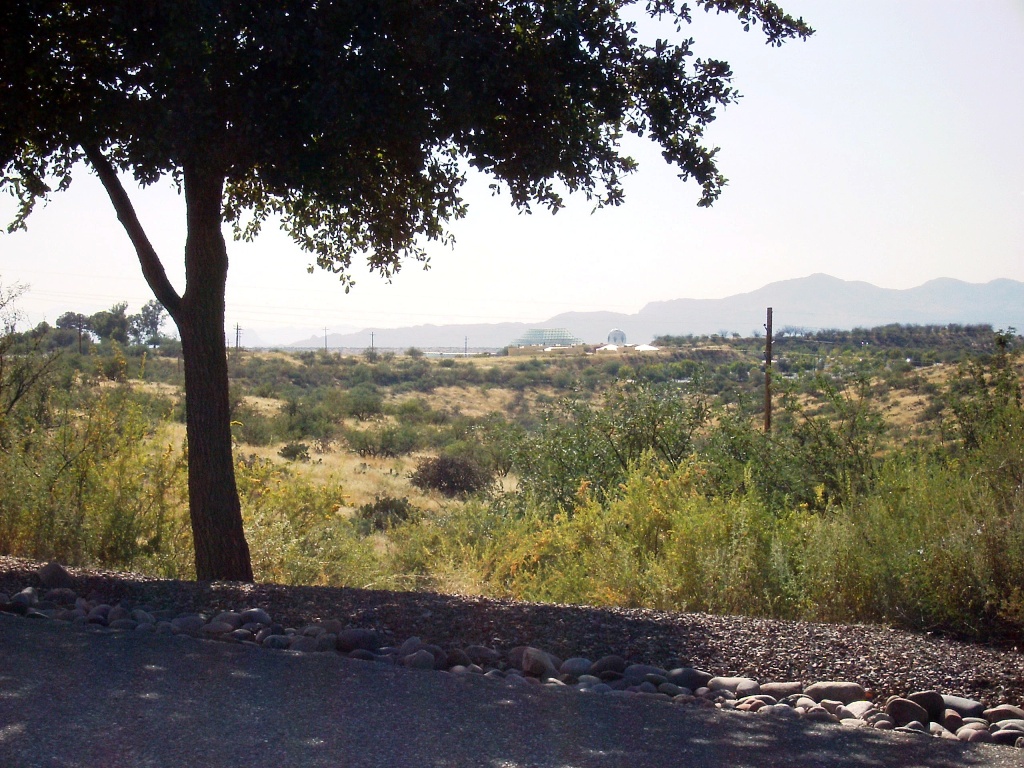
A biosphere is a closed system into which only sunlight enters, and which
supports life. Except for sunlight, everything else is recycled. "Biosphere 1"
is Earth.
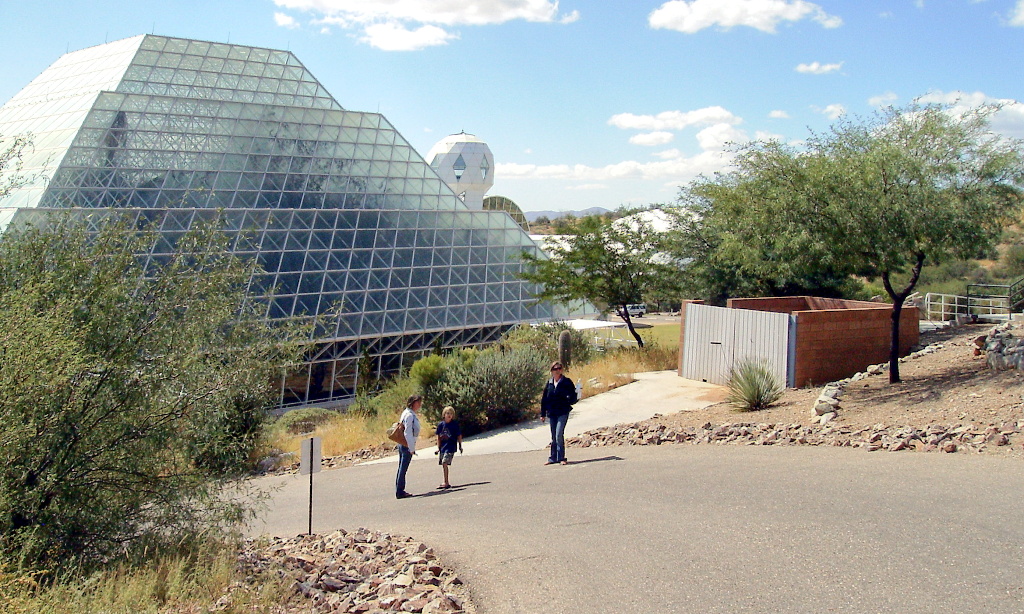
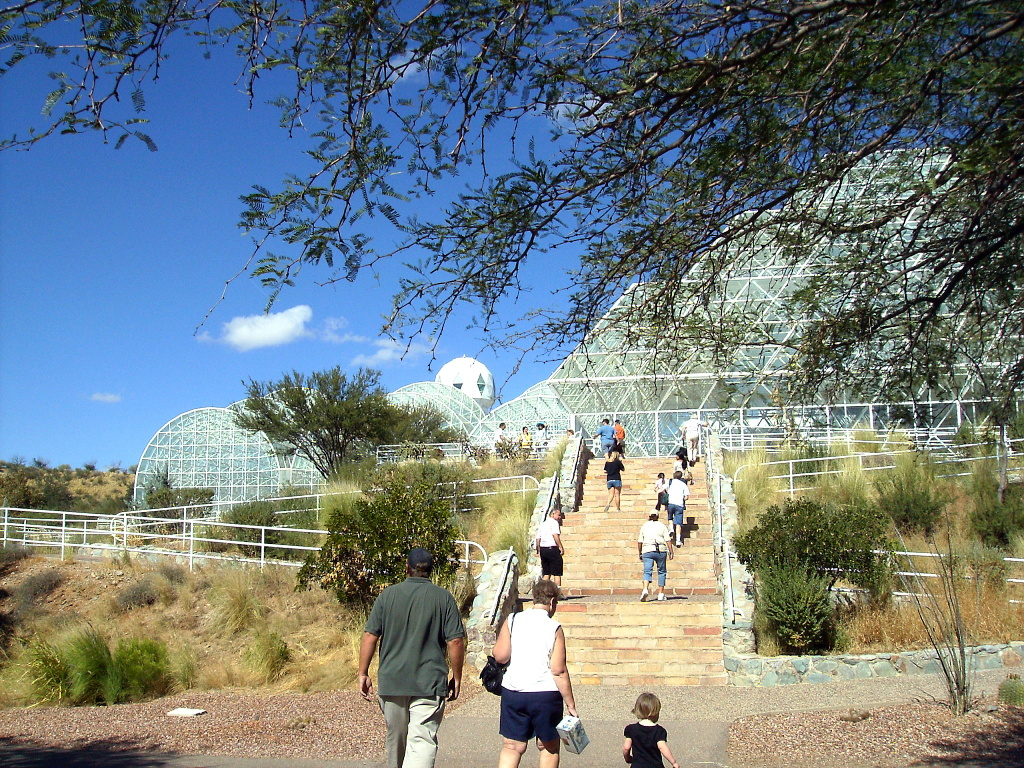
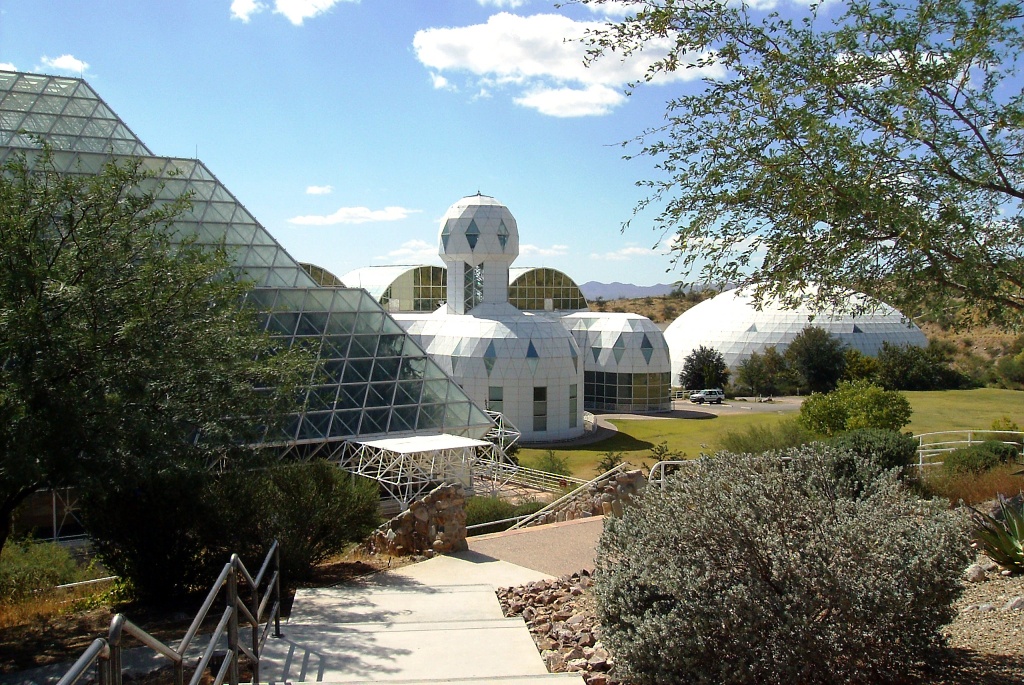
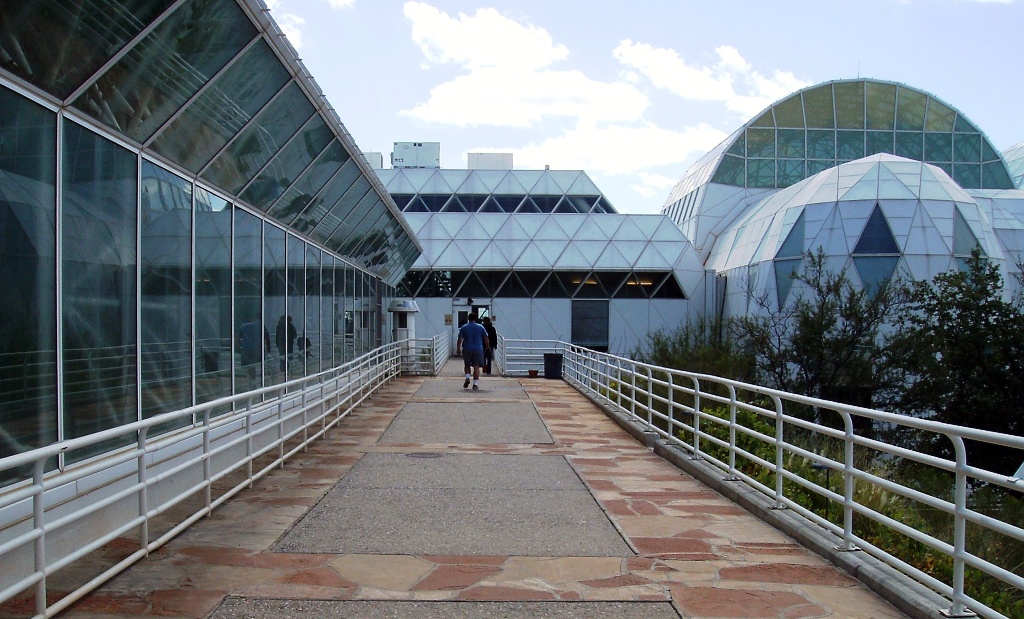
Biosphere 2 is the largest greenhouse ever built,
covering over three acres and measuring 7,000,000 cubic feet in volume. Its
thick concrete base is covered by a solid steel, custom-welded liner to keep out
contaminants such as radon gas from entering. (However, the liner failed to keep
carbon dioxide in, which was another issue.) Studies have shown the
sealing of Biosphere 2 is so complete that it only leaks about 6% a
year—compared to the Space Shuttle, which loses 350% of its atmosphere over the
course of a year.
To take a tour of the interior of Biosphere 2 costs $20 for adults and $12 for kids
Zachary's age. When I paid for the tour, I was warned—repeatedly and
intensely—of the number of steps we would have to navigate. There were a
number of steps, but nothing like one finds at Walnut Canyon.
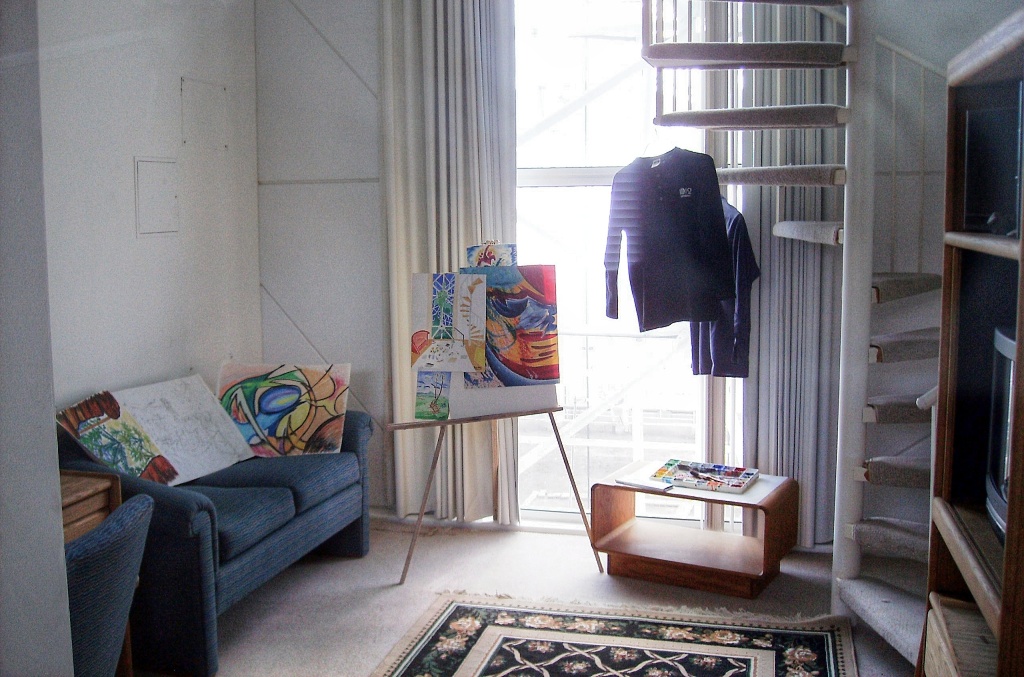
The tour begins in the "Human Habitat", which is within the seal and
is where the members of the original two-year mission (and the
six-month mission that followed) lived. Most of the apartments have
since become offices, but one has been retained "just as it was
originally" so we can see how the Biospherians lived. It seems
charming, in an Ikea sort of way.
While the apartments and laboratories are interesting enough, one visits
Biosphere 2 to see the terrarium.
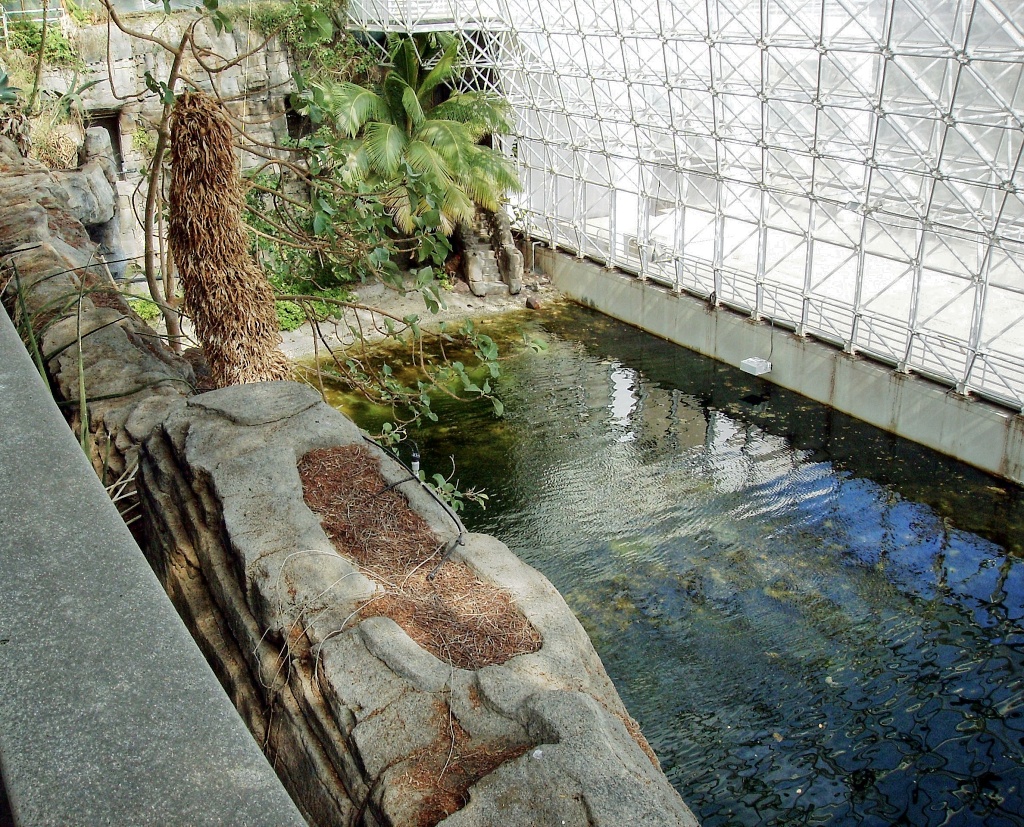
Indoor ocean: Actually contains a section of coral reef and sea water transported from the Western Caribbean. Wave machines help keep the water oxygenated."
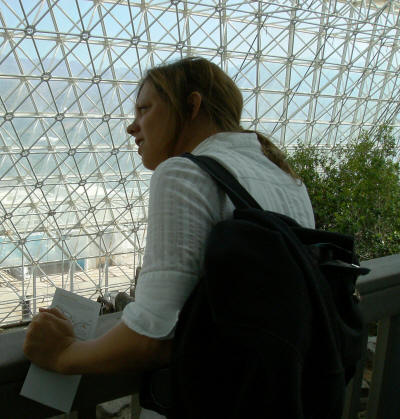
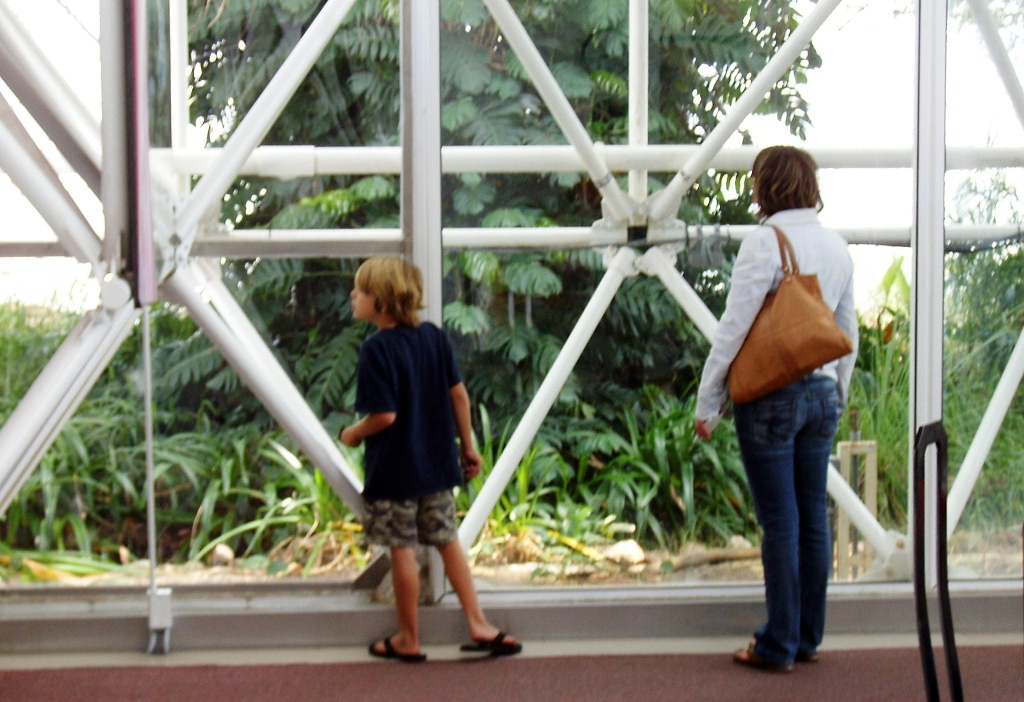
Karen stares in disbelief at the rain forest hanging over the ocean, while Arizona's Sonoran Desert hovers on the far side of the glass.
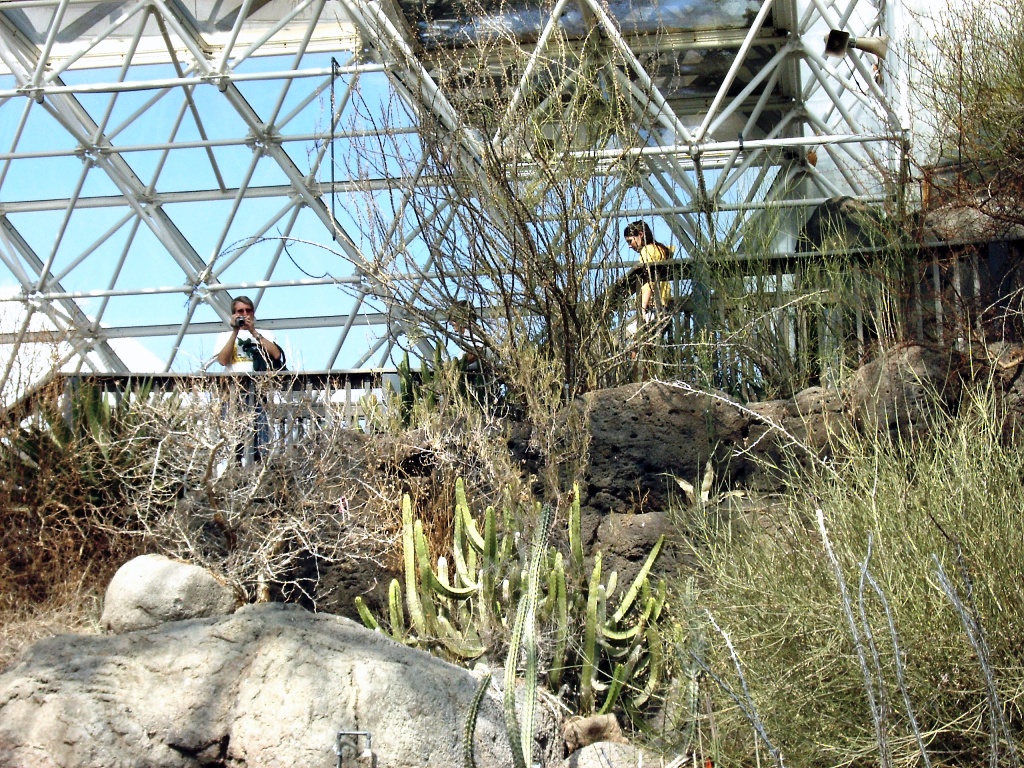
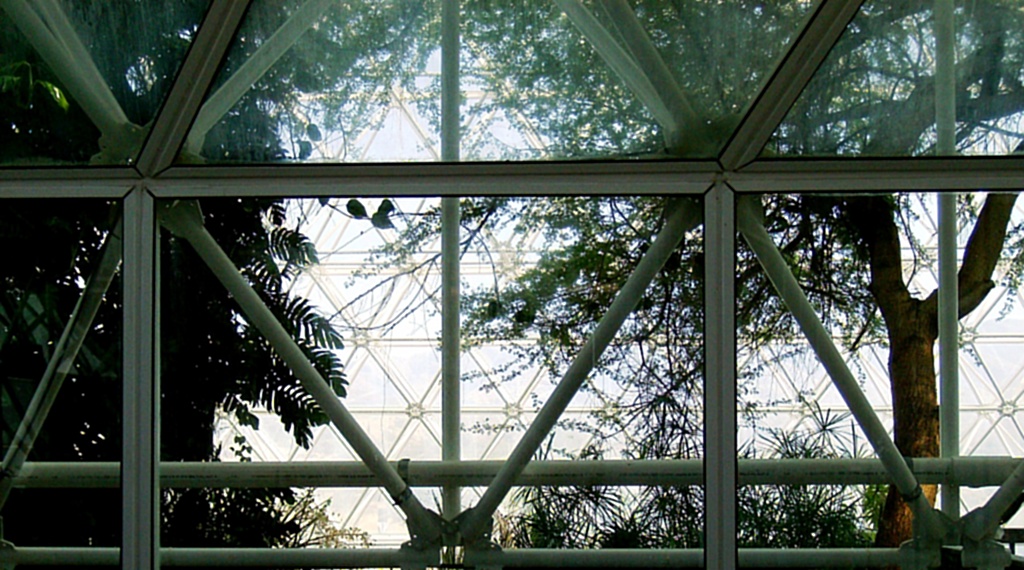
The bulk of Biosphere 2 is divided by plastic curtains into biome
habitats that mimic various parts of Earth's ecology. There's a rain
forest, a fog desert, upper and lower savannahs, and a thorn scrub,
not to mention an actual ocean—or, at least, a section of coral
reef. A huge banana tree dominates the entrance (this tree provided
the majority of the human missions' meals) but it's quickly
forgotten as you look over a sheer cliff into the "ocean", while
rain drenches the rain forest above.
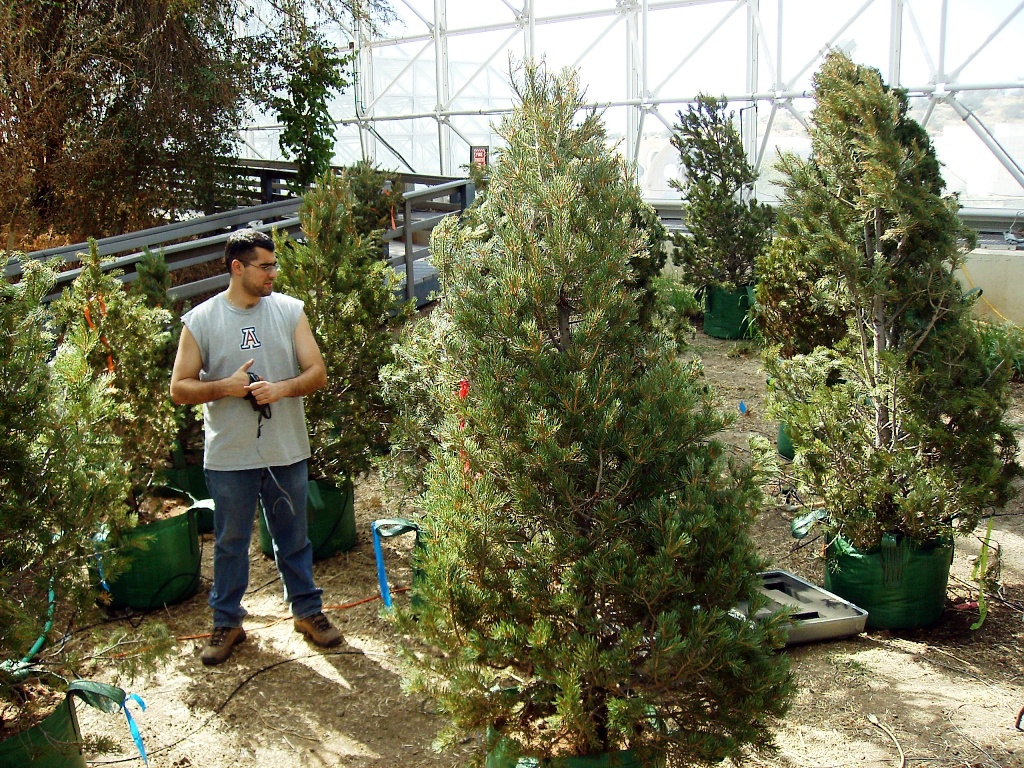
What happens when trees face drought? Enquiring graduate students want to know.
The sections of Biosphere 2, which are now used for non-closed research, can
be adjusted to mimic the temperature and humidity of any biome on Earth.While
we were there, one section was being adjusted for an experiment in which pines
would be studied to see exactly what happens to them in a drought.
In the fog desert, mimicking a stretch of land along the Mexican Pacific
coast, stretches of gray and brown brambles made Michael ask why all the plants
there were dead. "They aren't dead," our guide explained. "They are just
dormant. In nature, in the winters fog brings these babies back to life and they
produce prodigious amounts of oxygen. We can't keep them in fog all the time,
though; it would stress them out too much."
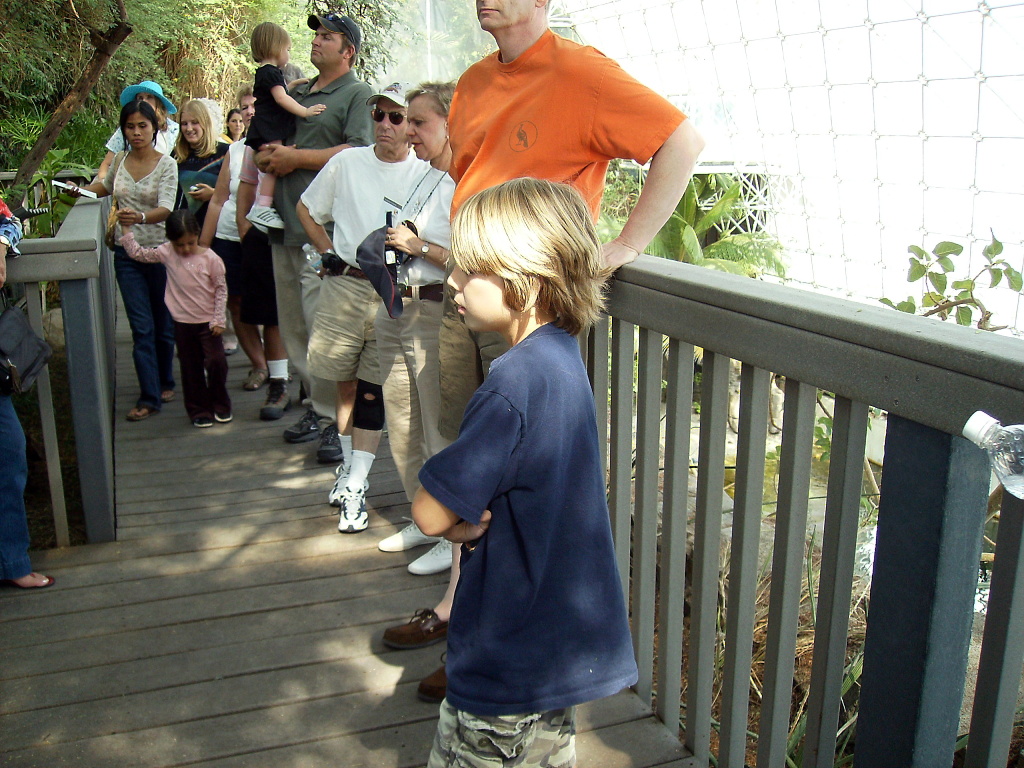
Zach listened carefully to the tour guide.
Oxygen, or the lack of it, was the major cause of stress during the first
two-year "mission". Microbes in the soil multiplied more exuberantly
than expected, and they sucked in much of the oxygen the humans had
expected to breathe. The microbes emitted carbon dioxide, of course;
and normally that would have been absorbed by the plants and
recycled back into oxygen. What no one expected was that the porous
concrete foundation of the place, despite the steel seal, absorbed
enough of the carbon dioxide to throw off the balance.
The lack of oxygen caused obvious problems for the crew as well as subtle
ones. They found themselves headachy and short-tempered. Life-long friends
became implacable enemies. The crew of eight split into two factions. All that
was missing was Mark Burnett and a camera
crew. Finally, oxygen had to be piped into the "closed" system, on two
occasions.
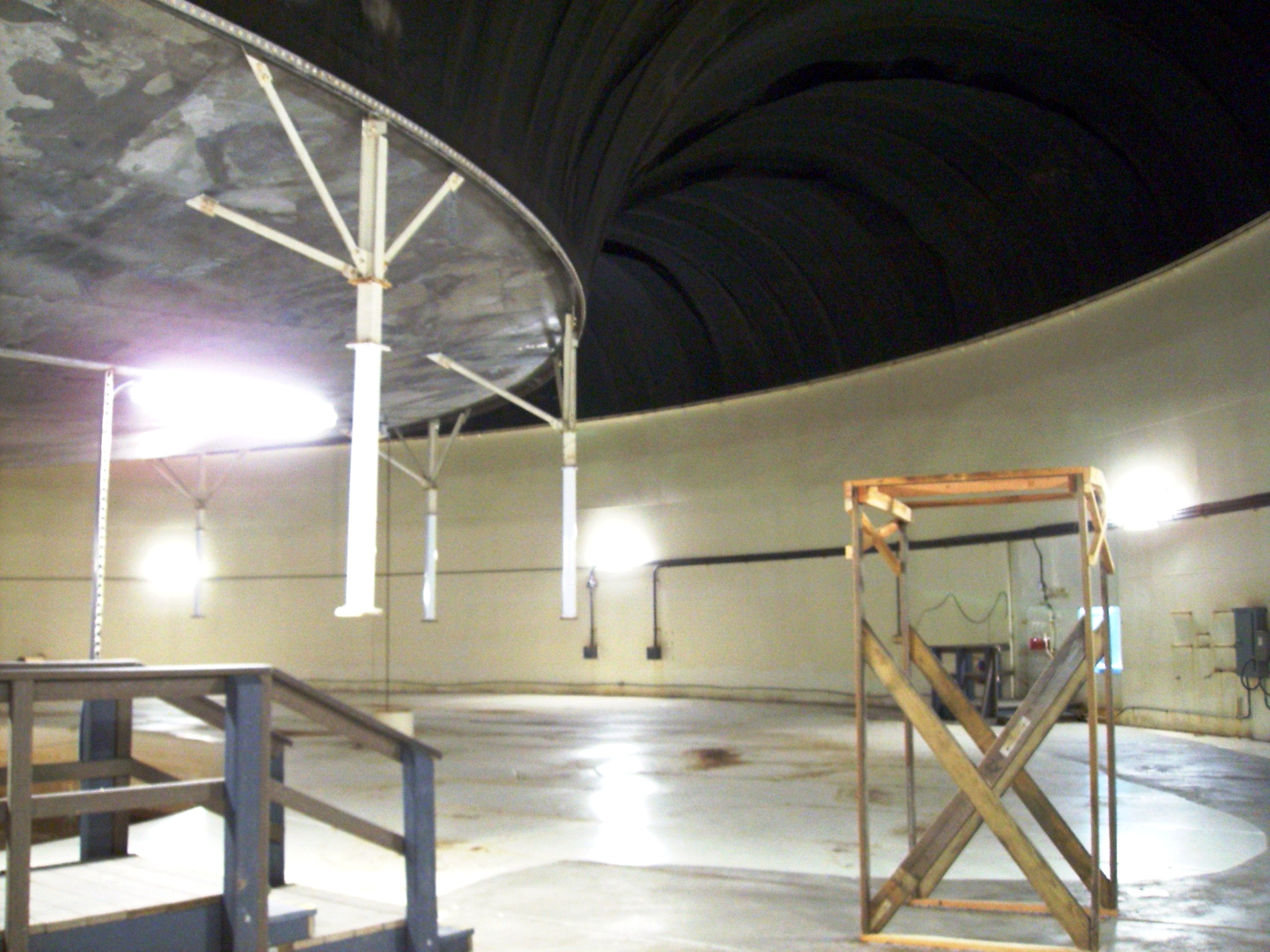
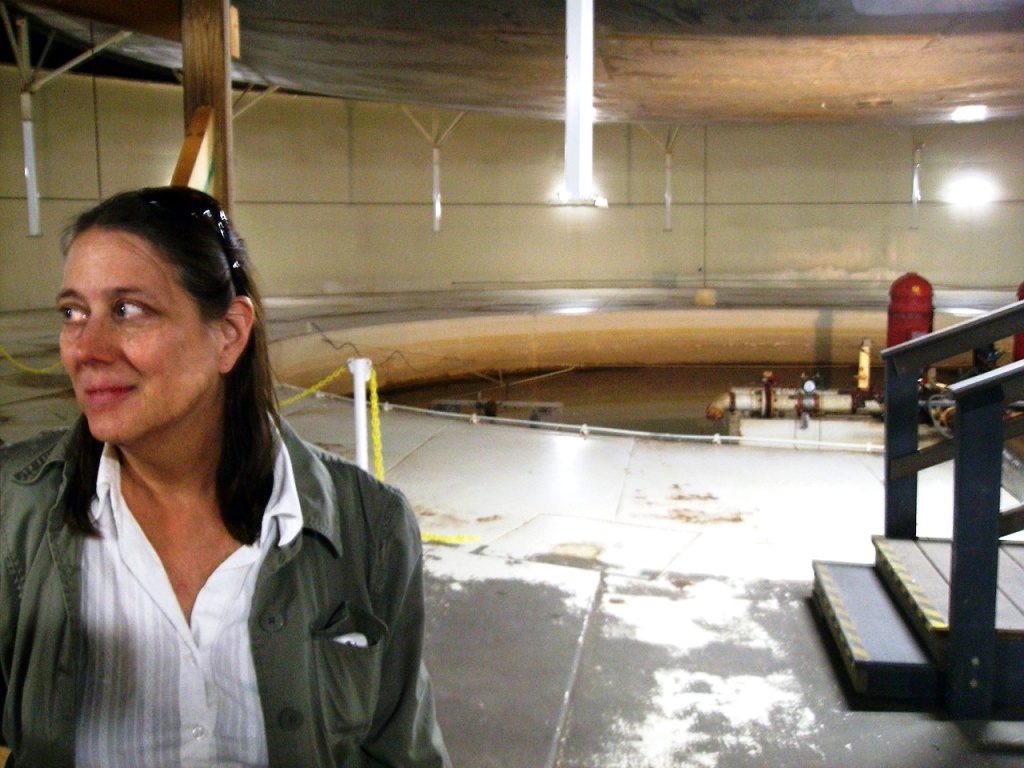
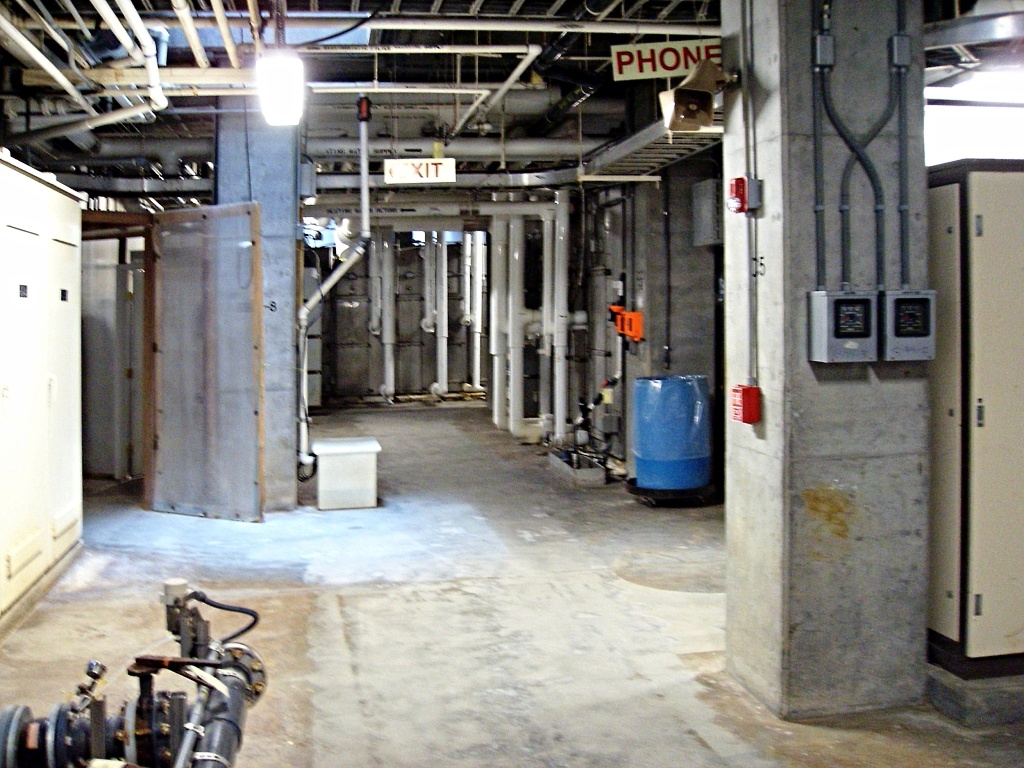
The area beneath the terrarium is, in its way, as interesting as the
terrarium itself. It shows the lengths to which man will go in order
to try and mimic nature. Miles of piping move chilled, cool and hot
water from place to place to create the precise temperatures needed
in each section of the terrarium. The energy required to maintain
these temperatures, not to mention moving the air and water around,
comes from an "energy complex" that creates electricity from LP gas
generators, as well as from the state power grid and a smattering of
solar panels located haphazardly here and there.The
sun shining through the acres of glass panels creates more problems,
which engineering was able to accommodate. Specifically, as the air
inside heats, air pressure increases. That air has to go somewhere;
and in a closed system there's nowhere for it to go. So Biosphere 2
needed a "lung" that would expand and contract as needed.
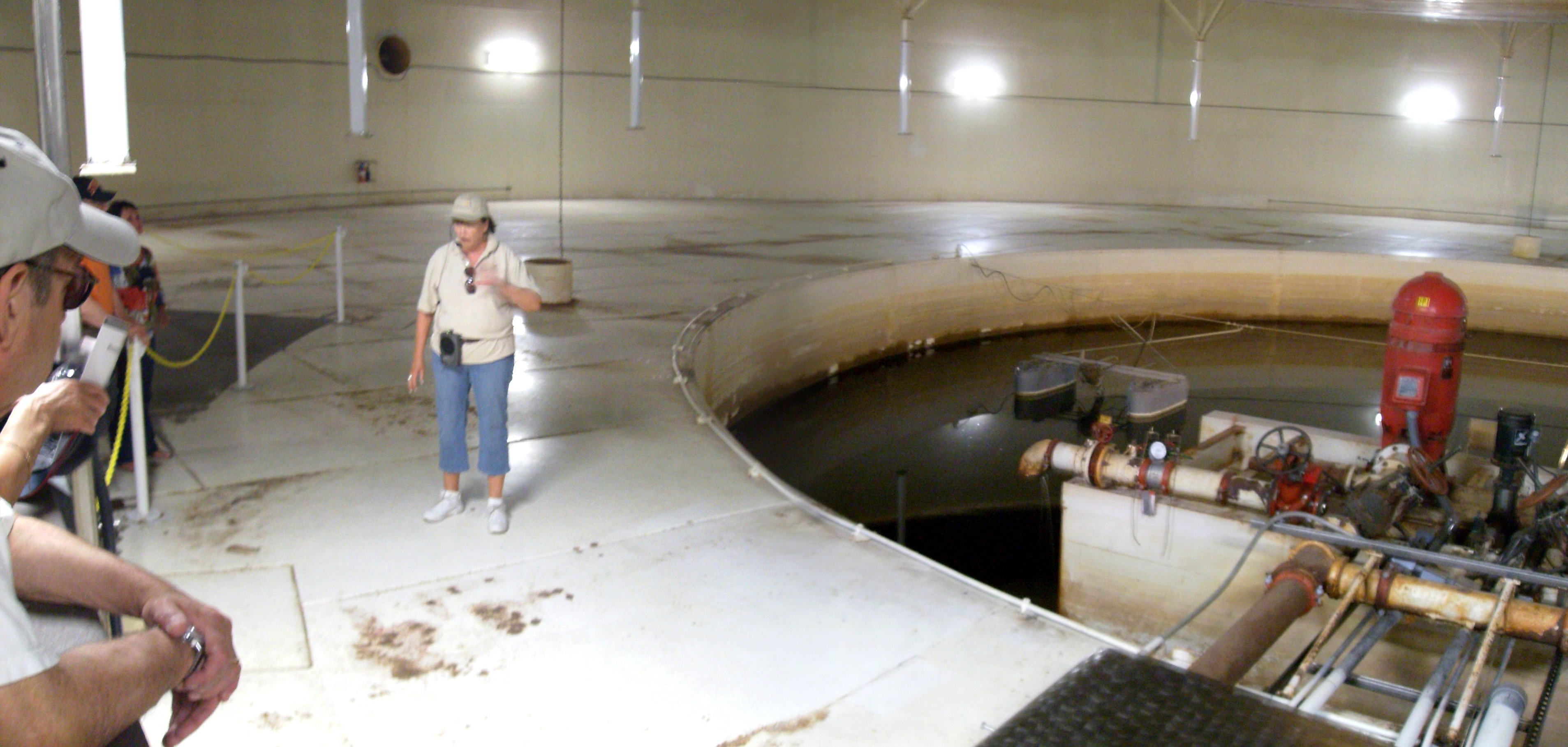
The "lung" is a cavernous space in which the ceiling is actually a rubber
gasket. When the air pressure rises in the morning, the bladder-like gasket
rises. When the air pressure goes down in the evening, so does the gasket.
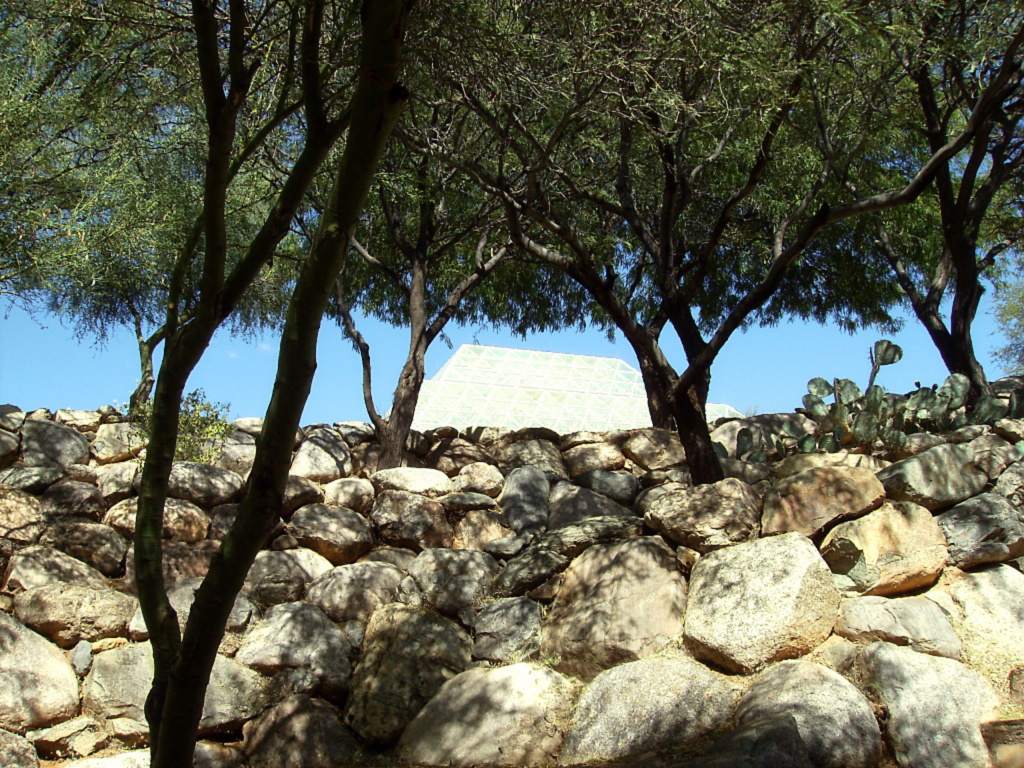
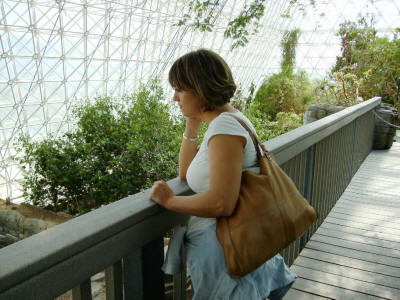
Jenny ponders the absorption of carbon dioxide into concrete and how that formed calcium carbonates in an unexpected place.
While there is a lot of controversy over how much actual science was
done during the first few years of Biosphere 2's existence, there can be no
argument that the place is a triumph of engineering. During the initial two-year
mission, the number of things that didn't go wrong is astounding. If
Microsoft Vista were as well-engineered, there'd be no complaints about it.
True, the problem with the oxygen was nearly a show-stopper. But we now
understand that a more expensive foundation of aluminum would not have had the
CO2 absorption issues. So real science was done: A theory was
tested, and as a result our understanding of the Universe increased.One
of Biosphere 2's strongest points was that its designers understood that life
and the environment are inextricably linked. When we hear astronomers talk about
planets "suitable to life" we are being misled. No planet, including Earth, was
"suitable for life" before it had life. In an intricately choreographed
ballet, life shapes a planet even as the planet shapes its life. As planetary
scientist, Dr. David Grinspoon, pointed out: "Earth wouldn't have 'Earth-like'
conditions without life, because life has shaped the world we know. For
instance, photosynthetic organisms created the oxygenated atmosphere, as well as
the ozone layer that protects us from the Sun's most destructive rays. So to say
another planet must be Earth-like in order to support life is to put the cart
before the horse. Instead, a planet must support life in order to be
Earth-like…I suspect that life can only survive on a planet for billions of
years if it has become deeply embedded in the geochemical, physical, and
climatic cycles of that planet in a way that stabilizes the environment.
"That we could ever re-create an earthlike environment in a closed space is
unlikely, because an earthlike environment, by definition, requires an Earth.
To replace any component of the environment with machinery requires a
complete understanding of both the component and
the machinery. It took the Earth 3 billion years to work out all the kinks,
and even now Earth seems to have underestimated the impact one of
her species (humanity) can have on the total balance.
As costly as that understanding may be to gather, though, I do applaud the
effort. Even though the terrarium is now open to the atmosphere, research
projects go on that don't require an enclosed and limited atmosphere.
Researchers can occupy a nearby village instead of having to live "under the
glass". Biomes can be used, discarded, rebuilt as the science requires.
Biosphere 2 is truly a priceless, one-of-a-kind test tube in which our world can
be studied, and yet another gem in Arizona's tiara.