|
By: Paul S Cilwa |
Occurred: 2/28/2009 |
|
Page Views: 1,235 |
| Hashtags: #Camping #Travel #Photography #Maui #Hawaii #Haleakala #Kipahulu |
| I spend a day driving and photographing along Maui's scenic Hana coast. |
| Estimated reading time: 7 minute(s) (1562 words) |
I can't truthfully say I was freezing when I woke up 3000 feet shy of
the summit of Mount Haleakala. I wasn't actually shivering. But I wasn't
sweating either, considering that the temperature inside the camper was hovering
around 35°F. And making the decision to leave the camper to run through
the rain to the bathroom took almost long enough to render the entire question
moot.
But I had a mountain to conquer, and I was pretty sure that Sir Edmund
Hillary wouldn't have let a little thing like a cold toilet seat stand between
him and his goal.
The rain had lessened somewhat from the worst of the night before, but it was
still raining, mostly. Breakfast was a surprisingly-good pre-made ham-and-egg
sandwich I'd bought the day before at Long's Drugs in Kahului, washed down by
mango Gatorade and topped off with some trail mix. I tried, unsuccessfully, to
warm up the inside of the camper by turning on the stove while I dressed; but it
made little discernable difference.
The motor did a better job, once I started up the vehicle. I pulled out of my
space and continued my way up the volcano.
Here's what Mark Twain had to say about his visit to Haleakala circa 1867:
But the chief pride of Maui is her dead volcano of Haleakala—which means,
translated, "the house of the sun." We climbed a thousand feet up the side
of this isolated colossus one afternoon; then camped, and next day climbed
the remaining nine thousand feet, and anchored on the summit, where we built
a fire and froze and roasted by turns, all night. With the first pallor of
dawn we got up and saw things that were new to us. Mounted on a commanding
pinnacle, we watched Nature work her silent wonders. The sea was spread
abroad on every hand, its tumbled surface seeming only wrinkled and dimpled
in the distance. A broad valley below appeared like an ample checker-board,
its velvety green sugar plantations alternating with dun squares of
barrenness and groves of trees diminished to mossy tufts. Beyond the valley
were mountains picturesquely grouped together; but bear in mind, we fancied
that we were looking up at these things—not down. We seemed to sit in the
bottom of a symmetrical bowl ten thousand feet deep, with the valley and the
skirting sea lifted away into the sky above us! It was curious; and not only
curious, but aggravating; for it was having our trouble all for nothing, to
climb ten thousand feet toward heaven and then have to look up at our
scenery. However, we had to be content with it and make the best of it; for,
all we could do we could not coax our landscape down out of the clouds.
Formerly, when I had read an article in which Poe treated of this singular
fraud perpetrated upon the eye by isolated great altitudes, I had looked
upon the matter as an invention of his own fancy.
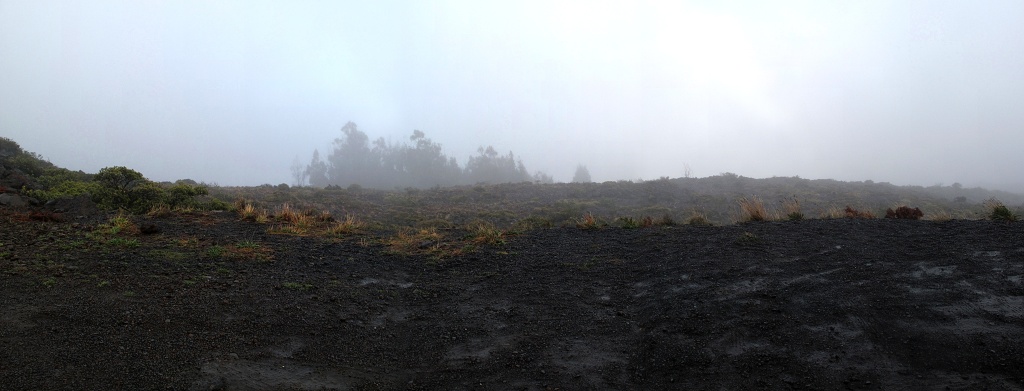
I saw none of this, because Haleakala was encased in obscuring fog thicker
than any politician's conscience. At most I could see just a few
feet.
The difference, of course, is that Twain was here in the summer, while the
official season I was here, as it turns out, is winter. Maui only has two
seasons, summer and winter, and near the shore the difference between them is
almost undetectable. But at the summit of Mount Haleakala, storms like this are
more likely to arrive, and last, in the winter than in the summer.
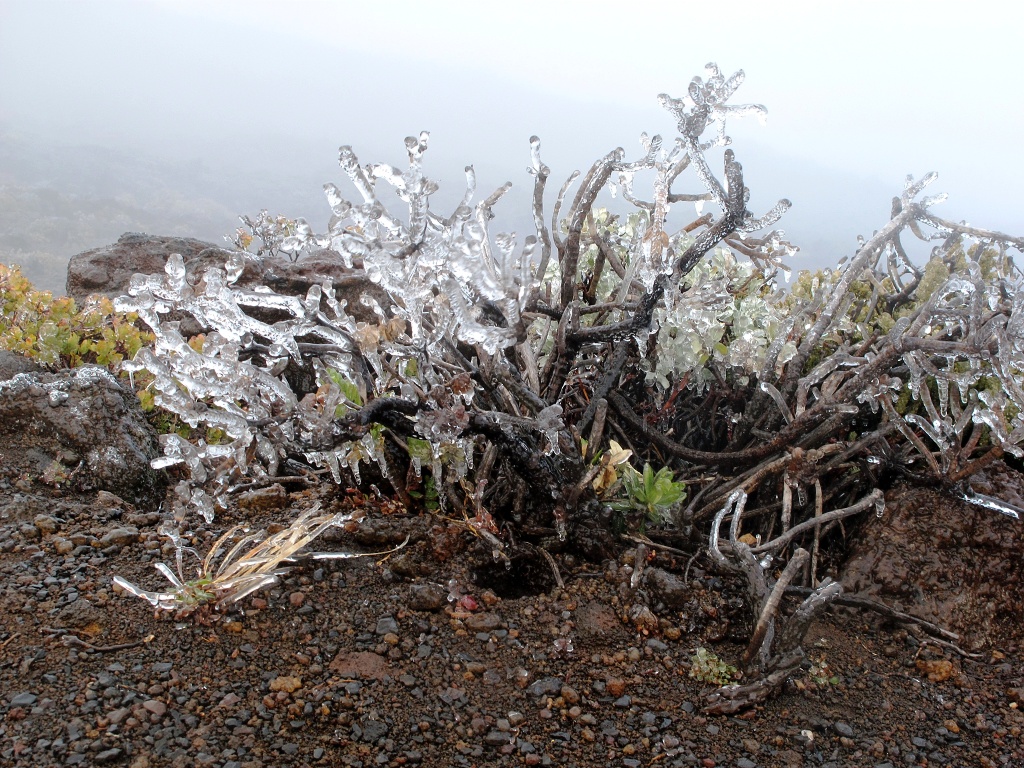
I did make it to the summit, adding a second fleece pullover to the first for
protection. But I couldn't see any of it. I contented myself with photographing
the ice encasing an alpine plant, and then returned the way I'd come.
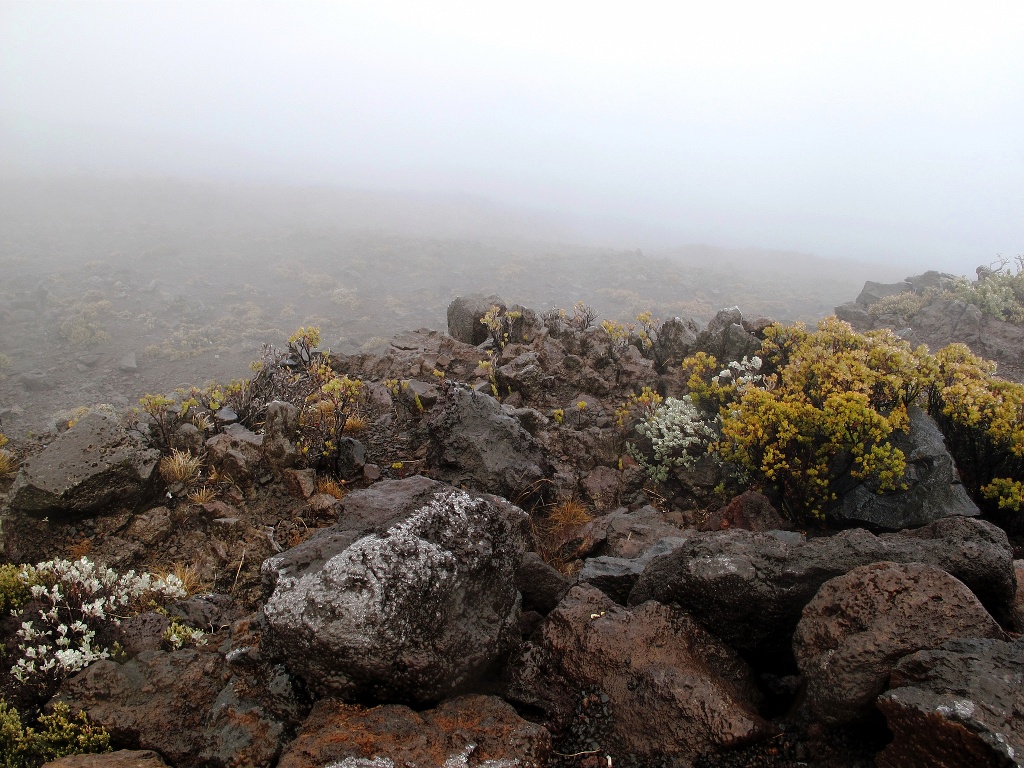
A patch of alpine plants and ice-encrusted rocks attracted my
attention and I again got out of the camper to take a picture, the
wind nearly tearing off the vehicle door as I did so. When I got
back in, the wind again rushed through the camper, picking up the
park receipt from the dashboard and throwing it outside into the air
before I could grab it.
I stopped at the Visitor Center just downhill from the campground
and explained the situation to a ranger named Ann.
"I believe you," she said. "This is one of the worst storms we've had up here
in years. The power is out up and I hear there's ice forming on the
signs."
"There is," I verified. "I was just up there."
"Well, you go to the gate and tell them Ann at the Visitor Center sent you,"
she instructed. "I can't promise anything but I bet they fix you up."
I did as she suggested and, sure enough, the ranger there gave me another
receipt so I would be able to go to the lower level section of the park, which
is not directly accessible to the upper section. This one I put in my pocket.
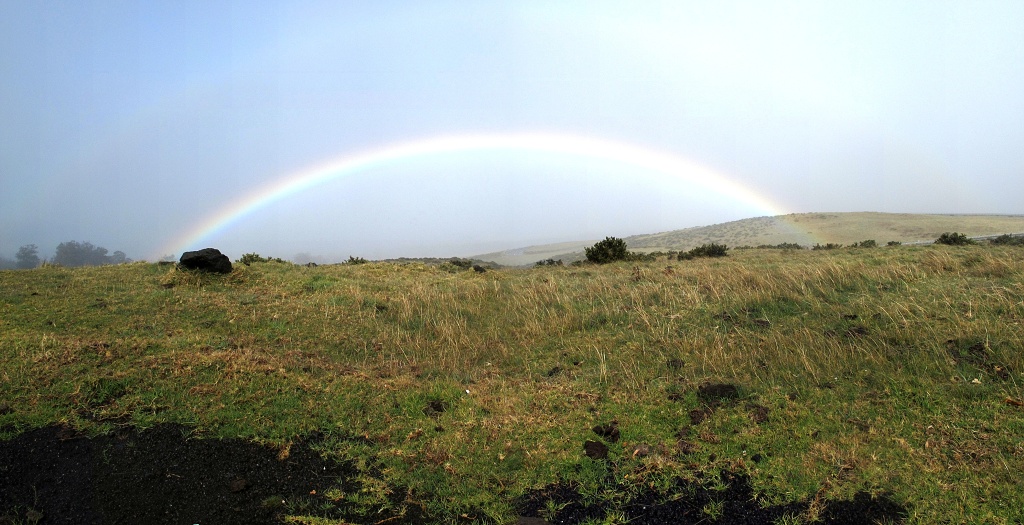
The weather improved quickly as I descended. Once I got out from under the
cloudy shroud hugging the mountaintop, even though rain continued to fall, the
sun kept sending rainbows to guide the way.
Almost before I knew it, I was back in Kahului, wearing shorts and a
T-shirt, eating lunch at a Burger King, as if I had not just been in
an ice storm atop one of the world's highest volcanoes.
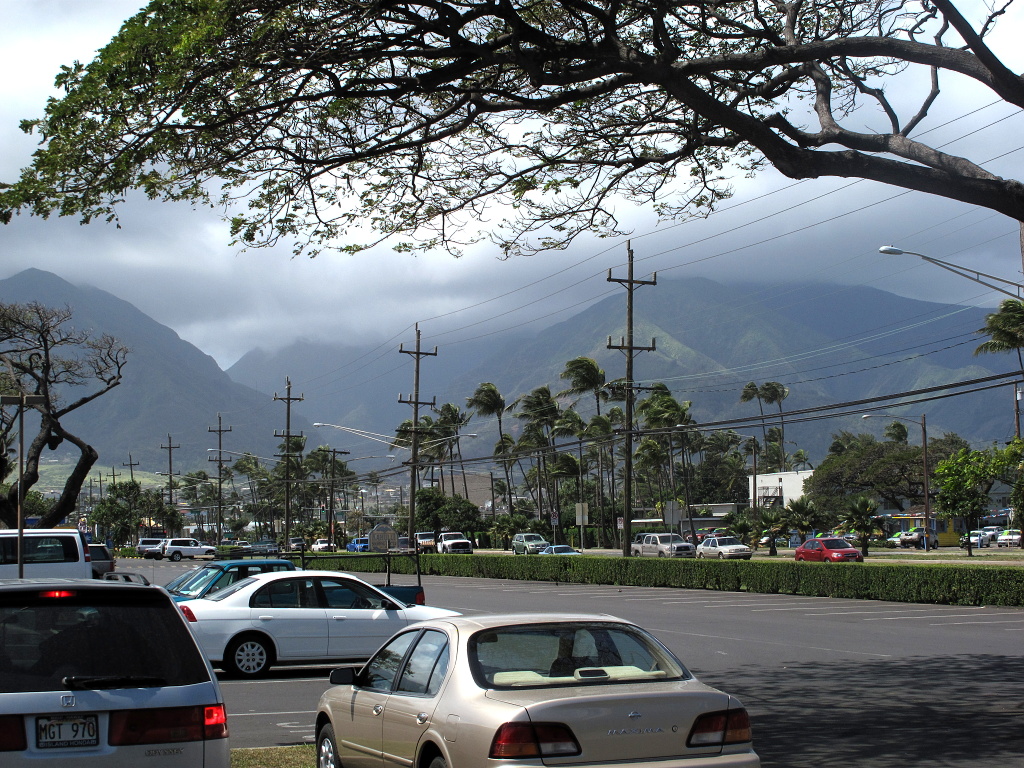
Here's a picture of Kahului, not because it's a particularly beautiful town,
but because of the West Maui Mountains that dominate it and the way that, in
spite of the mountains, it somehow reminds me of St. Augustine, Florida, where I
grew up.
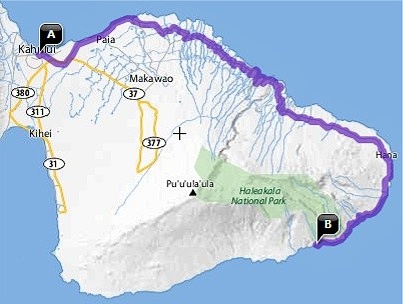
I had done as much with Haleakala's summit as was likely I could on this trip. So my
next destination, I decided, was Kipahulu, the lower section of
Haleakala National Park.
The distance of this trip, according to my GPS, was only 64 miles. But I was
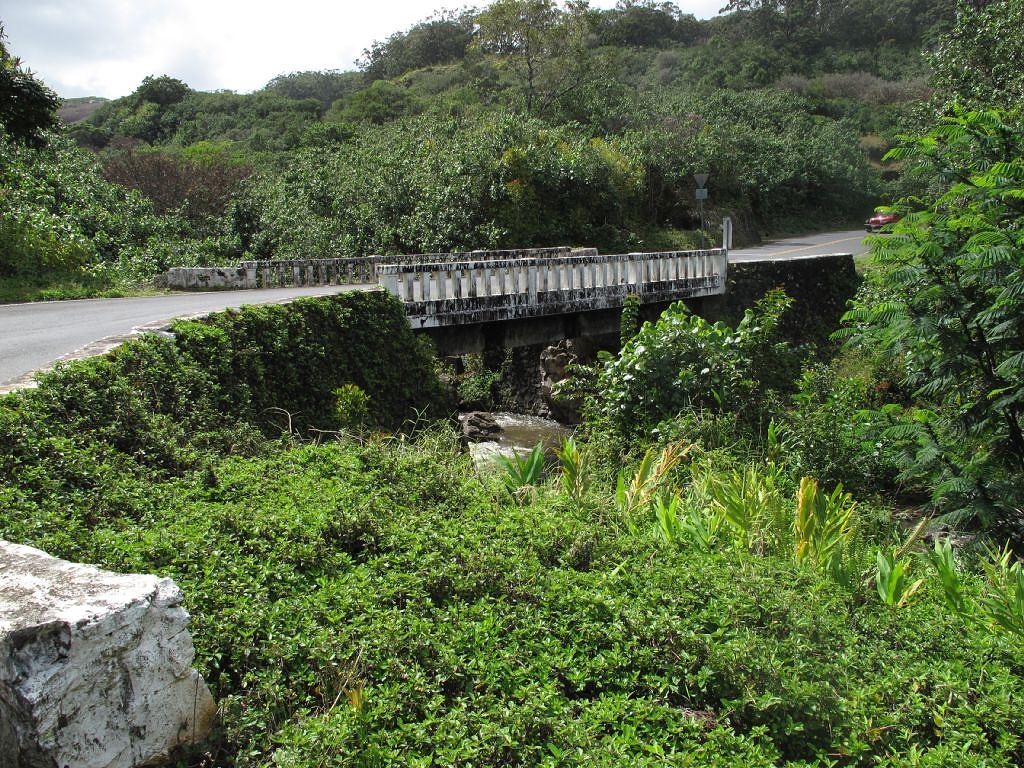
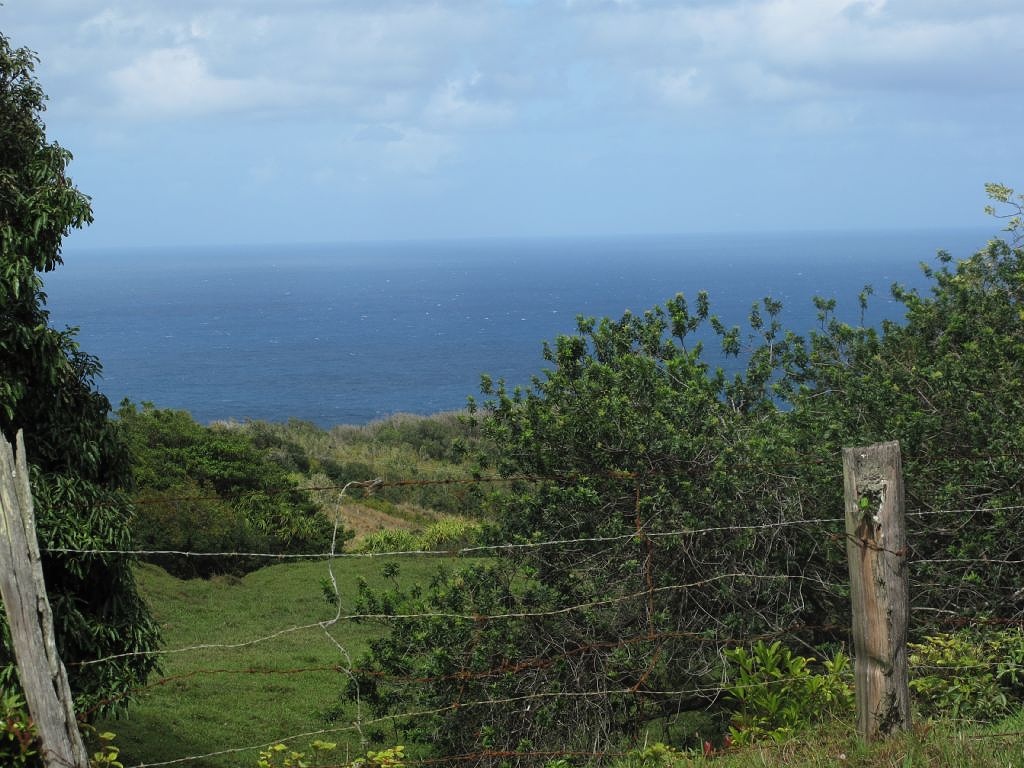
warned: It would take at least four hours to drive! As it turned out, it took
longer than that; I had to stop every 300 feet or so to take another photo.
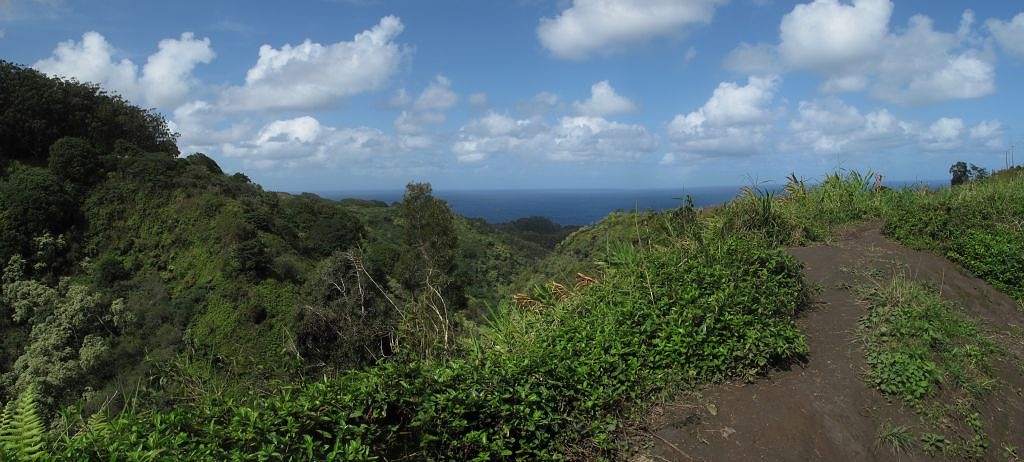
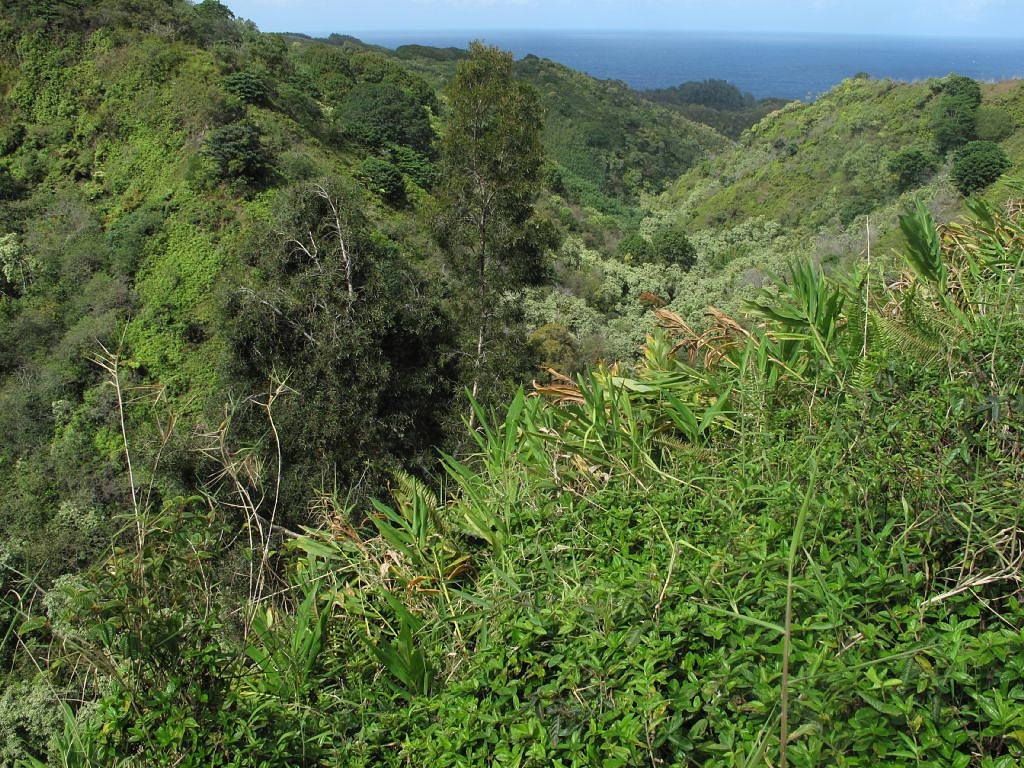
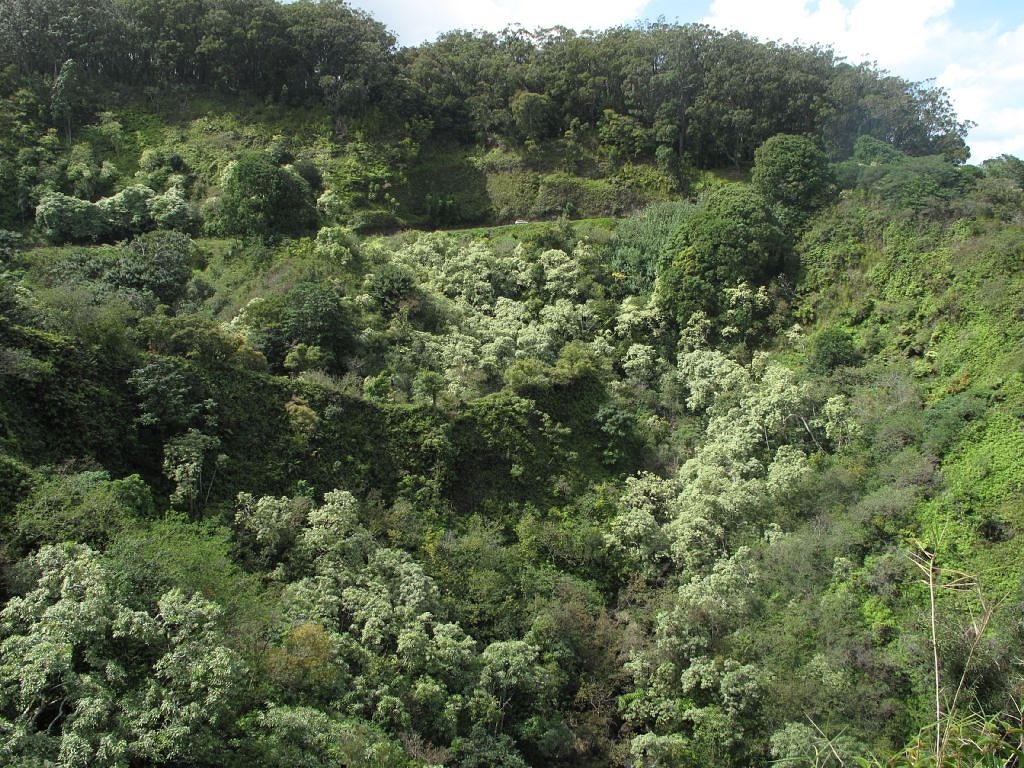
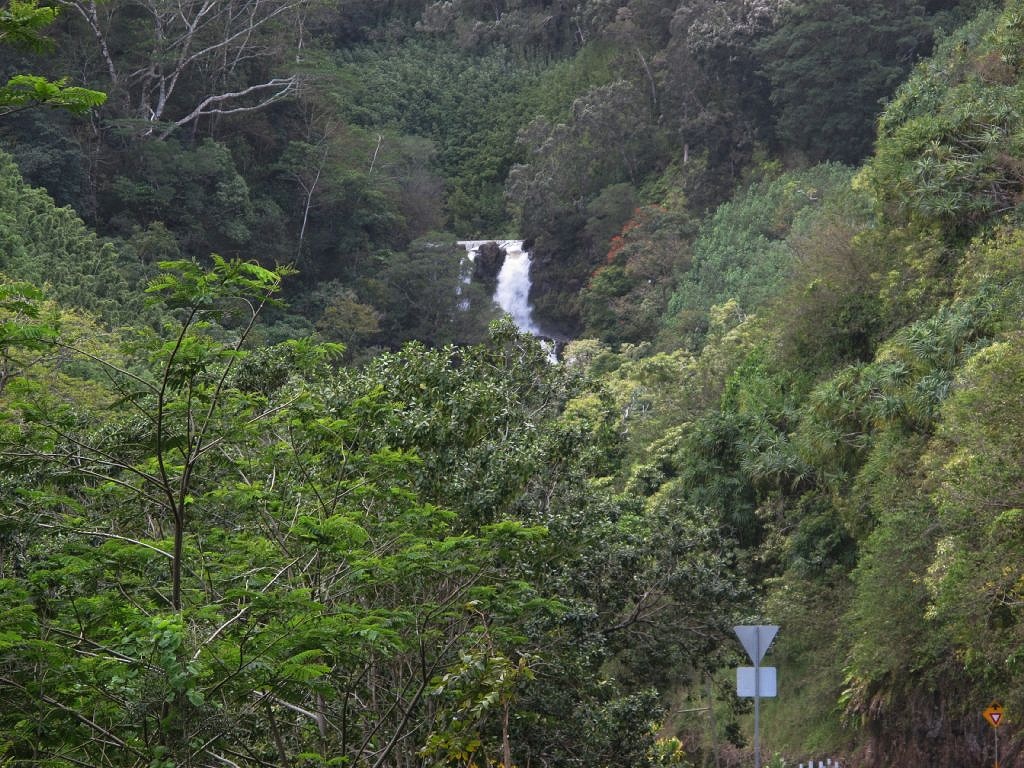
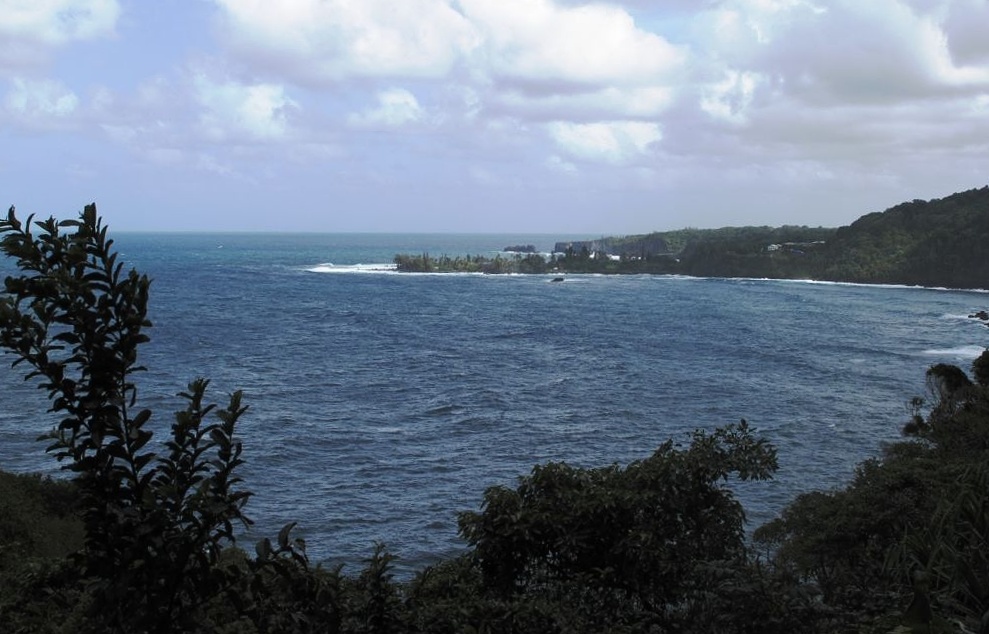
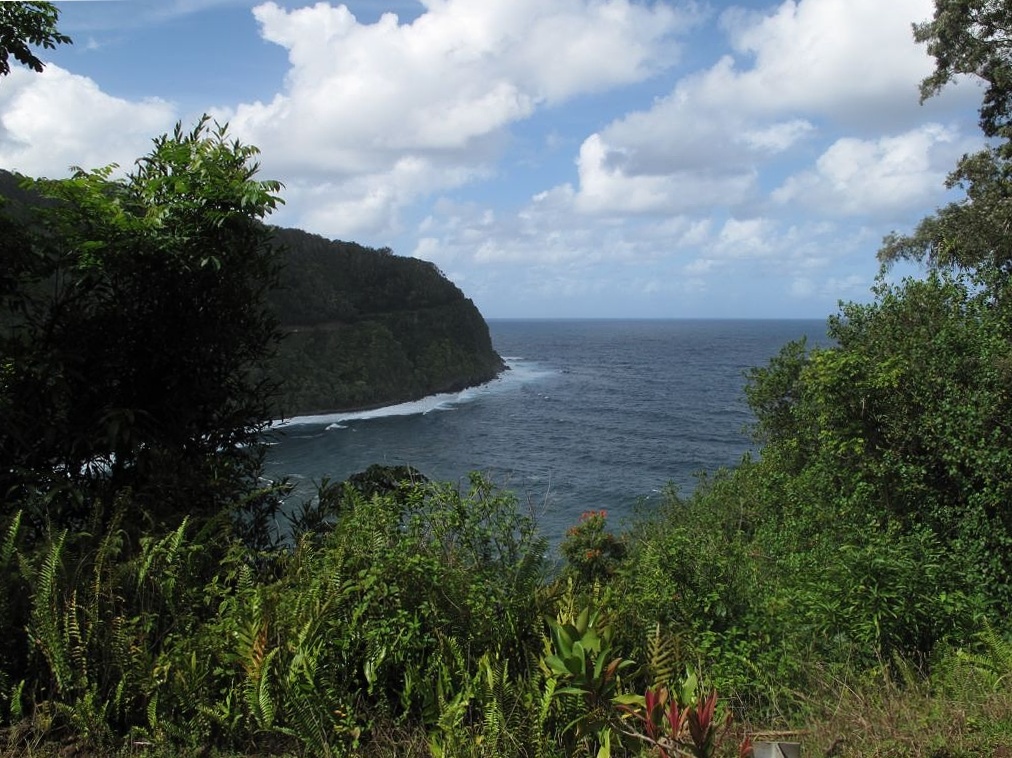
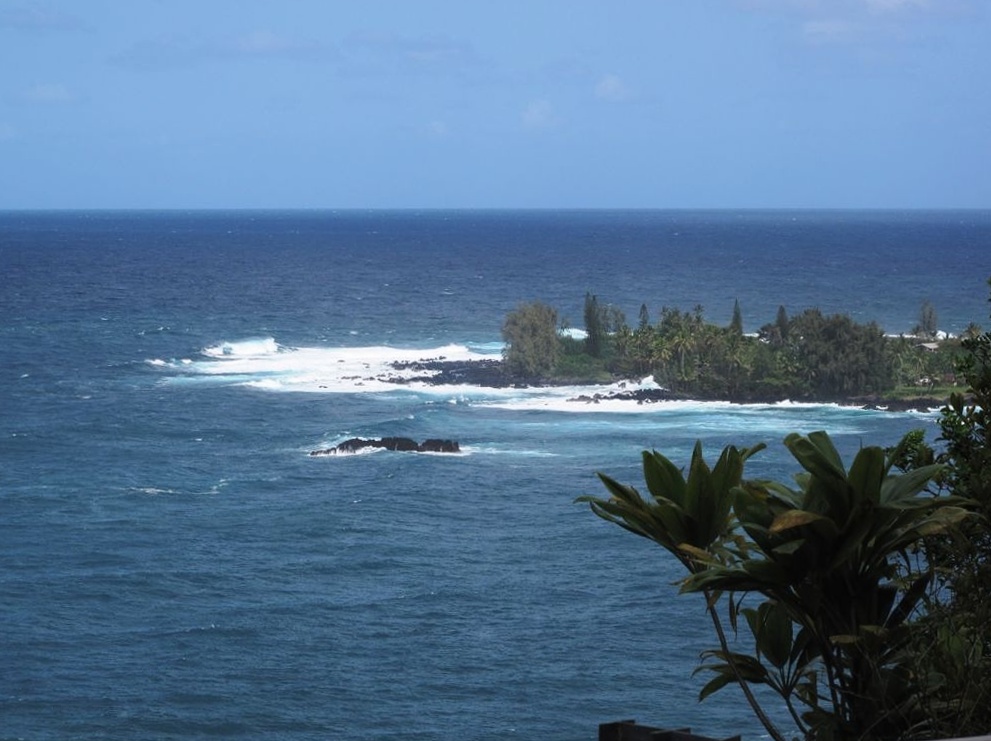
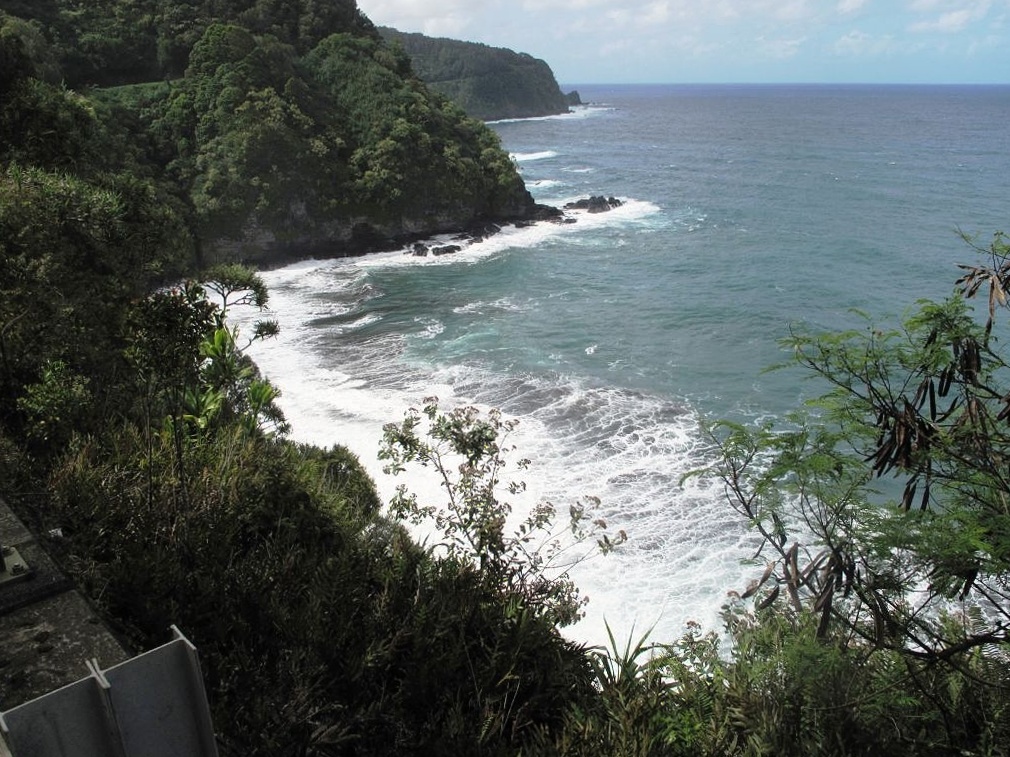
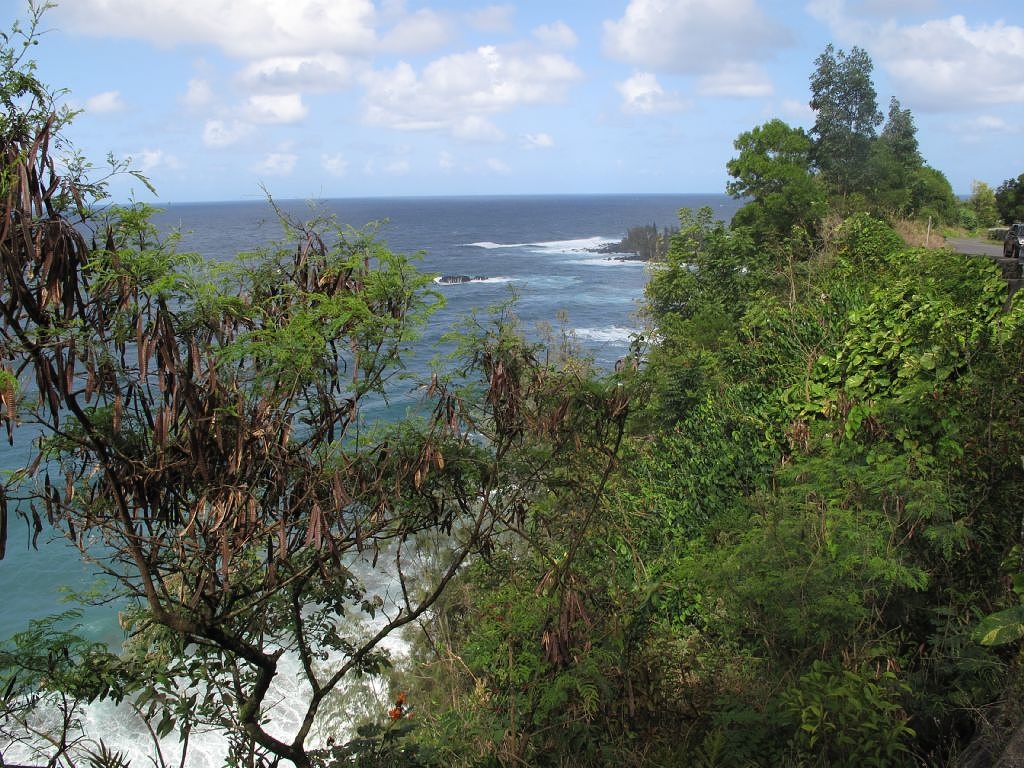
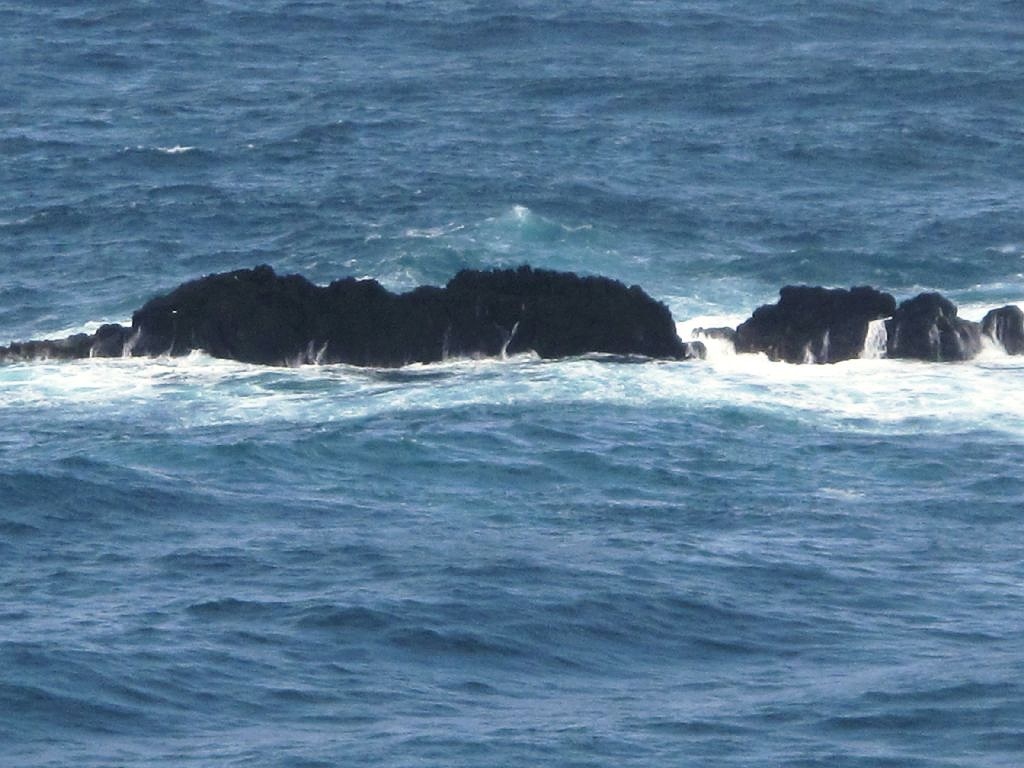
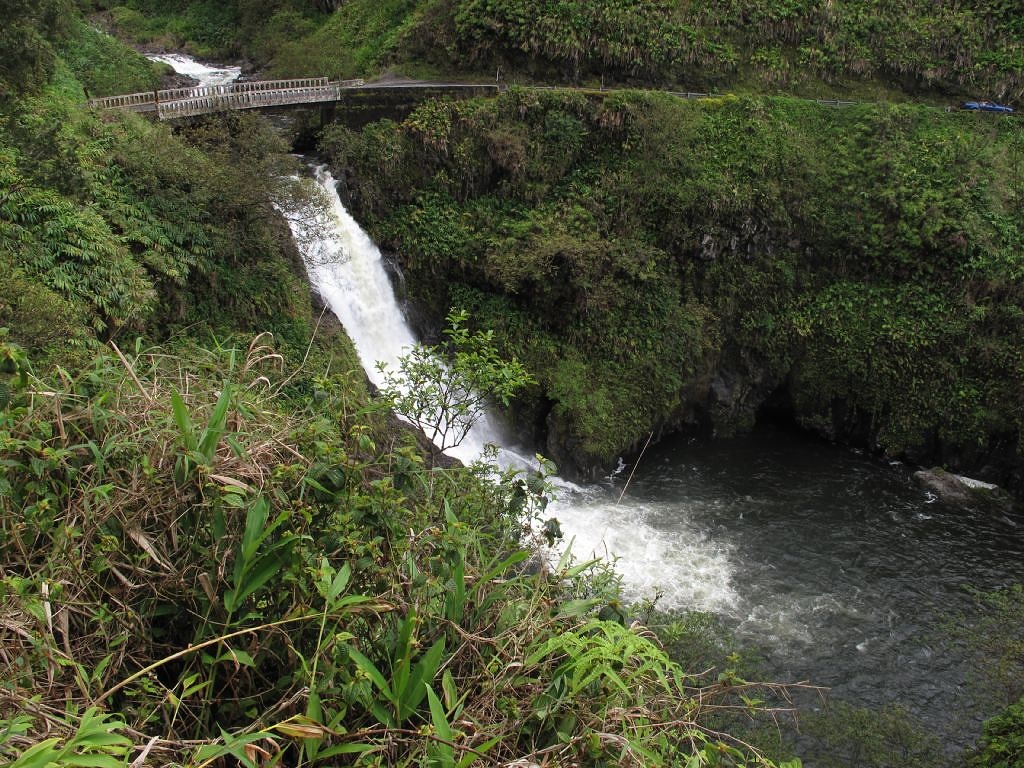
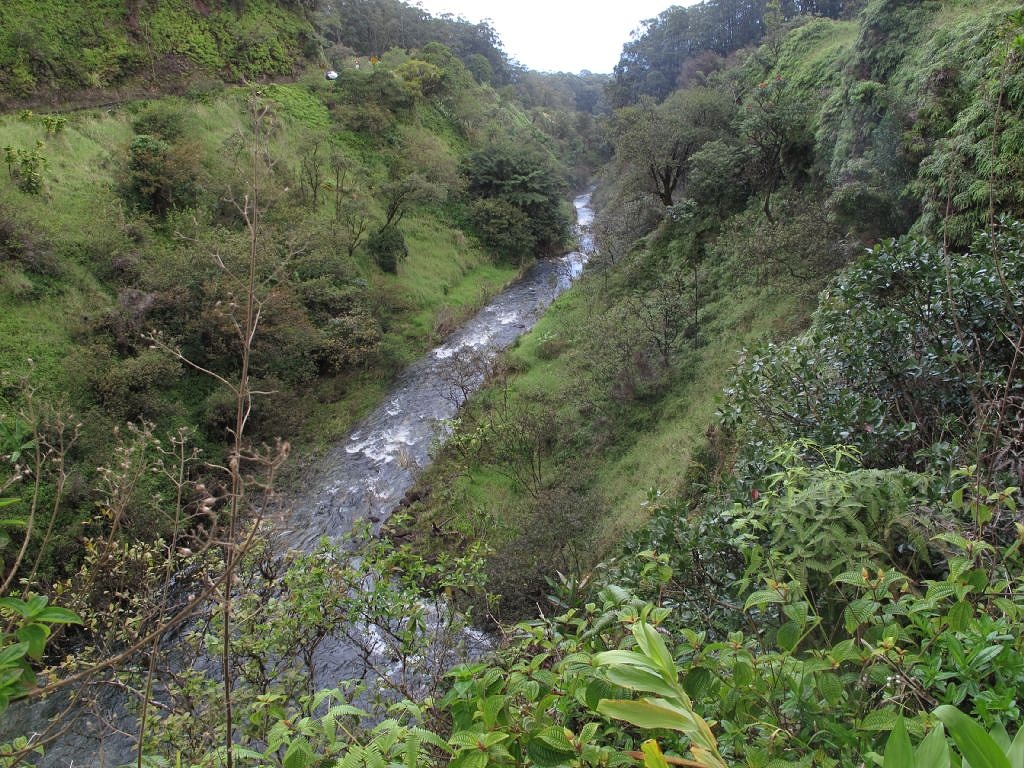
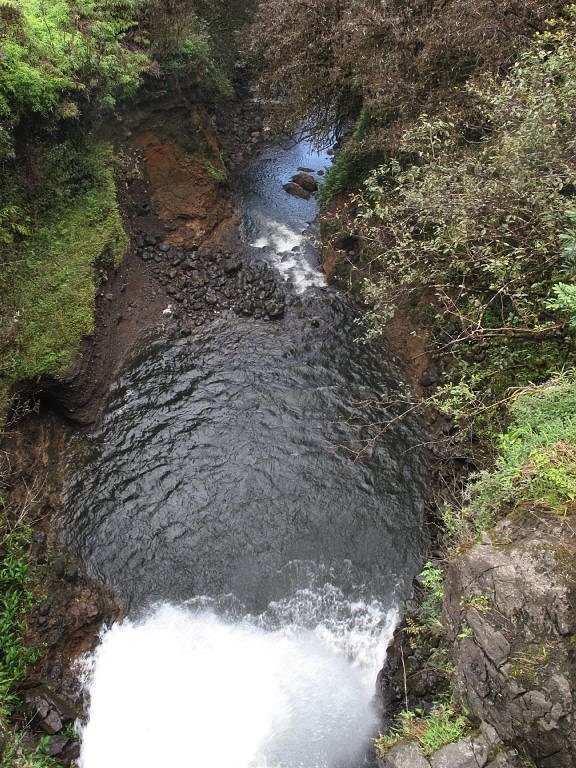
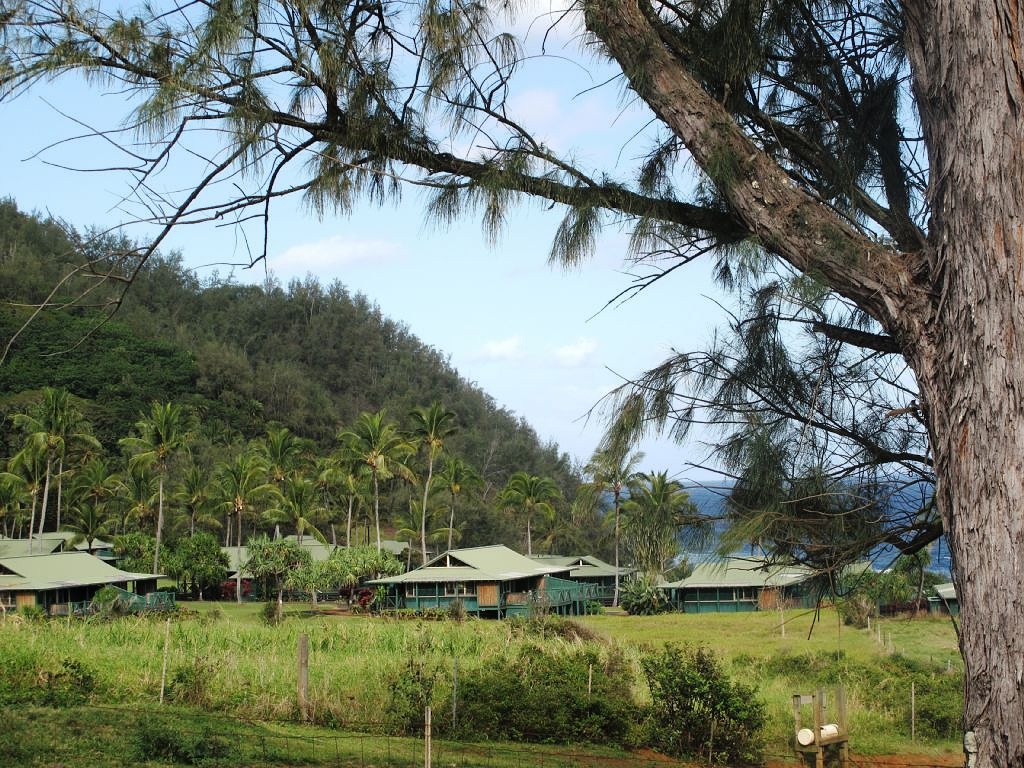
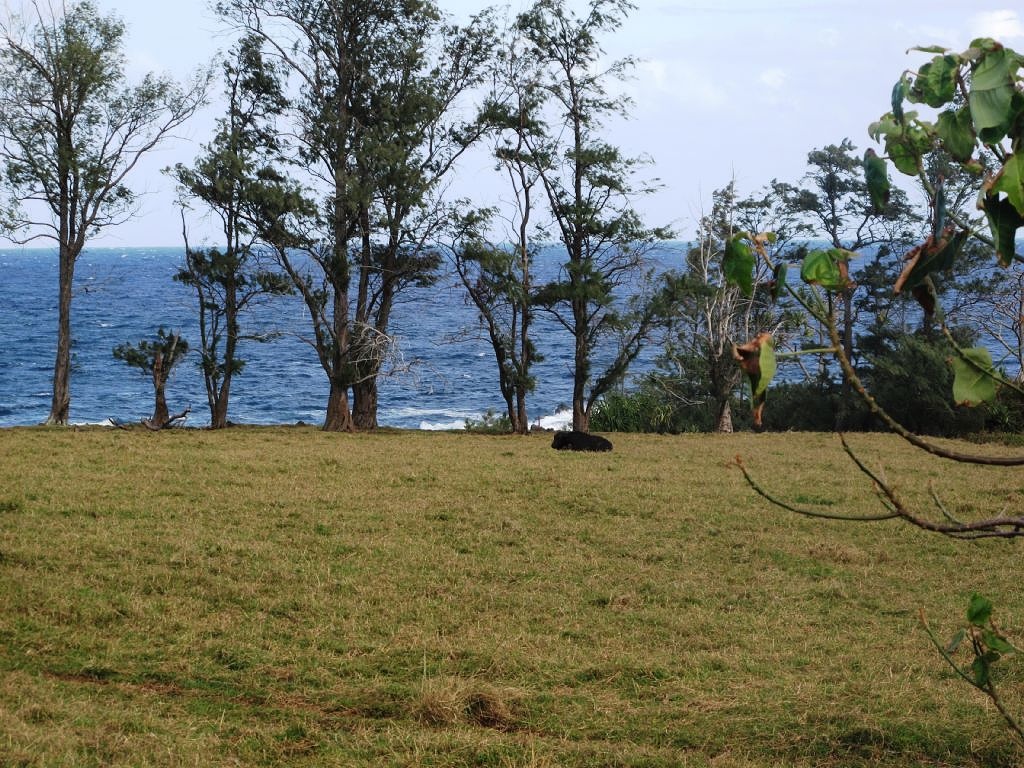
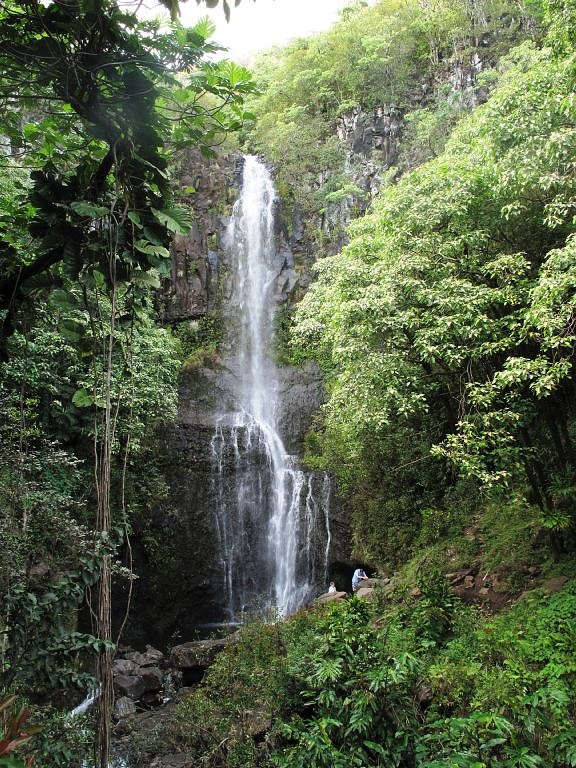
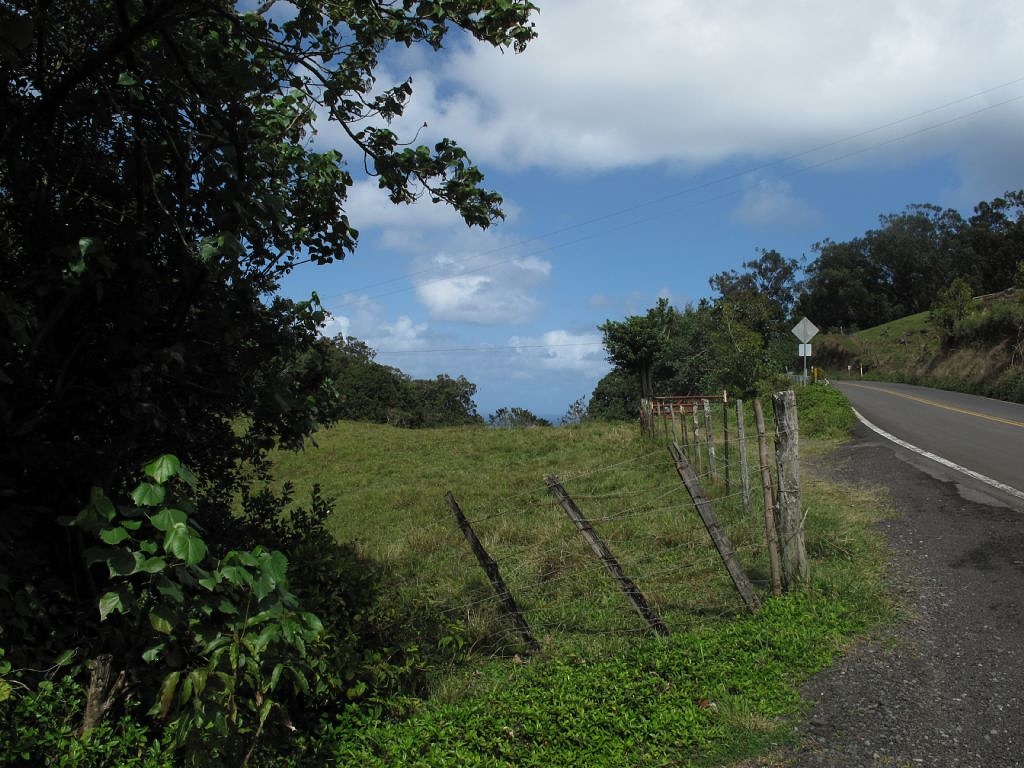
The Hana coast, as it is called, is the eastern-most part of the island and
the windward face as well. Thus it is the wettest, as the high reaches of
Haleakala squeeze the moisture from the sea air hitting it. Whereas the surface
of the Pacific Ocean in these parts gets from 30-40 inches of rain a year, the
Hana Coast gets 400! And it got much of it the day I was there. However,
it was not a depressing rain; it came in brief squalls just long enough to clean
my windshield.
The town of Hana is an artist colony and unspeakably laid back, nestled in
this rain forest. It was like a cross between Bar Harbor and Jurassic Park.
Someday I would like to spend more time there but today, I needed to keep moving
to get to my campground before dark.
Haleakala National Park's Kipahulu campground is similar to the Hosmer Grove campground,
in that it consists of an open area for tents and a pit toilet. If differs in
that it is just a few yards from the shore. I can't say "beach" because the
shoreline consists of lava spikes that would not make for safe swimming.
I parked the camper, got out, realized that I had chosen an inclined area
that would make sleeping tricky, found a more level spot and moved the camper
there. I was then ready for a night that would, I hoped, be more comfortable
temperature-wise, than the previous one.
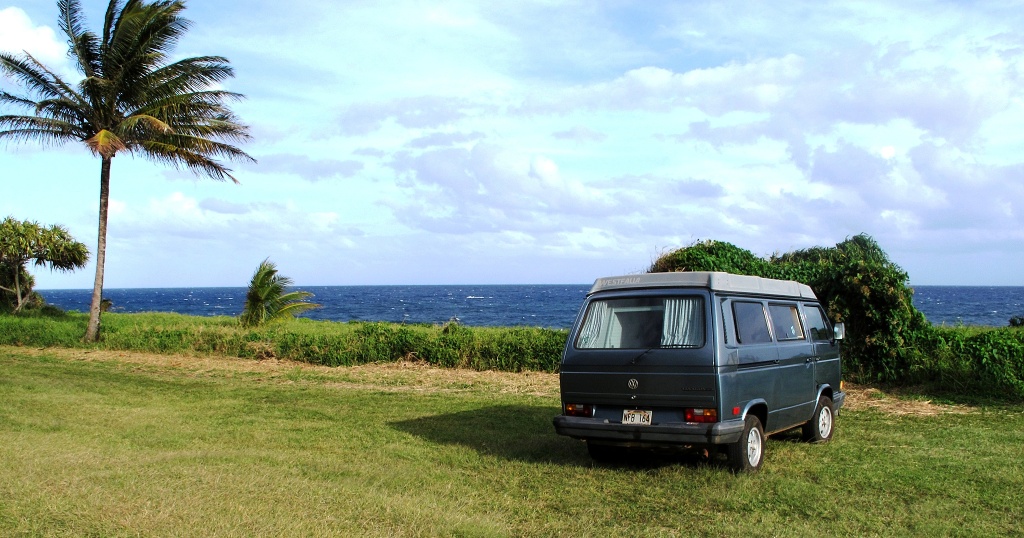
Gratefully taking off my shoes, I found the grass to be soft and
without sandspurs or cactus or any of the other disadvantages one
usually finds near the beach. In fact, it seemed made for
barefooting. The air was scented of flowers; it struck me odd that I
couldn't smell "sea air" as one does near the Atlantic. In fact, I
never smelt the sea from anywhere on Maui.
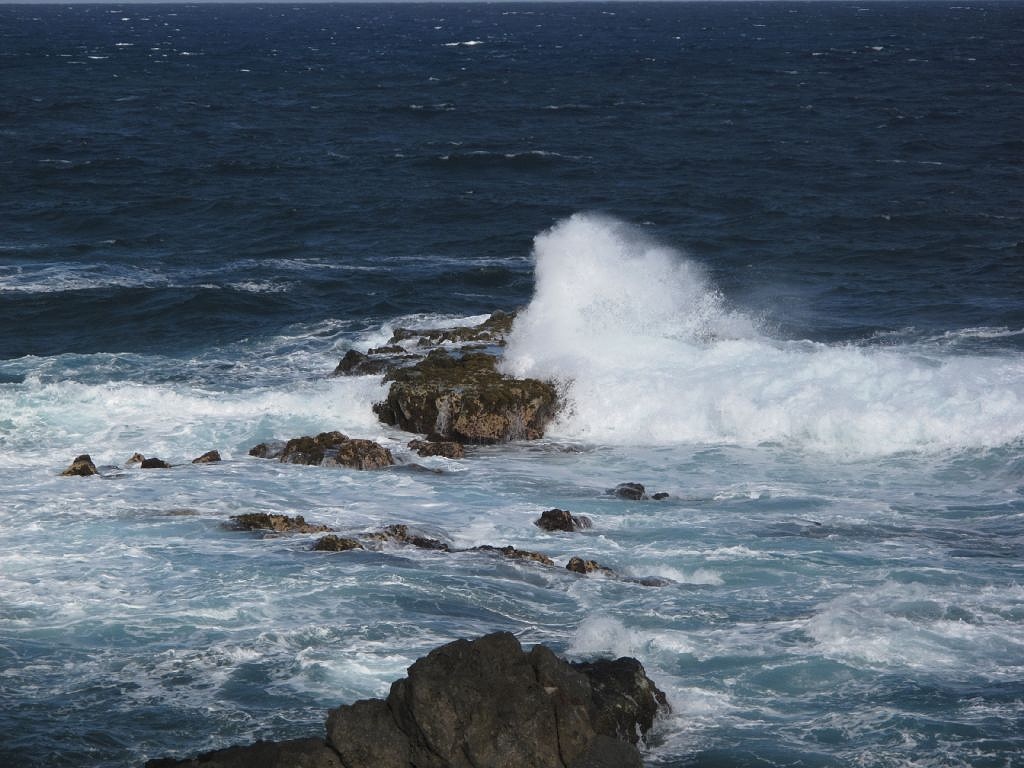
That didn't prevent me from enjoying the crashing of the surf into the lava
protrusions just offshore.
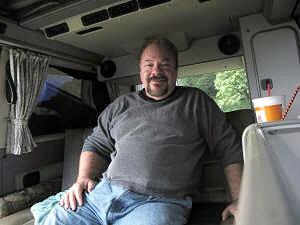
With a little sunlight left before nightfall, I finally got around to
organizing my stuff in the camper.
Dinner was, again, trail mix and water. (I should add, this
was delicious trail mix from
Sprouts back home, which included macadamia nuts. Interestingly,
macadamia nuts were as expensive here on Maui as they were in
Arizona.)
As the sun sank below the waves, I made the bed and went
to sleep beneath a light blanket, to the sound of the surf and the
balmy breezes of the Maui seashore.