|
By: Paul S Cilwa |
Occurred: 3/1/2009 |
|
Page Views: 1,476 |
| Hashtags: #Places #Photography #Camping #Maui #Hawaii #Haleakala #Kipahulu |
| Continuing my journey around Maui's eastern half. |
| Estimated reading time: 9 minute(s) (2138 words) |
The beautiful area now known as the Hana Coast was, prior to infection by the
European visitors, heavily populated. French Navy officer
La Pérouse, while sailing by the Maui coast in 1786, remarked
I coasted along its shore at a distance of a
league [three miles] …. We beheld water falling in cascades …. The
inhabitants, which are so numerous that a space of 3-4 leagues may be taken
for a single village. The huts are on the coast so that the habitable part
of the island is less than one half of a league. After passing Kaupō no more
waterfalls are seen, and villages are fewer.
The Hawaiian word for a cluster of extended families is
ʻohana.
I assume that the name of the town in this area, Hana, is derived from that.
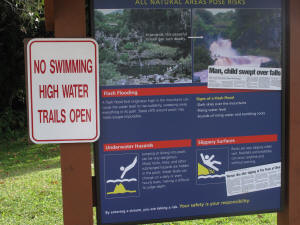
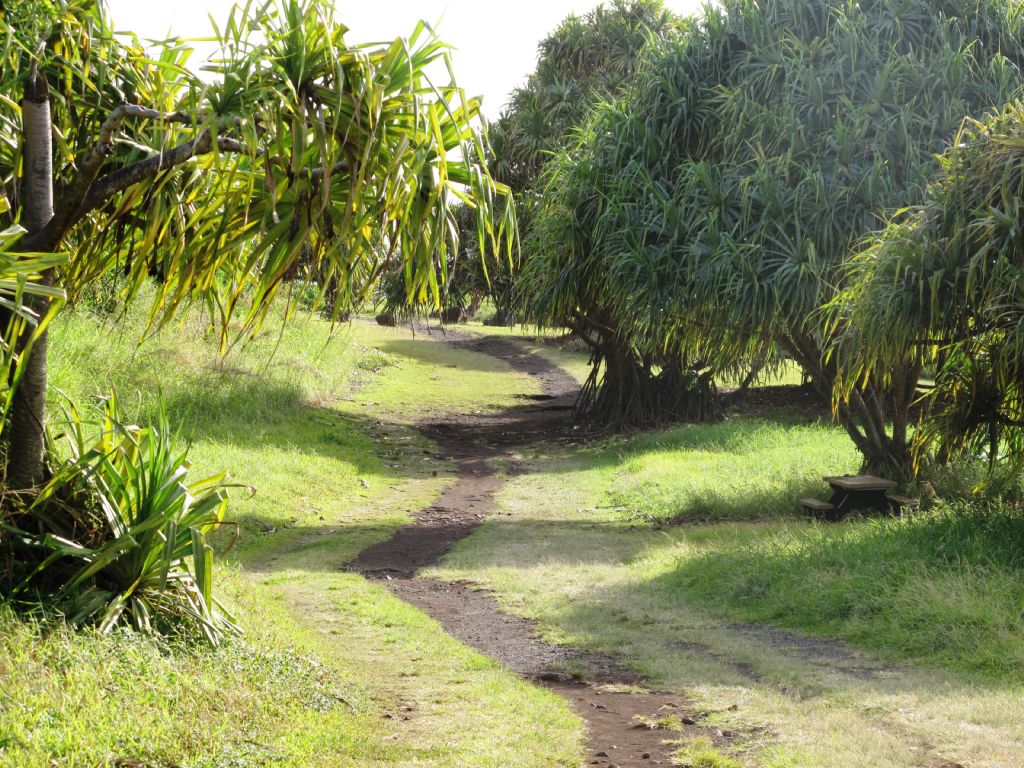
The hike to the stream that supplies the pool is very pleasant, much more a
nature walk than a hike. I'm not sure it's navigable in a wheelchair, but pretty
much anyone not in a wheelchair should be able to make it. There are even
benches to accommodate those who need a rest or simply wish to meditate in the
peaceful surroundings.
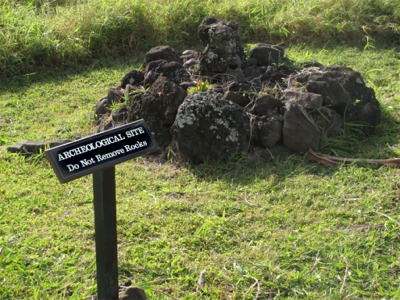
The area is littered with archaeological remains of the families that used to
farm this area. The remains aren't much to speak of, mostly piles of
rocks. But they do serve as a reminder that before this was a
national park, it was home to the ancestors of today's Hawaiians.
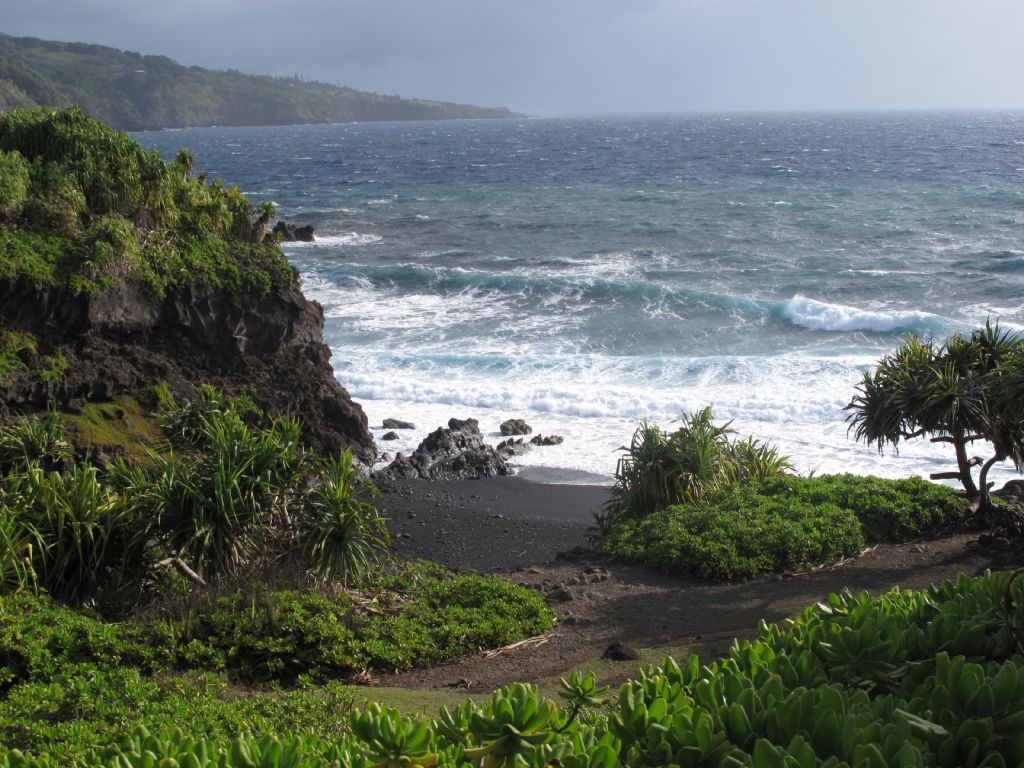
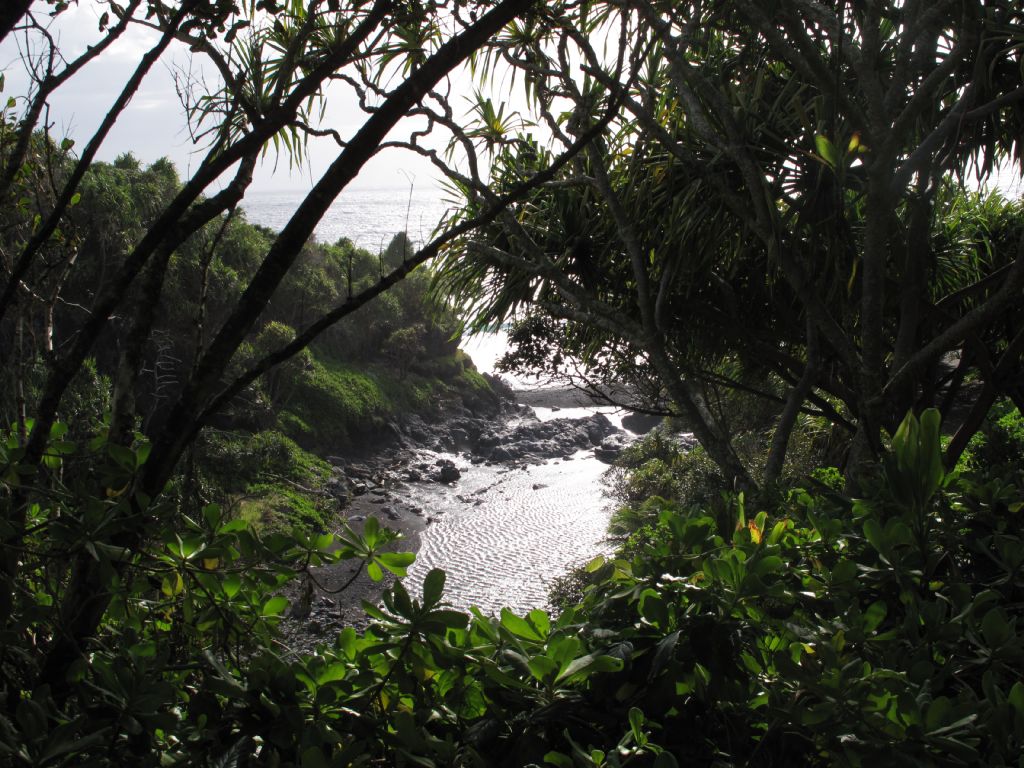
And, of course, since the path runs for a stretch along the shore before
turning toward Haleakala, there are stunning ocean views whenever one wants to
see one. In the shot below is a small black sand beach. This sand is formed by
waves pounding pieces of lava against each other. Such beaches erode relatively
quickly (hundreds of years versus thousands) as the amount of loose lava is used
up.
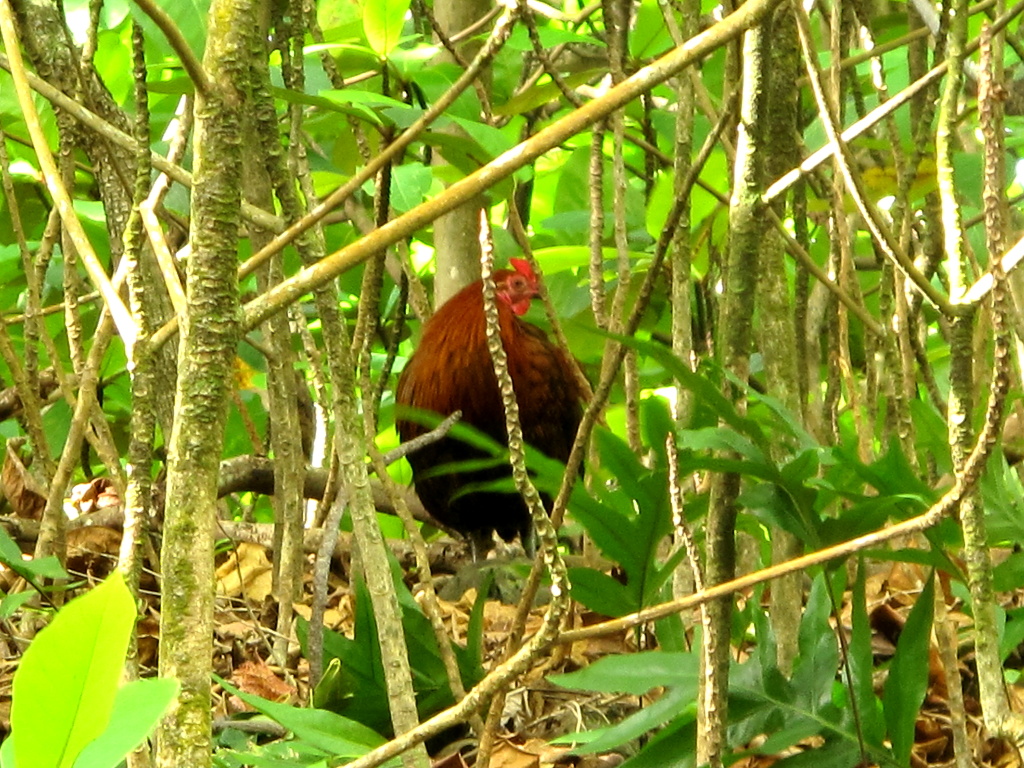
The jungle enclosed me and I enjoyed the songs of native birds, but also
a familiar call: An insistent cock-a-doodle-doo! that was
coming from somewhere. I knew the original Polynesian colonists had
brought chickens, and well as boar, with them; and here was a
free-living descendent. I stood still and listened, and soon was
rewarded with a view of one of the few kinds of birds I can actually
recognize!
As I continued up the path toward the second-largest waterfall on it,
Makahiku, I continued to snap photos of each cascade and pool as I came to it. I
so want to go back and spend a day swimming here!
Please allow time for the photos to load. And if
you'd like to make any of them your desktop wallpaper, feel free to right-click
and select "Set As Background" (or equivalent, depending on your browser).
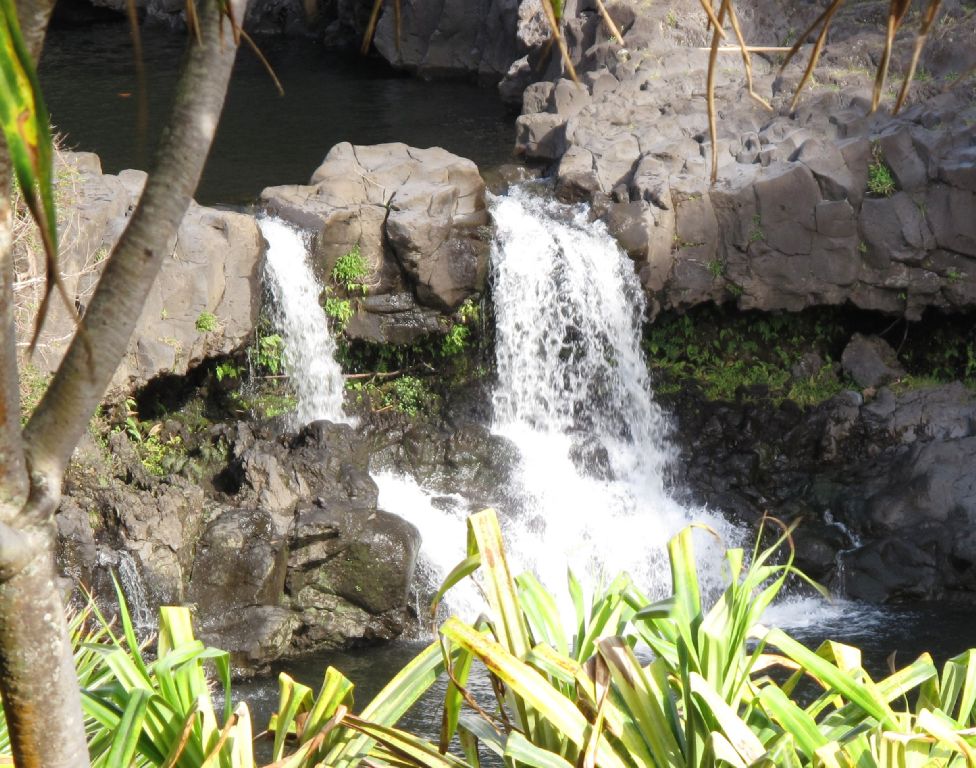
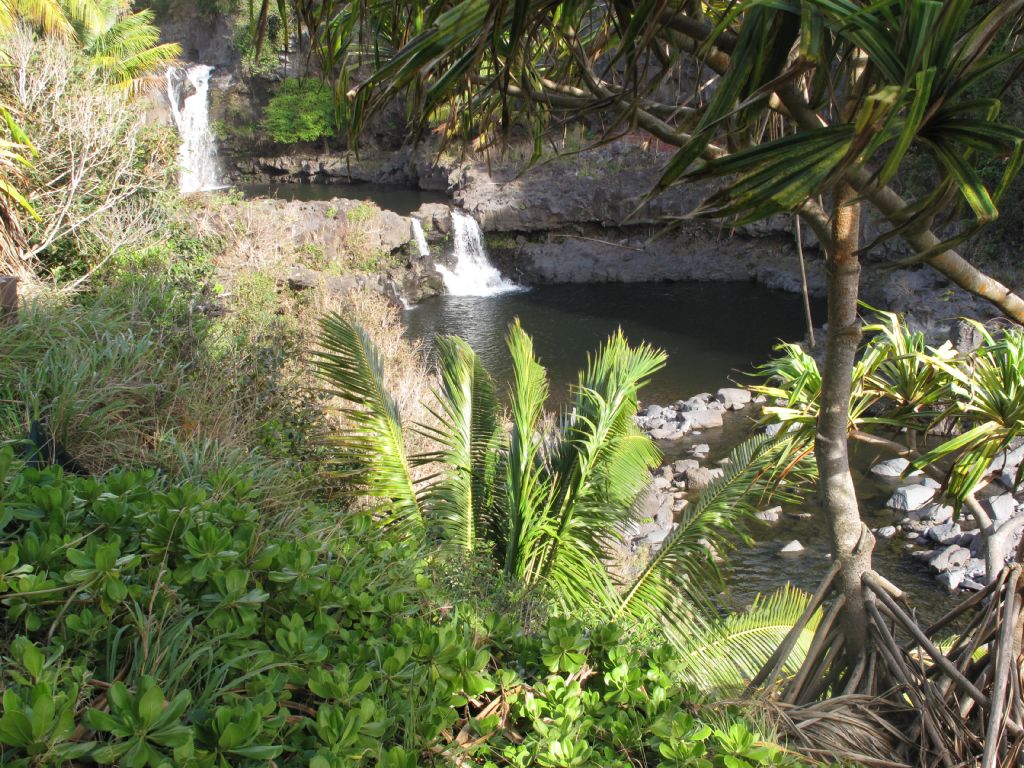
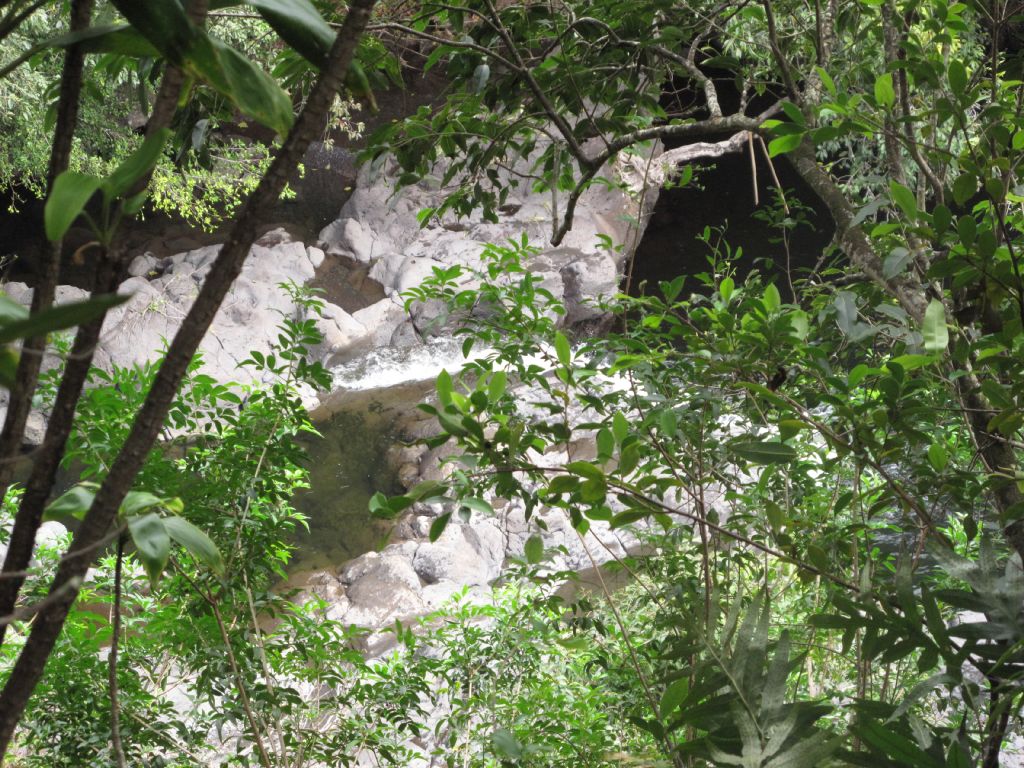
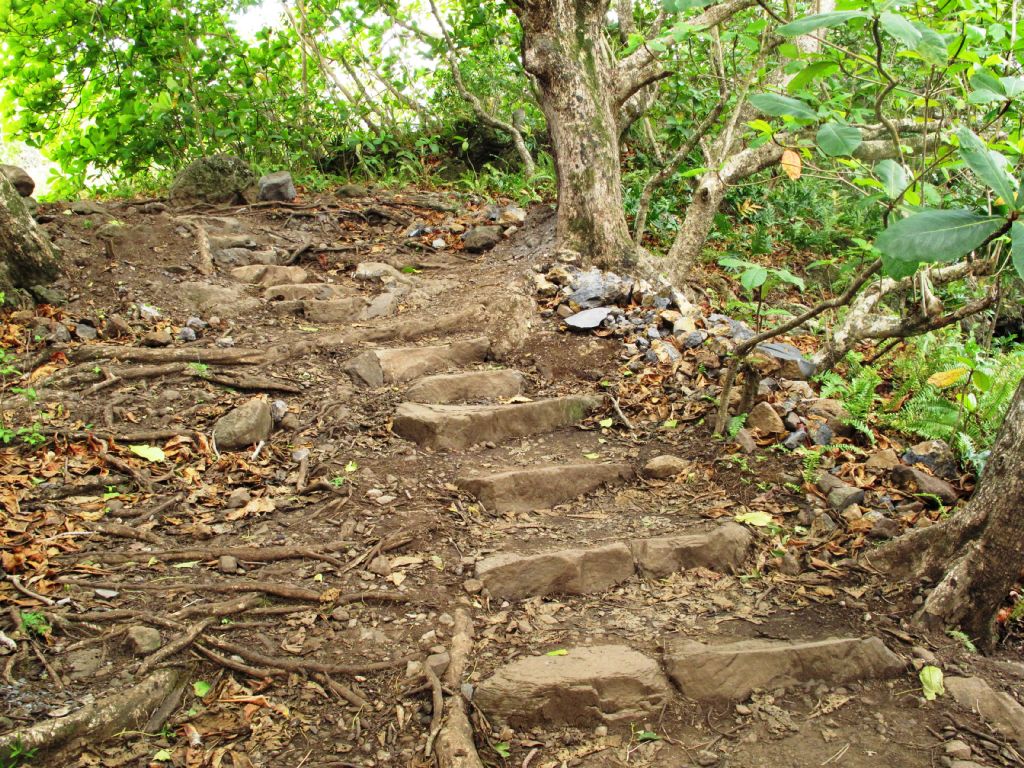
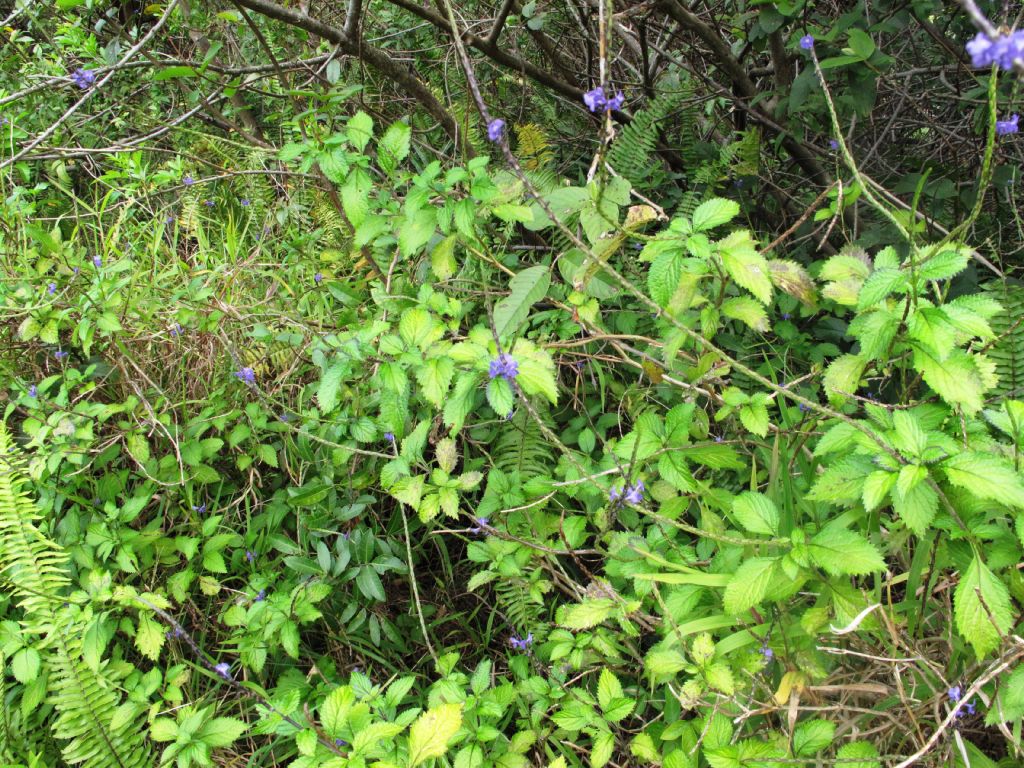
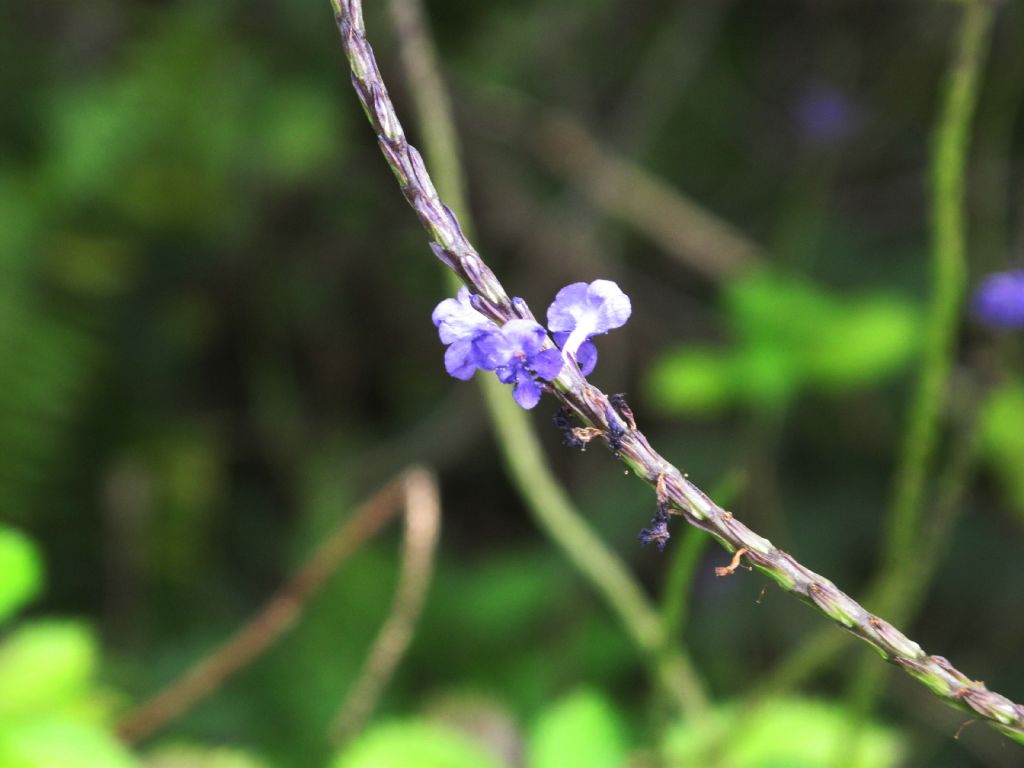
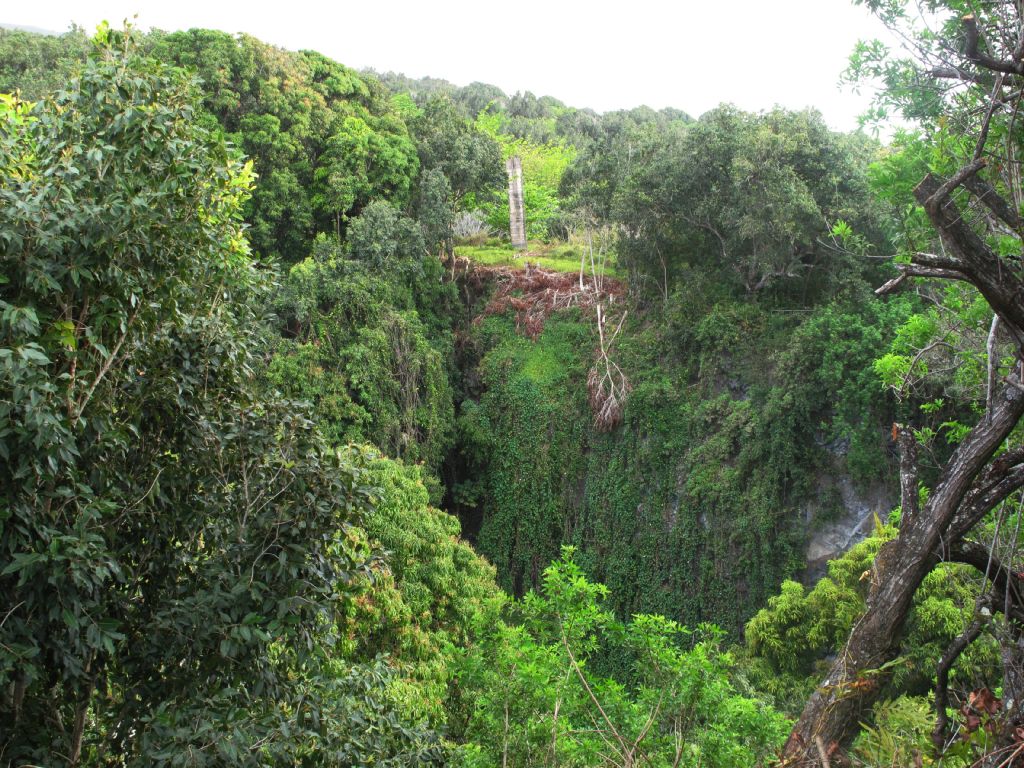
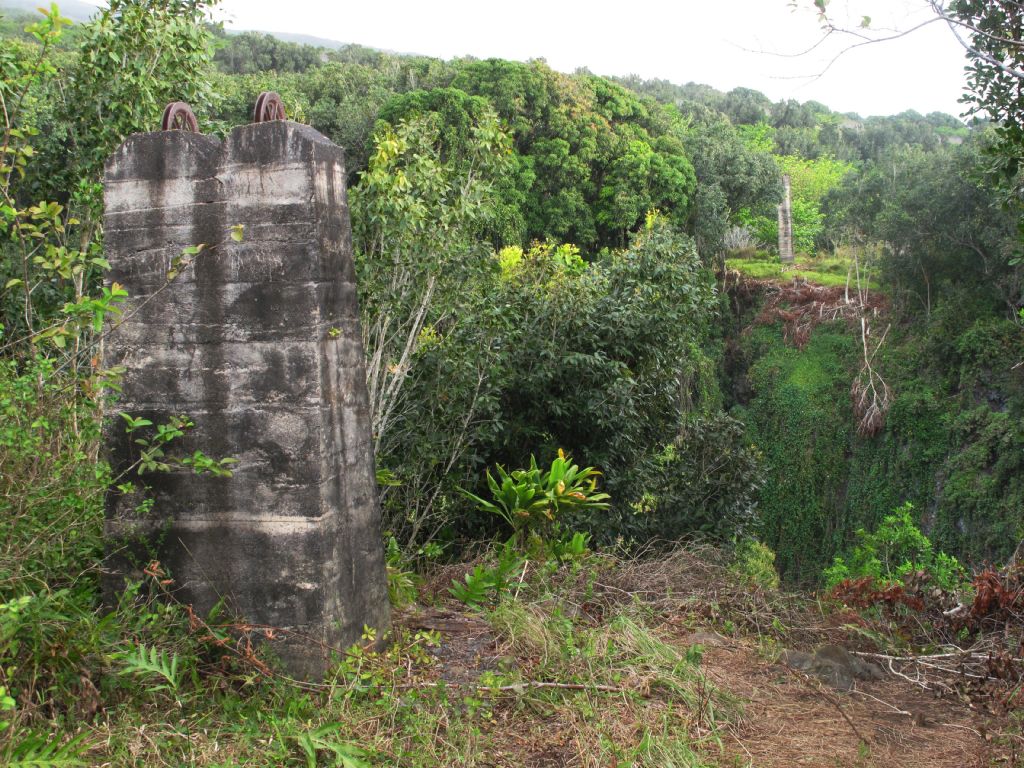
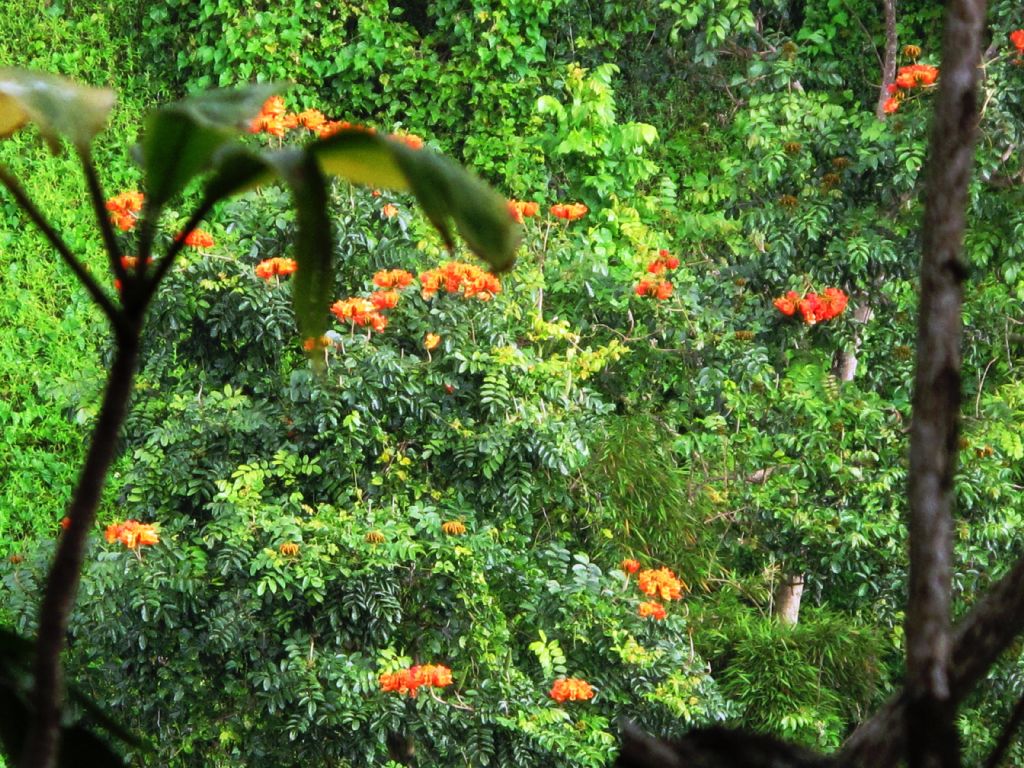
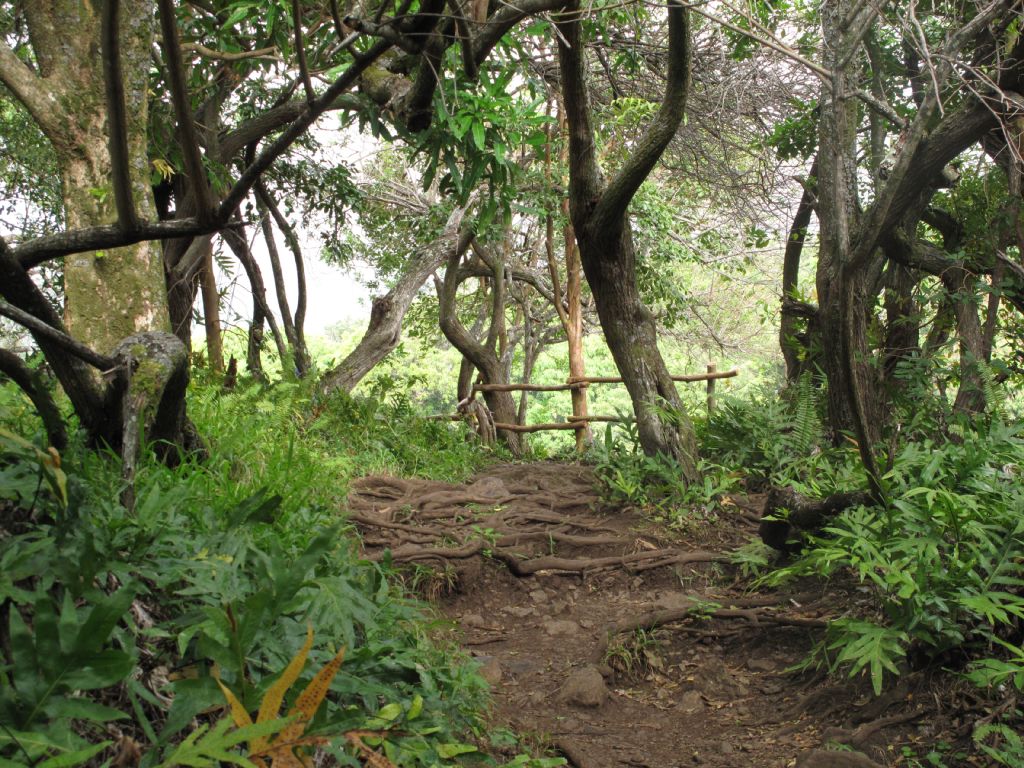
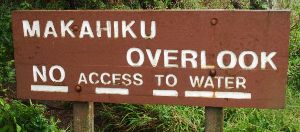
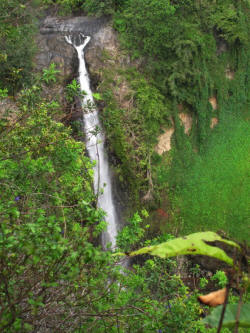
Makahiku Falls consists of a 187-foot drop. There is an even taller waterfall, a full
400-footer, about an hour further up the trail; I decided to save it for my next trip.
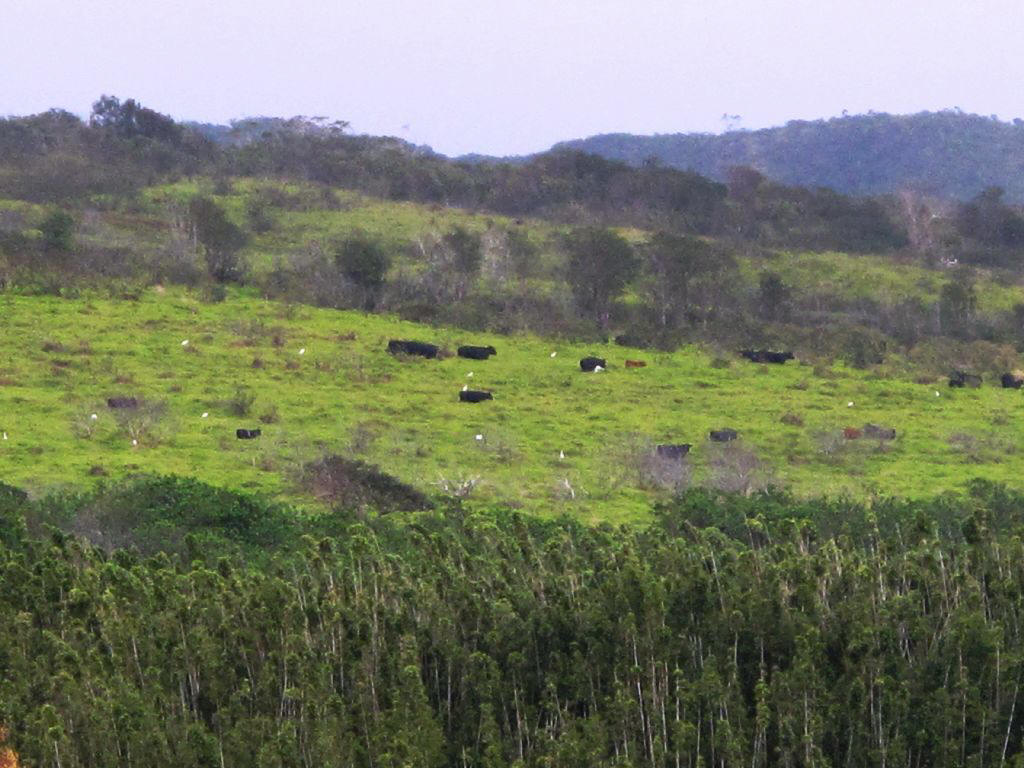
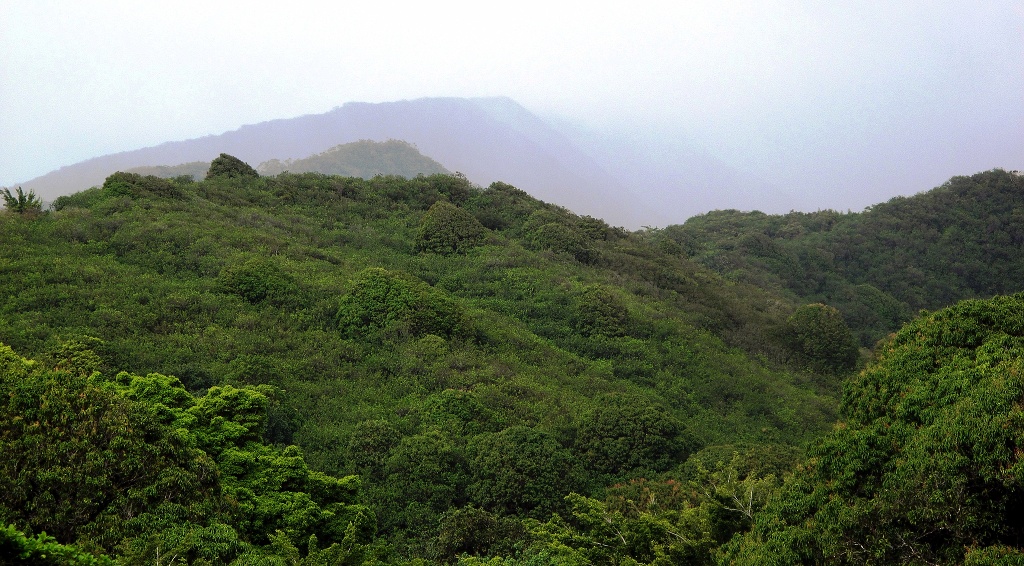
One of the things that most impressed me about this spot, was the view of the
slope of Haleakala. I was in a tropic rainforest; but just a little ways up was
a temperate clime currently being enjoyed by grazing cattle. And above them, was
the frigid sub-alpine zone, with an almost barren alpine zone above that. Within
a few miles of horizontal space, you have represented every climate short of
arctic!!
As Mark Twain put it, describing another 10,000 foot high Hawaiian peak,
Hualailai,
The rays of glittering snow and ice, that clasped its summit like a claw,
looked refreshing when viewed from the blistering climate we were in. One
could stand on that mountain (wrapped up in blankets and furs to keep warm),
and while he nibbled a snowball or an icicle to quench his thirst he could
look down the long sweep of its sides and see spots where plants are growing
that grow only where the bitter cold of Winter prevails; lower down he could
see sections devoted to production that thrive in the temperate zone alone;
and at the bottom of the mountain he could see the home of the tufted
cocoa-palms and other species of vegetation that grow only in the sultry
atmosphere of eternal Summer. He could see all the climes of the world at a
single glance of the eye, and that glance would only pass over a distance of
four or five miles as the bird flies!
Without being able to swim, however, there wasn't much more I could
do at Kipahulu. Which meant it was time to resume my journey around
East Maui, and to figure out where I wanted to spend my third and
final night on this island.
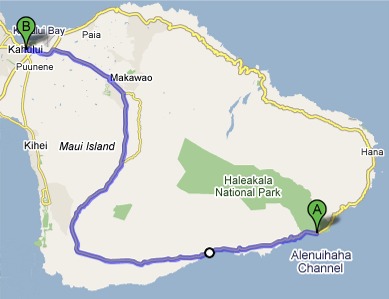
To avoid retracing my steps of the previous day, I continued past the
Kipahulu region of Haleakala National Park on what had been Hana Highway, but
now became Pi'ilani Highway. This roadway had only recently been reopened after
having been involuntarily closed by a 6.7 magnitude earthquake that struck on
October 15, 2006 and caused rockfalls, destabilized cliff faces and undermined
sections of the road. Even now, many segments of road were unpaved though quite
passable.
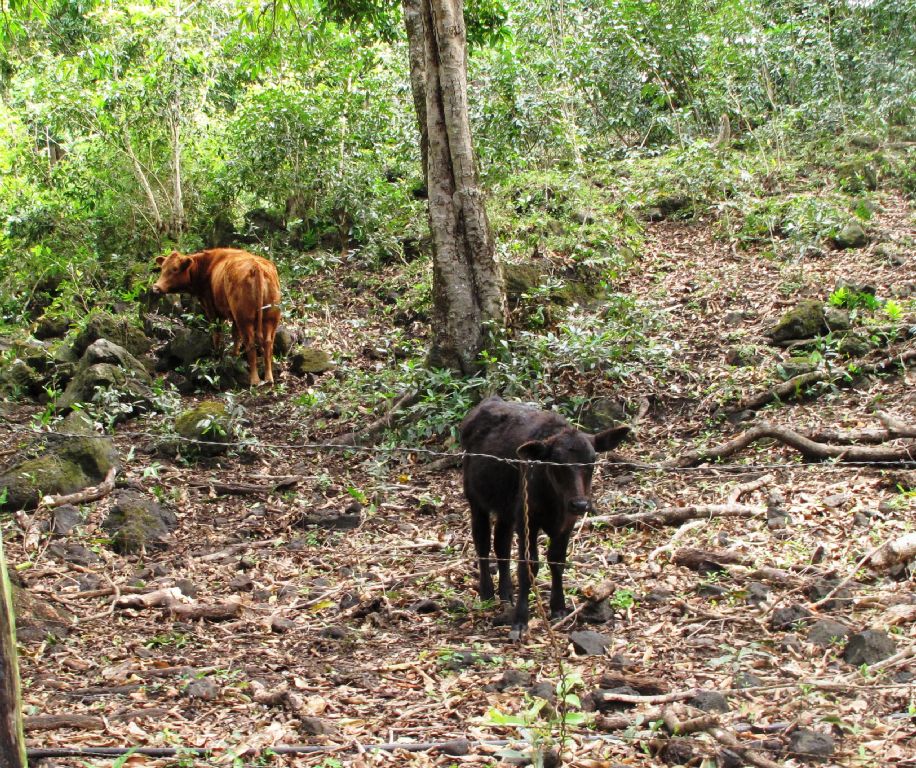
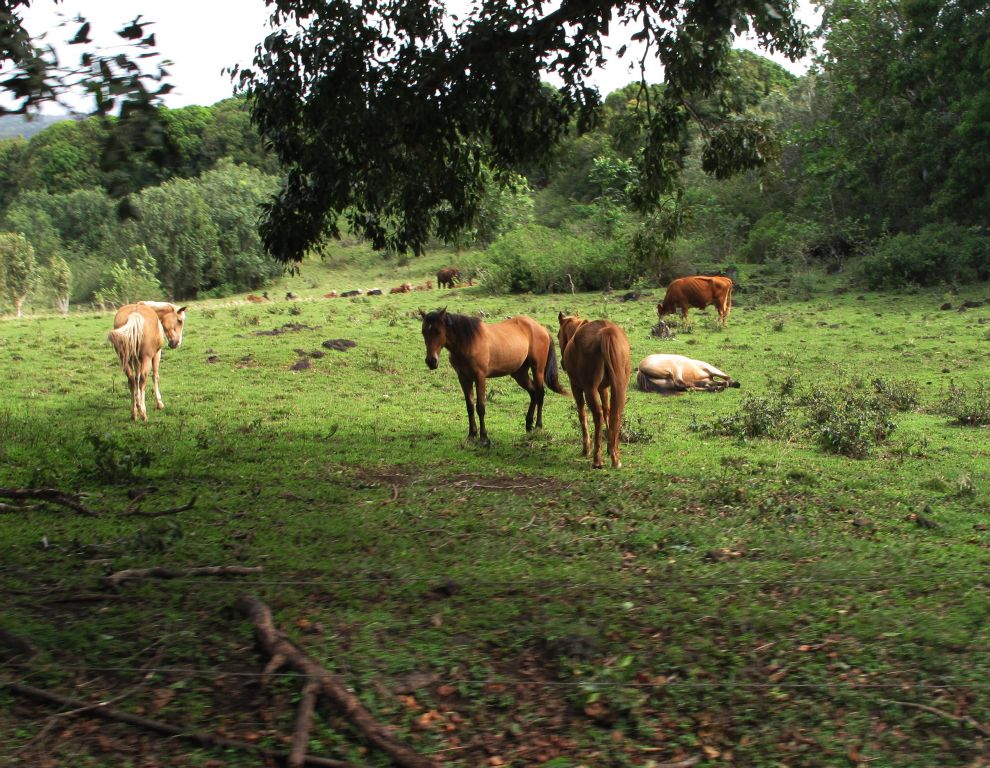
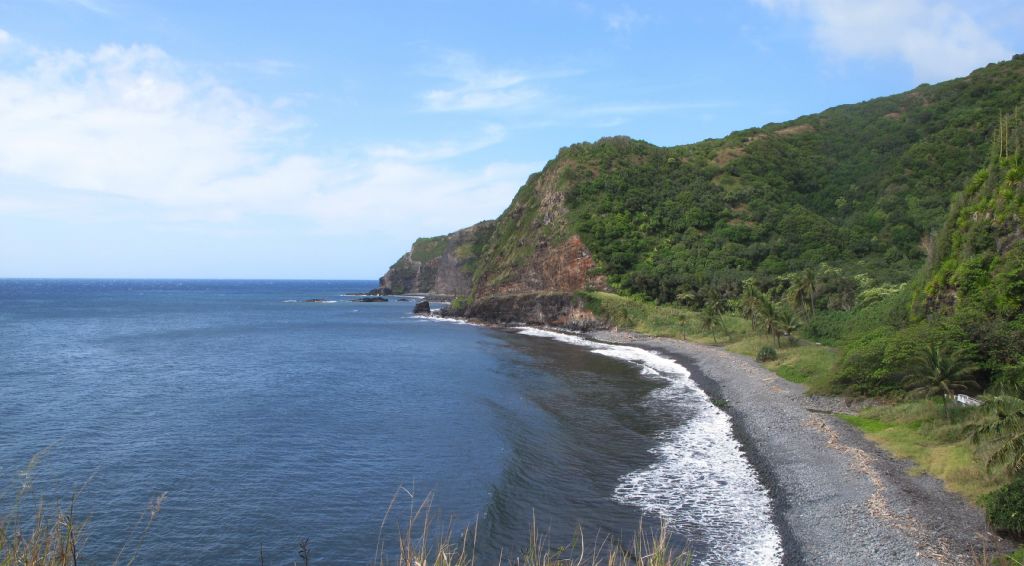
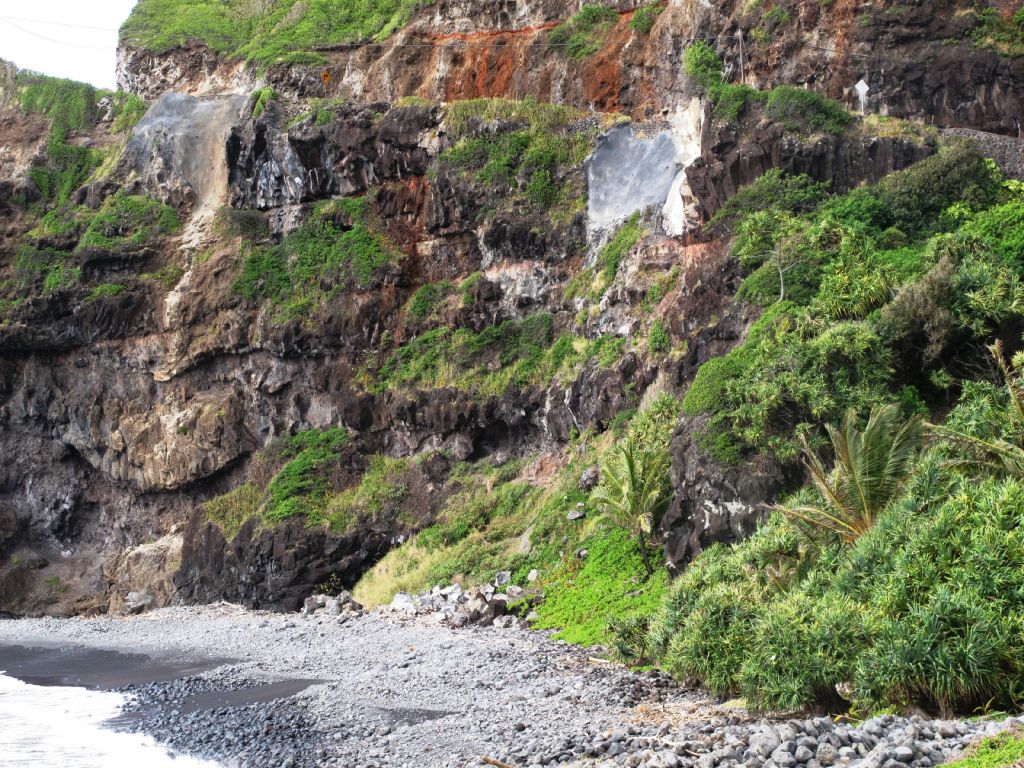
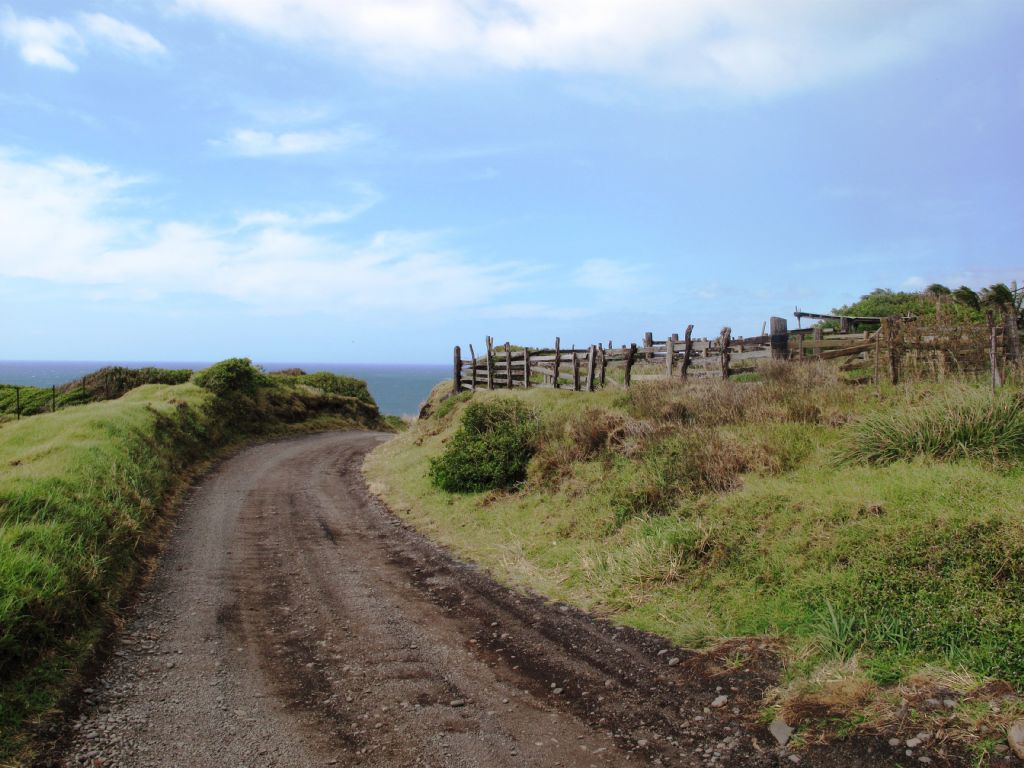
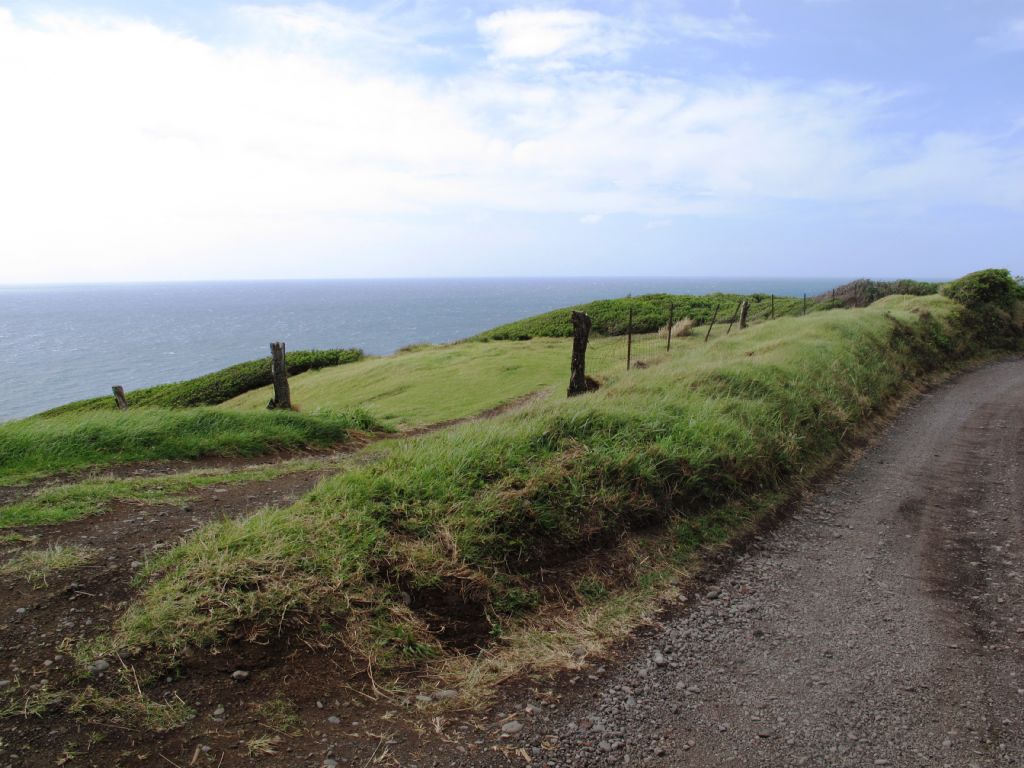
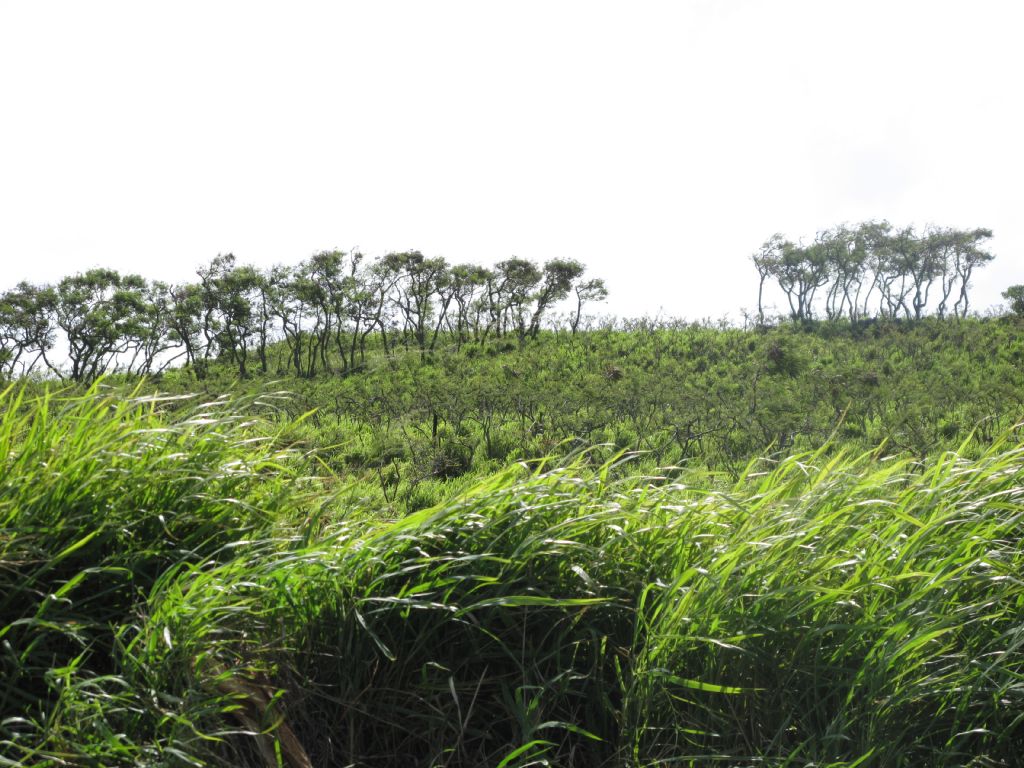
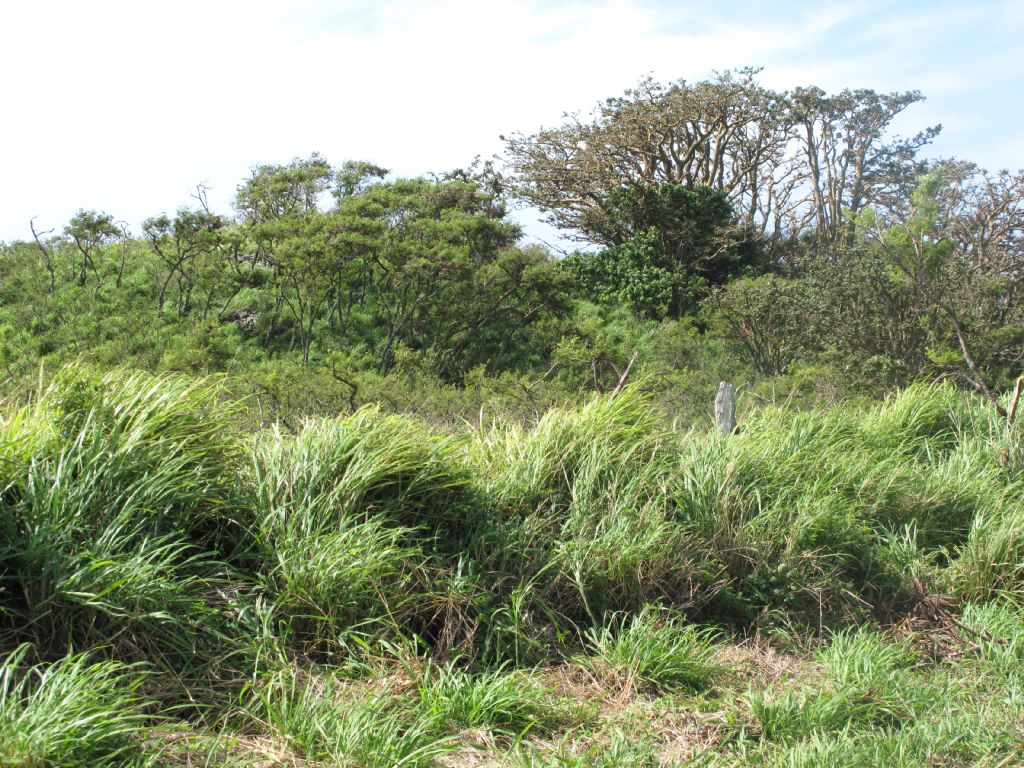
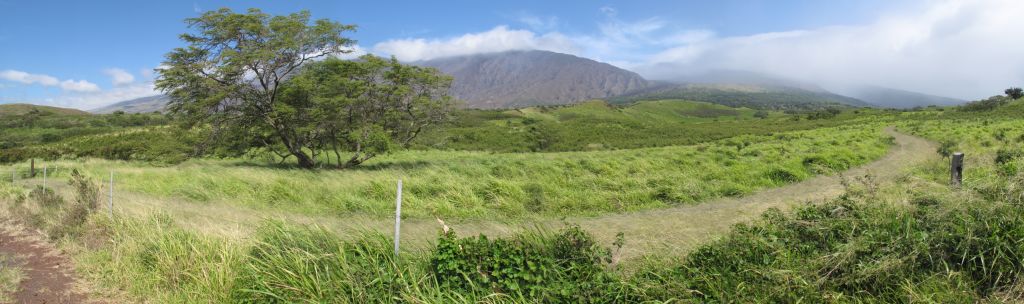
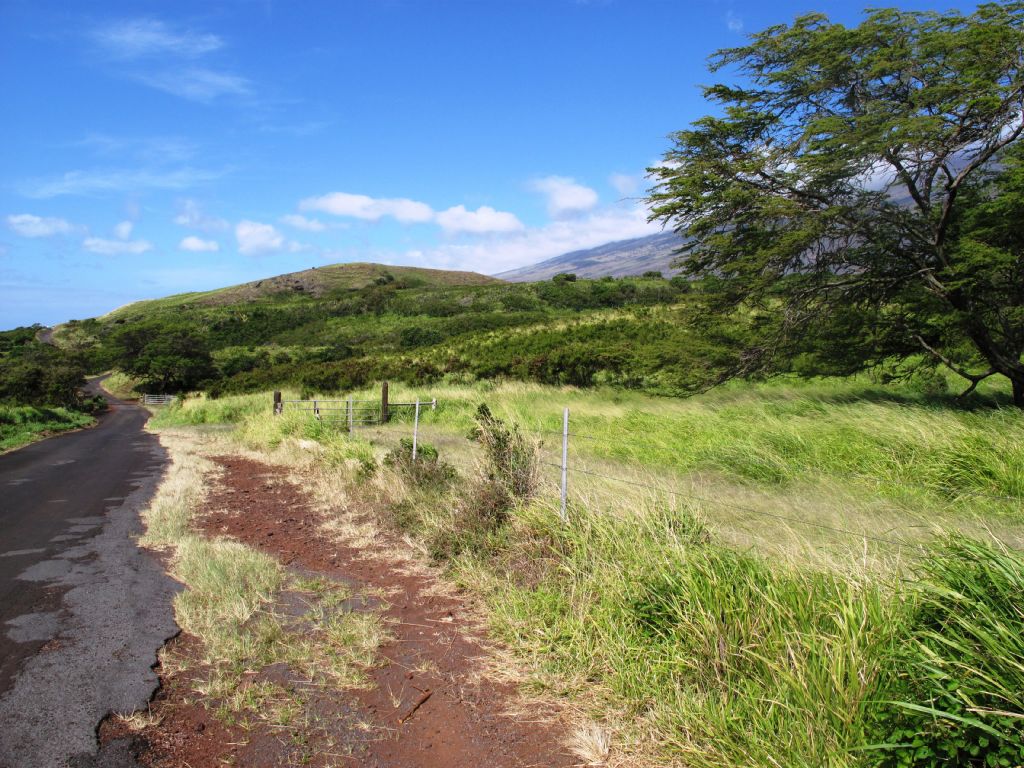
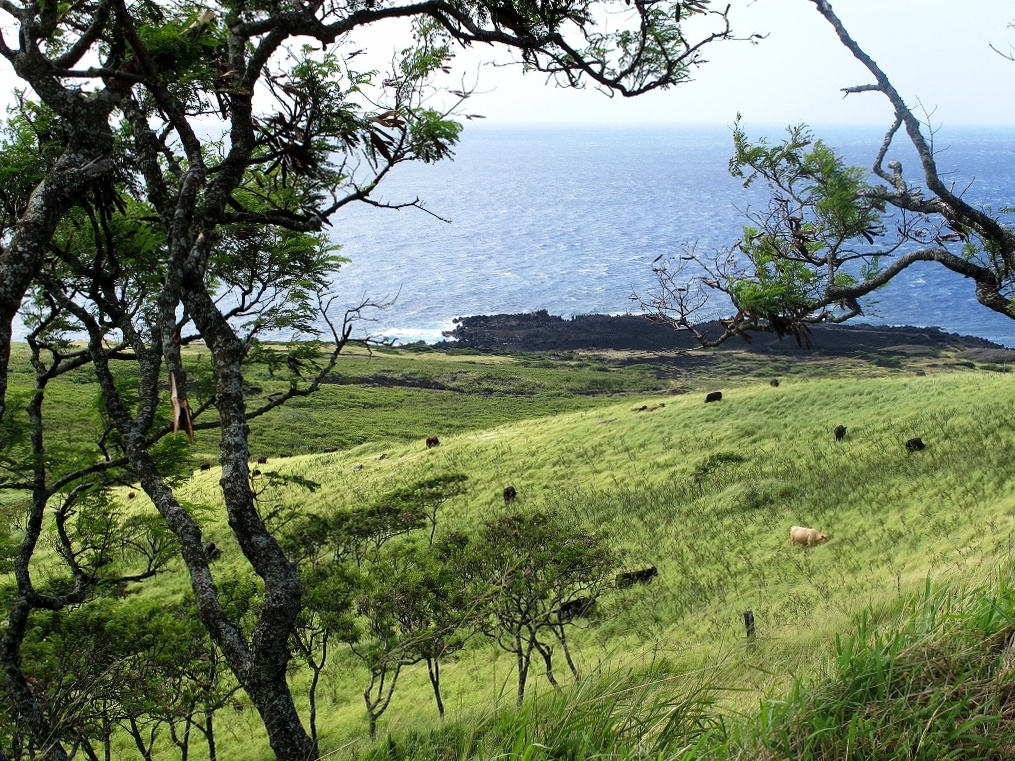
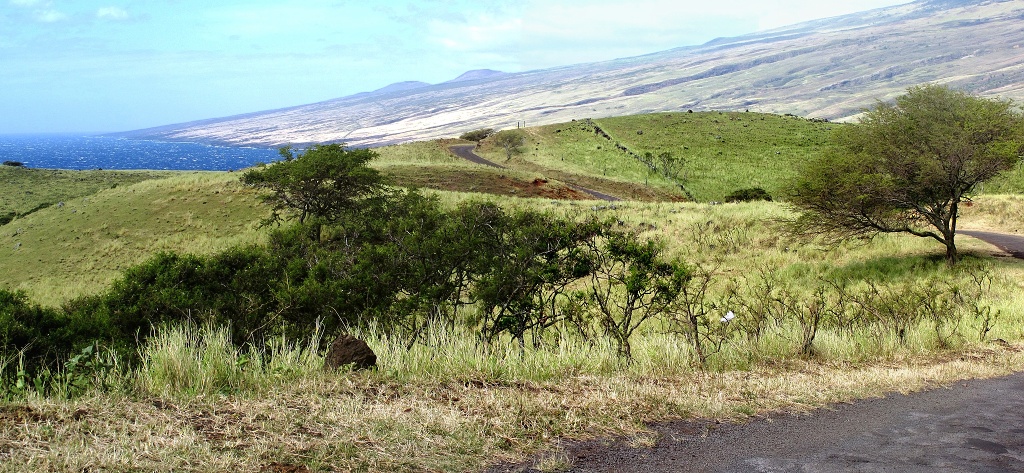
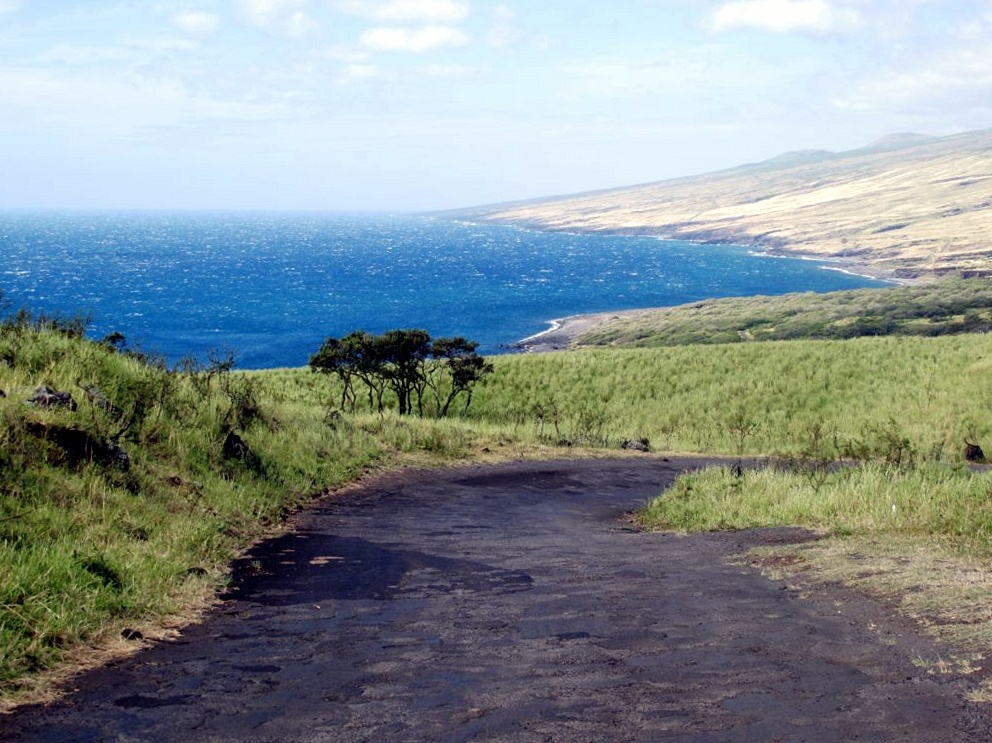
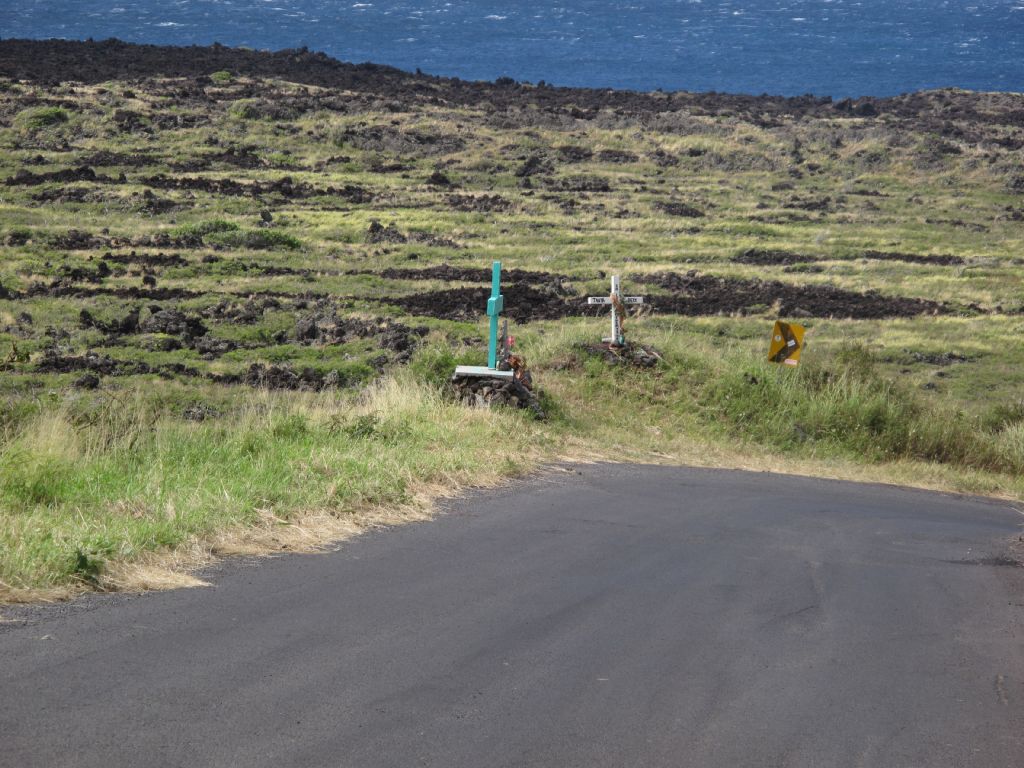
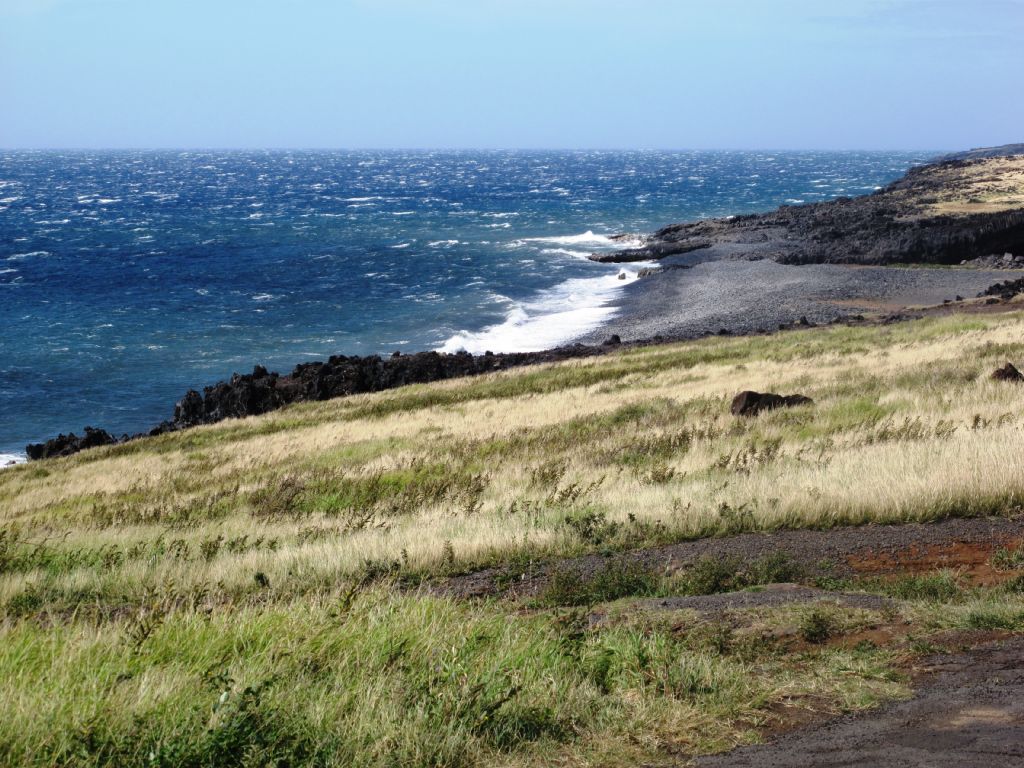
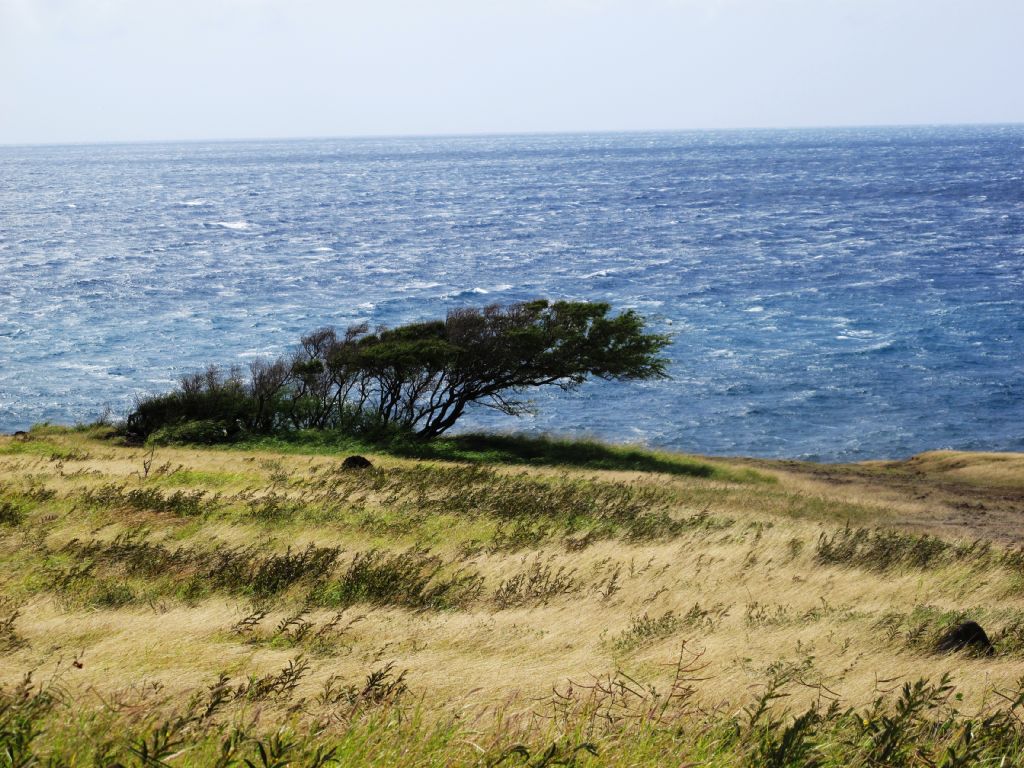
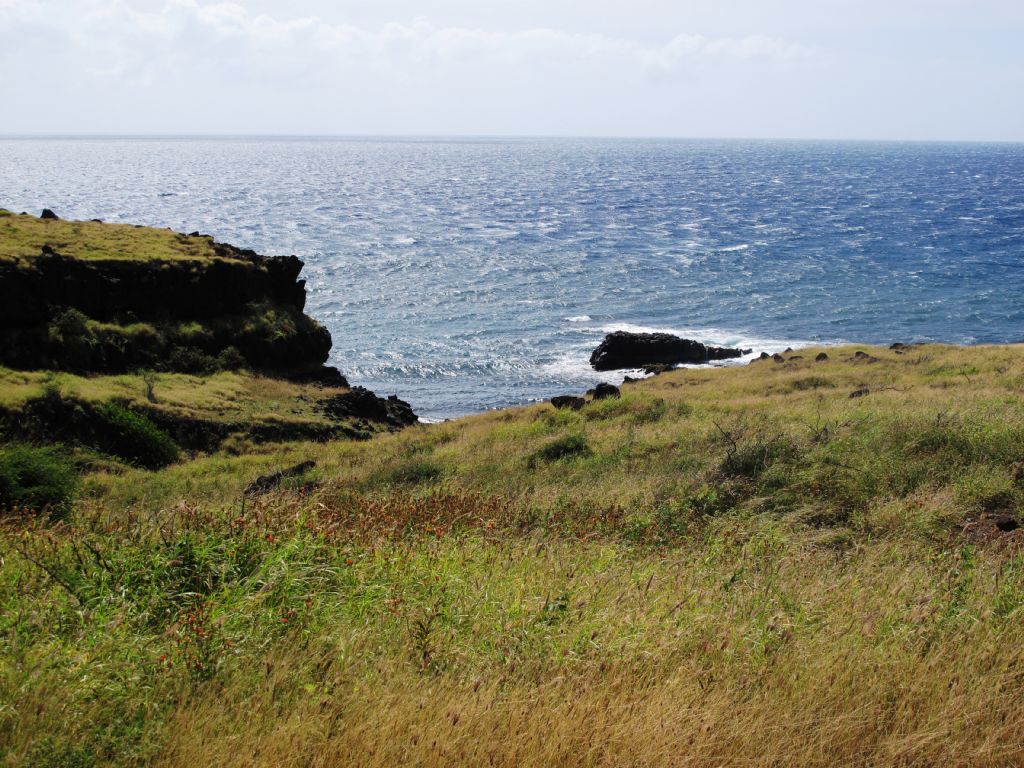
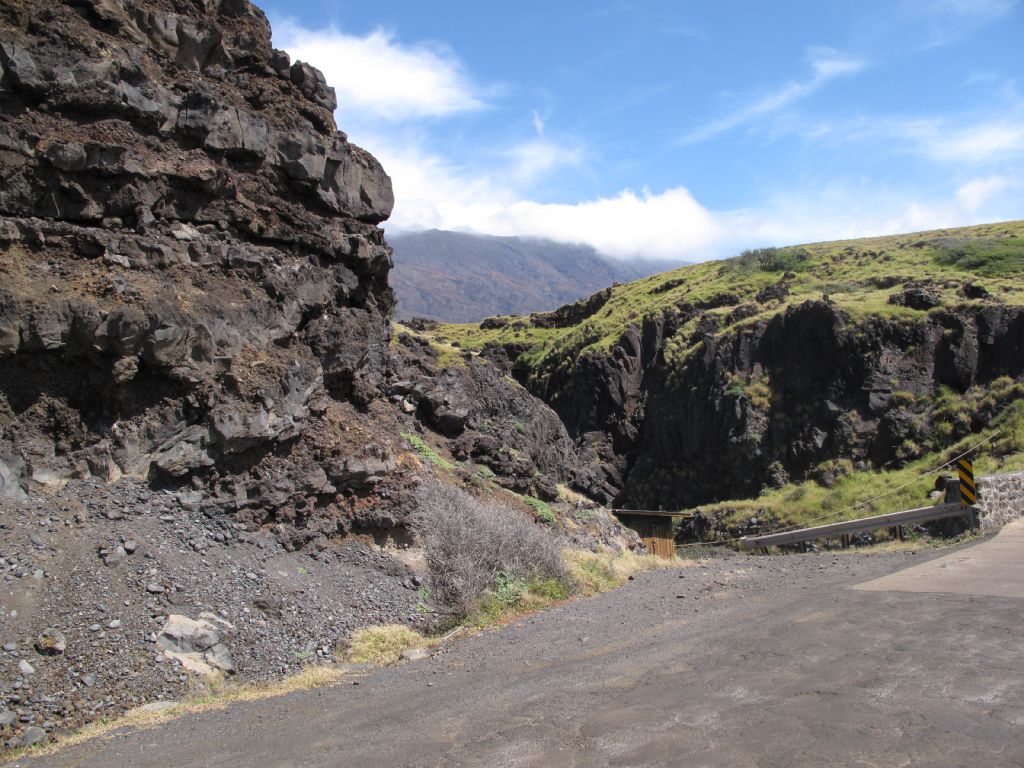
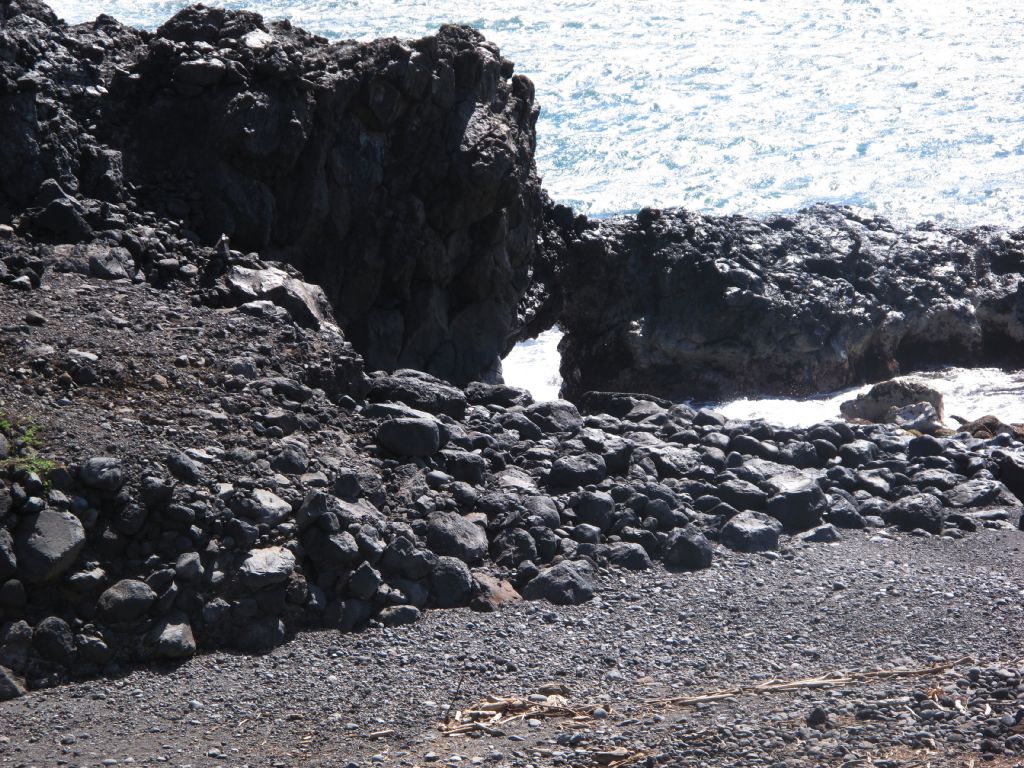
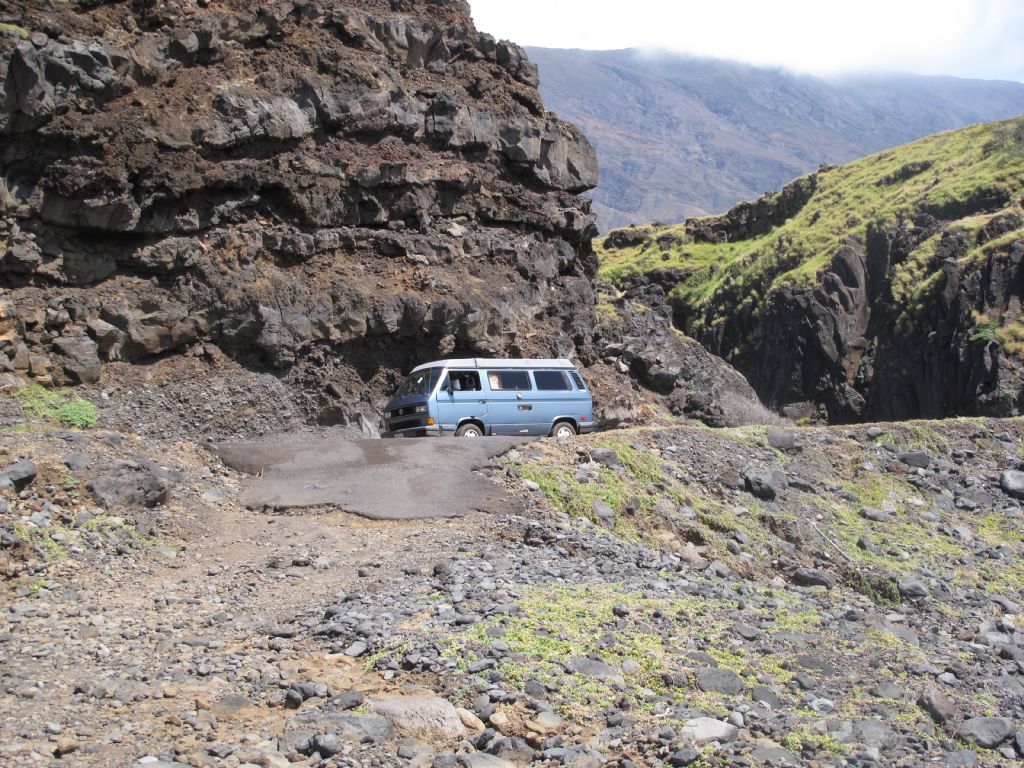
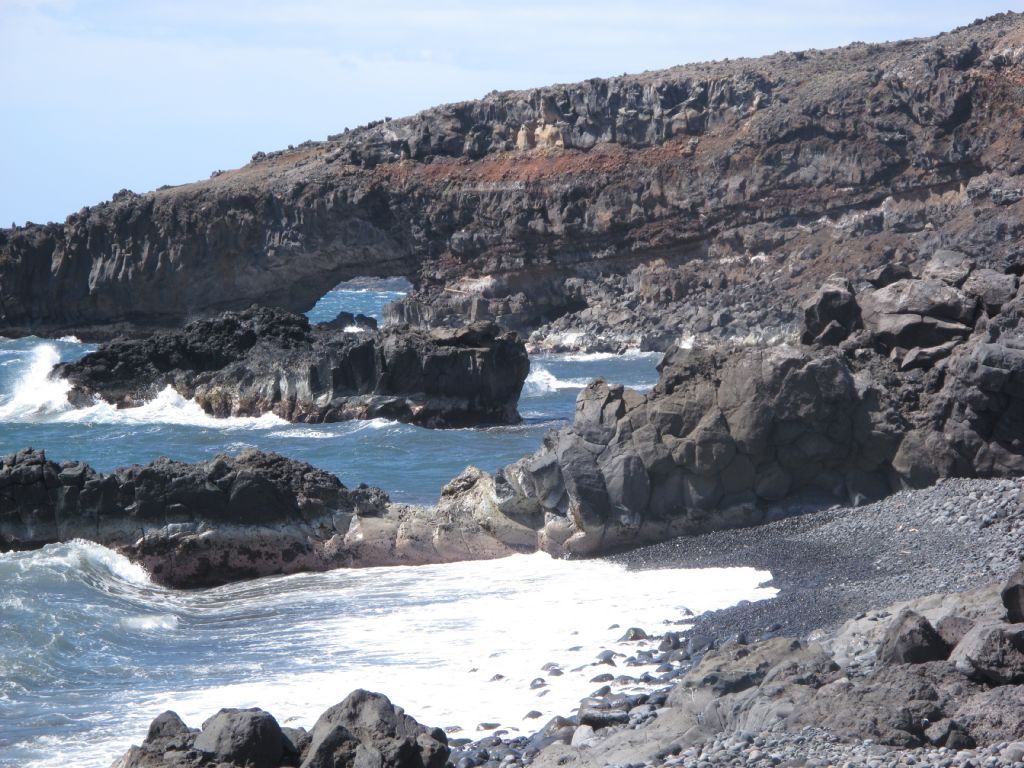
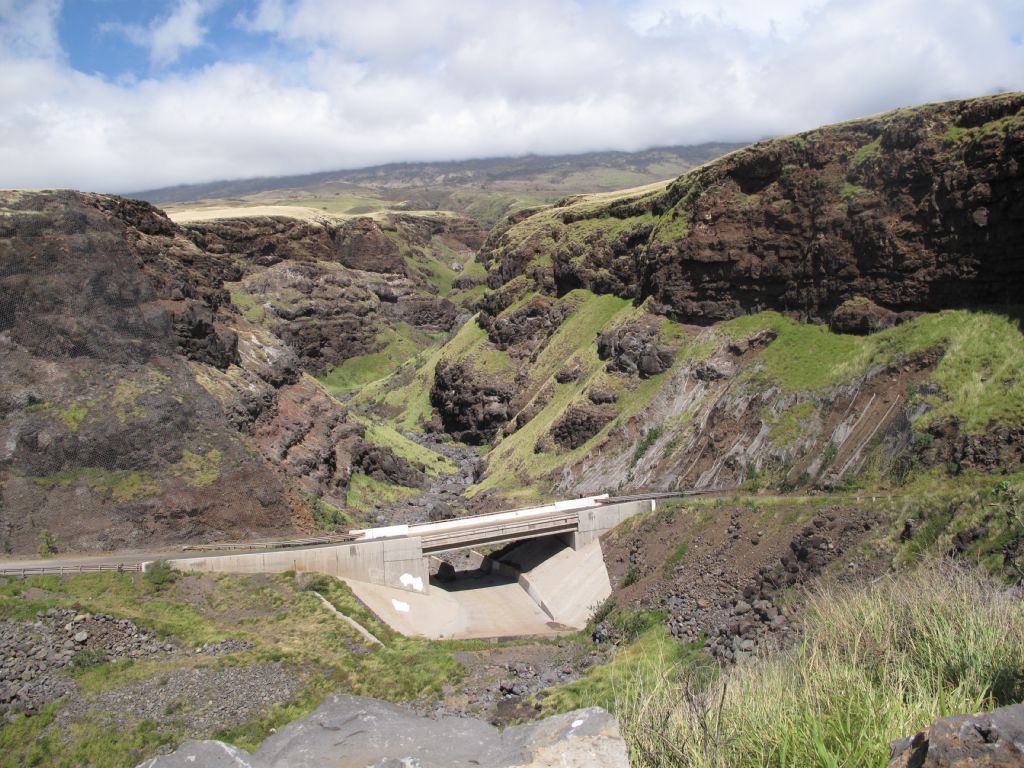
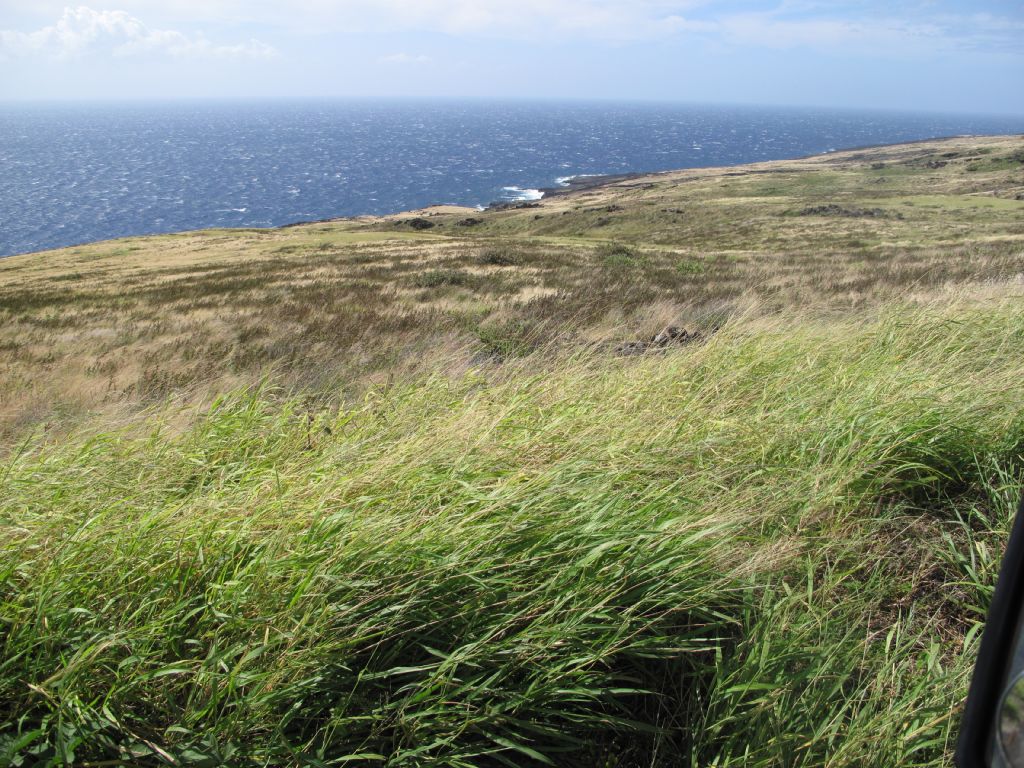
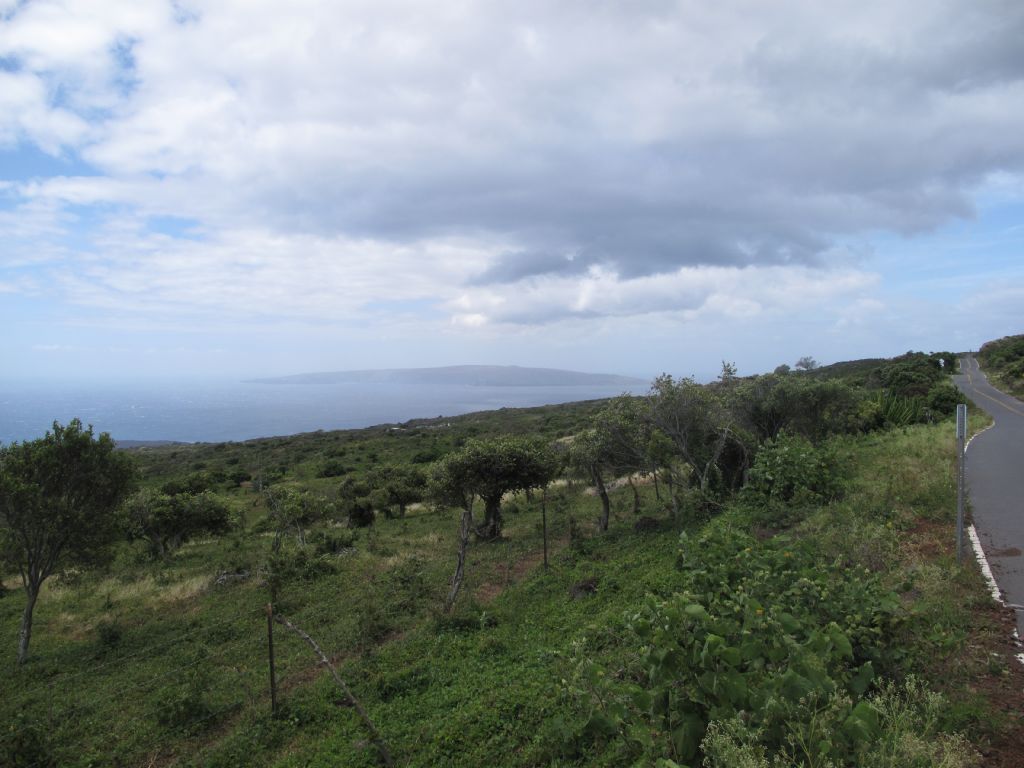
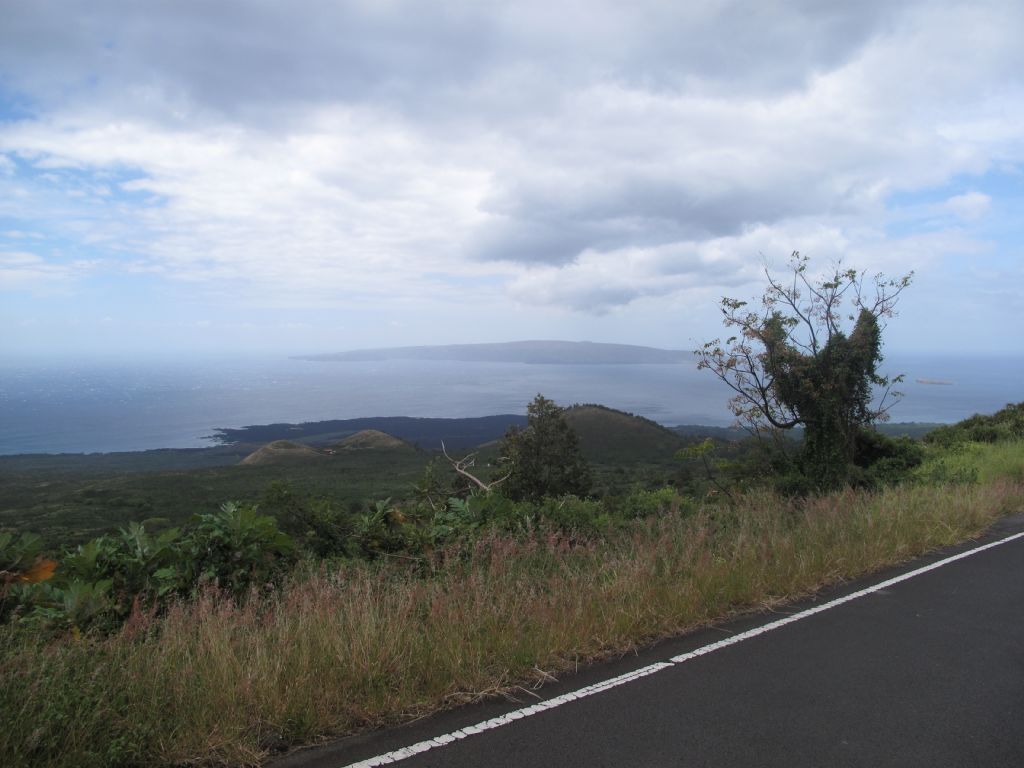
As you can see from the above photos, this section of highway does not
cross rainforest. As I drove the landscape became drier and drier, as I
retreated farther and farther into the windshadow provided by Haleakala's bulk.
As I rounded a corner, I spotted a truck with its hood up and two men and a
woman looking with concern into its innards. I stopped and yelled out the
window, "You guys need any help?"
The taller man, whose arms and legs were densely tattooed, smiled and waved
dismissively, "No, thanks, we're good."
Immediately the woman stepped in front of him and said, "Wait—do you have any
water?"
"I have some," I admitted. "I'm not sure how much." Being from
Arizona, I assumed she was thirsty and I only had about two quarts drinking
water.
"The radiator's bone dry," she explained. "Any water you have will help!"
I explained that if the need was for non-potable water, I had a sink in the
camper and I didn't know how much the tank held, but I had used very little of
it. And I had a soda cup for transport. So I filled the cup, and handed it to
the woman, who handed it to Tattoo Man, who poured it into the radiator. Then he
handed the cup to me, and as I returned to the camper to refill it, the woman
said gratefully, "You are a beautiful man!"
After the third time, I replied jokingly, "You already said that. You're
going to turn my head!"
"And I will keep saying it," she announced, "each time you bring
another cup of water!"
"Please!" I said. "Anyone would do this. It's not a big deal."
"Maybe not," the shorter guy, who also had a few tattoos but whose striking
feature was waist-length long black hair, said. "But we've been here an hour and
none of the locals going by stopped or asked if we were okay."
It took about six cups to fill the radiator, and then the truck started. But
the woman's radiator hose had sprung a leak, and she was afraid her homemade
repairs wouldn't last.
"She's a '72," the woman explained. "She's not going to live much longer, I'm
afraid. But on an island, you have to make things last as long as possible. And
I'll miss her when she goes."
"No worries," I said. "You go ahead of me, I'll be driving slower anyway and
probably will stop for more pictures. If you run out of water again, I'll be
along presently and we'll do it again!"
In point of fact, I did come upon them again and we did give their
radiator a last drink. The woman explained that we would shortly be in cell
phone range and then she could call her friend to get them, and to get the truck
towed.
Sure enough, after I'd driven another mile or so, my cell phone suddenly
began ringing and buzzing with a days' accumulated text messages and voice mail.
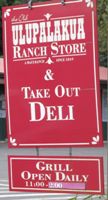
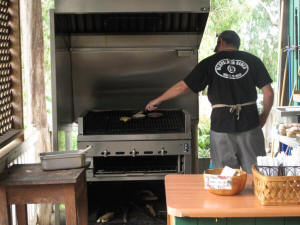
Shortly after I came to a lovely little
grill and gift shop. You
order inside and then wait on the porch while the cook makes your burger to
order. And I mean "to order"; you can not only pick what you want on it,
but what kind of animal died to provide it. Choices included elk and pig,
though I never saw elk on the island. I went with the beef; I knew there
were cows. And the result was delicious. (I would suggest they add some fries to
the menu, though—sweet potatoes are grown on Maui and sweet potato fries are
fantastic!)
(Note to my vegetarian friends: They also had garden burgers!)
I should mention at this point that Maui seems surprisingly poorly-mapped,
considering that it is a substantial portion of a United States state, and there
aren't that many roads anyway. My GPS seemed to think there were more roads here
than, in fact, there were. In addition to insisting I make a turn into a field
of sugar cane on more than one occasion, it imagined there to be a shortcut just
past the Ulupalakua Ranch Store on the slope of Haleakala, to the resort town of
Makena. In fact, even Google Maps thinks this road exists. But I've been there,
and I can tell you with some authority that, not only is there no such road, but
there could never have been such a road, for there is a sheer cliff at the location the road
supposedly turns off of the highway.
I had decided to spend the night at Makena Beach. Of course, to get to
Makena, I had to go first to Kahului. By the time I reached Makena, which is not
only a resort town but the mother of all resort towns, I found it to
consist almost entirely of condos, upscale vacation "properties", and expensive
stores. There are also a number of beaches, all of which seemed to belong to the
State Park system and to not allow overnight parking or camping. There was one
section that allowed overnight fishing but I didn't have a rod or reel
and was told they actually check.
By now it was dark, and I didn't know where I was going to stay. I could
go back to Hosmer Grove in Haleakala National Park; my receipt still was
good for another day. But 1) I didn't want to have to rush back in the morning
to be there to turn in the camper by the appointed time of 10 PM; and 2) I
didn't want to freeze my butt off up there again. Besides, it would take me
another couple of hours to get there.
I drove back to the camper facility, thinking I might could park there. And I
could, as it turned out. But I didn't want to. Surely there was a nearby beach!
Kihei is on the beach. The ancient camp book that came with the camper
told of one Papalaua Beach that allowed camping, fairly nearby. The GPS had
never heard of it but I resolved to find it on my own. I drove along Highway 30,
unable to see a thing off the road but hoping Papalaua Beach might have a sign.
Finally, I did spot a beach parking access parking area, or rather, I spotted
the tent and bonfire a family had erected there. There was space for me, so I
parked the camper and checked the place out. I was literally 30 feet from the
Pacific Ocean, or rather peaceful Maalaea Bay, in front of an ancient and
graceful tree. I knew it would look like a postcard in the morning; yet I was no
more than 15 minutes away from Aloha Campers. It was perfect sleeping
temperature; the other campers were quiet or drowned out by the ocean breeze;
and the stars shown brilliantly above.
It was a couple of hours later than I'd hoped, but I'd found the perfect
place to spend my last night on Maui.