|
By: Paul S Cilwa |
Posted: 10/21/2025 |
|
Page Views: 392 |
| Hashtags: #Memoir #Superman #SecretIdentity #GenderedClothing #DragHistory #Shame #CulturalNorms |
| A reflective memoir tracing a childhood Superman disguise into a meditation on gender, drag, shame, and the cultural history of clothing rules. |
| Estimated reading time: 5 minute(s) (1167 words) |
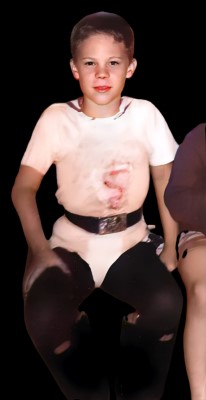
So I invented a better disguise: Suzie Darren, society news reporter. She wore the purple
gown and went barefoot because I couldn't manage the heels. After rescuing my sisters
from imaginary peril as Superman, I'd vanish and reappear as Suzie, interviewing
Nanny the Goat about last night's gala.

The next thing I knew, I was face-to-face with Ray, the man my mom had hired to do
carpentry and odd jobs. He slept in the room next to mine and I considered him to be
a friend.
This time, though, he was grim, trying to explain that other boys
would beat me up
if they knew I dressed like a girl
. I was immediately confused. There were no
other boys
there, and besides it was a secret identity. (That last part didn't
help.) But Ray wasn't talking about logic. He was transmitting something deeper: shame.
The costume trunk disappeared.
Now, at 74, I can say I'm not trans, not a drag queen. But when I feel a knot in my stomach
watching a bearded friend play with drag, I know Ray's disgust—and probably my mom's—got
passed on. It wasn't there before. No one ever groomed
me to be gay. But make no mistake:
I was groomed to be straight. And that grooming, like all child grooming,
wasn't about joy. It was about control.
(And let me add, I have no problem with "real" drag queens. I've met a few in
person—including the beautiful Miss Coco Peru—and they were all lovely people. It's just
guys playing with drag, like Rudy Giuliani, that make me cringe.)
The Real Groomers
Let's talk about grooming. Not the kind that gets headlines and moral panic, but the kind that's
so normalized we don't even see it. The kind that tells boys not to cry, girls to smile,
and everyone to fit into a binary that's more theological than biological.
This grooming starts early. It's in the church pews, the dress codes, the boys will be boys
and ladies don't do that.
It's not about protecting children—it's about preparing
them to serve a social order…one rooted in religious orthodoxy, patriarchal hierarchy,
and fear of deviation.
Ray wasn't really worried about my safety. He was worried about my symbolism.
A boy in a dress threatened the order. And that order, like most rigid systems,
was religious at its core—even if no one mentioned God.
Wear This, Not That

In the Paleolithic world, clothing was about survival, not symbolism. Both men and
women wore hides, furs, and woven grasses to keep warm, protect from the sun, or
carry tools. Archaeological evidence suggests little distinction between male
and
female
attire—function dictated form. A woman scraping hides or carrying a child
needed the same protection from cold as a man hunting. The idea that clothing should
signal gender is a much later invention, tied not to biology but to social
hierarchy.
Clothing was survival. Men and women wore hides and grasses
to stay warm and carry tools. No one cared who wore what. But as societies grew,
clothing became a sermon. In Rome, a matron's veil wasn't for warmth—it
was a badge of respectability. In medieval Europe, hose and doublets for men, gowns
and head coverings for women. These weren't fashion choices. They were visual catechisms.
The rules hardened. Not because they made people happy, but because they made people legible.
Controllable. A man in a gown disrupted the sermon. A woman in trousers threatened
the liturgy of gender.
In medieval Europe, separation deepened. Guilds, universities, and political offices
excluded women, while convents and households became their sanctioned domains.
Clothing became a visual shorthand for this divide: hose and doublets for men, long
gowns and head coverings for women. What had once been practical differences hardened
into rules, enforced by law and custom.
Drag as Heresy
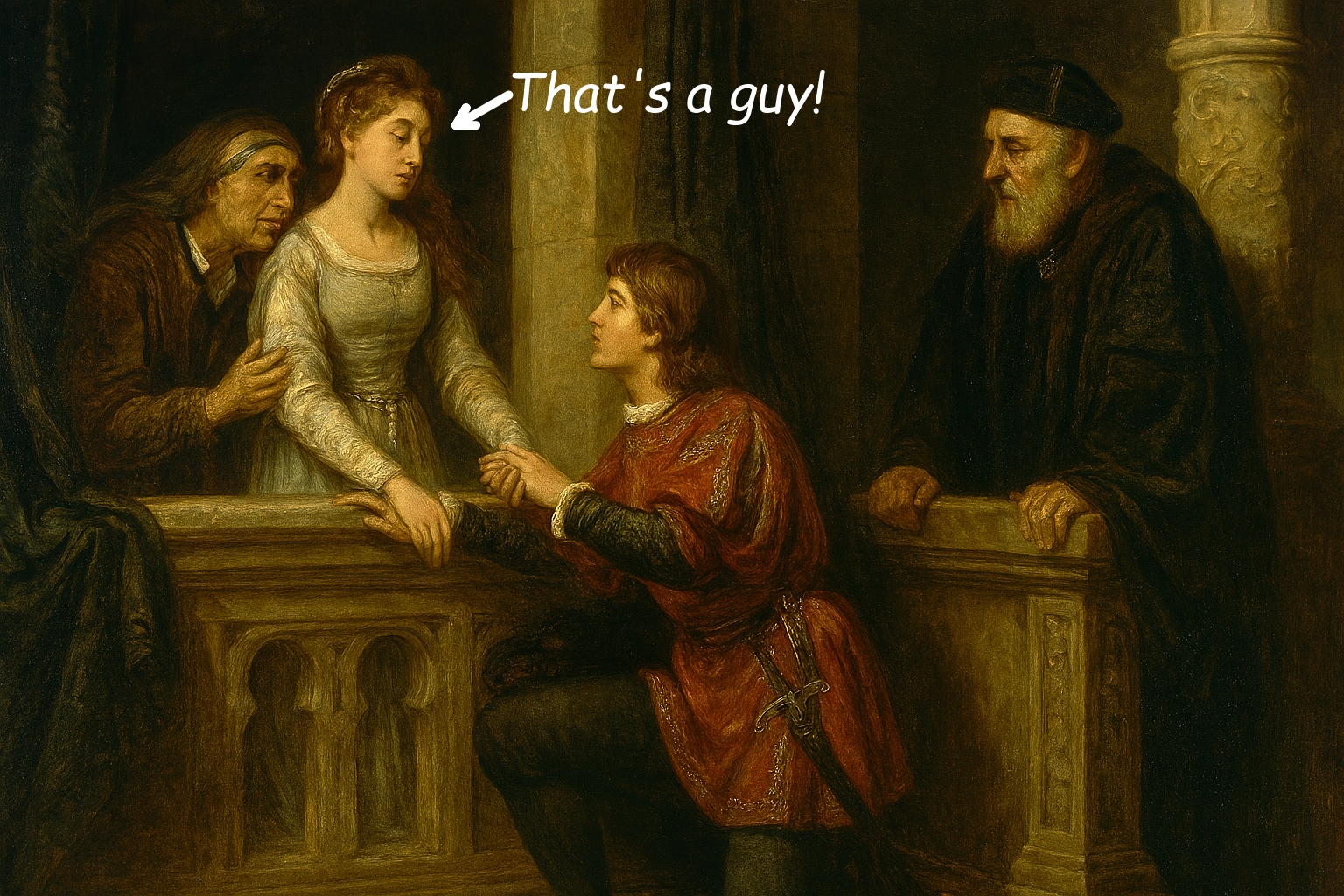
Drag, in its broadest sense, is theatrical heresy. In ancient Greece, men played women on
stage because women weren't allowed. In Shakespeare's England, Juliet was a boy in a dress.
The term drag
may come from the skirts that dragged across the stage—but the
real drag was the weight of taboo.
By the 19th century, drag balls emerged in Black and Latino communities. William Dorsey Swann,
born enslaved, called himself the Queen of Drag. These gatherings weren't just parties—they
were rebellions. Against grooming. Against control.
Today, drag is mainstream. RuPaul wins Emmys. Queens read to kids in libraries.
And the backlash is fierce. Because the pendulum swings. Not toward happiness,
but toward visibility. And visibility threatens control.
The Gospel of Shame

Ray's warning wasn't just about clothes. It was about obedience. About grooming
me to fear deviation. And that grooming wasn't secular—it was spiritual. A gospel of
shame passed down through generations. Not to make us happy, but to make us compliant.
Even Paul of Tarsus, whose letters shaped Christian gender norms, was torn. He greeted women
leaders—Phoebe the deacon, Junia the apostle—but also urged silence and submission.
Was he a misogynist? Or just trying to make Christianity palatable to Roman respectability?
Either way, the result was the same: grooming. Not for joy, but for order.
Gender Rules in Various Cultures
The idea that men hunt and women gather has been challenged by archaeology and
ethnography. Recent studies show women hunted in nearly 80% of foraging societies.
Jane Auel's fictional Ayla in The Clan Of The Cave Bear, the woman who hunts,
was not fantasy but reflection of real possibilities suppressed by modern bias.
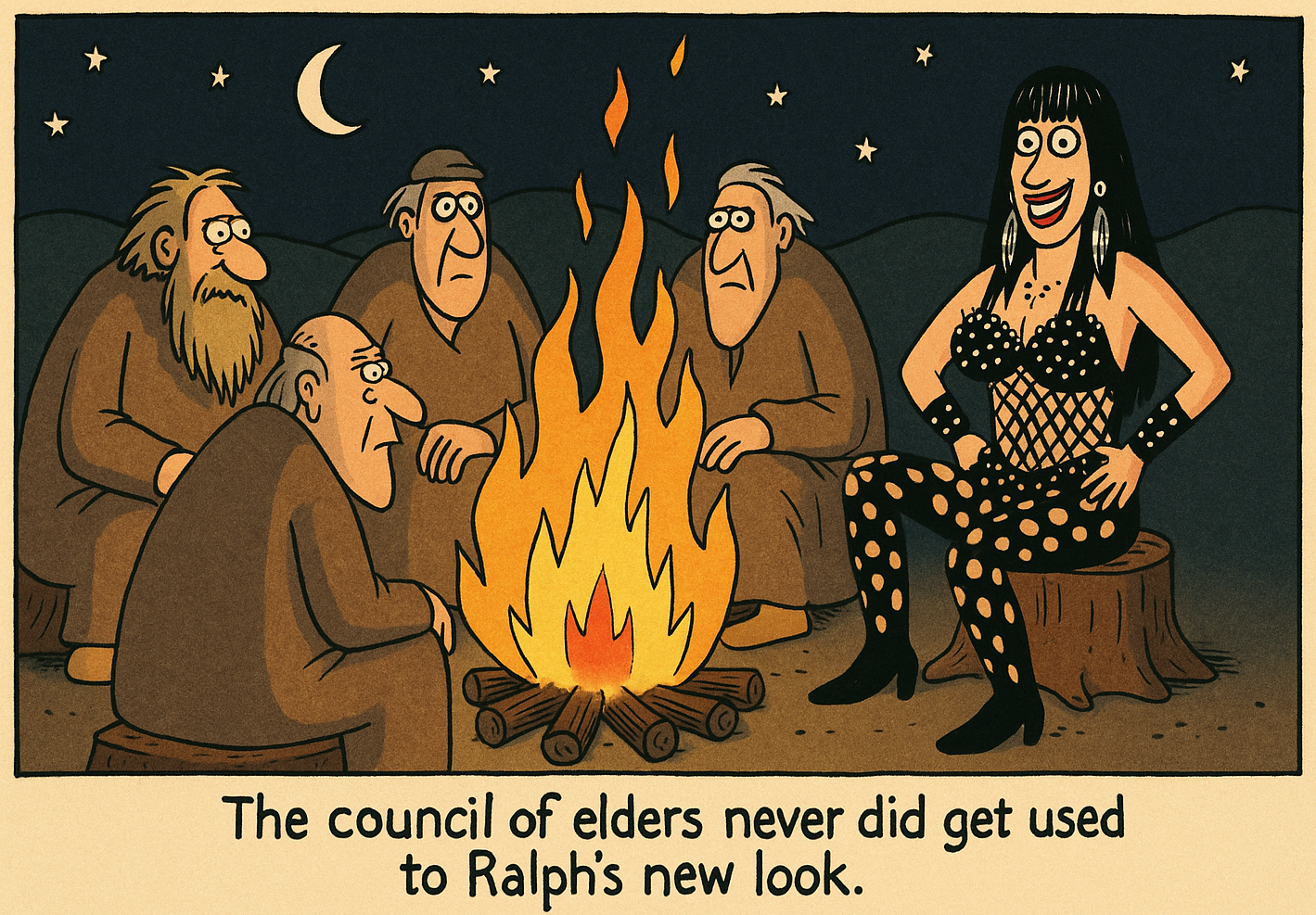
Indigenous cultures often recognized more fluid roles. Among some Native American
nations, Two-Spirit
people held respected positions, embodying both masculine and
feminine traits. In Polynesia, the māhū occupied a similar space. Gender rules were
not universal; they were imposed, often violently, by colonial powers seeking to
enforce European binaries.
Thus, the shame groomed into me at 9 was not inevitable. It was cultural, not natural. Other
societies might have seen Suzie Darren not as a problem but as play, or even as a sign
of spirituality.
The Pendulum of History
Suzie Darren wasn't a cry for help. She was a creative solution. A better disguise.
But the adults couldn't see that. They saw a breach in the liturgy. A child playing
outside the lines. And they responded with shame.
But shame is a costume too, one we're groomed to wear. One that drags across
the stage of life, heavy with centuries of control.
And maybe, just maybe, it's time to take it off.
Caftans are very comfortable!