A Million Little Pieces Of My Mind

Xylophone Concerto

Xylophone Concerto #1

By: Paul S Cilwa Posted: 9/11/2026 Page Views: 2
Hashtags: #Music #Classical #Xylophone #Concerto
Four movements, one coffee ring, and a tempo marking that may not be one.
Estimated reading time: 2 minute(s) (357 words)

The Concerto No. 1 is cast in four movements and lasts a little under half an hour, which its composer has described as "about a tank of gas." It is the only one of the three works presented here whose manuscript is complete, legible, and unambiguously in his own hand, a distinction he regards as overrated.

The concerto's subject was conceived, as noted elsewhere, on the descent into Flagstaff, and something of that origin survives in the finished work: a persistent downhill momentum, a tendency to gather speed precisely where a more cautious composer would apply the brake. Dr. Trevelyan-Boake has called it "the only concerto in the repertoire that is audibly losing altitude." She intends this kindly.

A word on the orchestration. The xylophone is not a loud instrument, and the customary solution—thinning the orchestra until the soloist can be heard— struck Cilwa as an admission of defeat. His solution was to leave the orchestra exactly as it was and instruct the soloist to play harder. The results speak for themselves, and have been the subject of correspondence.

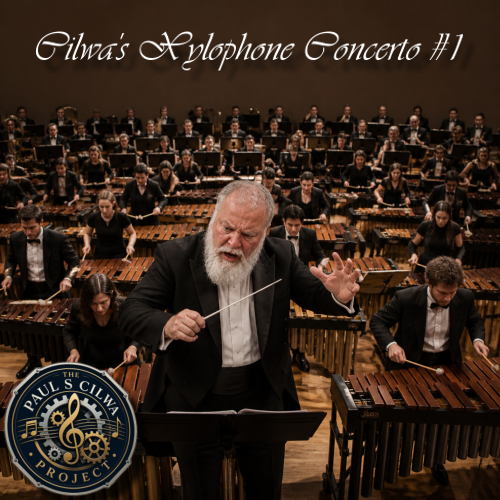
Xylophone Concerto #1

By Paul S Cilwa

Listen to the complete concerto:

Now Playing:

The Movements

I. Toccata

The soloist is given no introduction whatever, which is either a bold structural decision or an oversight the composer declined to correct once it was pointed out to him.

II. Fugue

Four voices, strictly handled, and the site of the celebrated coffee ring. Whether the resulting pause is a fermata or a moment in which the composer got up to answer the door remains the central controversy of Cilwa studies.

III. Waltz

A waltz in the sense that it has three beats to the bar. Dancers are advised to count them first.

IV. Finale

The material of the first movement returns, having apparently learned nothing, and the work ends in the key it began in—a conclusion Cilwa has defended as "the least I could do."